Showing posts with label Alexamenos graffito. Show all posts

Wednesday, 13 November 2024

Sun eyes

Skull with plain amber discs on clay in eye-sockets Grave 275. Dated to the 4th millennium BC. Zvejnieki cemetery, Latvia. Researched by F. Zagorskis. Photo by A. Butrimas...

On the skulls with red ochre and clay round amber discs (sometimes rings) were found stuck intentionally into eye sockets as "replacements" for the eyes. In all those cases, the amber pieces have a large, centrally placed hole...

Obviously to resemble eyes...

The graves of the same culture also contained perforated amber disc with "sun cross" design...

Amber disc (obverse (sun cross), reverse (sun rays) and cross-section) from Daktariškė 5 Neolithic settlement...

In 1956 Eduard Šturms presented the first overview of Amber artefacts in Eastern Globular Amphora Culture and interpreted them as symbols of the sun and (male) sun god, as they were (apparently) found in men's graves...

All the researchers agree that amber was regarded as a "sun stone", because of its colour and the way it reflects light...


So, to me it is obvious that the perforated amber "sun" discs that were inserted into diseased eye sockets directly linked sun and sight...

I talked about the same idea here:

Utu, Sun: 𒀭𒌓

According to this table, this means god, heaven + day = sun...
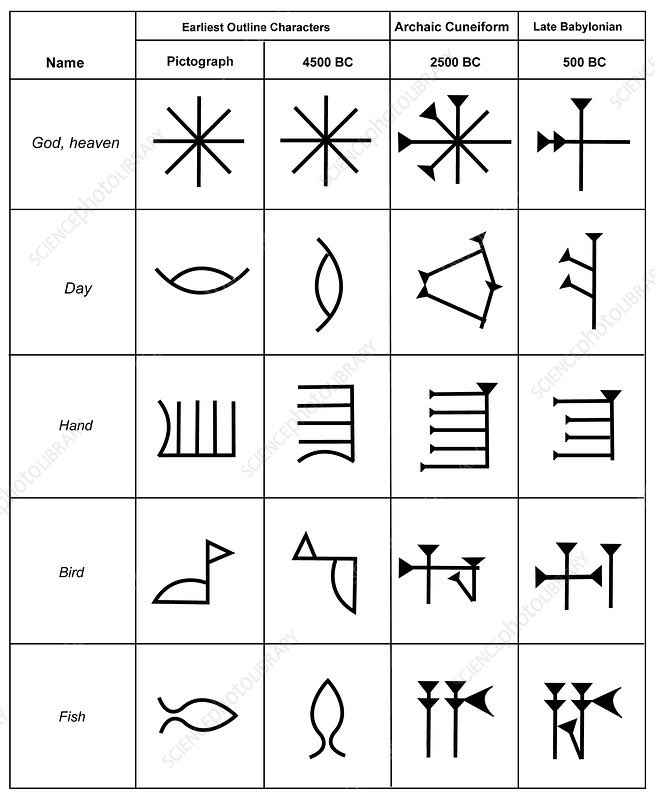
Did the god sign originally mean shiny thing? Did the day sign originally mean "eye"? 

If so: shiny thing + eye = to see = sun? 

Like Slavic Svetovid = light + to see  

I talked about this in my post "Svetovid"...

Now, check this out:

Irish "súil" (eye), from Old Irish súil (eye), from Proto-Celtic "sūle" ("two suns"), dual of "*sāwūl" (sun), from Proto-Indo-European "*sóh₂wl̥" (sun). 

Officially: The change in meaning in Irish is apparently due to the mythological view of the sun as the "eye of the sky"...Or maybe because sun (light) gives us sight...

More info on amber sun discs can be found in this article...

This sun cross thing can explain this petroglyph The Sun in the ship. Rock engraving. Sweden (after R. Rimantienė)...

How? The sailing season in the Baltic Sea and White Sea starts in Apr/May...At the beginning of summer...I talked about this in my post "Bes", about petroglyphs from Lake Onega in Russia...

BTW, while the Globular Amphora guys were making their amber sun discs, the guys from Late Neolithic Vasagård archaeological site located on the southern side of the island of Bornholm, Denmark, were making these: sun stones...I talked about this in my post "Sun stones"...

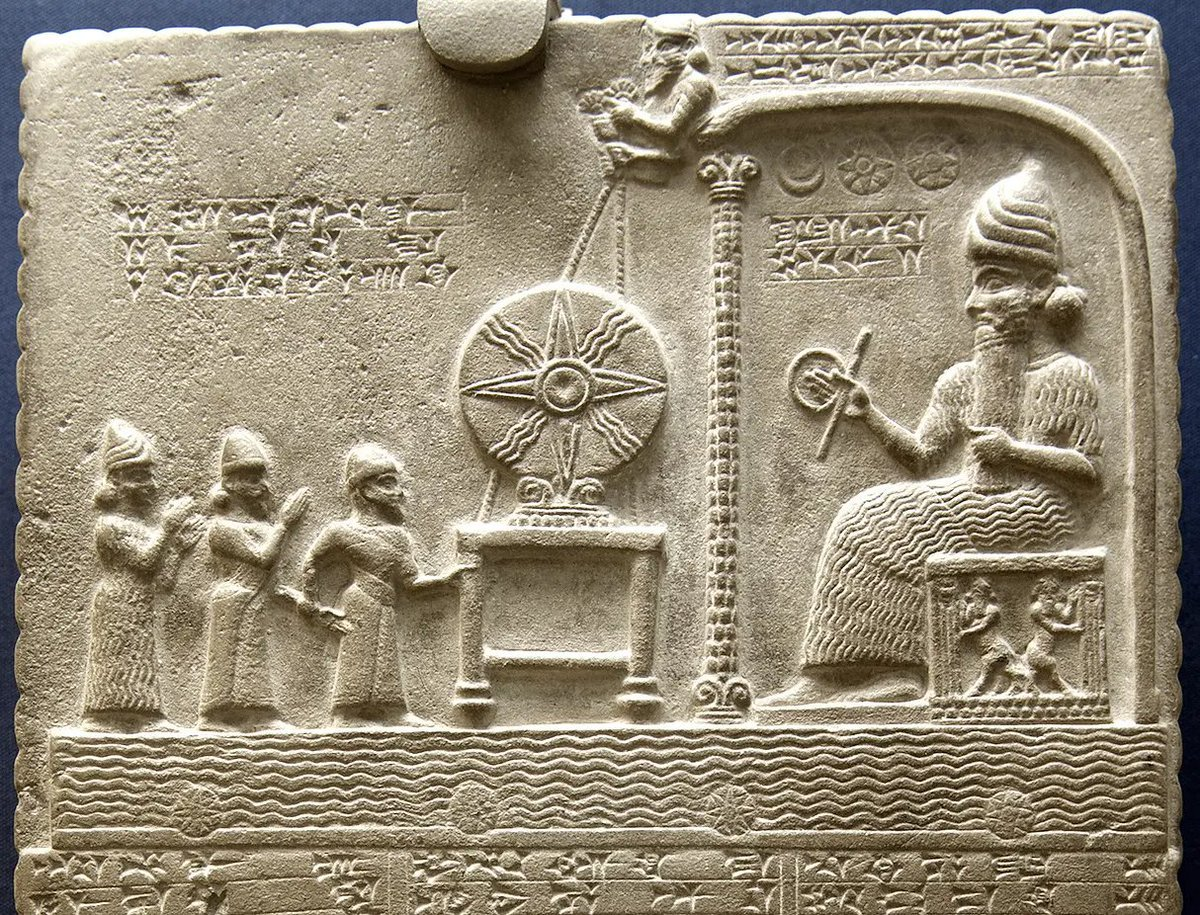
Oh yeah, and guess who also had a cross as his symbol...Mesopotamian sun god...

This is the 860BC-850BC Middle Babylonian limestone "Sun God Tablet", currently in the British Museum.

And in this article, "Sun god tablet", I tried to add few bits of information that will help us understand some of the symbols depicted on this tablet...
Finally don't forget this...I almost did. I should have posted this right after the post about the eye-sun link in the Irish language...

Basalt Idol (?) depicting a humanoid figure with spiky hair (sun rays?) and torcs (gold lunula like this one from Ireland?) around the neck. 


Ciudad Rodrigo, Spain. Early-Middle Bronze Age. Museo Archaeologico National in Madrid. Pic: Mark Vyvyan-Penney...I talked about the Irish gold sun bling in my post "Or Ireland's gold"...

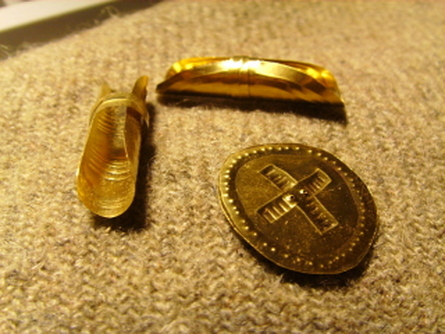
I will talk more about sun crosses soon. Just discovered something interesting related to this on Malta...For people who are wondering why I omitted Bell Beakers and their golden sun crosses...
Almost forgot this. Christ as the sun-god Helios/Sol, 3rd c. AD, Vatican. Christ is born on Winter Solstice, (re)birth day of the sun (god), he enters Jerusalem on a donkey, "animal of the (sun) gods and kings", and gets put on a cross, symbol of the sun (god). Interesting. I talked about this in my post "Alexamenos graffito"...


Finally, I promise 🙂 According to Slavic folklore, west is where the entrance to the other(under)world is. Why? Cause this is where sun enters the other(under)world. Hmmm...Did the "sun disc eye for the dead" dudes also have a notion of this?

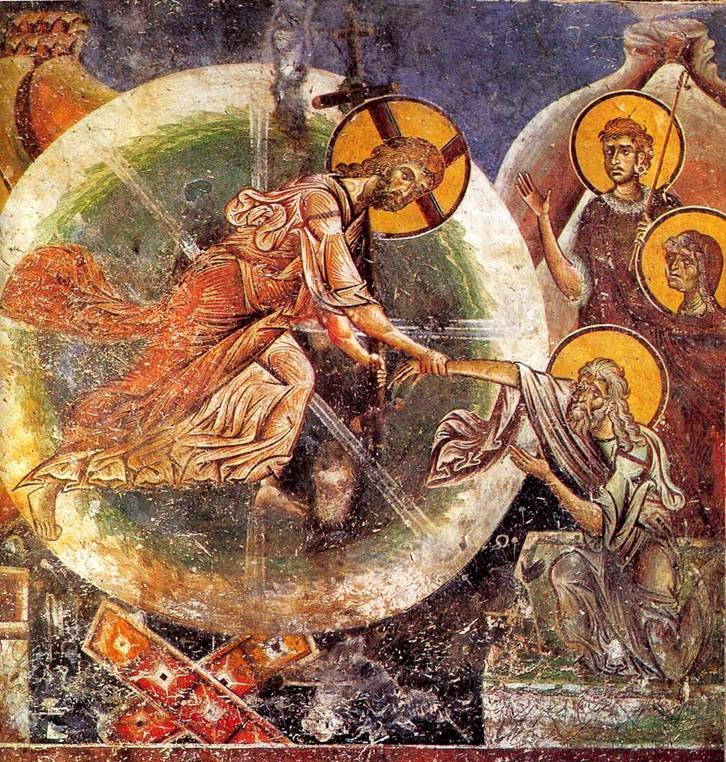
One of my favourite frescoes: Christ's descent into Hades, fresco from the 12th c. Church of St. George, Kurbinovo, Macedonia...Stunningly beautiful, it is also super unusual and interesting.

Article "Descending to Hades", about the Sun God as the ruler of the land of the dead.


Sunday, 19 November 2023

Alexamenos graffito

This is so the called "Alexamenos graffito". Carved sometime between the first and the third c. into a wall of the palace complex on the Palatine Hill in Rome, this is the earliest known pictorial representation of the crucifixion of Christ and his idolization.

It depicts a roughly drawn figure of a man with the head of an ass crucified on a cross. Next to the crucified figure is a smaller figure with one arm extended towards the former. Underneath the figures is a crudely written caption that reads "Alexamenos worshipping his God".

This graffito "mocks Christianity" which Romans "found foolish". Marcus Cornelius Fronto, a 2nd c. Roman orator, explains why: "Christians worship a crucified man, and even the instrument itself of his punishment. They are even said to worship the head of an ass..."

Interestingly, 3rd c. Christian author Tertullian mentions a peculiar anecdote that occurred in Carthage, where he saw an apostate Jew carry around a picture of man dressed in toga but with the head of an ass and hooves for legs.

Rather than feeling insulted, Tertullian was amused at the joke and wrote that "we laughed at both the label and the image". And then he said "Our god is the head of an ass,” he wrote, "but you (Non Christian Romans) in fact worship the ass in its entirety, not just the head" (?)

Apparently, the reference to donkey-worship comes from a story recounted by the Roman historian Tacitus, in which a group of Jews, expelled from Egypt, wandered through the desert, exhausted and dying of thirst, until they were led to water by a herd of wild asses.

In turn, the Jews started worshipping the animal that saved them, and a "god with the head of an ass" - a notion that was apparently also carried over to Christians. Hence Alexamenos graffito" with a crucified god with ass head...

Very very interesting...Didn't know about any of this...But I am not surprised at all...Remember this article about the origin of the Hanukah (Winter Solstice) celebration? And the link between Yahweh and Shamash, the old Semitic (Akkadian) sun god...I talked about this in my post "The tree of lite/life"...

Shamash who rode on a quadriga pulled not by horses, but by "kungas", a specially bred hybrids between female domesticated donkey and a wild male Syrian wild ass...Basically fancy donkeys...I talked about this in my posts "Shamash playing with solar horse" and "Sun god from Tell Brak"...

Why was the Sun god riding on a quadriga pulled by donkeys/asses and not horses? Cause the beginning of the worship of Shamash (late 4th/early 3rd millennium BC) predates the domestication of horses...

Kungas were so highly regarded, that "they were deemed especially suitable for drawing the chariots of kings and gods"...

Kings and gods...Kings and gods...Why did Jesus have to ride into Jerusalem on a donkey/ass again? To prove what?

People say: He was't proving anything. He was fulfilling a scripture prophecy.

"Rejoice, O people of Zion! Shout in triumph, O people of Jerusalem! Look, your king is coming to you. He is righteous and victorious, yet he is humble, riding on a donkey" Zechariah 9:9

God/King riding on the favourite ride of the old Gods/Kings...

In a letter dated to 1775 BCE, Bahdi-Lim, governor under the Mari king Zimri-Lim, insists that the king should not ride horses in his capital, as it was considered uncivilized. Instead, he urges the king to honor his royal status by riding in a donkey-drawn wagon.

This is very interesting. By the time the Jews built First Temple and dedicated it to Jahweh, horses were domesticated and had replaced donkeys/asses as the vehicles of the Semitic sun god...

"He (Josiah) removed from the entrance of the LORD's Temple the horse statues that the former kings of Judah had dedicated to the sun... He also burned the chariots dedicated to the sun..." Is this the god of the First Temple? I talked about this in my post "Sun god from the first temple"...

But it seems that (some) Jews, thousands of years later, still remembered the old ways, and the link between their (sun) god and donkeys/asses...

BTW, the reason why the Semitic sun god Shamash was depicted riding in chariots pulled by equids, is because the old Mesopotamian summer, the sunny half of the year, the domain of the sun god, starts in Apr/May. 


Which is when the equids (donkeys and horses) start mating...

Basically, equids, donkeys and horses, were originally animal calendar markers for the hot/dry half of the year. Animal calendar markers which were later deified and turned into sun gods riding on chariots pulled by equids...

Or sun gods with equid heads...Just like...

Once Lord Vishnu’s head was cut off accidentally by other gods. The head turned out to be the Sun. The gods then attached a horse head to Vishnu's body, which is how he assumed his Hayagriva form. 

I talked about solar horse animal calendar marker in Indian mythology in my post "Hayagriva"... 

So no wonder Tertullian didn't find it funny that the Romans depicted his god with a donkey head, and that instead he found it funny that the Romans thought this was funny...

The Jews who were saved from dying from thirst in a desert (domain of the sun god) by the wild asses (holy animals of the sun god) definitely thought that it was their (sun) god who personally intervened to save them...

And it seems that early Christians were aware of this link between their (sun) god and donkeys. The link which predates the link between the sun god(s), like Surya, Helios, Sol Invictus...and horses by almost a millennium...

So back to "Alexamenos graffito"...Knowing all this, what was Christ with donkey/ass head mockery of the Christian belief, or just a symbolic depiction of the true nature of Christ/Sun, the way early Christians might have seen it?

You live and learn...

Ahhhh I completely forgot to mention that cross is an ancient Mesopotamian symbol of the sun (god)...I talked about this in my post "The cross of Shamash"...


That's it. To read more about ancient animal and plant calendar markers, start here…then check the rest of the blog posts related to animal calendar markers I still didn't add to this page, and finally check my twitter threads I still didn't convert to blog post...I am 9 months behind now...