About black and white ravens, and the final proof that Apollo was just another name for Nergal. Which I first proposed in my post "Palil"...
480-460BC cylix showing Apollo with lyre, pouring a libation and attended by a black crow or raven, Delphi Archaeological Museum.
First, this is definitely a raven, not a crow. Why? Because of this: Black crows don't live in Mediterranean. Distribution map of the Corvus species from this article: (area shading: light-grey=hooded, grey=collared, dark-grey=all-black)
Here we go: In Greek mythology, Coronis was a mortal lover of the god Apollo and the mother of Asclepius, the Greek god of medicine. While she was pregnant, she slept with Ischys, a mortal man and was subsequently killed by either Apollo or his sister Artemis for her betrayal...
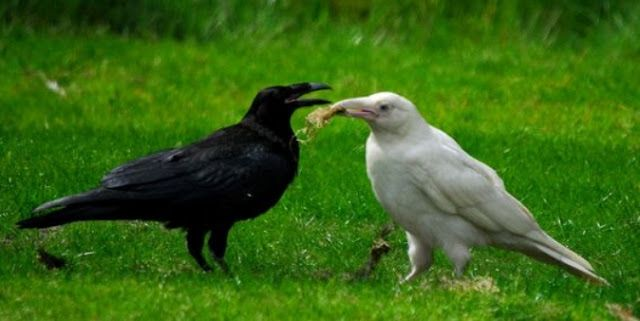
Now according to Ovid, Apollo had appointed a "white raven" to guard pregnant Coronis while he was away. After finding out that Coronis slept with Ischys, the white raven reported it to Apollo. Apollo, enraged, picked up his bow and stroke Coronis with an arrow...
As she lay dying, Coronis told Apollo that she was pregnant with his child. Apollo, filled with remorse, tried to revive his lover, whose funeral pyre was already built, but failed. Apollo then rescued the unborn baby from the body of Coronis by performing a cesarian section...
Apollo then vented his anger on the raven:
"Then to him he called the silly raven, high in hopes of large requital due for all his words; but, angry with his meddling ways, the God turned the white feathers of that bird to black..."
This is why the ravens are black today...🙂
A very strange story indeed. And it gets stranger even. According to Antoninus Liberalis, the raven had once been a man named Lycius a son of Clinis. Clinis was a native of Babylon "and a great worshiper or Apollo". In Babylon?
Anyway, Clinis venerated Apollo so much, that Apollo once took him to the land of the Hyperboreans, where he visited the shrine of the Hyperborean Apollo, and saw Hyperboreans "sacrificing donkeys to Apollo"...
When Clinis returned home, he decided that from now on, he should too honour Apollo by sacrificing donkeys to him, just like the Hyperboreans did. But Apollo forbade Clinis to do this, because donkeys could only be sacrificed to him by Hyperboreans...
Clinis of course adhered to Apollo's order, but his sons decided to go ahead and sacrifice donkeys to Apollo anyway. But as they brought the animals to the altar, "Apollo struck the animals with madness, which caused them to attack and devour Clinis and his family"...Eeee what???
Anyway, eventually Clinis, his wife and four children were all transformed into birds, with Lycius being turned into a white raven (which became black after the incident with Coronis)...
What a weird weird story. First, Apollo being venerated in Babylon? That must have been some other local Mesopotamian god, equivalent to Apollo. But which one? Well, the local sun god, Shamash ofcourse. This dude:
Most likely Sun God Shamash riding on a quadriga pulled by "kungas", donkey hybrids so highly regarded, that "they were the preferred draught animal for drawing the chariots of kings and gods"...3rd mill BC cylinder seal imprint found in Tell Brak, Syria. I talked about this in my post "Sun god from Tell Brak"...
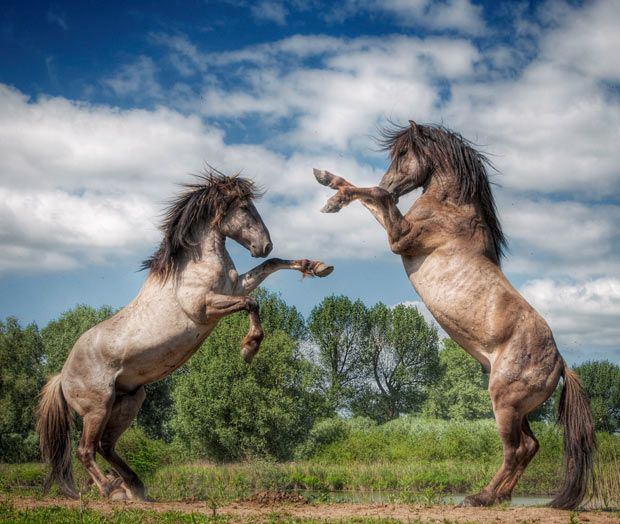
As you can see Shamash rides on the quadriga pulled by donkeys, which are solar animals, just like horses. This is because the mating seasons of wild horses and donkeys are directly linked with the amount of sunlight and peak on Summer solstice.
Hence
(White) Horse is one of the most widespread solar symbols. Celtic solar horse coin.
Articles about solar horse (equid):
Iran "Water carrier equid", "Dioscuri plate from Iran"
Mesopotamia "Shamash playing with the solar horse", "Sun god from Tell Brak"
India "Hayagriva"
China "Longma", "Three legged crow", "Mythical beast from Xian"
Levant "Alexamenos graffito", "Goddess on a horse", "Unicorn"
Europe "Archaic rider", "Beotian solar pyxis", "Pegasus and chimera", "King John", "The horseman"
The knowledge of the link between Sun god and horses was preserved until Christian times. Christ as the sun-god Helios/Sol/Apollo, 3rd c. AD, Vatican.
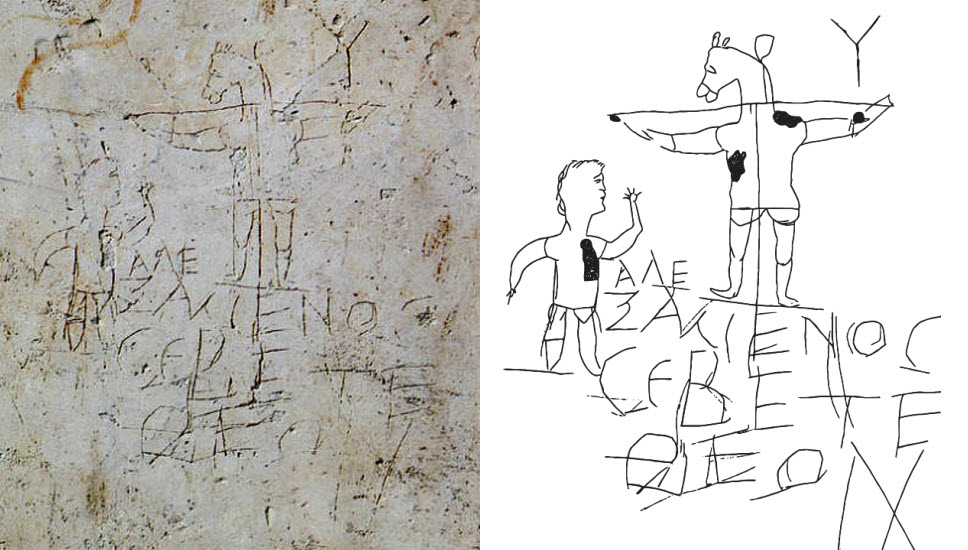
The knowledge of the link between Sun god and donkeys was also preserved until Christian times...
Early Christian "Alexamenos graffito", Rome. From my post "Alexamenos graffito"...
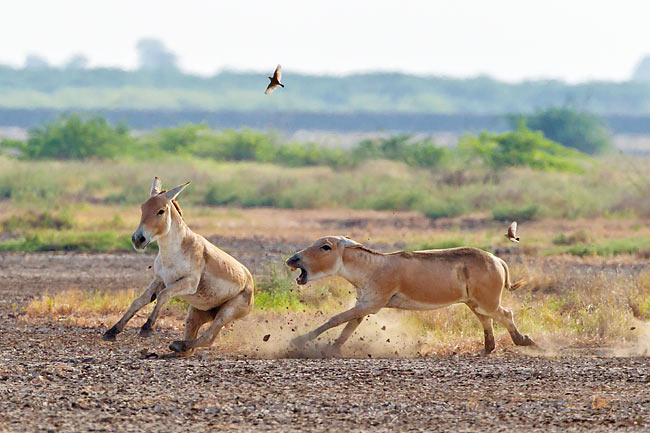
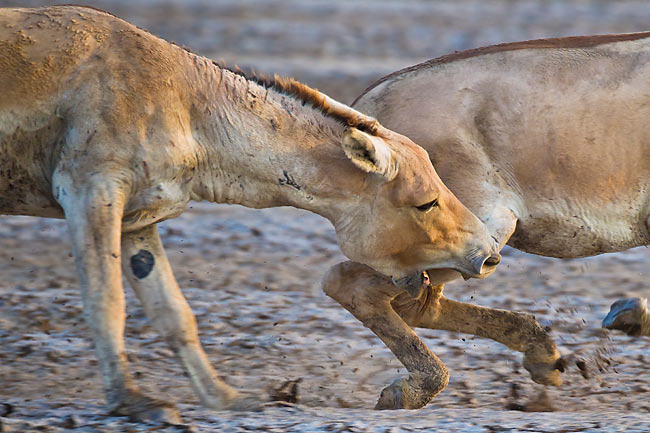
Christ is born on Winter Solstice, (re)birth day of the sun (god), he enters Jerusalem on a donkey, "animal of the (sun) gods and kings", and gets put on a cross, symbol of the sun (god)...Interesting...And what is this weirdness about "Apollo struck the donkeys with madness, which caused them to attack and devour Clinis and his family"? Donkey mating season, marked by violent fights and "biting", starts in Apr/May, beginning of summer, the part of the year ruled by Sun god...
BTW, I don't know if donkeys were ever sacrificed to Apollo by anyone in Hyperborea 🙂, but in my post "Onager" I already talked about the link between Apollo and donkeys. The post analyses the story "How King Midas got to have donkey's ears". It goes like this: Pan and Apollo have a musical competition. Tmolus, god of the mountain of the same name located in Lydia, Anatolia, judged the competition...
So...Where are you going with this, I can hear you ask?
Here: In ancient Greece, a "white raven" is a proverbial expression about things that did not exist. Yet we have this weird story about Apollo and his white raven which is then turned into a black...Linked to Mesopotamia...
I thought that I was the only one equating Apollo and Nergal, but it turns out Martin Schwartz suspected that this could have been so too. In this paper, "Apollo and Khshathrapati, the Median Nergal, at Xanthos", he equates Apollo with Nergal based on the fact that both were called "Lord of the great city"...
This is the title which Shamash/Nergal had as the god of the dead...
And then Martin Schwartz goes to say that "...both Apollo and Nergal are represented by ravens, palm trees, snakes, and lions..."
Interesting. Very interesting...
I wrote several articles and twitter threads trying to prove that Apollo is actually Nergal. I discuss why both Apollo and Nergal were linked to lions in my post "Lions of Delos" which also contains links to articles which talk about their link to flies (disease)...
The 7 remaining "Lions of Delos", a group of (possibly) 12 (I would say definitely 12, one for every month of the solar year) lion statues which once lined the monumental avenue, similar to Egyptian avenues of sphinxes, in the 600 BC Temple of Apollo...
Nergal is a personification of the burning, destructive sun of Jul/Aug, the hottest, driest time of the year in the northern hemisphere.
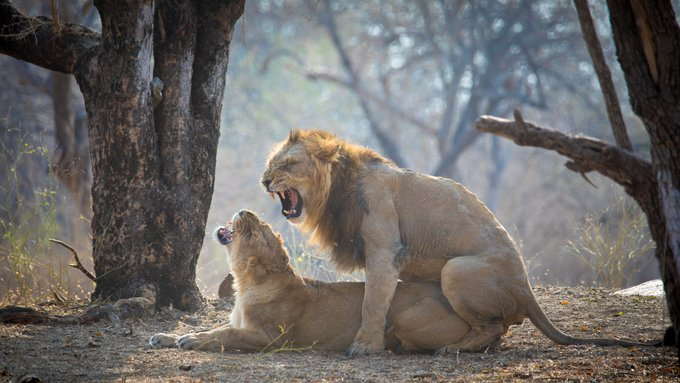
This is the time of the year when Eurasian lions used to start their main mating season.
Which is whey Jul/Aug is marked by an animal calendar marker Lion, Leo...
Which is why Nergal was depicted as a Lion-Man. I talked about this in my post "Winged superhuman hero"...
BTW, Eurasian lions mating season which started in Jul/Aug, spanned the whole of Autumn (Aug/Sep/Oct)...Which is why autumn starts in Leo (Jul/Aug). And why lion is the symbol of autumn...I talked about this in my post "Symbols of the seasons"...
Snake is a symbol of sun's heat. I talked about this link between sun gods and snakes in my post "Nude winged hero dominating snakes" about this 3rd millennium BC, Bactrian seal depicting the sun god (see heat rays emanating from his shoulders, the same ones that identify Mesopotamian sun god Utu/Shamash) holding snakes, symbols of sun's heat...
Sun's heat which peaks in Jul/Aug, Leo...Which is why in Mesopotamia, where summer lasted seven (hot) months, the local dragon (dragon = symbol of summer), had seven snake heads (snake = symbols of sun's heat)...Oh, and look, we also have dragon killer(s) and the princess 🙂 I talked about this in my post "Seven headed dragon"...
BTW, the chthonic aspect of the sun gods and snakes comes from this:
Snake is a pure solar animal. It is in our world when sun is here (day, hot half of the year) and it is in the underworld when sun is there (night, cold half of the year)...
I talked about it in these posts "The chthonic animal", "Enemy of the sun", "Letnitsa treasure", "Kassandra"...
What about palm trees?
Jul/Aug is date harvesting season in Iraq.
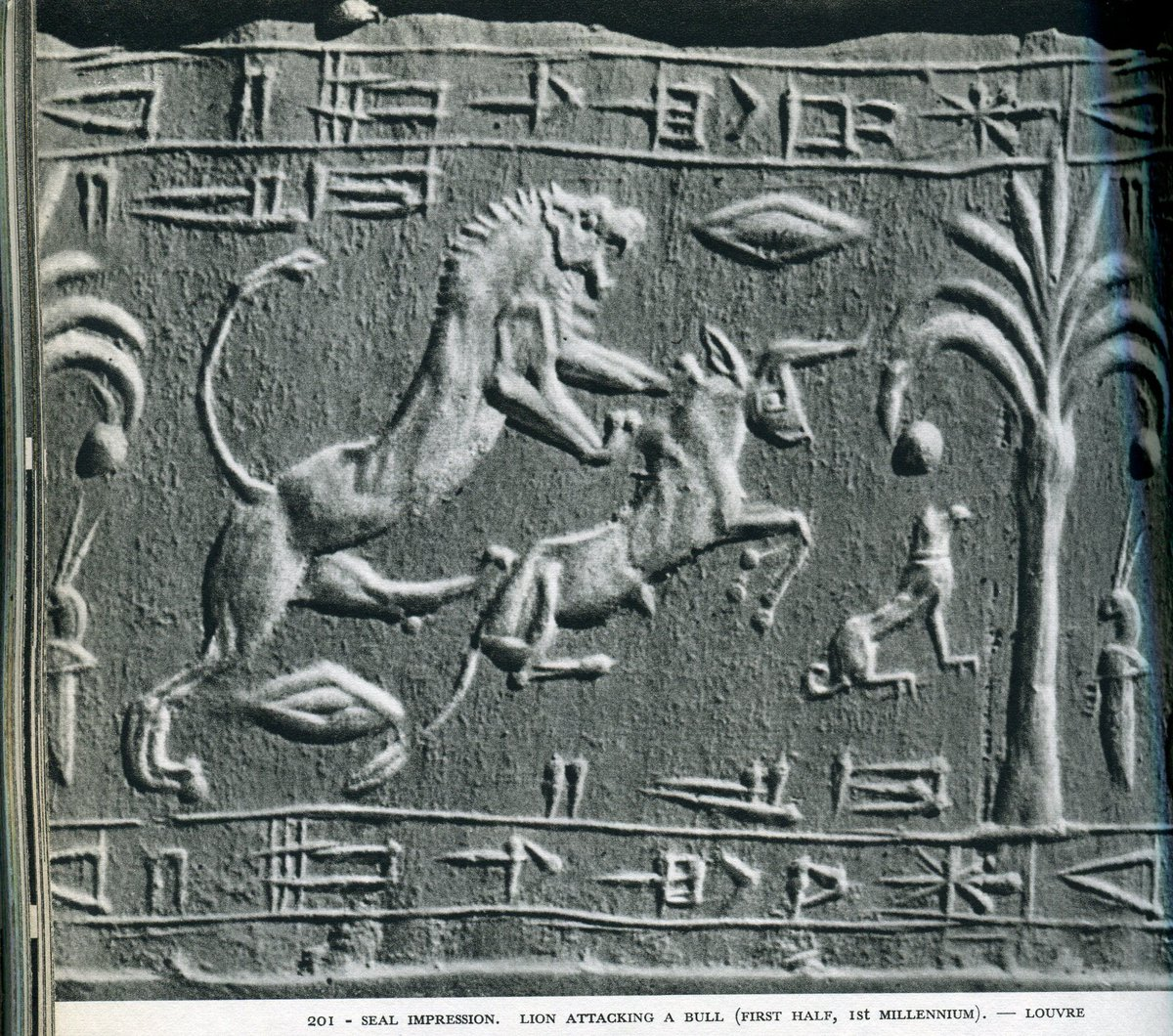
Hence on this seal we see Lion (Autumn, starts in Leo, Jul/Aug) killing (ending) Bull (Summer, starts in Taurus, Apr/May). In dog days. Under a palm tree. I talked about it in my post "Lion killing bull under a palm tree"...
All the animal and plants associated with Nergal and Apollo are calendar markers pointing at the same time of the year, the middle of the hot, dry half of the year in Mesopotamia, the hottest and driest time of the year, Jul/Aug. The seat of Nergal.
Except ravens...
I fell into this rabbit hole while I was researching the post "Care of the dead" about Sumerian festivals of the dead, which I talked about the ancestral worship in Mesopotamia.
Two Assyrian soldiers forcing Elamite captive to grind bones of his family, 7th - 6th c. BC. This wasn't like most people think an act of random cruelty...Making someone destroy the bones of their ancestors was a deliberate forced act of sacrilege...
I was rereading the part of this article Babylonian menologies which talks about the month of Abu, Jul/Aug, the month of fires, the month ruled by Nergal, I came across this:
"The constellation Corvus which rose in this month at 3000 BC. was identified with Nergal, god of the burning Jul/Aug sun"...
I told you many times that the constellation names were derived from much older animal calendar markers...
If a particular group of stars rose with the sun "when wild cows start to calve" it became Bull Calf, Taurus.
If a particular group of stars rose with the sun "when lions start to mate" it became Lion, Leo...
But there is nothing which links crows or ravens with Jul/Aug. They nest very early, in spring and are finished nesting by the time summer starts.
Was this the first failure of my Animal Calendar Marker theory? Why was Corvus linked to Nergal, the destructive sun in Jul/Aug???
And then I though, what if originally Corvus wasn't Corvus at all? What if the bird of Nergal originally wasn't a raven at all? So I started looking around, and sure enough:
"The term buru₄[mušen] (buru₄ [bird]) was a Sumerian term for a type of bird. From the Ur III period onwards it was a term for a raven/crow. The meaning of early attestations of buru₄[mušen] remains uncertain but is believed to refer to a bird of prey or perhaps a vulture"...
So corvus constellation that rose with the burning sun in Jul/Aug wasn't crow/raven constellation at all. It was a vulture constellation. Very very interesting. So I checked which vultures nest in Mesopotamia during the summer months...And what I found is indeed astonishing...
But before I reveal what I discovered, let me introduce you to two charming gentlemen: Lugalirra and Meslamtaea, "who were both closely associated with Nergal, and could be either regarded as members of his court or equated with him"...
These two dudes "typically appear together in cuneiform texts and could be described as the "divine twins", and were linked to Gemini constellation. They were regarded as protectors of doors, "possibly due to their role as the gatekeepers of the underworld"...
Hmmm...Twins guarding doors (of the underworld)? Very interesting, knowing that right after the summer solstice, we enter the hottest time of the year, Jul/Aug, the domain of Nergal, the god of the underworld...
So far so cool. But the most interesting thing about these two, is that apparently there is a hymn, which refers to "the gatekeepers of the doors of the court of Nergal", Lugalirra and Meslamtaea as a pair of ravens, respectively black and white. And no one knows why...
Now I think I have just uncovered why. Remember I told you I found which vulture could be the original buru₄[mušen]. It's Egyptian vulture. The bird which as an adult is white, but whose juvenile birds are black...
The Egyptian Vultures are breeding summer visitors in Iraq. The eggs are laid in Mar/Apr/May. They are incubated for a period of 39-45 days (Apr/May/Jun). The chicks fledge (leave the nest) 70 to 85 days after hatching (Jul/Aug/Sep).
So we have vulture which is white in Apr/May, start of summer, peak of the flood (does Meslamta-ea has anything to do with Ea, god of the flood?), and is black, in Jul/Aug, end of summer, peak of heat (does Lugal-irra have anything to do with Erra, another name for Nergal?)...
It is the black (fledgling) Egyptian vultures that leave their nests (fly into the sky), at the same time when the "buru₄[mušen]" constellation rose with the destructive sun, Nergal, in Jul/Aug, in the 3rd mill. BC, at the time when these constellations were first dreamt of...
And, the summer solstice, the "gate" (of hell in Mesopotamia) sits right in the middle of summer, between the white vultures (Apr/May, flood) and black vultures (Jul/Aug, drought)...
Wow...So...We now know what this crazy story about white ravens turning into black ravens by (most feared) Apollo (another face of the destructive sun god, Nergal) was all about. It wasn't about ravens at all...
Now that we know which bird buru₄[mušen] originally was, this helps us also decipher the story about three birds from the Gilgamesh flood myth.
This is the part where:
...after seven days of flood, Utnapishtim
released a dove that flew away but came back to him.
released a swallow, but it also came back to him.
released a raven that did not come back to the boat indicating that the flood was over...
Now I told you that this flood story is just a depiction of an annual Tigris and Euphrates flood, not some "Biblical" flood of extraordinary proportions. The water starts rising every year in Jan/Feb and subsides by Jul/Aug. That's 7 months.
The flood peaks in Apr/May when doves, swallows and Egyptian vultures all start to nest.
Doves fledge after c. 35 days.
Swallows fledge after c. 40 days.
Too early (May/Jun), waters still high.
buru₄[mušen] first vultures, later ravens, fledge after c. 120 days.
Flood is over...
Again, I am bemused by the fact that no one saw these links before...
Soooo...What do you think?
I'll finish this post with the lyrics from "Kill the great raven" by Snakefinger and Residents, which also suddenly make a lot more sense. To me at least. You can listen to the song here...
That's it. To read more about ancient animal and plant calendar markers, start here…Then check my twitter threads I still didn't convert to blog post...I am way way behind...