Showing posts with label Buddhism. Show all posts

Thursday, 24 April 2025

Pretas

In Buddhism, Pretas, the "Hungry ghosts" are pitiable creatures with huge, empty stomachs which suffer constant hunger...

Buddhists believe that beings are reborn as hungry ghosts because of their greed, envy, addiction, obsession, and compulsion and jealousy...

And yet, in the summer there are hungry ghost festivals throughout Asia that feature food and entertainment for the hungry ghosts...

The origin of Buddhist "hungry ghosts" is in Hinduism, where originally Preta was understood as the ghost of any deceased individual. The Sanskrit word "preta" (प्रेत) literally means "departed, deceased, a dead person" derived from "pra-ita" meaning "gone forth, departed"...

Today, the dead are burned and the food is given to them "for a year, until they reincarnate"...But I wonder if this belief about the hungry dead originates from the time before Hindus started to be burn their dead and before Hindus started believing in reincarnation?

Here is why.  Today the Hindu families ritually feed the deceased "whose spirit is often symbolised by a clay mound somewhere in the house"...Why? Is this a remnant of the memory of the the time when the dead were buried under the mounds of clay (earth), under tumuli?

Is it possible that this belief and ritual came to India from the steppe with the Indo-Europeans? Who did bury their dead under the tumuli. And is it possible that these are actually remnants of the ancient Ancestor Cult?

The same ancestral cult featuring ever hungry and thirsty ancestors found among the Slavs for instance? I talked about this in many of my posts, like "Soul breads", "Dead man loaf" and , in which I talked about the breads made for the hungry dead...
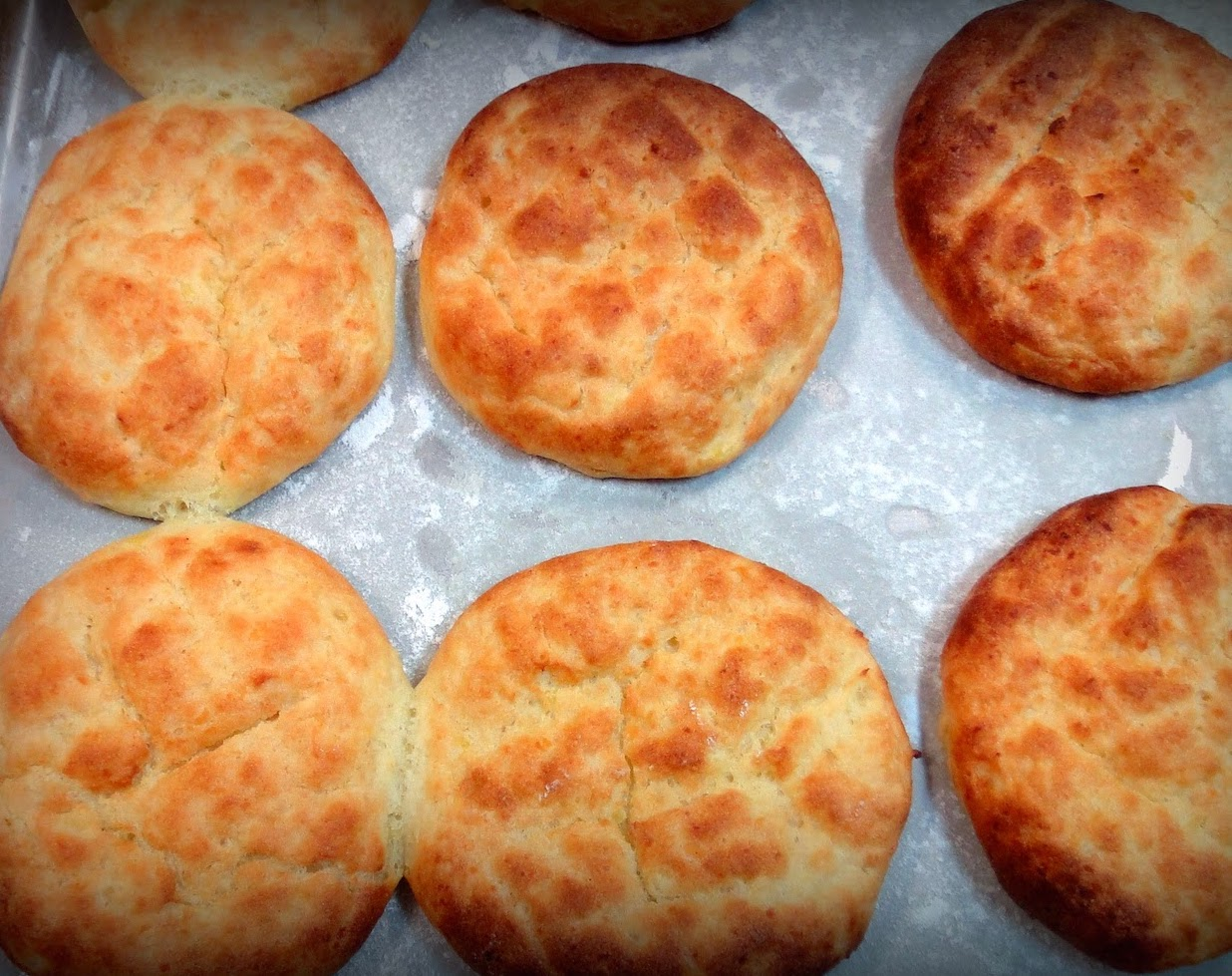
It is interesting that Hindus feed their "hungry dead" rice balls, "which are said to symbolise the body of the deceased"...Just like in the Slavic ancestor cult where ancestors are believed to be the source of grain. 

I talked about this in my post "Diduch", about Diduch (grandfather), symbolic representation of the the dead ancestors who govern the lives of the living... 

Romans too saw direct link between the dead and the grain. I talked about this in my article "Lapis Manalis", about the sacred water stone which covered the entrance into the underworld/grain storage pit...

BTW, while I was looking for a suitable illustration for "lapis manalis" (we don't know what it actually looked like), the sacred stone used as part of a Roman "aquaelicium" (calling of the waters), rain making ceremony performed during droughts, I suddenly realised what cup and ring marks look like...

We find the same link between the dead, the god of the dead, Osiris and grain in Egyptian religion too. I talked about this in these articles where I talk about why Egyptians believed that grain grows from the body of Osiris...I talked about this in my post "The beard of Osiris" and "Braided beard"...
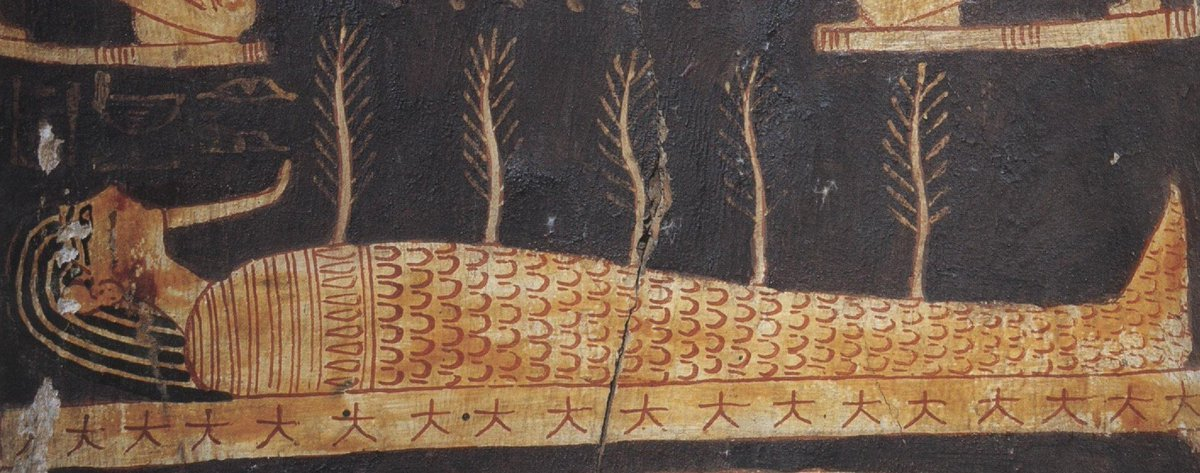

It is this life giving power of the dead, which Pluto (Hades), the giver of wealth, appropriated for himself. And this is why Hades and Persephone are depicted sitting on their throne in the land of the dead, with sheafs of wheat and flowers...I talked about this in my post "Pluto"...

In the Mesopotamian and Hittite ancestor cult, we also find hangry and thirsty ancestors who are also linked to rain and grain. Talked about this in my article "Care of the dead" about the care of the dead in Mesopotamia and Anatolia...

"...humiliation of the Hittite kingdom is the result of the fact that the Hittites have forgotten to respect the sacred bond with their dead..." - Last Hittite king Suppiluliuma II.

Statue of Suppiluliuma II, Hatay Archeology Museum

The last thing that I will say about the "hungry ghosts" is that in China the hungry ghost festival is held on the 15th day of the 7th lunar month which corresponds to Jul/Aug in Gregorian calendar...

During the festivals, people give food to the hungry ghosts and hope for blessings from their ancestors in return...This is the old contract between the dead and the living. The living feed the dead so that the dead will feed the living...The contract the Hittites broke...

The Chinese seventh lunar month, is actually known as the "Ghost Month" or "Hungry Ghost Month," and is believed to be a time of the year when the gates of the underworld open, allowing spirits to roam the earth...

Very interesting, considering that in Mesopotamia, July, or month of Ab, was dedicated to the dead and the dead god, Tammuz, who died and went to the underworld...You can read more about this here...

The rituals of this month, consisted in eating bread in the funeral feasts for the dead god of life, who now reposed in hell, and in carrying torches by night for the souls of the dead who during this month ascended from the underworld to the world of the living...

Interesting, right?


Thursday, 11 November 2021

Samantabhadra

Let me introduce you to Samantabhadra, a bodhisattva associated with practice and meditation...Apparently a very important dude in Buddhism, whom I only met today for the first time... 

Let's have a look at the symbols associated with Samantabhadra...

He is holding a lotus flower (symbol of infinite wisdom) and Lotus sutra (all you need to know about infinite wisdom), while siting on a white elephant (symbol of Buddhist practice, as well as purity), which is in turn standing on lotus flowers (lots more infinite wisdom)...

Together with Gautama Buddha and the bodhisattva Manjushri, bodhisattva Samantabhadra forms the Shakyamuni Triad in Mahayana Buddhism...


As I said, a very important dude...

Did you see the white fluffy stuff behind the Buddha gang? That's clouds...Here is another depiction where our three Mahayana amigos are actually standing on clouds...


I don't know what white fluffy clouds symbolise in 10 worlds of Buddhism, but in real world they mean rain...This is kind of important...Cause all the symbols associated with Samantabhadra's best mate, Manjushri, are calendar markers for monsoon season. I talked about this in my post "Manjushri"...


So what about Samantabhadra's symbols? He rides on a white elephant...Guess who else rides on a white elephant? Indra, the thunder and rain god...Why? Cause Indian elephants mate during Indian monsoon season...I talked about this in my post "Musth"...


Which is why in India, elephant is an animal calendar marker for monsoon season...Which eventually became deified as Ganesha...I talked about this in my post "Ganesha"...

As I already explained in my post about Manjushri, lotus blooms during peak monsoon season...

So both Samantabhadra's main symbols point to Jul/Aug, Indian monsoon season...Just like the Manjushri's symbols...

Cool right? It gets cooler...

Question: If both of Buddha's companions are symbols for the hottest and wettest part of the year in India, Monsoon season, what (or who) is Buddha symbol for?

In Tibetan Buddhism, Samantabhadra is also a name that refers to the Primordial Buddha (Adi-Buddha) also known as Vajradhara...

Vajradhāra, which means the giver of lightning, is also, the name of Indra, the thunder and rain god...Buddhists will of course tell you that  Primordial Buddha is blue cause "wisdom"...But maybe, he's blue cause "rain water"???

One other thing...Samantabhadra, the Primordial Buddha, is most often depicted having sex with his consort, Samantabhadri the Primordial Mother Buddha...This is called Yab-Yum, (Tibetan: "father-mother")...


How have a look at this: This is Ardhanarishvara, a composite form, a union, of the Hindu deities Shiva and Parvati. I talked about this in my post "Ardhanarishvara"... 

Ardhanarishvara, the union of Shia and Parvati, is depicted standing in front of a green tree, between Shiva's vehicle (bull) and Parvati's vehicle (lion, well it's supposed to be a lion anyway)...

Did I mention that bull is the animal calendar marker for summer (May,Jun,Jul) which starts in Taurus (Apr/May), the animal calendar marker for the beginning of the calving season of wild Eurasian cattle?

Also, did I mention that lion is the animal calendar marker for autumn (Aug,Sep,Oct) which starts in Leo (Jul/Aug), the animal calendar marker for the beginning of the mating season of Eurasian lions?

And did I mention that at the point between bull (summer) and lion (autumn), in Jul/Aug, is the peak monsoon season in India? Which supports the "Tree of life"...

BTW, that is the river Ganges pouring out of their union...Well, technically Ganges is pouring our of Shiva's forehead...

This is Ganga river water flow chart


And this is the local climate chart


The Ganga water flow starts rising in Jun, at the beginning of the wet season, in mid summer, the middle of the bull season, the middle of the season of Shiva, Shiva's forehead...The Ganga water levels peak during the peak monsoon...

Oh yeah, guess who is the son of Shiva (bull) and Parvat (lion)? Well, Ganesha (elephant) of course...

Sooo, I will leave you here to ponder the true essence of the Primordial Buddha...Have fun...I have to go and make dinner...

More about animal calendar markers found in ancient cultures, start here then check the rest of the blog posts I still didn't add to this page...Too lazy to do it, sorry...

PS: while we are talking about animal calendar markers for Jul/Aug in India, you definitely need to see this post about "The bitch of the gods"...

Friday, 17 July 2020

Yellow leaf


Until 10 years ago, I used to train martial arts. Quite seriously. I was quite good actually...Then my knees started giving me problems...Anyway...I still do it a bit today. For a laugh...And health... 🙂 As part of that training I studied Taoist and Buddhist philosophy and meditation...I was of course searching for enlightenment, the mind of no mind, the empty place where we become one with the divine...Immortality? I think that was mentioned few times too... I fully expected an earth-shuttering experience, after which nothing will ever be the same...Something like matrix falling off and me (or more like "not me" 🙂 ) standing there and realising "I was god"...Or some shit like that...
Then one day I was watching a documentary about some old Buddhist Kung Fu master who was considered to be enlightened... And so after showing off his fighting skills, which were amazing, the interviewer asked him: So you have attained enlightenment. What does that look like? And the old man giggled and said: (He he he) Before enlightenment - eat, shit, sleep. After enlightenment - eat, shit, sleep. But in an enlightened way. (He he he)... I was staring at the screen feeling almost offended 🙂 Here I was, doing my Kung Fu (which by the way means Hard Work), reaching for the ultimate human experience, and this old fool was making a mockery out of it...
Anyway, time passed. One January, my wife gave birth to our son. More time passed... 10 months later, one autumn afternoon, I took him to the local park for a walk in one of those prams where babies are sitting facing you, so you can keep an eye on them and they can keep an eye on you. And you can talk...Which we weren't, as we still couldn't understand each other... And then, without warning, a giant, golden yellow maple leaf fell from the tree into my 10 months old son's laps...His eyes widened as he stared at the leaf with complete amazement, as this was the first yellow leaf he has ever seen. And then he said: "wow"... And I got enlightened... I finally understood what "To become childlike", which was often mentioned in the ancient texts, actually meant. It meant "To be able to see the world as if you are seeing it for the first time. In all its glory. Huge. Mysterious. Magical." My little Buddha (The Awaken one), who by the way never slept as a baby because being awake was sooooo interesting, said one "wow" and that was enough to open my eyes and wake me up, after 40 years of being asleep and 15 years of studying martial arts and meditation... My baby son made me see how amazing not just that yellow leaf was, but how amazing my son was, my wife was, the park was, the world was, "now" was, I was... Since then I have been trying to stay awake here and now. Which wasn't always easy, as my brain was constantly trying to drag me into very important "future" and "past" that I had to think about instead of being in the present... But, I have to say, that for the most time, I have been eating, shitting and sleeping "in an enlightened way"... 🙂


Friday, 8 November 2019

All of Vedas


The syllable Om is first mentioned in the Upanishads, a part of the Vedas, ancient Sanskrit texts that contain some of the central philosophical concepts and ideas of Hinduism.

The concepts of Brahman (ultimate reality) and Ātman (soul, self) are central ideas of the Upanishads, and "know that you are the Ātman" is their thematic focus.

The Upanishads are commonly referred to as Vedānta. Vedanta has been interpreted as the "last chapters, parts of the Veda" and alternatively as "object, the highest purpose of the Veda".

The syllable Om has variously been associated with concepts of "cosmic sound" or "mystical syllable" or "affirmation to something divine", or as symbolism for abstract spiritual concepts in the Upanishads.

In the Aranyaka and the Brahmana layers of Vedic texts, the syllable is so widespread and linked to knowledge, that it stands for the "whole of Veda" (all there is to know).

The Brahmana layer of Vedic texts offers various shades of meaning to Om, such as it being that which is "mysterious and inexhaustible", or "the infinite language, the infinite knowledge", or "essence of breath, life, everything that exists", or that "with which one is liberated".

Vedic scholars state that Upanishads recommend Om syllable as a "tool for meditation". They say that the Om syllable may appear in the mind of the meditator as "highest concepts such as the cause of the Universe, essence of life, Brahman, Atman, and Self-knowledge".

Now this is very interesting.

In my article "Vowels" I talk about natural meaning associated with pure vowels "A, O, U, E, I" in Serbian language.

Here is the relevant bit:

I will finish with OM - the sacred sound of Vedas.

In Serbian "Budi" means "Be, Exist". "Budan" means awake.  Buda was the awaken one, he was Budan (awake).

Buda claimed that "being awake" was "all knowledge"...

The holy sound of Vedas which is said to represent "the whole of Vedas", is OM, pronounced as "AUM"


I actually believe that this sound was originally AOUM but that O was lost first only for AU to be later replaced with O.

AOUM consists of these vowels: 

A - outside
O - surface of the body
U - inside of the body
M - core. 

M is one of the only two sounds that can be made with your mouth closed. And the only sound that produces the vibration of the whole central cavity, our core. This is why M is the core sound of words that mean me, my, myself (me, mene in Serbian), the words whose meaning is directed inwards. 

So the above mantra brings our focus from outside into our core, (m)ind by using emotional discharge through descending vowels. 

The word for mind in Serbian is UM. This word derives its meaning from U + M = inside + me = mind. This is probably the old "AOUM" shortened down to the absolute minimum number of sounds necessary to convey the intended meaning of internal me, real me....mind, UM.

This is kind of incredible, right?

AOUM, through its inner natural meaning encoded in its sound, conveys all the above Vedic teachings. 

It is "All of Vedas". 
It is "The meditation tool".
It leads us to "Brahman (The Creator, God, The ultimate reality), Atman (Soul which is part of the Ultimate Reality), and Self-knowledge (Realisation that I am Brahman, God)...

Interestingly the root "UM" meaning mind is found in Sumerian language as the root for words related to knowledge, intelligence, ability, respect...

To use the words from one of my favourite songs by Amy Winehouse, "Me and Mr. Jones": "What kind of fuckery is this?"


Friday, 23 December 2016

Budi

I give you this as my Christmas present. Read it and think about it. I hope it will make your life better and happier. 

These are stećak standing stones from The Balkans. They are found in Croatia, Bosnia, Montenegro and Serbia. 


And this is an an "alleged" inscription from one of stećak standing stones from Hercegovina. I have found it on the Wikipedia web page about medieval standing stones epitaphs. The reason why I said "alleged" is because I have no way of verifying whether it really is or isn't genuine medieval tombstone inscription. So all I can do is trust the source (for now) and then go and check it later.  

But the reason why I am writing this post is actually the content of the message. Here it is:

"Here I lie on my own noble land. My name is Vlk (Wolf) the son of Hum. Take what I am going to tell you, but don't trust me.  You are you and I am I so our truths don't have to be the same. When you are like me, take stock of your life just like I did. 

Don't hope that what is yet to come is going to last for ever, but also don't feel regret for what has passed. Most people have small knowledge and big expectations. They will therefore always accuse yesterday for what is going to happen to them tomorrow. You should love the moment you are in and the lips that kiss you. 

Later on your bones will, like mine now, peacefully sleep under a heavy stone. Don't knock down my tombstone, let it stand as it stands now. If you don't understand what I am telling you now, maybe some son of your son will understand me one day. 

I lied here on an accursed day in the year 1209."

Talking about Buddhist mindfulness...Be in now. That is all there is... 

The man lying under the stone was not a Buddhist. He was just "budan". In Serbian the word "budi" is an imperative of "to be". It is a command or a suggestion to live in now, to exist in the present. And the word "budan" means "awaken", the one who "is" here and now....

So the man whose epitaph "allegedly" this is, understood the big secret of now. But when did he get this understanding? On his death bed? Or was he lucky to gain this understanding earlier? Maybe this is a message, genuine or not, that is intended to wake us up before we reach that moment of no return and help us live the rest of our lives "awake", which is the only way to truly live...

If you don't understand what I mean, maybe you should read this book: "The power of now" by Eckhart Tolle. It is the best explanation of what mindfulness is I have ever come across. Maybe then you will understand. But if you don't, don't throw the book away. Give it to your children and maybe some child of your child will understand it one day...

And take what I just wrote in this post, but don't trust. See for yourself...


Here is the original in Serbian:

"A se lezim rad na svojini plemenitoj. Ime mi Vlk ot Humske zemje sin. Ono tsto tcu ti rejti ti privati al nejmoj mi vjerovati. Tij si ti, ja sam ja pa nam ni istine ne moraju biti iste. Kad budnes ko ja svedi svoj ratcun tko tsto svedoh ja svoj.

Ne najdaj se da tce biti vjetcno ono tsto tce tek dojti, al ni ne zali za onijem tsto je projslo. Vetcina ljudi ima malo znanje a velka otcekivanja. Oni tce zato uvijek optuzivati jutce za ono tsto tce im se dejsiti sijutra. Ti voli trenutak u tkome jesi i usne koje te jube.

Kasnje tce ti kostji ko sada moje mirno snivati ispod terzka kamena. Ne prevali mi biljega mojega, pusti ga da stoji kako stoji. Ako me ne razumijes sada ti mozda me razumjedne tvojega sina neki sin.

V proklet dan legoh v godini 1209."