Showing posts with label Bezoar symbolism. Show all posts

Sunday, 2 August 2020

A vessel from Tepe Hissar

Vessel from Tepe Hissar, a prehistoric site, continuously occupied between 5th to the 2nd millennium BC, Northeastern Iran. It depicts leopard and ibex (bezoar) goat


It seems that these two animals had a special significance for the people of Tepe Hissar...Here are two more bowls from the period 4500-4000 BC, one with Bezoar goats and one with leopards...


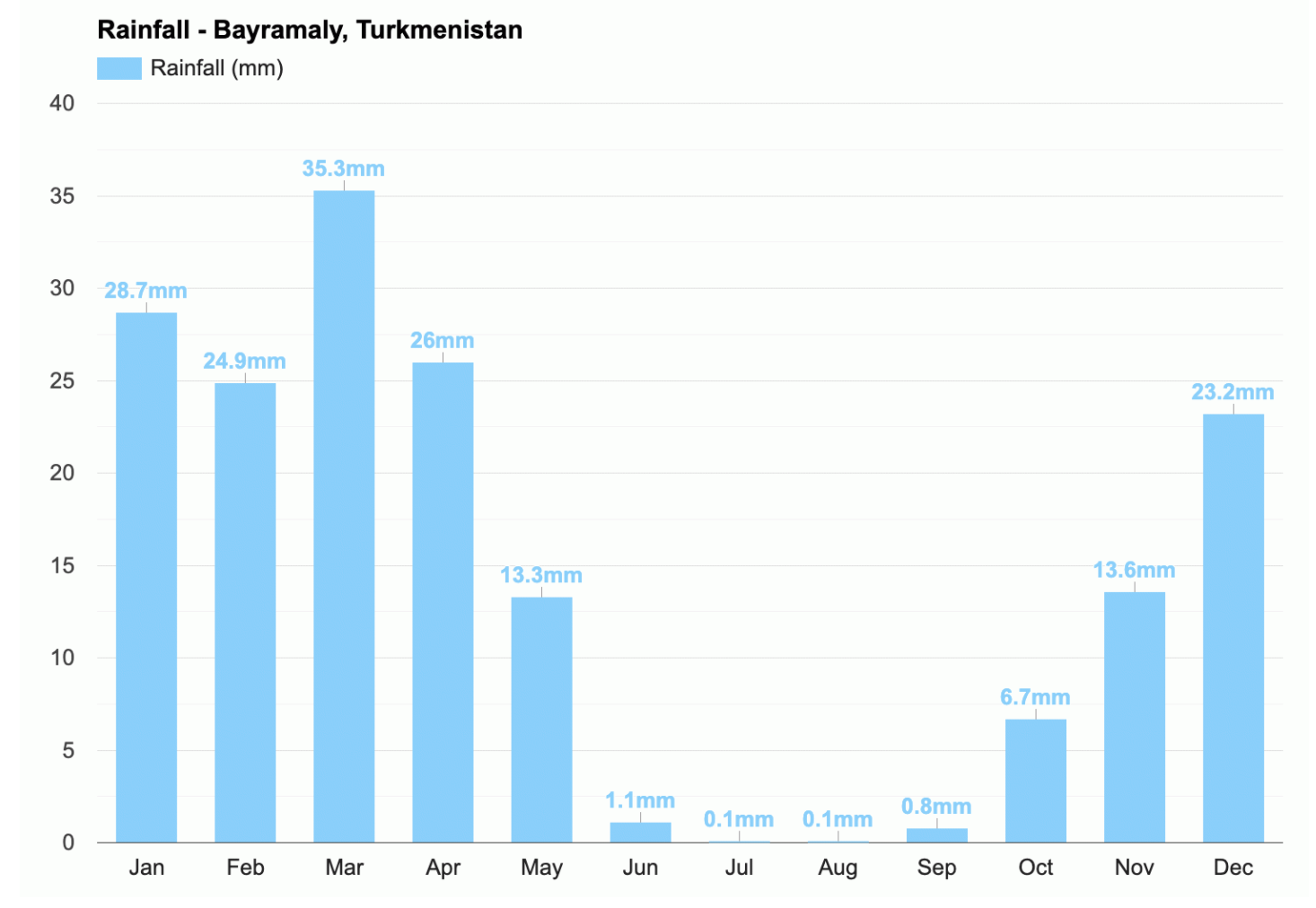
Bezoar and leopard were used in Western Asia, Mesopotamia and Central Asia as calendar markers for "rain season", because their mating seasons (Bezoar: Nov-Jan and Leopard: Jan-Mar) span the middle of the rain season (Oct-May). 

Look at the flowing water and plant depiction on the middle vessel above...

This is the temperature and rain chard from the area where Tepe Hissar is located


I talked about the same Leopard - Bezoar symbolism in Iraq in my post "Ibex and Leopard" 

But what I love about the original Tepe Hissar vase from this thread, is that this link between rain, water and mating of leopards and bezoars is actually depicted on the vase. Explicitly 🙂


One other very very interesting thing about the Tepe Hissar Bezoar depictions on many vessels (apart from giant erections or rivers of semen 🙂)  is the "thing" located inside of the goat's horns...


What is this? A flower? Or the Sun? Winter solstice falls in the middle of the Ibex-Bezoar mating season...I talked about this in my post "Goat"

That this is indeed most likely sun and not flower can be seen on this vessel shard from Tepe Hissar...


Ibex and Leopard


Do you want to buy this Sumerian cylinder seal from Late Uruk/Jemdet Nasr Period, Circa 3200-3000 BC?  Too late. Someone already payed 23,500 $ for it...

Anyway, I would like to talk about the meaning of the scene depicted on the seal...

Christie's describes the scene as "lioness attacking a goat on a rocky landscape...with a tree growing behind the lioness". Well it's actually a leopard attacking a Bezoar goat...You need to know your animals if you want to understand what the makers of this seal wanted to convey

The climate in Mesopotamia is divided into dry season (May-Oct) and wet season (Nov-May). It is the rain (and snow in the northern Mesopotamia and Armenian highlands) that falls during the wet season that makes life possible in Mesopotamia...


Bezoar goats mating season starts in Oct-Nov and ends in Jan-Feb...And because the beginning of the mating season of the Bezoar goats coincides with the beginning of the rain season, they were used as a solar calendar marker to mark this significant annual event...


Western Asian and Central Asian leopards mating season starts in Jan-Feb...The end of winter. The coldest, wettest and darkest part of the year in the Northern Hemisphere...Which is why Leopard is a symbol of dark part of the year and is opposed to lion which is the symbol of the light part of the year...


Because of the Eurasian lion's mating season which starts (or once started when these lions still lived in Europe and Western Asia) in August, the end of summer, the hottest, driest and brightest part of the year in the Northern Hemisphere...I talked about leopards in my article "Leopard and tiger" and I talked about lions in my article "Entemena vase"... 

So Leopard mating season starts at the end of the Bezoar goat's mating season...Leopard's mating season "follows" Bezoar's mating season...Hence Leopard "attacking" Bezoar goat from the back...

It is the rain season, which spans Bezoar mating season and Leopard mating season, that is the "green" season in Mesopotamia...The season represented by the "Tree of life" (or just a tree full of green leaves enjoying the rain, rain which is represented by balls lying in piles everywhere under the animals, a known way rain drops are represented on ancient seals)...

That's it. To read more about ancient animal and plant calendar markers, start here…Then check my twitter threads I still didn't convert to blog post...I am way way behind...

Friday, 24 July 2020

Fluffy

Few weeks ago I published an article about the solar snake symbolism found on 2000BC Bactrian seals...  In this article I will analyse some other Bactrian seals, whose symbolism is explainable through local climate and animal behaviour in that climatic area..

Bactria is the area located on the border between Turkmenistan, Tajikistan and Afghanistan...


The climatic year is divided into dry part (May-Oct,Nov) and wet part (Oct,Nov-May)...


Rain was the most important thing in the lives of farmers in Bactria...It turned desert into a garden...They must have been constantly on the lookout for  any sign that could announce its arrival, and anything that coincided with it soon got turned into a calendar marker...

Like for instance disappearance of snakes, which go under ground to escape incoming cold and wet weather...And the beginning of the mating season of the Goitered gazelle which starts in November, right when the rains arrive...


And so here is the first Bactrian seal for today: Mother earth flowering next to the flowing river. The snake is under ground and the Goitered gazelle is looking at the amazing effect of "the rain it has brought"...


One of the main animal calendar markers in the area between Eastern Mediterranean and Central Asia, is of course Ibex (Bezoar) goat...Which is why we find it on artefacts from Crete to Indus Valley. It's wild mating season starts in Oct-Nov and announces the arrival of winter...


In Bactria, the beginning of winter is also the beginning of the rain season...Winter - wet and cold - Bezoar is opposed to Summer - dry and hot - Snake...Snake is the symbol of sun's heat which "swallows all the water" which Bezoar goat brings to Bactria...Hence this seal...


One other animal that announces the arrival of the rain season in Central and Western Asia is the vulture...


Storms arrive when local vultures start their mating flying routines...I talked about the root of the double headed eagle symbol in my article "Double headed eagle". 

Hence this seal...A vulture guy holding Bezoar goats...


In the old days, before the animal calendar markers were discovered 🙂 this would have been interpreted as the "master of the animals" ðŸ™‚ or a "demon" ðŸ™‚ But we now know better...This is the storm god (hight flying vultures are directly associated with the sky) brining rain when Bezoar goats mate...

I find these next seals very cute ðŸ™‚  Look at the way the bodies are drawn...Fluffy...


These are clouds... With Goitered gazelle horns...Just so we know when the clouds arrive...In November when Goitered gazelles start their mating season...Rally cool...

Another fluffy dude...

This guy has two vulture heads pointing to two opposite directions...The way a couple of vultures looks like during their mating synchronised flying from the ground...In November, when rain clouds arrive. Bezoar cloud is there too. 

I will finish with this amazing object. The Goat of Rain. Limestone Ibex, with horns, beard and eyes made from lapis lazuli, the water stone, late 3rd - early 2nd mil. BC. Bactria (BMAC). Pic from "Battriana una antica civiltà delle oasi dalle sabbie dell'Afghanistan" by Giancarlo Ligabue and Sandro Salvatori...


Anyway, enough for today...Have fun...

To read more about ancient animal and plant calendar markers, start here…then check the rest of the blog posts related to animal calendar markers I still didn't add to this page, and finally check my twitter threads I still didn't convert to blog post...I am 9 months behind now...