Showing posts with label Bear symbolism. Show all posts

Sunday, 11 August 2024

White stag

"As for the White Roebuck [Stag], how many kings in how many fairy tales have not chased this beast through enchanted forests and been cheated of their quarry?"

From "The White Goddess" by Robert Graves

In Arthurian legend, the White Stag (the White Hart) is a mystical beast pursued, but never caught by the Knights of the Round Table...

The usual explanation why the White Stag can never be caught by a Knight is that this hunt is an allegory for hunt for sacred knowledge, which the Knight is still not ready (or worthy) to receive and understand.

I wonder if this "sacred knowledge" is "animal calendar marker"? 🙂

Let me explain what I mean. Today I read about St. Eustace.

He was a Roman general who, while hunting, came upon a stag with Christ on the cross between its antlers, after which Eustace converted to Christianity. Here he is depicted kneeling between a horse and a stag...

Interesting, right...Apparently, for medieval Christians, a White Stag was a symbol for Christ. BTW, remember my post "Deer killing snake" about the actual meaning of the  "deer killing snake" scene?

Deer was, by Early Christians, identified with Christ, because according to Physiologus, "deer kills snake/dragon"???

In my post "Winter deer" I explained that deer is an animal calendar marker for dark, cold, wet half of the year in Europe, Sep/Oct/Nov-Mar/Apr/May. Why? 

Because the deer mating season, characterised by wild stag fights, takes place in (Sep/Oct/Nov)...

The dark, cold, wet half of the year in Europe, Sep/Oct/Nov-Mar/Apr/May Winter is also the only time when deer can be seen with fully grown antlers...

I think that the fact that a stag with fully grown antlers is a symbol of winter, can help us understand why in Arthurian legend, the White Stag (the White Hart) is a mystical beast pursued, but never caught by the Knights of the Round Table...

The reason is that we have a White Stag, winter, midwinter, winter solstice...Being chased by a Knight on a (White) Horse, symbol of summer, midsummer, summer solstice...As a calendar marker horse can only follow deer, never catch it...

I first talked about the potential allegorical/calendaric meaning of the "deer hunt" scene in my post "King John":

Does anyone else think that this picture, allegedly showing King John on a stag hunt, looks strange, and may be hiding something in plain sight?

Like animal calendar markers horse (summer) chasing deer (winter)?

Is this King John or an allegorical depiction of the sun god on a white solar horse on the St John('s day), Midsummer, Summer solstice?

(White) Horse is one of the most widespread solar symbols. Celtic solar horse coin. 

Articles about solar horse (equid)

Iran "Water carrier equid", "Dioscuri plate from Iran"

Mesopotamia "Shamash playing with the solar horse", "Sun god from Tell Brak"

India "Hayagriva"

China "Longma", "Three legged crow", "Mythical beast from Xian"

Levant "Alexamenos graffito", "Goddess on a horse", "Unicorn"

Europe "Archaic rider", "Beotian solar pyxis", "Pegasus and chimera", "King John", "The horseman", "St George of the sprouting crown"

Slavic Sun god Svetovid, also rode on a white horse, and white horses were kept in his temples...I wrote about that in my post "Svetovid"...

I Serbia, Vidovdan, Christian holidays, originally The day of Vid (Light) is celebrated close to Summer Solstice...

The reason why horse is a solar symbol is because horse fertility is governed by the sunlight, meaning horses mating season, which starts in Apr/May and which is characterised by wild stallion fights, peaks on summer solstice...
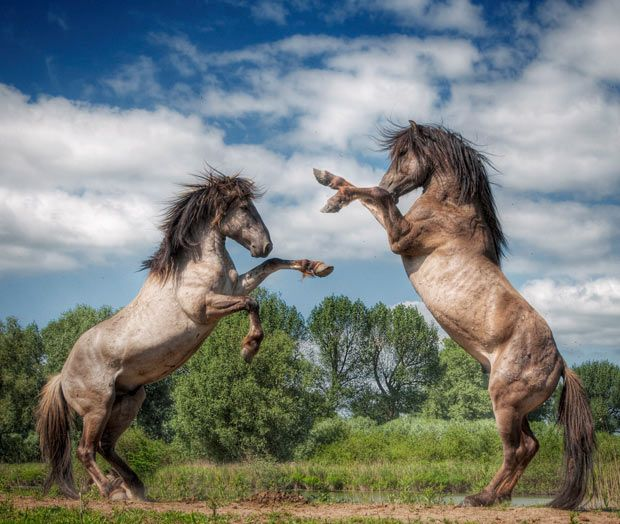
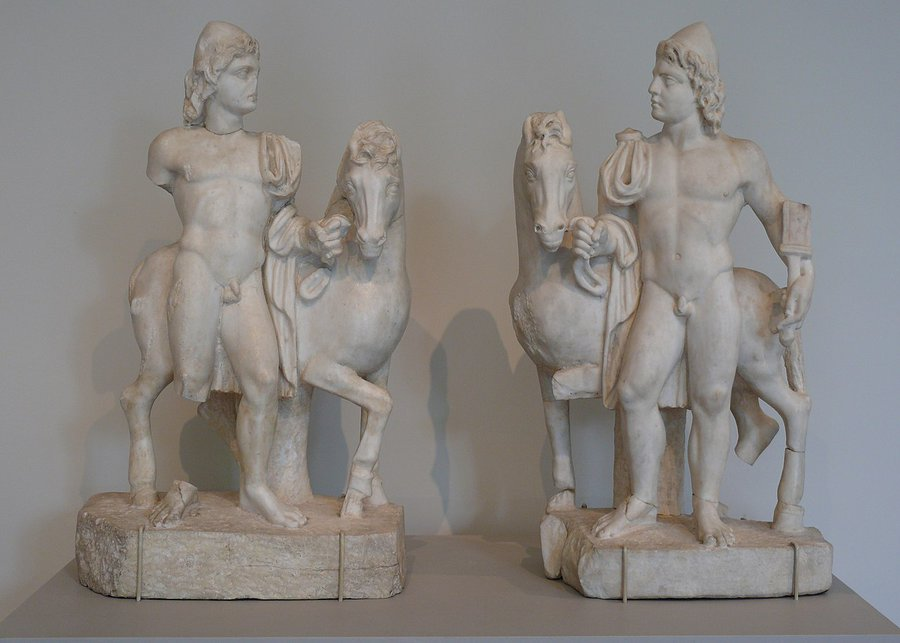
Which is why we find horse zodiac symbol disguised as Dioskuri, divine twin horsemen. The guys who wanted to marry "the daughters of the white horse". They mark Summer Solstice, the peak of the horse mating season...
So if a living stallion is a solar symbol of summer solstice...Then a dead mare seems like a good symbol for winter solstice...Right?

"Mari Lwyd" meaning "Gray Mare" is an ancient Welsh tradition celebrating the end of the Christmas season (taking place from Christmas into January)...Analysis of this tradition and a possibility that it originally was part of the solar horse cult can be found in my post "Gray mare"... 

You also might find these articles about the origin and the meaning of unicorn as a solar symbol interesting: "Unicorn", "Reem"...

That virgin btw is Virgo, Aug/Sep...She "calms" 🙂 the unicorn (horse mating season ends in Sep/Oct)...


So we have:

A White Stag, winter, midwinter, winter solstice...Winter solar symbol...Birth of Christ...

A White Horse, summer, midsummer, summer solstice...Summer solar symbol...Birth of John the Baptist...

St John the Baptist says this about Jesus: "He must increase and I must decrease." What does this statement mean? 

Sun at #WinterSolstice and #SummerSolstice???


From my post "He must increase and I must decrease"...

BTW, in Europe, and in Slavic part of Europe in particular where St John is known as Ivan, St John's day,  (Slavic Ivandan, Ivanje) is a completely solar festival, dedicated to the blazing summer solstice sun, Beautiful John (Slavic Lepi Ivo)...

Knowing this, it is interesting that St Eustace is celebrated on the 20th of Sep, basically on the day of the Autumn Equinox. When the light gives way to darkness. Is this random?

I don't think so, cause Autumn Equinox is the exact time when horses stop mating (light half of the year symbolised by horse as animal calendar marker ends) and deer start mating (dark half of the year symbolised by deer as animal calendar marker starts)...

Interestingly, even thought we read again and again that in the Arthurian legends the White Stag is never caught, King Arthur actually eventually does catch and kill the White Stag...

We can read about this in "Érec and Énide" by Chrétien de Troyes. The hunt takes place at Easter (Mar/Apr/May), when stags shed their antlers, and when all stags suddenly disappear, die (without antlers they look like hinds)...

I wonder if the reason why it is the King Arthur (Bear, symbol of spring/summer) 

who manages to kill the Stag, symbol of winter/spring?

I talked about bear as the symbol of spring in my posts "Bear dancers" about Romanian bear dance. It is in the spring (Feb/Mar) that mother bears emerge from their dens with their cubs...

Romanian New Year ritual bear dance:


Bear dances (spring, summer, autumn)

Bear falls cause a demon took over him (winter) 

Bear is killed and bled to let the demon out (hibernation, death-rebirth)

Bear gets up and dances again (spring, summer...)

As well as in my post "Overpowering" about this this statue from Trier, where boar, animal calendar marker for winter, is "overpowered" by bear, animal calendar marker for spring (bears emerge from hibernation in Feb/May) and summer (bears start mating in Apr/May)...

One more thing. In the papers about the White Stag, we can read that "white stag is a symbol of otherworld, underworld". In continental Europe, Winter, "The White time of the year" is also the time of Death. Hence White Stag (Winter Stag) as the symbol of the other(under)world...

Also interesting. Depictions of a deer hunt found on medieval standing (tomb) stones found in Bosnia, are positioned in such a way, that deer is always leading the knight westward, "where west means death"...At least, according to this article.
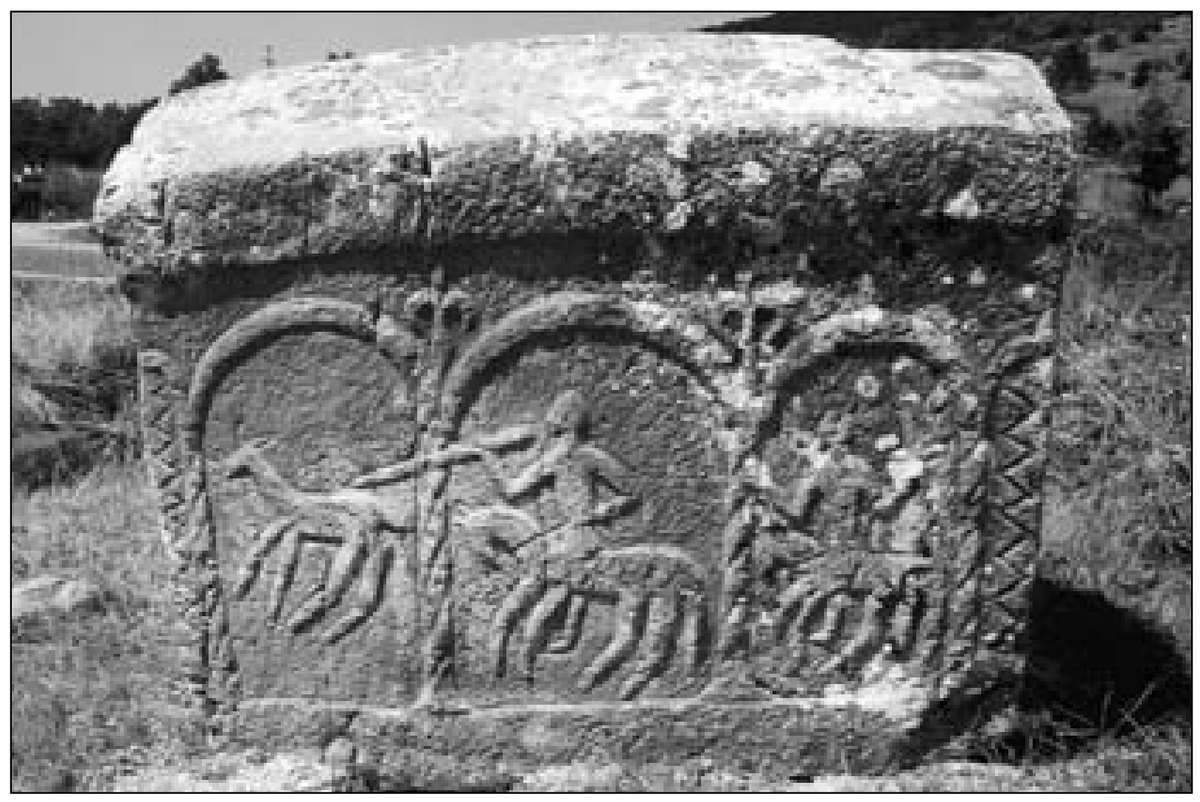
According to Slavic folklore, west is where the entrance to the other(under)world is. Why? Cause this is where sun enters the other(under)world. 

I talked about the sun in the underworld in my post "Descending to Hades"...

One of my favourite frescoes: Christ's descent into Hades, fresco from the 12th c. Church of St. George, Kurbinovo, Macedonia... 

Just one last thing:

Christ was not only seen by early medieval Christians as White Deer (winter solstice sun). Christ was also seen as White Unicorn (summer solstice sun)...

So both the horse and the deer, both solar symbols for two halves of the same solar year, are Christ...

Christ is born on Winter Solstice, (re)birth day of the sun (god), he enters Jerusalem on a donkey, "animal of the (sun) gods and kings", and gets put on a cross, symbol of the sun (god)...Interesting...Early Christian "Alexamenos graffito", Rome. From my post "Alexemenos graffito"...


That's it. To read more about ancient animal and plant calendar markers, start here…Then check my twitter threads I still didn't convert to blog post...I am way way behind...

Saturday, 12 June 2021

Overpowering

Roman stone sculpture of a bear overpowering a boar, from an ancient tomb monument, Trier...🙂 I think that "overpowering" is a nice way to "put it"...


Hmmm...Should I talk about obvious or hidden...

Considering everyone else is going to talk about animal sex,  I will talk about it too...And animal calendar markers derived from mating seasons of animals caught here in the act....

The wild boar mating season in Eurasia starts in November...At the beginning of winter...Which is why wild boar has been used to represent winter...

I talked about wild boar symbolism in my posts "Calydonian boar" and "Double headed eagle"...

Bears don't like shagging in the snow...They are asleep while boars are having fun...Bears emerge from their hibernation in spring, and are seen in some parts of the world, like Slavic countries, Romania as heralds of Spring...Which is why bears are part of Spring festivals...

I talked about bear symbolism in my post about "Bear dancers"...

There disappearance underground at the beginning of the winter and there reemergence from the underground at the end of the winter is seen as a symbolic death and rebirth...Just like sun and nature die and are reborn every winter...

The Christian holiday known as "Presentation of Jesus at the Temple" is celebrated on February the 2nd. In Serbia known as "Sretenje" (Meeting)... Serbians say that this is the day when "winter meets summer"...

Which is interesting because this is actually the beginning of spring...

I talked about this "Natural year division" in my post "Two crosses"...

Now Serbian tradition says that on this day, bears will awaken from their winter hibernation. If a bear comes out of his den and sees his shadow, he will get frightened back into hibernation, and winter will last 6 more weeks...Otherwise, winter will end soon...

So what about bear shagging??? Well, bear mating season stats in May...At the beginning of summer...This makes bear the opposite to boar from the symbolic point of view...

Bear is basically a solar symbol, because it is in our world during the warm part of the year, when sun is here too, and is in the underworld during the cold part of the year, when sun is there too...

This is why in Slavic mythology, the God Veles, the enemy of the Thunder God Perun, is represented as bear...Now it is well known that Thunder God's enemy is The Summer Sun, which causes drought...

So back to our "bear overpowering boar"...Knowing all this, this statue could be interpreted as summer overpowering winter...

But, whether whoever made this statue knew any of this or whether he had any ulterior motives or he was just a lover of bestiality, I honestly don't know...But this was a great excuse to talk about animal symbolism and animal calendar markers 🙂

To read more about ancient animal and plant calendar markers, start here…then check the rest of the blog posts related to animal calendar markers I still didn't add to this page, and finally check my twitter threads I still didn't convert to blog post...I am 9 months behind now...

Wednesday, 2 June 2021

Bear dancers

Romanian bear dancers...At the end of the year, boys and men in eastern Romania put on heavy bear costumes, often made of real fur, and dance through the streets of towns and villages...


They dance to the rhythm of drums. In the end a ritual scene is performed in which the bear collapses because a demon is inside him. The "Gypsy" comes with a knife and bleeds the bear, lets the demon out and the bear gets resurrected. You can watch a documentary about this ritual here: 

In some versions of the tradition, the bear, the Gypsy and the drummers also go from house to house in the village, singing and dancing to ward off evil and bring good luck...

Officially "It’s thought that the tradition of dancing bears originated many centuries ago among the Roma who would visit villages just before New Year with real bears on leashes to dance and chase away bad spirits from the outgoing year"...

I can see why people would think that this ritual could have Roma origin...Roma's with their dancing bears were until recently a common scene in Eastern Europe...

I wrote about this in my post about St Gallen and the bear...

The thing is, at the end of the Solar Year, we also find Dancing bears in Slavic countries of Eastern Europe...But there, the bear is not dancing alone. He is dancing with a goat and a stork...

In Slavic countries however the bear is not the main character in this ritual dance...The goat is...The dancing goat...


Which also gets killed, bled and then resurrected...I talked about this in my post "Krampus"...

The goat is the most common symbol for winter in Eurasia...

I talked about the symbols of the seasons in my post "Symbols of the seasons" 🙂 The reason why goat is the symbol of winter, is because ibex goats start their mating season at the beginning of winter...End of October beginning of November...This is marked by wild goat fights...

I talked about this in my post "Goat"...

In Eastern Mediterranean, Middle East, Central Asia, Mesopotamia...wild goat mating season coincided with the beginning of the rain season which was source of life in those dry areas...Which made the wild goat symbol of rain, life, resurrecting nature...I talked about this in many of my posts, including "Pan, the goat of rain"... 

But in continental Europe, winter brought by the dancing wild goats wasn't the season of life...It was the season of death by cold...Which is why in Europe goat became symbol of winter cold...Cold which can bite your fingers and ears and nose off...

I talked about this in my post "Tanngnjostr and Tanngrisnir"...

Because in continental Europe nature dies at the beginning of winter, and gets resurrected at the end of winter, and because winter is the season of the goat, the goat has to die, so nature can get resurrected...

Here we see the hunter armed with a bow and arrow hunting the goat in the above winter ritual from Ukraine...

The same scene is described in the Slovenian legend about Zlatorog (Gold horn): Hunter kills the goat from whose blood grows magic flower...

And this is exactly what is depicted by the winter zodiac: Sagittarius (hunter) kills Capricorn (goat)  from whose blood Aquarius (snow melt) brings Spring (rebirth of nature)....

Anyway back to the dancing bears...In Slavic end of Solar Year ritual dances, the bear and stork are accompanying the dancing, dying and resurrecting goat, because they are also in a way, dying and resurrecting...

In the past people didn't know what happens with the migratory birds in the autumn...Slavs believed that migratory birds went with the sun to the land of the dead...

I talked about this in my post "Nav"...

Slavs also believed that on their return from the land of the dead, in the spring, the migratory birds brought souls that are ready to be reborn...Sounds suspiciously like "storks bringing babies"???

So storks "died" (went to the otherworld taking with them the souls of the recently deceased) at the end of autumn, when nature died too. And were "resurrected" (came back from the otherworld bringing with them the souls of then future children) when nature was resurrected too...

Now finally back to bears :) The bear disappears at the end of autumn (goes to hibernation, goes underground, to the underworld) where it spends the winter...It comes out of hibernation, underground, underworld at the beginning of spring...With the cubs...

Back to the Romanian bear ritual again: 

Bear dances (spring, summer, autumn)

Bear collapses because a demon is inside him (beginning of winter) 

Bear is killed and bled to let the demon out (winter, hibernation-death)

Bear gets resurrected and dances again (spring, summer...)

This is just another version of the same death - resurrection of nature ritual, part of the same Old European belief system which was built around European climate...And which was populated by animal symbols, basically animal calendar markers based on animal behavior in Europe...

Bear wandering about in the middle of winter is an unlikely site as bears only dance (are active) during warm part of the year: spring, summer, autumn...

So a bear dancing in the middle of winter is a magic ritual designed to summon spring...

The only bears not in hibernation (the underworld) in the middle of winter were bears owned by the Gipsy bear tamers...Enterprising Gipsies would not miss the chance to earn some money (food, drink) by taking their bears from house to house and performing the "real" bear dance...

So Romanian dancing bears and Slavic dancing bears are not something that had to be an imitation of Gipsy dancing bears...Could actually be the other way round...

To read more about ancient animal and plant calendar markers, start here…then check the rest of the blog posts related to animal calendar markers I still didn't add to this page, and finally check my twitter threads I still didn't convert to blog post...I am 9 months behind now...

BTW, the oldest example of a zodiac circle, as we know it today, was found in Croatia, in Nakovana cave.... 


Friday, 11 September 2020

Khafajeh vase


I have seen this picture of the so called "Khafajeh vase" so many times before. Amazing object. It was dated to the mid 3rd millennium BC, and it is called so because it was allegedly found in Khafajeh, in Diyala region of Iraq in an unsupervised dig...

The vase was made in the so called "Intercultural style" with stylistic elements from Mesopotamia, Iran, Central Asia and Indus valley. And it is believed that it was not made in Iraq, but in Iran by the people of the Jiroft culture...

As I said, an amazing object. But just how amazing this object really is, I only realised the other day, when for the first time I saw the whole design that adorns it unrolled into a continuous stip...


It is shown on the page 331 of the "Art of the First Cities: The Third Millennium B.C. from the Mediterranean to the Indus Valley" By Metropolitan Museum of Art (New York, N.Y.) 

The design is divided into four "scenes" (and not three as it is stated in the description in the book):


The official interpretation is: "heroes, masters of animals subduing the nature". I would beg to disagree...And to understand why I am so sure that this has nothing to do with any imaginary "masters of animals" we need to look at climate and animal behaviour in Jiroft area...

Jiroft culture was centred around the Halil River catchment area. Pic: Key physical, archaeological and phytogeographical features in the Jiroft valley. KSN (Konar Sandal North) and KSS (Konar Sandal South) sites. Inset: Map of Iran with location of the Jiroft valley...


The climatic year in the Halil River (Jiroft) area is divided into dry season (Apr/May to Oct/Nov) and wet season (Nov/Dec-Mar/Apr). The wettest month is Feb, while the driest month is Jul which is also the hottest month...

The precipitation falls as rain in the valley and as snow in the mountains which surround it. And it is the snow which fell on the mountains that affected the life of the Jiroft people more than the rain that fell on the valley...Pic: snow cover of the Iranian mountains per month


The rivers in the mountain areas of Iran, including the Halil river, are fed mostly by snowmelt, which starts in late Feb early Mar, and peaks in late Apr, early May. Pic: the flow of Iranian rivers, which have a spike between Mar and Aug with peak in late Apr early May...


The snowmelt brought with it sediments from the mountains and created rich alluvial plains ideal for agriculture. It also fed the river until the end of June, allowing for intensive irrigation for months after the last spring rains, extending growing season significantly...

The snowmelt in the surrounding high mountains also fed the a shallow groundwater table in the alluvial plains which created many artesian wells and springs. Agriculture and civilisation flourishes where freshwater is readily available...


And if the rain and snow ever stopped falling, the river would stop flowing and that would mean the end of the life in the Jiroft valley...And  this is exactly what happened at the end of the 3rd millennium BC...

Everything indicates that the Halil river valley was abandoned due to desertification during the "4.2 kiloyear event


The end 🙂 

Well the end of the bit about the climate. Now the animals. We have: zebu cattle, eurasian lions, scorpions, vultures, bears and snakes...What is the meaning of this menagerie? Let's see...

Zebu

I would suggest, based on the behaviour of other wild cattle (aurochs, buffalos) which both have single mating season, and Indus valley depictions, that wild zebu also had single mating season which spanned the summer (Apr/May-Jul/Aug)...

1/8/2022. Just came across this article entitled "Seasonal fluctuations of reproductive functions in Zebu cattle" in which we read that "Fertility maxima coincided with the onset of the rainy season (June to August), with significant rank correlations between conceptions and temperature (+ 0.827), pressure (− 0.751) and precipitation (+ 0.632)"...

I talked about this in my post "Kharif and Rabi season"... 


Eurasian lion

As for Eurasian lions, their main mating season was and still is August to October. I talked about this in my post "Entemena vase"


Syrian Brown bear

It is distributed throughout Northern Armenia, Azerbaijan, Abkhazia in Georgia, Iraq, Iran, Lebanon, Turkey and Turkmenistan. They mate between May and July with cubs born in the winter den around January or early February. 

Asiatic black bear

It is found in the forests of Eastern Asia from Iran to Taiwan and Japan, particularly in hilly and mountainous terrain. They mate in June and July with cubs born in winter den in January and February.

Both Syrian brown bears and Asian black bears prepare their dens for hibernation in mid-October, and will sleep from November until March when they will emerge out of their dens with their cubs...

Guess what happens in Iran at the exact time when the bear cubs emerge from their dens? Date palm pollination, which in the Northern Hemisphere takes place in Mar/Apr...Which is what is shown on the "bear part of the "Khafajeh vase": bear cubs next to blooming date tree...

Vulture

As for vultures, the vultures which live in Iraq, Iran and North India start their mating season at the end of autumn, beginning of winter (late Oct early Nov). I talked about this in my post "Double headed eagle

Scorpion

As for scorpions, they disappear from the outside nature (and probably appear inside human dwellings) at the end of autumn, beginning of winter, when the weather gets too cold and damp. I talked about it in my post "Scorpion man"...


Finally snakes.


They are the symbol of sun's heat. The only true solar animals, they are in our world when the sun is in it too (day, and hot, dry part of the year), and in the underworld when the sun is there too (night, and wet, cold part of the year). I talked about this in my post "Bactrian snakes and dragons"...

Why am I yapping about animals and their mating and birthing seasons? Because these significant lifecycle events, which occur every year at the same time, were used by our ancestors, before solar and lunar calendars were developed, as solar year calendar markers...I am adding articles related to this theme to this list

And this is exactly what each animal is on the "Khafajeh vase": a calendar marker...

So let's have a look at the "Khafajeh vase" imagery again, with all the knowledge about the natural world in which the Jiroft people who made this amazing vase lived...

1. The bear cubs scene

Bear cubs are born at the end of Jan beginning of Feb, beginning of spring. They emerge from their dens in Mar, middle of spring, at the beginning of the date palms pollination and the beginning of the snowmelt. So I would say that the bear cubs "scene" symbolises the spring...

2. Zebus

Zebu's mating season coincides with the snowmelt flow season which peaks in Taurus 🙂. This is why the "human looking being" who stands on zebus is holding flowing water, the rivers among lush vegetation. So I would say that the zebus symbolise summer...

The snowmelt surge starts diminishing towards the end of June, around summer solstice. Which I would say is the border between the zebu scene and the lion scene. The maximum water flaw beginning of summer, Taurus. The minimum water flow end of summer, Leo...

3. Lions

Lion mating season coincides with the driest part of the year in the Halil river catchment area. Not only that this is the period with the least precipitation, but also the snow melt flow has stopped, so river is at its lowest level...And Leo is also the hottest part of the year.

This is why the "human looking being" who stands on lions is holding snakes...And lions are depicted standing in arid landscape with no vegetation...So I would say that the lions symbolise autumn...

By the way, do you see that flower depicted above the shoulder of the human figure? I bet that's Sirius, which when this vase was made rose with the sun in Leo...

4. Carnage...

Lion (autumn) has killed the zebu (summer) and is now eating the carcass of a long dead animal. Lion is joined by scorpion and eagle...

Eagle is the dual zodiac sign for scorpio. On the zodiac circle, and in general as solar year animal markers, they both symbolise the beginning of winter. And the arrival of rain and snow...So I would say that the scorpion and eagle symbolise winter...

So here we have, spelled out, in animal solar year markers, the climate in the Halil river basin, where Jiroft culture once thrived. Until the sun god got angry and dried the skies and rivers and wells for ever. Well for few hundred years, during the 4.2 kiloyear event...

The same sun god depicted standing on zebus (young sun of spring and early summer, which causes the snow to melt and rivers to fill - holding water) and standing on loins (the old sun of late summer and autumn, which causes the land and rivers and wells to dry - holding snakes)

Yes I believe that this "human looking being" is not a hero or a master of the animals, but the sun god, from the time before the "bull horn hats" became fashionable among gods...

That's it...

Well except for the sun and the moon. The sun is shown next to both the young and the old sun. As the identification mark. The moon pointing up, which I postulated to mean winter, wet season, is only shown next to the young sun, the one which causes water to flow...

Which makes me wonder if this is moon, which points upward during winter, or vessel which collect precipitation which falls during winter wet season, river bed...Or both...Still thinking...

To conclude. This is an extremely complex set of interconnected animal and plant calendar markers, which perfectly describe the climate in Jiroft valley. There is no way this is an accident or coincidence...

Which is why "Khafajeh vase" is so important: it proves that Jiroft culture, like Indus Valley culture, Elamites, Akkadians, Sumerians, Assyrians, Egyptians, Hittites, Minoans, Mycenaeans, BMAC...also used animal solar year markers...The same ones in the same way...

To read more about ancient animal and plant calendar markers, start here…then check the rest of the blog posts related to animal calendar markers I still didn't add to this page, and finally check my twitter threads I still didn't convert to blog post...I am 9 months behind now...