Friday, 27 September 2024

Utu

 Utu, Sun: 𒀭𒌓

According to this table, this means god, heaven + day = sun...

But, did the god sign originally mean shiny thing (sun, star)? And did the day sign originally mean "eye"? 

Because if the did, then we would get: shiny thing + eye = to see = sun? 

Makes a lot of sense...At least to me...Cause I am a Slav...Cause Slavs have Svetovid...

svet (world)

svetlo (light)

vid (sight)

Svetovid (sun god) = world, light + to see = sun  

I talked about this in my post "Svetovid"...

Thanks to @selineith for the original sun pic...

Saturday, 21 September 2024

Mosaic floor from Sulcis, Sardinia

This Roman mosaic floor from Sulcis, Sardinia depicts leopards drinking from a krater for mixing wine and water with a grapevine growing from the krater...

What is this all about? Animal and plant calendar markers...Of course 🙂

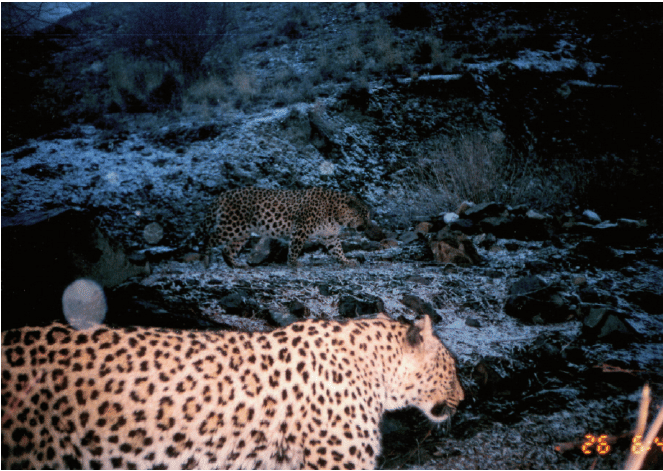
Leopard was closely associated with the god Dionysus (Bacchus), god of rebirth (of nature).

Why? Cause leopards, which mate in Jan/Feb, are animal calendar markers for the end of Winter, start of Spring. The time of rebirth of nature...


You can read more about this in my posts "Leopard and tiger"...

Few more Dionysus posts explaining animal and plant calendar markers embedded into his mythology: "Patera of Rennes", "Maenades with hare", "Furious maenad", "Thyrsus"...

Here is another really cool depiction of the same scene with wine mixing krater flanked by two leopards and grape vine growing from it, from a sarcophagus found in Serbia...

The moment of discovery of a Roman stone sarcophagus found inside the crypt decorated with frescoes and mosaics at Beljnjača archaeological site in Šid, Srem region, northern Serbia...

The sarcophagus was dated to 4th c. AD. It was made of white marble from Austrian Alps, probably carved in nearby Roman city of Sirmium, one of the biggest Roman cities of its time with over 100k inhabitants...

The sarcophagus, which was robbed soon after the burial, originally contained remains of a couple, an officer and his wife, who were depicted on the side of the sarcophagus...

The front and back of the sarcophagus were decorated with mythological motifs: panthers around crater with grapevine as elements of Dionysus cult, personifications of the seasons of the year, and Medusa heads...


More about this artefact can be found in these two articles: 1, 2...

So? What does it all mean?

The rain and snow that fall during winter, the time of the year ruled by Dionysus, is what ensures rebirth of nature in Eastern Mediterranean...Where the cult of Dionysus most likely originated...

Levant

Crete

As you can see, the rain falls between the the grape picking (I talked about this in my post "Crocus fairy") which ends  before (Oct/Nov) 

and the grape flowering (I talked about this in my post "When grapes flower") which starts after (Apr/May)...


And guess what happens in Feb/Mar? Anthesteria, an ancient Greek three-day festival in honour of Dionysus...When the new wine was first drank...

Oh, and guess what else happens in Feb/Mar, when during Anthesteria the new wine was mixed with water in kraters? 

Grape vine rebirth.


After it died, after all the leaves fell off at the start of winter, it gets reborn, with new leaves starting to grow at the start of spring...

And so new grape vines growing out of a krater for mixing wine with water, flanked by two (couple of mating) leopards (panthers)...

Neat, I think...

@another_barbara:

Mixing wine and water in a chalice during a resurrection ritual ...  🤔 Why does that sound so familiar ... 🤔🤔😃.

Same all, same all...

To read more about ancient animal and plant calendar markers, start here…Then check my twitter threads I still didn't convert to blog post...I am way way behind...

Sirius, the mother of Venus

You know how everyone thinks that Inanna/Ishtar (Morning Star) is Venus and how I think that it was originally Sirius, and only later became Venus? 

Well, it seems that Ancient Egyptians preserved the proof of this switch in their mythology. 

Meet Sopdet...

Sopdet, the personification of Sirius, was the consort of Sah, the personification of Orion. And their child was Sopdu, the personification of Venus, "Lord of the East" (Venus as morning star)....

Ta Ta Taaaaaaa!!!!

Why the f*ck would Sirius be the mother of Venus? Because Venus is what everyone thinks when we say "Morning Star"...But Sirius is also "Morning Star", actually "The (most important) Morning Star", in Jul/Aug, when it rises together with the sun, to announce the Nile Flood...

So does this myth, Mother (Sirius, Older Morning Star) --> Son (Venus, Younger Morning Star), trying to tell us that Sirius was (Original, Important, Once A Year) The Morning Star, and Venus is (Later, Less Important, Every Day) Morning Star?

I think so. 

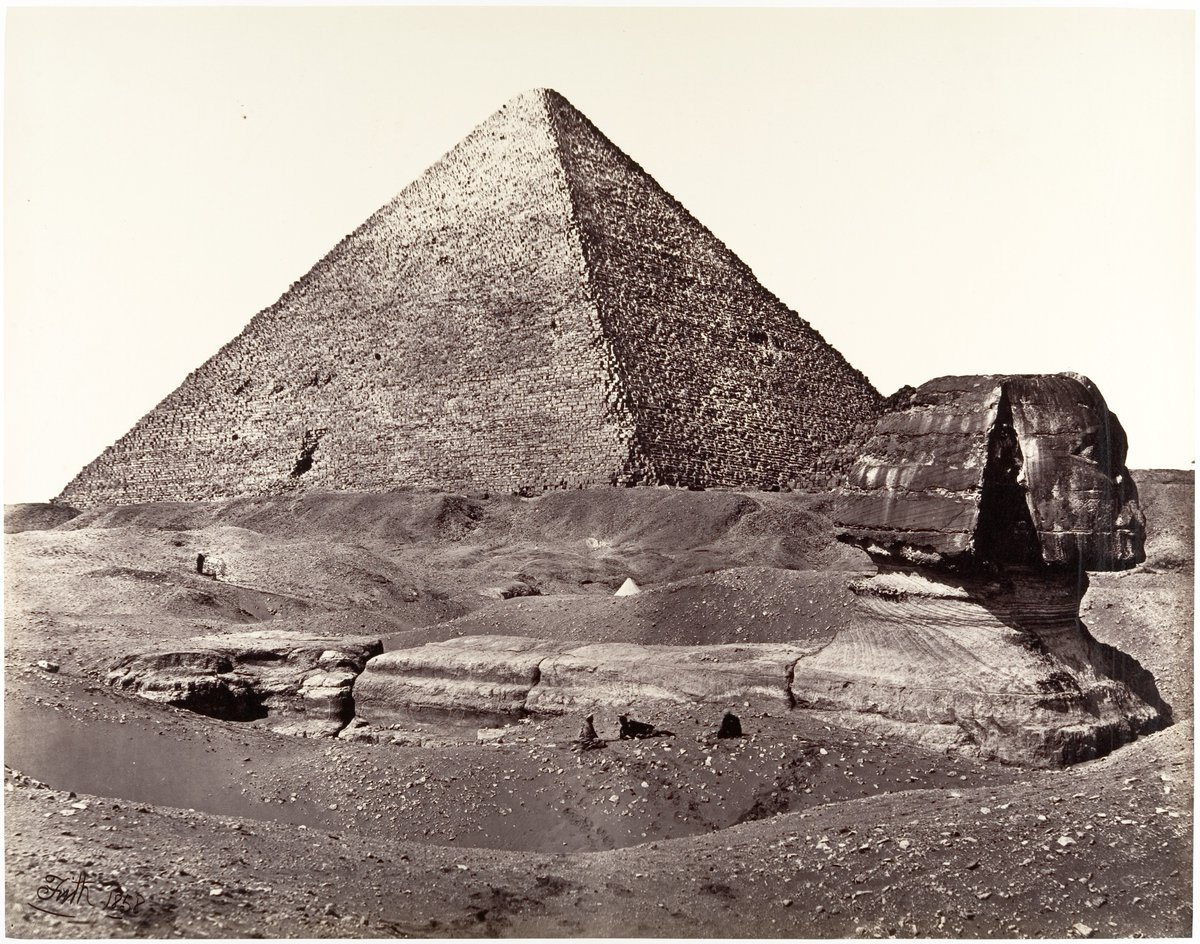
BTW if you want to see where the "Lioness of heaven" (Ishtar) is hiding in Egypt, check these two articles: "Sphinx" and "Giza lioness"...

Did Mesopotamians forget this switch? Don't know. They certainly left is clues that we can use to decipher the true nature of Ishtar: 

Sirius...The morning star in Leo. Hence Inanna/Ishtar (personification of Sirius), also known as the lioness of heaven, standing on a lion, with sun above the lion, in Leo... 


In my article "Inana and Šukaletuda" I analysed the epic "Inana and Šukaletuda" which is used as "proof" that Inanna is Venus, but in which all calendar markers point at Inanna being Sirius and not Venus...

More about Inanna/Ishtar as Sirius can be found in this article, "The brightest star", about Ishtar being the the most shining when Sirius is the most shining, and also about Bow and Arrow constellation and its link with Leo, Ishtar and Nergal...And in this article, "Woman of the Apocalypse" about the true identity of this mysterious "Lady"...

To read more about ancient animal and plant calendar markers, start here…Then check my twitter threads I still didn't convert to blog post...I am way way behind...

Lyres of Ur

A lyre player from "The Standard of Ur", a Sumerian artefact found in one of the largest royal tombs in the Royal Cemetery at Ur, associated with Ur-Pabilsag, a king who died around 2550 BC. Now in the British Museum...

4 lyres of this type were actually found in royal graves in the Royal Cemetery at Ur.


These instruments were not ordinary instruments. They were ceremonial instruments. 

Stele representing a bull-lyre player and singer on the lower register and a priest with a plumb-bob on the upper register. Limestone, period of Gudea, ruler of Lagash, ca. 2120 BC, found in Telloh (ancient city of Girsu). From 1910 History of Sumer and Akkad...

This is obvious from the fact that the Sumerian sign for lyre also means "to praise." You can read about this here. But praise who?

All the lyres have a sound box topped by a bull head, three with a bearded bull head and one with a normal bull head. And no one knows what the meaning of the (bearded) bull head is...Well...

Well, we kind of know that the bearded bull is the symbolic depiction of the sun god Utu/Shamash. Why? Cause in "Enki and the world order" we read  "Utu/Shamash...the great herald in the east of holy An...with a lapis-lazuli beard, rising from the horizon..."

But why (lapis lazuli) beard? No one knows...Well...Over 70% of all the water flowing down Tigris and Euphrates comes from the snowmelt in the mountains where these two rivers originate. 

Snowmelt caused by Utu/Shamash, which peaks at the beginning of summer, Apr/May, in Taurus...

Which is why the water level in Tigris and Euphrates also reaches its peak in Apr/May, in Taurus. Which causes the annual flood, the source of life in lower Mesopotamia...

Which is why Utu/Shamash was depicted as a golden bull (Sun in Taurus) with flowing lapis lazuli beard (flowing water)...I talked about this in many of my posts. Like: "Shamash young and old", "When Utu steps up into heaven", "Butt chewing", "Maran"...

BTW, Taurus here is The Old Taurus, the animal calendar marker for the beginning of the calving season of wild eurasian cattle...I talked about this in my post "Cow and calf ivory", "Calydonian boar", "Bull carrying grannary", "Cypriot stamp seal with cow and calf"… 

Seal from Tell Brak

So I think that these harps were used to praise Utu/Shamash, the sun god...

Now interestingly, two of the harps have golden bull head with lapis lazuli beard, on has a golden bull head with golden beard, and one has silver bull head with no beard. Is this significant? I think so. Of course this could all be just me seeing thing again. What do you think?

Anyway, why am I talking about this? Cause of Apollo and his Lyre...Remember that in one of my recent posts about the Apollo I said that I finally realised why he is constantly dragging his lyre with him and insisting to play it weather anyone liked it or not?

In my post "Lyre of Apollo" I already explained that Apollo's lyre was a complex animal calendar marker for Apr/May, Taurus, beginning of the hot, dry half of the year ruled by the (sun) god Apollo...

But I wrote this article in 2022, and I it was only recently that I realised that Apollo is basically Shamash/Nergal. And that all his main attributes are found in Shamash/Nergal mythology of Mesopotamia...Including...the bull lyre...

Remember, Shamash, Sun, can be both life bringing (Apr/May, Taurus) and life taking (Jul/Aug, Leo)...

With Apollo, this is depicted through his two main attributes: bow and arrow and the lyre...

Let me explain what I mean...

As I showed in my two articles "Marble throne of Apollo", "Apollo the great archer" and "Apollo Sminthius", bow and arrow are the symbols of destructive Shamash, in Jul/Aug...Shamash the lion/serpent/dragon...

A Coin depicting Apollo Sminthius (Apollo lord of the mice) with his plague causing bow and a mouse/rat at his feet. 

And I think that the lyre is the symbol of the other, life giving side of sun god Shamash...

But then, I heard that lyre is a great instrument to play while watching the world burn...🙂

That's it. I will write about Ur lyres comics 🙂 at some stage, hopefully soon...

To read more about ancient animal and plant calendar markers, start here…Then check my twitter threads I still didn't convert to blog post...I am way way behind...

Friday, 20 September 2024

Apollo Sminthius

A Coin depicting Apollo Sminthius (Apollo lord of the mice) with his plague causing bow and a mouse/rat at his feet. Minted in Alexandria, Troas/Troad. Around 300 AD. Currently in The British Museum, Department of Coins. London...

The worship of Apollo Smintheus (or Apollo Sminthius) extended only to Asia Minor and not the Greek mainland.  Alexandria in Troas was the center of this cult. This is one of the strongest arguments for the thesis that the origin of the Apollo cult was Asia minor...

We of course know that Apollo originated much further East, in Mesopotamia...If you don't know what I am talking about check my article "Apollo, the great archer".  


In it I ask and answer the question: Why was Apollo armed with bow and arrows? Why was he "Apollo who shoots afar"? And why "as he goes through the house of Zeus, the gods tremble before him and all spring up from their seats when he draws near, as he bends his bright bow"?

In it I also talk about Apollo's link to pestilence and plagues and I explain why Apollo "was a god who could bring...deadly plague with his arrows". And I also talk about Apollo's link to Nergal, the Mesopotamian god of pestilence and plague...

It all has to do with the fact that Sirius and the surrounding stars, which were in Mesopotamia known as bow and arrow, rose with the sun (Apollo/Nergal, destructive side of Shamash), in Jul/Aug, the main season for epidemics in Mesopotamia...

I talked about this here in my post "The lord of flies" about Beelzebub, the lord of the flies, who was identified by Jews and Christians with Satan...I will in this article like to show that behind this nickname hides the old Mesopotamian God of Death, Nergal, The Destructive Summer Sun...

And not just in Mesopotamia. Every disease that either started or peaked in Jul/Aug in Mesopotamia, also started or peaked in Jul/Aug in Turkey...Including the area of Troas/Troad...And guess what's in the area of Troas/Troad? Troy. 

And guess where the Apollo Sminthius is first mentioned? At the very beginning of the Homer 's Iliad I, 39.

There, Apollo 's priest, Chryses, after Agamemnon had kidnapped his daughter, prays to Apollo Sminthius to punish the Greeks "with his silver bow and arrows" (the ones that bring pestilence and plague). And Apollo obliged...

So what was the disease that Apollo Sminthius stroke the Greeks with? Well, considering that it was the "Apollo, the lord of the mice", most people, me including, believe that it could have been a black plague...

Black plague is caused by a bacteria, Yersinia pestis, which is transmitted to people by flees which live on rats, mice and other small rodents...

I talked about it in my post "Burned house horizon", in which I asked the question: Why did Neolithic Central Europeans often burn their settlements down to the ground only to rebuild them again? Well, apparently "it could be a ritual" (read: no one knows)...But interestingly, until recently, people did exactly that to get rid of black plague.

Now, mice breed during the summer and autumn, and the peak breeding season for harvest, wood and house mice in Europe and  is in Jul/Aug...

Right after the grain harvest. In Leo. Apollo/Nergal time of the year...Rats also mostly breed during summer and autumn...

According to historical records 1, 2, 3, the main black plague season in Mediterranean especially in the area near Istanbul, which is where Troy is located, was summer, the hottest and driest time of the year...

What about the plague that Iliad says Apollo had unleashed on the Greeks? When did that plague happen? Well, we don't really know. We know that the whole Iliad story unfolded over 45 days, and that the plague happened at the very beginning.

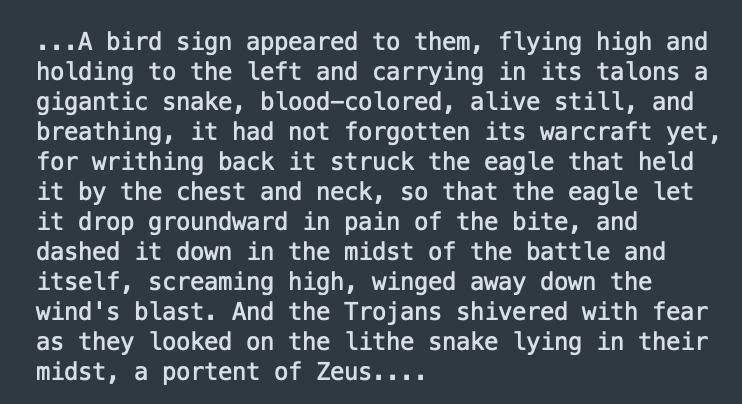
Now half way through the story, in the book 12, during the fierce battle between Trojans and Greeks in front of the Greek camp, a warning was sent from Zeus that can help us determine when the story told in Iliad took place...


I talked about it in my post "Lakonian snake eagle kylix", about this Black-Figure Kylix depicting a snake eagle flying to the left, gripping the neck of a snake in its beak and clutching the serpent's long, undulating body in its talons. 530 BC...

In which I said: The snake eagle is a migratory summer visitor in Western Anatolia, where Troy is located...So the only time when the Trojans could have seen a snake eagle flying over the battlefield carrying a snake in its beak was during the summer, Apr/May - Sep/Oct...

Significant? 🙂 I asked in this post...

Well, yes, as it turns out. Cause that would mean that the story from Iliad takes place during the summer, the hottest time of the year, the Apollo/Nergal, mice/rats, plague time of the year...

And so silver arrows rained down on the Greeks fired by Apollo from his silver bow...Silver...Much better colour for star constellation bow and arrow (Sirius and surrounding stars), which rises in the morning with the sun, Apollo/Nergal, during the mice/rat/plague season...

While shooting stars rain down bringing plague. Or so the ancients believed...But some people don't agree that the plague that Apollo unleashed on the Greeks was black plague, or that rats were in any way involved. Like the authors of "The Sminthian Apollo and the Epidemic among the Achaeans at Troy"...

These are their arguments: "Homer gives no symptoms of the pestilence which killed the Greeks at Troy but states that the mules and dogs died before the men. The disease therefore cannot have been black plague. Man is susceptible to it but equines and dogs are not..."

"The disease which is the best candidate for killing is equine encephalomyelitis which at the present time kills equines 7 to 14 days before symptoms appear in man. The death of dogs in modern epidemics is unusual but, experimentally, young dogs are susceptible..."

"In the epidemic at Troy rodents played no part. The arrows were the direct transmitter of the disease. Mosquitoes, as we now know, can transmit a number of diseases including equine encephalomyelitis...And there are plenty of swamps with mosquitoes around Troy..."

"Since mosquitoes are the usual vectors for equine encephalomyelitis it is possible that the terrifying sound of Apollo's bow is a metaphor for the terrifying sound of myriads of mosquitoes..."

Love this. Again, remember "Lord of the Flies" (and other flying biting insects which swarm during the hottest part of the year), Nergal, Apollo?

Interestingly, equine encephalomyelitis peak season is...Jul/Aug...So even if the Apollo's plague was equine encephalomyelitis, the timing is still very auspicious 🙂

The problem with their theory is that their first argument, that black plague only kills people, is wrong.

Byzantine author Nicephorus Gregoras, who died in 1360, reported that during the second plague:

"The calamity did not destroy men only, but many animals living with and domesticated by men. I speak of dogs and horses...even the rats that lived within the walls of the houses...". You can read about it in "Scientific Facts about the Black Death"

So, it could have been the black plague that Apollo unleashed on the Greeks or it could have been equine encephalomyelitis (although we don't know if that disease affected humans before 1939). It doesn't change anything...

Apollo lord of the mice, rats, flies, mosquitoes, plagues of all kinds, unleashed the plague on the Greeks most likely during the hottest time of the year, Jul/Aug, when silver bow rises with the sun and silver arrows rain down on earth...

That's it. Animal calendar markers to the rescue, again, I think...

To read more about ancient animal and plant calendar markers, start here…Then check my twitter threads I still didn't convert to blog post...I am way way behind...

Sunday, 15 September 2024

Lakonian snake eagle kylix

Lakonian Black-Figure Kylix depicting a snake eagle flying to the left, gripping the neck of a snake in its beak and clutching the serpent's long, undulating body in its talons. 530 BC. Currently in the Getty Villa.

From the Getty page: "In the Iliad, the poet Homer described an omen seen by the Trojans as they were attacking the Greek forces. Signifying the eternal conflict of the forces of the earth and the sky, the motif of the battling eagle and snake was used throughout antiquity"...

The eagle fighting a snake can of course be seen as the depiction of the fight between the forces of earth and sky. But is this the only meaning of this image?

Eagle-Snake struggle mosaic from the palace of the Emperor Justinian I  (527-565), Istambul.


This is a complex animal calendar marker for the thunderstorm season in Europe Apr/May -  Sep/Oct...

when migratory snake eagles can be seen in Europe...

I talked about this in my post "Eagle snake struggle"...

The snake eagle is also a migratory species in Western Anatolia, where Troy is located...So the only time when the Trojans could have seen a snake eagle flying over the battlefield carrying a snake in its beak was during the summer, Apr/May - Sep/Oct...Significant? 🙂

The same animal calendar marker, snake eagle carrying a snake in its beak, used for the same time of the year, on this complex Mesopotamian calendar encoded using animal and plant calendar markers. 

I talked about it in my post "Adda seal"...

The same symbol (animal calendar marker), eagle fighting snake, depicted on this gold plaque excavated from the Majiayuan cemetery in Zhangjiachuan, Gansu Province, China and dated to 5th-3rd c. BC. 

I talked about this beautiful object in my post "Snake eagles from Inner Mongolia"...

That's it. To read more about ancient animal and plant calendar markers, start here…Then check my twitter threads I still didn't convert to blog post...I am way way behind...