Showing posts sorted by relevance for query "animal calendar markers" "snake". Sort by date Show all posts

Saturday, 4 December 2021

Wolf vs snake

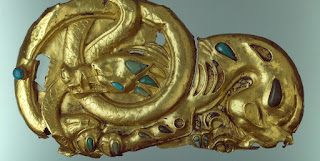
Few days ago I came across this amazing artefact: A "Scythian" gold belt buckle depicting a "fight between a wolf and a snake"...


This is one of 250 decorative gold objects made by the Eurasian nomads between the 7th c. BC and 2nd c. AD, in the so called "Scythian-Siberian animal style"...which are part of the "Siberian collection" of Peter I which was assembled in the early 18th c...

Now there is something very strange about this object...The wolf is not really a wolf...You can see more clearly what I mean on this drawing made one century before the Siberian collection was assembled...
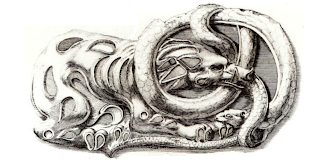
This is not the drawing of the belt buckle from the collection of the Peter I. It is a drawing of another belt buckle, most likely a part of a pair, from the Nikolaas Witsen collection...Depicting a mirror image of the scene from the belt buckle from the Peter I collection...

Nikolaas Witsen was a Dutch scientist and cartographer, who visited Russia in 1664-1665. He wrote about his trip in a book "Northern and Eastern Tartaria" where this drawing appear...

In this first detailed depiction of Siberia (Tartaria) in Europe, Witsen also wrote about the gold objects which were at that time dug out of the ancient Siberian burial mounds...

Apparently, looting ancient Siberian burials for gold was a big business at the time...No one knows what was found and lost...The belt buckle from the drawing was one of the objects Witsen "collected" or bought from the "collectors" for himself...

Here are the drawings of both buckles:

L: Nikolaas Witsen collection R: Peter I collection. 
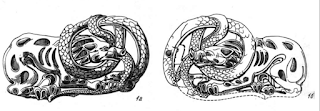
Drawing from this page which compares these two collections...

You can see that the "wolf" is actually a composite animal, with the body and the head of a wolf and the snout (and a tusk) of a wild boar...

So...Composite animal...Mythical beast? Or a complex animal calendar marker? 🙂

So what are animal calendar markers? Well these are ancient animal symbols used as calendar markers to mark the time when the depicted animal mates, gives birth, migrates, hibernates...

They were most likely devised by the first farmers in the Fertile Crescent, maybe 15,000 years ago, although there are some indications that they could be even older, developed in Palaeolithic Europe, and then brought to Fertile Crescent during last Ice Age...

Anyway, these animal markers were in the Fertile Crescent used to create first agricultural calendar...The reoccurring annual events important for agriculture were marked by the animals that mated, or gave birth, or migrated, or hibernated...at that same time...

For instance: 

Rains arrive when ibex goats are mating.

Flood arrives when auroch cattle are calving.

Snow starts melting when leopards start mating.

The hottest and driest part of the year is when lions start mating.

And so on and so forth...

The first farmers brought this agricultural calendar with them, as they were spreading through Eurasia and North Africa. Amazingly, over time these animal calendar markers became deified...And became base on top of which all Eurasian and North African mythologies are built...

More about ancient animal calendar markers, start here then check the rest of the blog posts I still didn't add to this page, and finally check my twitter @serbiaireland threads I still didn't convert to blog post...I am 7 months behind now...

Back to the belt buckle...

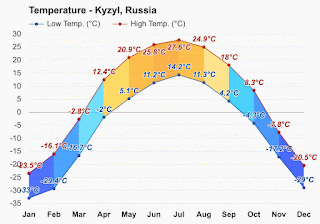
So what about our belt buckle then? What do the animal calendar markers (snake, wild boar, wolf) depict? Well to understand this we need to look at the climatic year in Central Siberia, and particularly the temperature...See, two halves: hot (+30) and cold (-30)...


So, snake...

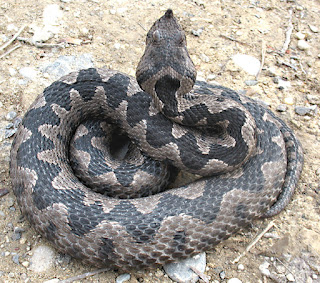
Snake is a solar animal, which is in our world when sun is in our world: during the day and during the hot part of the year...Which is why it was in this ancient calendar, used as a solar symbol and the symbol of the hot half of the year...I talked about this in many of my posts, for instance "Enemy of the sun", "The chthonic animal", "Bactrian snakes and dragons"...
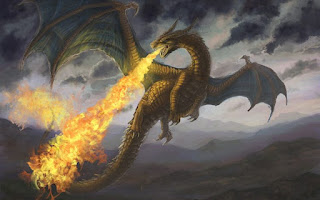
Dragon of a fire breathing variety, is just "an old snake", just a "snake that has looked at the sun for a long time"...Dragon is basically just a symbol of the late summer, the hottest and (usually) driest part of the year, the time of droughts...I talked about this in many of my posts, for instance "Dragon who stole rain", "Seven headed dragon", "Winged superhuman hero", "Is that you Gilgamesh"...
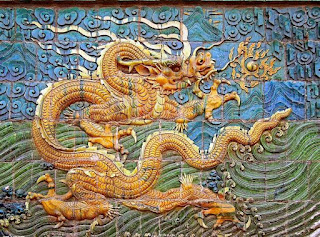
If you are interested in mythology where dragon is a water animal, because the hottest part of the year is also the wettest, check these articles out about Chinese dragons: "Chinese dragon", "Tiger and dragon"...
So we have a snake/dragon as a symbol of the hot part of the year...Fighting with a composite creature, part wild boar (mating season Nov-Jan), part wolf (mating season Jan-Mar)...
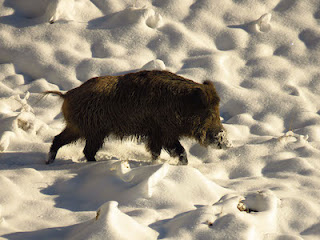
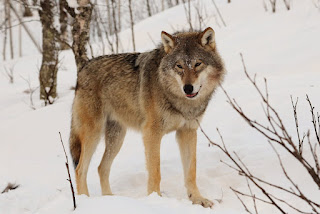

As you can see the animals forming "The enemy of the snake/dragon" mate during the winter, and are used widely as symbols for winter, the cold part of the year, when snakes are nowhere to be seen...They are killed (forced underground into hibernation) by their "mythical enemy"...Cold winter...

And if we look at the "mythical animal", we can see that the wild boar (snout, tusk) actually marks the beginning of winter and the wolf (head, body) marks the end of winter...

So...I believe that here we have a symbols of two opposing halves of the Central Siberian climatic year, hot summer and cold winter...Depicted through animal calendar markers...

PS: Here is another article about an artefact done in "Siberian animal style" with every single animal depicted having its mating season during the winter, which why it is being used as an animal calendar marker for winter...I talked about it in my post "Tasmola talisman"...


To read more about ancient animal and plant calendar markers, start here…then check the rest of the blog posts related to animal calendar markers I still didn't add to this page, and finally check my twitter threads I still didn't convert to blog post...I am 9 months behind now...

Tuesday, 7 March 2023

Horned serpent

Horned Serpent petroglyph, Barrier Canyon, Utah, USA...Pic by Brian C. Lee.

When I first saw this image, I thought that this could be a depiction of an actual horned snake. The only horned snake that lives in Southwestern USA is American horned rattlesnake (Crotalus cerastes).

But it is images like this, of a horned humanoid figure standing over a snake with no horns that made me believe that the horned serpent depicted on the ancient American petroglyphs is not a depictions of a horned rattlesnake, but something else entirely. Pic by "Nine Mile the Third".

In this article I will explain why "mythological" horned serpents of the Indian tribes of the South West of the USA isn't mythological at all. It is actually real...complex animal calendar marker. 

The horned serpent is an animal hybrid

with a body of a rattle snake

and horns of the desert big horn sheep

So what's it all about? Well let's first have a look at the mythology of the horned serpent.

The horned serpent is believed to be the guardian of water and is associated with rain, thunder and lightning. Its wavy curves symbolise flowing water...and its depictions are most often found on river canyon walls...Pic by "Nine Mile the Third"

Sooo...Rattle snake-Big Horn sheep hybrid guarding water...Why? What does it mean? Well to understand this, we need to have a look at the climate in the Southwest of the USA and the annual lifecycle of Rattlesnakes and Big Horn sheep...

This is climate chart for Arizona...

That spike you see in Jul/Aug/Sep is the monsoon...Only the most important annual event, the one that makes corn agriculture (and life) possible in Arizona...And the rest of the Southwest...

In my post "Alosaka" about the Hopi Indian "god of agriculture and rain", I explained that he had Big Horn Sheep horns because the mating season of these wild sheep, characterised by violent ram fights, coincides with the Southwestern Monsoon season...

And so the Big Horn sheep became animal calendar marker for the Southwestern Monsoon season: 

When are the rains going to arrive father?

When Big Horn sheep start banging their heads my son...Now shut up and go to sleep...🙂

Eventually this animal calendar marker became deified...And we ended up with the Rain god with Big Horn sheep horns...To whom people could pray for rain...It's kind of hard to pray to a sheep...

So this solves the horn part of the horned snake, mythological being associated with rain, thunder and lightning, the protecter of flowing water...BTW, a lot of the canyons where horned snake petroglyphs were found are dry, except during monsoon season...So let's have a look at the reproduction lifecycle of Rattlesnakes...Cause animal calendar markers most often mark mating and birthing period of the depicted animal...

In the Southwest of the USA, Rattlesnakes are active between Mar/Apr and Oct/Nov.

But they are most active during the monsoon season (Jul/Aug/Sep). In just a few short months, they need to shed their skin (at least once), give birth, find mates, mate...

Which makes Jul/Aug/Sep the most likely time to be bitten by a rattlesnake...

I don't think that this would have gone unnoticed by the local hunters/gatherers/corn farmers...

Soooo...The monsoon thunderstorms arrive when Big Horn sheep and Rattlesnakes start mating/giving birth. What do you think? Is this why in Southwestern USA we find "horned serpent" as the guardian of water associated with rain, thunder and lightning? 

I think so...

BTW, the horned snake from the original tweet is just a part of a larger petroglyph panel, depicting a the "spirit" (???) with horned snake (guardian, bringer of water) on one side and the sun on the other. As opposing forces??? Or just to emphasise that the wettest part of the year in in Southwestern USA is also the hottest time of the year??? Pic by Randy Langstraat.

This petroglyph is one of many made during the archaic period (6000 BC - 100 BC)...Here is another one from that period. I love the horned snake with hands spewing water (rain)...Oh, and there is another "spirit" (???) there too...Pic by Randy Langstraat.

Apparently no one knows what these "ghost" like creatures with "tails" could be...Well, the monsoon rain storms, which arrive with the "horned snake", look like this...Hmmm..."ghost" like creatures with "tails"???

Maybe this petroglyph panel, also from the archaic period (from Thompson, Utah) depicts just such rainstorm? Compare this image to the above pic of monsoon clouds spewing water onto the dry ground...Pic by Calvin J. Hamilton.

In the middle of this panel is this horned dude, with what look like Big Horn sheep horns. Just like our Hopi friend Alósaka, the Big Horn sheep god of grain and rain, whom I mentioned earlier...

The Utah horned dude also has no legs, and looks like one of those monsoon downpours...Which apparently have a name: microbursts...or...rain bombs...Like this spectacular one...

Downpours which create flush floods and fill the rivers with water...Like this flush flood in White Canyon, Utah. And he has what looks like flowing water pouring out of his shoulders...Hmmm...

And next to the horned rain cloud dude is a horned snake...The guardian (bringer) of rain...Which arrives in Jul/Aug...In the 7th moon after winter solstice...Keep this in mind...Now look at this petroglyph...A horned snake with 6 horns and a rattle...Pic by Michael Fuller.

Apparently, no one knows what this means...Maybe each horned snake represents on moon and the rattle means thunder...And this all together means "the horned snake brings rains after 6 moons counting from the winter solstice"??? What do you think? Makes sense?

Monsoon rains which are brought by the horned snake in Jul/Aug, end the drought, caused by the summer sun in May/Jun. Look at this: petroglyph at Los Lunas site, depicting shielded warrior (with sun shield) engaged in combat with horned serpent...Pic by W. C. "Bill" Porter.

Oh BTW, in case you wander if this horned snake has Big Horn sheep horns, it does. Just reversed for some reason. This article shows all different ways Big Horn sheep were depicted, on Southwestern petroglyphs. 

Normal horns example

Reversed horns example 

Pic by Maarten van Hoek.

I could go on and on, but I think this is enough for everyone to get the point...What we are looking at are complex animal calendar markers for Monsoon season in the Southwest...

Animal calendar markers which were developed by the "archaic people", nomads, who lived from hunting large and small game animals, and collecting and processing wild plants...

They occupied the Southwest of the USA from approximately 8,000 years ago until the introduction of corn agriculture about 2,000 years ago...The earliest examples of their art appear in Utah, in and around the Canyonlands National Park...

BTW this is climate graph from the area of Utah where these cloud dudes with horned snakes first appeared. The precipitation peak starts Jun/Jul, peaks in Aug, and ends in Sep/Oct...From "Climate of the Central Colorado Plateau, Utah and Arizona: Characterization and Recent Trends"

Interestingly, the corn farmers continued using the same animal calendar markers...What does this tell us about cultural continuity in the area? I think a lot...

These animal calendar markers were developed locally, in the area, and were used by local people, hunter/gatherers who later became farmers. They were not imported from any other part of the world where we find animal calendar markers. And I found them everywhere I looked so far. 

Like everywhere else, these animal calendar markers are an inevitable product of the process in which hunter gatherers turn into farmers...

Hunter gatherers knew everything about plants and animals...And if those animals do the same thing every year, at the same time, then you can use them as calendar markers...

As agriculture become more and more important, and people start depending on it more and more, the animals related to the most important annual agricultural events (like monsoon rains) become more and more important. To the point where they become deified...

And turned into gods...As I said, you kind of look stupid praying to a Big Horn sheep for rain...So you pray to a God of rain with Big Horn sheep horns...Makes much more sense...

And this seems to have happened everywhere...And I believe totally independently...It's just the way we are...

Anyway, I hope you enjoyed reading this article. I did certainly enjoyed researching it and writing it...

To read more about ancient animal and plant calendar markers, start here…then check the rest of the blog posts related to animal calendar markers I still didn't add to this page, and finally check my twitter threads I still didn't convert to blog post...I am 9 months behind now...

Sunday, 21 September 2025

Peacock and cobra

Chaturbhuj Nala's rock art in Bhanpura, Madhya Pradesh. 

What we see is two peacocks attacking a snake. Peacocks are known to hunt and eat snakes and were kept in palaces for exactly that reason...I think that the dots depicted next to the snake are drops of snake's blood. But does this image have another, non obvious meaning. I think so. And I think that animal calendar markers can help us understand it...

Animal calendar markers are made by people who observed that certain annual animal behaviour, like mating, birthing, migrating, coincides with some climatic event like summer monsoon season...

In India, climatic year is divided into two halves, the wet half of the year, summer monsoon (Apr - Sep) and dry half of the year, winter monsoon (Oct - Mar)...

I talked about deification of the monsoon winds in India in my post "Surya's wives" in which I explained what this commonly depicted scene means. 

This very happy looking dude, with two gorgeous babes sitting on his laps, is no other than the Vedic Sun God Surya. He is positively "beaming" with pride...And I guess pretty glad to have few extra hands...But what is really the narrative here? Well sun and monsoon, dry and wet, of course...

And in my post "Vayu", about the "God of wind" whose name literally means air/wind. But not just any wind. Summer monsoon wind...

The peak monsoon rain season in India is Jun-Sep...

Interestingly, this is also the peak mating season of the peafowls. During this time peacocks engage in mad displays and fights and their mating call even sounds like Hindu for "Come rain!!!"...

Not something local people would easily miss...

Which is why peacock became deified animal calendar marker for summer monsoon rain season. I talked about this in my post "Come rain"...

Inevitable deification of peacock animal calendar marker, process we see everywhere with all animal calendar markers, produced in India these kind of legends: Peacocks originally had dull tail feathers...

But once Indra, the god of monsoon rain, battled the demon Ravana. Indra was losing the fight, and was running away from Ravana when he came across a peacock who spread its tail and hid Indra behind it...

In return from being saved by the peacock, Indra gave a boon to the peacock saying that just as he, Lord Indra is  Sahasraksha, or thousand-eyed, the peacock too shall get a plumage of a thousand iridescent eyes...

Oh, and since then Indra loves peacock so much, that it is believed that when Indra transforms himself into an animal, he becomes a peacock...

Indra is usually depicted riding on a cloud elephant (another deified animal calendar marker)...


Why? Indian elephants mate during Indian monsoon season...

This is another proof that Rig Vedas had to have been written in India proper, cause this link between rain gods and elephants makes no sense anywhere else...

I talk about elephant calendar marker in India in my posts "Musth", "Samantabhadra", "Modesty", "Ganesha"...

But Indra's main general, Kartikeya, rides on a peacock...I will talk about Kartikeya in a separate post soon...

Also, because this overlap between peafowl mating season and the monsoons season, Makara, the mount of the old monsoon god Varuna, but really a complex animal calendar marker for the monsoon season, sometimes has peacock tail...Talked about it in my posts "Makara", "Yakshi", "Maruts"...

But what about the snake?

Snake is a pure solar animal. It is in our world when sun is here (day, hot half of the year) and it is in the underworld when sun is there (night, cold half of the year)...


I talked about this in many of my posts listed here

I so far didn't write about snake animal calendar marker in Indian mythology, something which is way overdue. Will try to do this soo...I promise...

But what snake is depicted between the two peacocks on the Chaturghuj Nala's rocks? If I was a betting man, I would bet it is the Indian Cobra (Naja naja). 

Why? Because it has a mating season in India between April and July...During rain monsoon...

During this period, the female Indian Cobra lays eggs in holes in the ground and then guards them. The incubation period lasts for approximately 48 to 69 days, after which eggs hatch into young snakes that are independent from birth and capable of hunting and delivering venom...

Again, all the things not easily missed by the local population...

So, during the monsoon season, both peacock and cobra have their mating seasons and are because of that both animal calendar markers for the monsoon season...

In the Arthashastra, an Ancient Indian Sanskrit treatise on statecraft, politics, economic policy and military strategy, when the author wants to talk about two natural enemies forgetting their ancient hostility in the face of a common calamity, he says:

The peacock and the cobra are natural enemies. But during the heat of the summer, the cobra lives in the shade of the peacock’s wing...

I believe that this is both political and calendaric allegory...

And so back to the original depictions of peacocks attacking a cobra from the Chaturghuj Nala's rock art. What I think is depicted here is triumph of summer monsoon (peacock) over sun (snake), where the drops of snake's blood represent rain...


That's it. To read more about ancient animal and plant calendar markers, start here…Then check my twitter threads I still didn't convert to blog post...I am way way behind...

Wednesday, 18 October 2023

Oldest narative scene

Archaeologists have discovered what may be the earliest known narrative scene, telling an ancient story, at the 11,000-year-old site of Sayburç in south-eastern Turkey. 

The two panels depict people interacting with dangerous animals. In one, a human grasps their penis whilst leopards approach from either side. In the other panel, a squatting male holding a rattle or snake faces a bull. 

What could this all mean? We don't know, but it sure must mean something...

You can read the full article about this archaeological site in "The Sayburç reliefs: a narrative scene from the Neolithic". 

The "earliest known narrative scene, telling an ancient story" is actually a complex animal calendar depicting seasons in the Sayburç area: 

Here is the climate chart for the Sayburç area:


Hot/Dry Season (Apr/May-Oct/Nov)

Cool/Wet Season (Oct/Nov-Apr/May)

But how can this scene be related to this climate chart? Well, through animal calendar markers, which mark either mating or birthing or migrating time of the depicted animal...

So let's analyse the animal calendar markers depicted on the Sayburç relief:

Charging bull


Bull is the most common animal symbol for summer (May/Jun/Jul)... 

I talked about (most common) animal symbols for seasons (still imbedded into out zodiac today), found all over Eurasia and North Africa since Neolithic, in my post "Symbols of the seasons"...

Summer starts in Taurus (Apr/May), the ancient animal calendar marker which marks the time of the year when Wild Eurasian cattle used to start calving... I talked about it in many of my posts, like "Bull carrying granary", "Cow and calf ivory", "Ram and bull"...

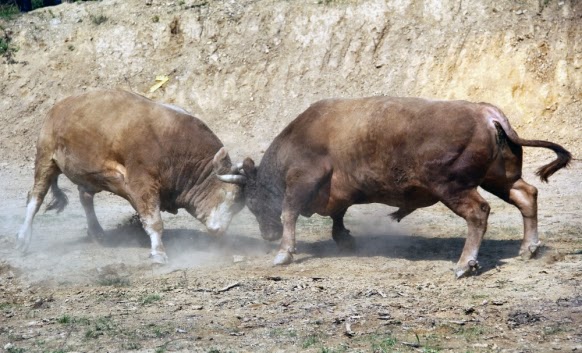
The summer, which started in Apr/May with the calving of Wild Eurasian cattle, ended in Jul/Aug, with mating of Wild Eurasian cattle...Mating which was marked by vicious bull fights...Where bulls "charged" at each other...

I talked about this in my posts "Alidjun" and "Bull leaping in Syria"

Jul/Aug is also the hottest time of the year in Eurasia...

Snake is a pure solar animal. It is in our world when sun is here (day, hot half of the year) and it is in the underworld when sun is there (night, cold half of the year)...I talked about it in these posts:

"The chthonic animal", "Enemy of the sun", "Letnitsa treasure"...

This is why we see sun gods depicted with snakes. A seal depicting the sun god (see heat rays emanating from his shoulders) holding snakes, symbols of sun's heat...You know, like Utu/Shamash, the sun god? 


I talked about this in my post "Nude winged hero dominating snakes", "Snake god from Hatra", "Sun god from Tell Brak"...

Also, the beginning of the mating season of the most common Eurasian snakes, vipers (Apr/May), coincides with the beginning of the drought season in Mesopotamia and surrounding regions...

This is why we find Snake as a symbol for sun's heat, and an animal calendar marker, of "sunny, hot" half of the year world over...

Examples:

Eagle-Snake struggle mosaic from the palace of the Emperor Justinian I  (527-565), Istambul...This is actually a complex animal calendar marker for the thunderstorm season in Europe Apr/May -  Sep/Oct, when migratory snake eagles can be seen in Europe...

I talked about it in my post "Eagle snake struggle"

A "Scythian" gold belt buckle depicting a "fight between a wolf (winter) and a snake (summer)"...Made between 7th c. BC and 2nd c. AD... 

I talked about this in my post "Wolf vs Snake"...

Now bull is running towards the man (god) holding a snake with a snake pointing downwards (If I can see correctly). A dead snake? Representing the end of the sunny, hot half of the year...

Leopard: 

According to the article about this relief, one of the leopards is male and the other is female. Leopards are solitary animals which only come together during mating season...

Eurasian temperate climate leopards mated in Jan/Feb...So I believe that the leopards mark this time of the year...Which just happens to be the peak of the rain season in the Sayburç area...


And this this then raises the question: who is the masturbating dude standing "in leopard" (Jan/Feb), which is what "standing between the two (mating) leopards" means...

I am not sure if I am seeing things, or the great masturbator has a feline (leopard) features? Look at the ears and the shape of the face...To me it doesn't look "completely" human...

If so, we have here the earliest clear depiction of the deification of an animal calendar marker: leopard, marker for the Jan/Feb peak of the rain season, being turned into the leopard-man sky/rain god...Rain being the sky/rain god's semen, which makes the barren earth fertile...

BTW, the link between leopard's semen (mating season) and rain (heavenly semen) is still there in Mesopotamia thousands of years later

It is depicted explicitly on this vessel from Tepe Hissar, dated to 4500-4000 BC...Both Ibex goat (main rain season animal calendar marker from Western Asia and Mediterranean, check "Shell plaque with ibexes") and Leopard/Cheetah are actually ejaculating rain...


I talked about this in my post "A vessel from Tepe Hissar"...

So...Back to our "narrative scene, telling an ancient story": 

The furious bull of dry, hot summer is stopped...The sun's heat has died down...The leopards of the rain season are mating, the (leopard) rain god has arrived and is spreading his holy semen on the land...Rejoice...

To read more about ancient animal and plant calendar markers, start here…then check the rest of the blog posts related to animal calendar markers I still didn't add to this page, and finally check my twitter threads I still didn't convert to blog post...I am 9 months behind now...