Showing posts with label blue lotus symbolism. Show all posts

Saturday, 9 May 2026

Crux Ansata

5th-century relief featuring the Coptic "crux ansata" (Christianised ankh), from a 5th Century AD Coptic Church. 


According to Socrates of Constantinople (380 – 439 AD), when Christians were dismantling Alexandria's greatest temple, the Serapeum, in 391 AD, they noticed cross-like signs inscribed on the stone blocks. Pagans who were present said the sign meant "life to come", an indication that the sign Socrates referred to was the ankh; Christians claimed the sign was their own, indicating that they could easily regard the ankh as a Crux Ansata.

This is Crux Ansata:


The explanation that the Ankh symbol meant "life to come" is very interesting indeed. Here is why:

In my 2018 post "Square and compasses" and in my 2019 posts "Etemenanki" and "An-Ki-Ankh" discussed the origin of the Ankh symbol. 


And I proposed that the ankh symbol came from Mesopotamia where it originally looked like this:

A hand (of god, the great architect) holding measuring line (for measuring domed sky, An) and measuring rod (for measuring flat earth, Ki). 


Basically, primitive Square and Compasses...


There is actually Serbian saying "Pomoću štapa i kanapa" (Using stick and rope) meaning "in the old primitive way"...

This symbol, meaning An (Sky) - Ki (earth) eventually became Ankh...

In these old posts I also wrote that: 

Early examples of the ankh sign date to the First Dynasty (c. 30th to 29th century BC). There is little agreement on what physical object the sign originally represented. Most scholars believe the sign is a knot formed of a flexible material such as cloth or reeds or rope... The below stone ankh was actually made to resemble ankh made from reeds.


This ankh is made by bending one piece of reed into a loop, and then tying it to a handle created from  another piece of reed bent to form T shape. Like this:


Here is one I made today :)


What does the intercourse between the Father Sky and Mother Earth produce? Life. Living nature including us humans...Life is materialised divine, (sky) god who became (earth) matter...

So An+Ki = Father+Mother = Life... 

What did the intercourse between God (Father Sky) and Mary (basically symbolical replacement for Mother Earth) produce? Christ who is God who became Man. God materialised. So based on the above analogy, Christ is just a symbol. Symbol of life itself. 

I wrote about Christ as Life in my post "Living nature", but I will repeat it here...


If Christ is life, living nature, then his immaculate conception and virgin birth become easy to understand...

If Christ is life, living nature, then his death and resurrection become easy to understand...

If Christ is life, living nature, and we are part of life, living nature, then we are Christ. We truly live and move and have our being in Christ...This too then becomes easy to understand...

If Christ is life, living nature, then god who became matter is easy to understand too...

If Christ is life, living nature, then we are all Christ, we are all god. Just like the mystics the world over have been teaching for millennia...

Apparently this is too "Pagan" for "Christians" and too "Christian" for "Pagans"...So everyone gets offended...

This is Christ on the cross from "Plaque from the Maskell ivories", AD 420-30, Rome 


This is also crux ansata, Ankh, AnKi, life...

On the original Coptic relief, the priest (saint?) is using ankh to point at the green plants, symbol of life. Which can't grow without (rain, flood) water...It is (rain, flood) water that makes life possible. It is the (rain, flood) water that contains the essence of life...

I recently wrote an article "Sycamore tree goddess" in which I talked about the link between ankh (life) and (Nile flood) water (the source of life) in Egypt...


Which is why (rain, flood) water is holy. Cause, despite all our accomplishments, we owe our existence to a six-inch layer of topsoil and the fact it rains (floods)...

This link between the Nile flood, life and Ankh is symbolically depicted through this, most likely the oldest, the original Egyptian Ankh: A hand holding a knot made from Papyrus (flowers during and therefore marks the beginning of the the Nile flood) and Lotus (flowers during and therefore marks the peak of the Nile flood). I talked about this first in my post "Goddess on a horse"...


Which is why this is super interesting: A relief from the ancient Egyptian Temple of Hatshepsut. It shows a platter with food arranged to look like a duck by making an (ankh) knot using lotus, the symbol of the Nile flood without which there will be no food in Egypt...

I talked about the blue lotus as the plant calendar marker for the Nile Flood in many of posts. For instance "Lotus and papyrus" in which I explain why the Egyptian god Hapi, who was the god of the annual flooding of the Nile in ancient Egyptian religion, was associated with papyrus and lotus flowers, and is often depicted as twins, tying papyrus and lotus flowers together...

And my post "Beautiful boy", about Nefertem, the Egyptian Beautiful Boy, originally a lotus flower at the creation of the world, who had arisen from the primal waters...Nefertem emerging from the lotus blossom, from the tomb of Tutankhamun...


PS: Now I understand why the Innana knot, the symbol of fertility and plenty, made from reeds and directly linked to the annual Tigris and Euphrates flood...Will write more about this soon...


BTW, I already talked about some other aspects of the Inanna cult found in Egypt in my post "Inanna in Egypt"... 

That's it. If you are interested in reading more about ancient animal and plant calendar markers, which are at the root of all our mythologies, start here…Then check my twitter threads I still didn't convert to blog post...I am way way behind...

Saturday, 15 May 2021

Golden boy

Inlaid ivory panel depicting "lioness devouring a boy"... From the palace of Ashurnasirpal II, part of an almost identical pair, originally part of a piece of furniture, perhaps a throne. ca 899-700 BC...


There is something very strange about this object. It doesn't look very Mesopotamian...

This "boy" being devoured by the lioness...His gold tunic and particularly his gold curly hair, indicate that this is not an ordinary boy...And the lioness devouring him. The jewel on her forehead indicates that we are not talking about an ordinary lioness either...

I would suggest that this young boy (we know it's a boy because he is wearing short skirt of youth and not the long skirt of adulthood) is the symbolic depiction of the young sun of spring and summer...

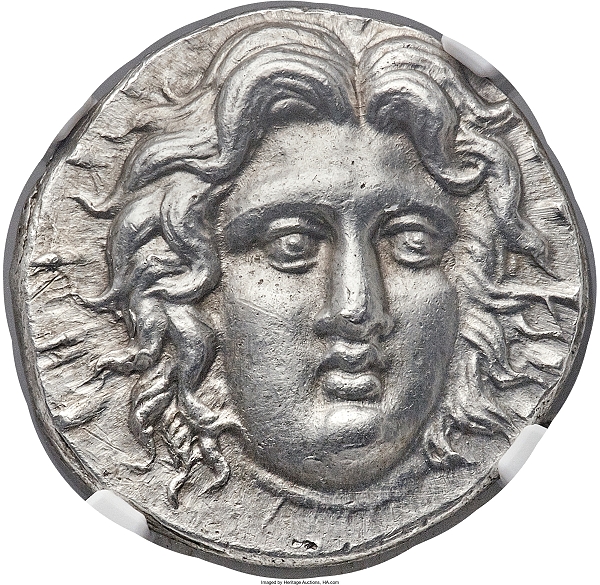
A very strange depiction of the sun to be found in Mesopotamia...But not further west...Here are three ways the sun god Helios is depicted on Greek coins: Big rays, Small rays, No rays, but dashing locks of (presumably golden) hair... 


From my post about "Lion killing Snake" symbolism...

Was this golden hair boy an early depiction of such sun god? The piece looks like an import. From where? Do we find anything similar anywhere else at that time in the Eastern Mediterranean? 


The killing of the young boy by a lioness takes place among blue water lilies, wrongly called Blue Lotus, even though they don't belong to the lotus family... 


These beautiful blue flowers are native to both Nile marshlands as well as Mesopotamian marshlands although it is possible that they were transplanted from Egypt to Mesopotamia during Bronze Age or even Earlier...were believed to be "magic flowers", and were worshiped by both Egyptians and Mesopotamians...You can read more about this in "Influences of Egyptian Lotus Symbolism and Ritualistic Practices on Sacral Tree Worship in the Fertile Crescent from 1500 BCE to 200 CE"

And blue water lilies flowering season is from July until September. Peaking in Leo...Leo which marks the end of summer...

Hence the lioness killing the gold haired boy (sun) among the lilies...So I think that whoever made this ivory plate deliberately placed the murder scene among the flowering blue lilies. 

By the way, why is July-August the part of the year marked by Leo? Well Eurasian Lions are seasonal breeders. And their mating season peaks from August and October. 


Covering the whole of autumn, part of the year symbolised by lion...

I talked about this in my post "Symbols of the seasons"...

And it is autumn that kills summer...

Interestingly, Nebuchadnezzar II dedicated the bright blue gate he built in Babylon to the Babylonian "Mistress of Heaven", Ishtar, and covered its façade with Nilotic blue lotus (Blue water lily)...


Ishtar (the warrior goddess) who likes posing standing on a lion...


The "mysterious" morning star...Guess who rises with the sun, pretending to be "The morning star" in Leo? Sirius...A very special star indeed...

Is she the lioness in the original scene? The jewel on the lionesses forehead sure looks like a star...

PS: Just learned about Nefertem, the Egyptian Beautiful Boy, originally a lotus flower at the creation of the world, who had arisen from the primal waters. Some of the titles of Nefertem were "He Who is Beautiful" and "Water-Lily of the Sun"... 

Nefertem emerging from the lotus blossom. Found at the entrance to the tomb of King Tutankhamun, in the Valley of the Kings, 18th Dynasty, New Kingdom.

Pic: Margarete Büsing

BTW, blue water lily flowering season, July until September is the same season when the Nile water level reaches its peak. During the annual Nile flood...

So I wonder if "lotus flower at the creation of the world, who had arisen from the primal waters" just means: "lotus flower who arrises from the waters of the Annual Nile Flood"

The Annual Nile flood is after all what originally created Egypt...Without the annual Nile flood there would be no Egypt... 

I talked about this in my posts "The flower of life" and "Lotus and papyrus"...

This is the time when Hathor, who was also Mehet-Weret (The great flood) finally arrives...As a lioness, Sekhmet...I talked about this in my post "Holy Cow" and "Cow and calf ivory"...

PPS: Just learned that the jewel in the lioness's forehead is lapis lazuli, the "water stone"...This would also point at the lioness, flood link...I talked about this link between lapis and water in my post "Lapis lazuli water seal", "Lyres of Ur"...

To read more about ancient animal and plant calendar markers, start here…Then check my twitter threads I still didn't convert to blog post...I am way way behind...