Showing posts with label Leto. Show all posts

Thursday, 10 November 2022

Skipping

This is one of the best examples of the use of plant calendar markers I have ever seen...Archaic Greek black-figured amphora, found in Etruscan city of Vulci, Italy, and dated to 520BC... 

Currently kept in the British MusemThe main panel depicts, from left to right: 

Hermes

Dionysos holding grapevine with ripe grapes

Leto holding the infants Artemis and Apollo in her arms

Satyr (?) holding long juvenile ivy shoot...

Soooo???

The ripe grape (harvest) season in Greece is autumn, Aug, Sep, Oct...

The common ivy (Hedera helix) is an evergreen which grows throughout the year, but the main growth spurt season in Greece, when it puts out long juvenile shoots, is spring, early summer, Feb, Mar, Apr, May...

So the grapes and ivy shoots can be used as plant calendar markers for autumn and spring...And they are held by Dionysus, god of winter, whose plant symbols are grapevine and ivy, and one of his Satyr mates...

So Dionysus and Satyr are, with their plants, marking beginning and the end of winter. And in the middle of winter is midwinter, winter solstice, the time when the new sun, new solar year is born...Which is exactly where Leto stands...

Now remember that Leto gave birth to Artemis first and Apollo second...Which is why Artemis is closer to the grapes, autumn, and Apollo is closer to the ivy, spring...

Amazing, totally amazing...

But wait!!! This could just be a coincidence!!! Just a random jumble of plants, gods and mythological creatures!!! How can you be sure that this depicts winter?

Cause of the other side of the amphora. Of which, we only have the description:

On the other side, we have a scene of a procession: first a Satyr carrying a wineskin, then another Satyr riding a goat, followed by another Satyr slapping the goat's behind, followed by another Satyr dancing...

So?

Well, if there ever was a symbol of winter, it's a goat...Wild goats mate during winter, and are found as symbol of winter throughout Eurasia...

I talked about the link between wild goats and Dionysus in my post about "Patera of Rennes"...
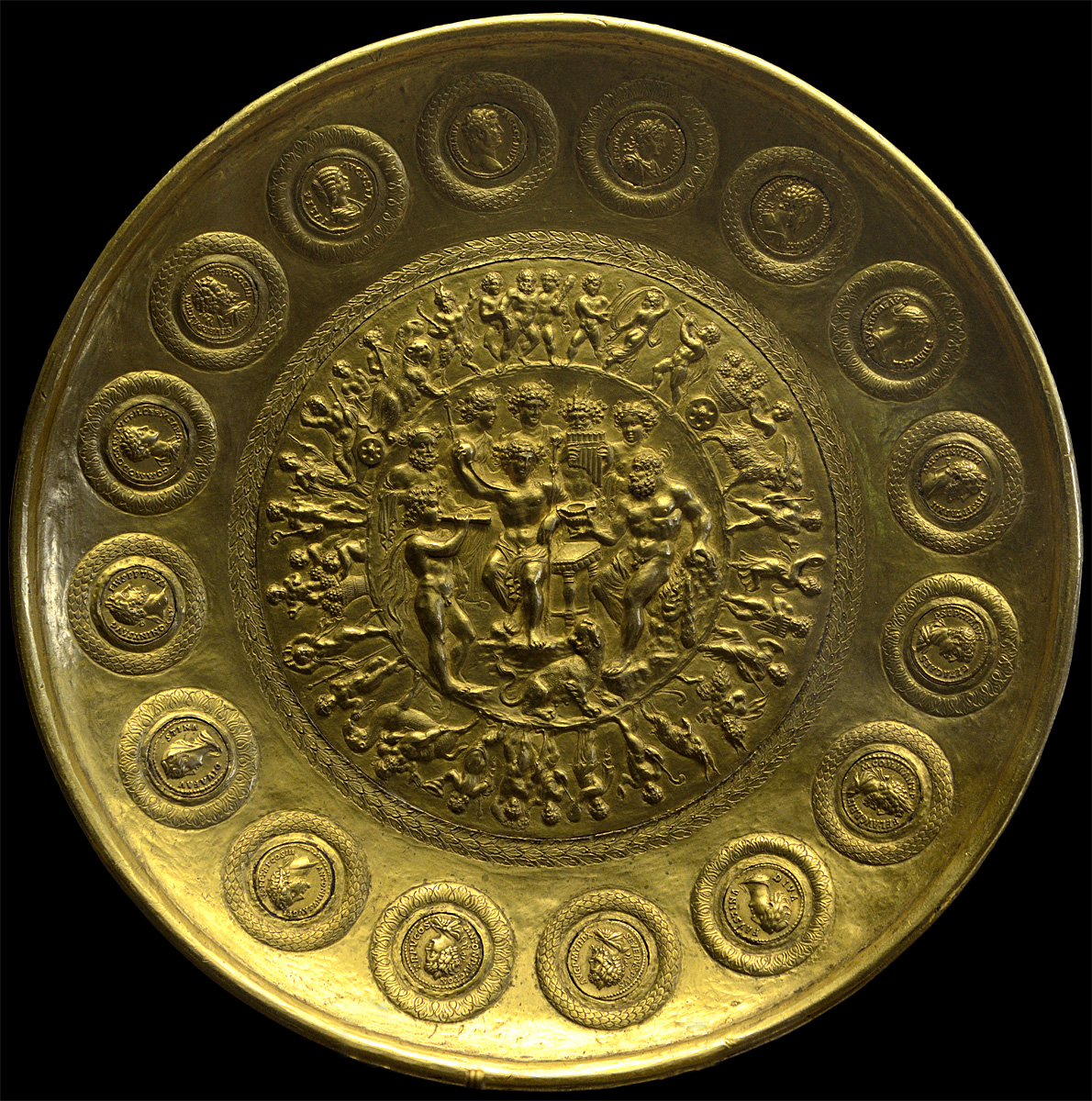
And in Europe, because the Alpine Ibex mating season centres around Winter Solstice, we have this as the winter zodiac...I talked about this in my post "Trentar"...

This all of course fits with the story about the birth of Apollo and swans...When Apollo was born, swans circled over the place where he was born...

The Swans of Apollo were "Singing swans" which "when the singers would sing hymns to Apollo, would join the chant in unison"...The only swans that "sing" are whooper swans...

Which are migratory birds, which are in Greece only during winter...Right on time for winter solstice...You can read about all this in my post "Singers of Apollo"...

So I will stop here for tonight...Hope you enjoyed this...Have a nice evening...

PS: Forgot to wish you all "Sretno Novo Leto" (Happy New Year/Summer)... Apparently the etymology of Leto's name is unknown, possibly "pre Greek"...

To read more about ancient animal and plant calendar markers, start here…then check the rest of the blog posts related to animal calendar markers I still didn't add to this page, and finally check my twitter threads I still didn't convert to blog post...I am 9 months behind now...

Saturday, 11 May 2019

Bird torcs

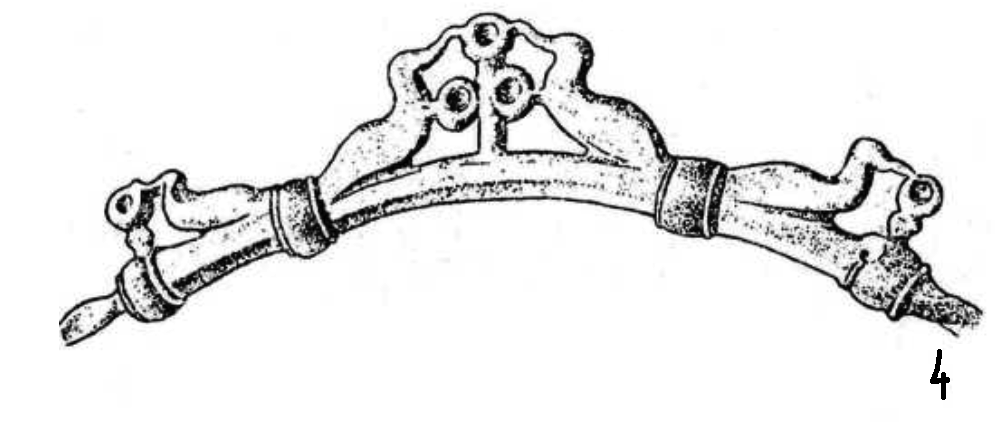
Very interesting La Tène bronze torcs from Marne region of France. 

The first two are decorated with two birds, most likely ducks, holding a disc. Solar disc? 

Tthe third one is again decorated with birds (ducks?). And triskele (trinity) between them?  


The fourth one is decorated with two birds holding a tree of life?

What is the meaning of these decorations?

Arrival and departure of the migratory birds demarcate the "sunny" part of the year in Europe. Which is also the part of the year when plants grow and give fruit...


This is reflected in Slavic languages. The word for summer "leto" is derived from the word for flight "let" precisely because the summer, the sunny part of the year is demarcated by the arrival and departure of migratory birds. You can read more about in my post "Leto".

Is this what the above torcs are symbolically depicting?

Sunday, 28 May 2017

Bull and bird

Recently I came across these two interesting vases:

The Sub-Minoan (1150-1100 BC) vase from Crete decorated with a bull and a bird. 


The Mycenaean (1300 BC) vase from Enkomi, Cyprus, decorated with a bull and a bird


Apparently similar vases were also found in Jordan, but I couldn't find any pictures of them.

Now what do these images symbolize? Well it could be just bulls and a birds. They are often seen together. 


But Minoans considered both bulls and birds sacred and clearly attributed a symbolical meaning to both animals. This is a Minoan symbol, Larnax, 1300 bc. A bird (duck) sitting on labris which is positioned between the bull horns. 


So is there a deeper meaning to these images?

In my post entitled "Leto" I talked about the link between Slavic words "let" meaning "flight" and "leto" meaning "summer, year".

In short, the period between these two "let" (flights) of migratory birds, between their arrival and their departure, is "leto" (summer). This beginning of the new "summer" is the beginning of the new period of vegetative growth and abundance, the "important" part of the year. Which is why Serbian word for "summer" and "year" is the same: "leto"...

In Slavic mythology, Jarilo was the son of the supreme Slavic god of thunder, Perun, his lost, missing, tenth son, born during Velja Noć (Great Night), the pagan Slavic celebration of the New Year. We don't really know what the "Great Night" means, but I believe that this Great Night was originally the night before the beginning of winter which in the Irish calendar is marked by Samhain, the 31st of October, and in the Serbian calendar by St Mitar day (Mitrovdan) the 8th of November. I believe that this night was originally the night of the 5th of November, the mid point between the autumn equinox and winter solstice. 

I also believe that the expression Great Night was also an euphemism for Winter, the time of cold and death. Right in the middle of the winter is the night of the winter solstice, the longest night of the year, which is also the middle of the winter, the middle of the darkest part of the year. This is the night when new fires are rekindled, to symbolize rekindling of sun's fire, the birth of the new sun, new solar year. This new sun is Jarilo, whose name means the young one, but also the hot one.

However, on the same night when he was born, according to the Slavic tradition, Jarilo was stolen from his father and taken to the world of the dead, where he was adopted and raised by Veles, Perun's enemy, Slavic god of the underworld and cattle. The Slavs believed the underworld to be an ever-green world of eternal spring and wet, grassy plains, where Jarilo grew up guarding the cattle of his stepfather. In the mythical geography of ancient Slavs, the land of the dead was assumed to lie across the sea, where migrating birds would fly every winter. This land of the dead was by Slavs known as Iriy, Irij or Vyriy (Russian: ирий, ирей, вырий). And when do the migrating birds leave the land of the living? By the beginning of the winter, which is marked by Samhain (Mitrovdan).

With the advent of spring, Jarilo returned from the underworld, bringing spring and fertility to the land. Spring festivals, actually more precisely summer festivals of Jurjevo/Jarilo, St Georges day,  that survived in the Slavic folklore celebrate Jarilo's return, the return of the summer heat. This is also the time when in Irish folklore we find Beltane, the day of bonfires, which also celebrates the return of the summer heat...

And when does Jarilo return from the land of the dead? When the migratory birds return from Irij, the land of the dead, where they spend winter, the period between Samhain (Mitrovdan) and Beltane (Jarilo day, Djurdjevdan)...

You can read more about the old Celtic and Serbian calendar in my post "Two crosses". 

Now Beltane (Jarilo day, Djurdjevdan), the day when Jarilo returns from the land of the dead, the beginning of Summer, is celebrated on the 6th of May. This date, falls in the middle of the Taurus (Bull) zodiac sign (21 April – 21 May), which marks the beginning of the calving period of the Eurasian wild cattle

So the arrival of migratory birds is immediately followed by the beginning of summer, which falls in the middle of Taurus (Bull) zodiac sign...

Is this what is symbolically depicted on the above two vases? 6th of May, Beltane, (Jarilo day, Djurdjevdan), the beginning of summer? I think so. 

What do you think?

Friday, 27 January 2017

Leto

Serbian word "leto" means both "summer" and "year". The word comes from Proto-Slavic *lěto, which comes from Proto-Indo-European *leh₁tom. Cognate with Ukrainian "літо" ‎(lito) meaning "summer", Belarusian "слецiць" ‎(sljecicʹ) meaning "to warm" and "слетный" ‎(sljetnyj) meaning "warmish", Bulgarian "лято" ‎(ljato) meaning "summer", Russian "лето" (leto) meaning "summer, year", Slovene "poletje" meaning "summer", Czech "léto" meaning "summer", Slovak "leto" meaning "summer", Polish "lato" meaning "summer", and Upper and Lower Sorbian "lěto" meaning "year".

Possibly also cognate with Old Gutnish "ladigh" meaning "spring" and dialectal Swedish "låding, låing" meaning "spring", and with Irish "lá" ‎meaning "day".

The etymology of this word is unknown. So let me propose one. Is it possible that the word "leto" comes from the word "let" meaning "flight"? The word "let" comes from Proto Slavic verb "letěti" meaning "to fly".  So why would you derive the word meaning "summer, year" from the verb "to fly"? Because of the migratory birds. Every year, starting from the second half of February, right after the climatic start of the spring, 4th of February,  migratory birds start arriving from their wintering sites. The bulk of the migratory birds return by the end of April, just before the climatic start of the summer, 6th of May.

So every year, during spring, which is in Serbian called "proleće", which can mean both "before summer" and "flying by, migrating", migratory birds arrive back home, signalling the end of the cold part of the year and the beginning of the warm part of the year. 


Equally the end of the warm period of the year, which normally coincides with the end of October, the end of the climatic end of autumn, is signaled by the flight of the migratory birds, this time in the opposite direction, flying away to their wintering sites.


In the old Celtic and Serbian calendar, year only had two parts: the warm, white part, summer (6th of May to 5th of November), and cold, dark part, winter (6th of November, 5th of May).

So the period between these two "let" (flights) of migratory birds, between their arrival and their departure, is "leto" (summer). This beginning of the new "summer" is the beginning of the new period of vegetative growth and abundance, the "important" part of the year. I believe that this is why Serbian word for "summer" and "year" is the same: "leto"...

I was just made aware of the existence of a Macedonian folk festival called Letnik. The following is excerpt translated from Makedonians in Albania by Dragoslav Budimovski. Original title: "Будимовски К, Драгослав. „Македонците во Албанија“. Студентски збор, Скопје, 1983. стр. 151":

"Letnik, which is celebrated every year on March 1 in the old calendar and is associated with the return of migratory birds from southern regions to Macedonia. The return of the migratory birds is celebrated as the beginning of spring or summer, the period of growth and the beginning of agricultural work. Therefore this feast is often considered to be a celebration of the beginning of the year in terms of the active period of the year. 

Holiday is mostly celebrated in Western Macedonia, in Galichnik, Golo Brdo, Pustec, Debar, Prespa, Ohrid and Struga. That this celebration has ancient pagan roots can be seen by the fact that in the areas where we have mixed population Orthodox and Muslim, like in Golo Brdo and Reka area, Letnik is celebrated by both Orthodox Christians and Muslims. However in mixed Macedonian Albanian areas only Macedonians celebrate Letnik. 

According to the testimonies of the local people, Letnik celebrations start in the early morning of the 1st of March. The first thing everyone does in the morning when they wake up is to look for a chicken (bird) so that you can be as light as a bird all year round. My comment: Originally people probably looked for return of migratory birds in flight. Then people look into their pockets so that they will have money and success (prosperity) all year round. People then go out in the forests and mountains and from there they bring home boughs made from blossoming cornel branches and they would put them over the fireplace. Alternately they would bring a cornel branch with which they would touch verige (the chain holding the cauldron over the fireplace), and then they would eat cornel blossom, so that they are healthy as cornel and as solid and strong as iron. My comment: Cornel is probably chosen because it has bright yellow flowers, like the summer sun everyone is awaiting...


Young children would pick dry branches and would go from house to house throwing them into house fires saying: How many sparks so many children (similar to Christmas Eve ceremony my comment: ceremony which is related to rekindling of the sun's fire). During Letnik day it was mandatory to bring a branch of cornel if you visited anyone's house, and in return the hosts would give the guests nuts, boiled grain and sweet. If the year turns out to be good for the host, the person who entered the house on first on Letnik morning is asked to do the same next year as he is believed to have brought luck to the family. my comment: Similar to the Christmas Položajnik (first footer) ceremony

This pretty much confirms my theory that the word leto comes from let. But there is more. 

In Slavic mythology, Jarilo was the son of the supreme Slavic god of thunder, Perun, his lost, missing, tenth son, born during Velja Noć (Great Night), the pagan Slavic celebration of the New Year. We don't really know what the "Great Night" means, but I believe that this Great Night was originally the night before the beginning of winter which in the Irish calendar is marked by Samhain, the 31st of October, and in the Serbian calendar by St Mitar day (Mitrovdan) the 8th of November. I believe that this night was originally the night of the 5th of November, the mid point between the autumn equinox and winter solstice. 

I also believe that the expression Great Night was also an euphemism for Winter, the time of cold and death. Right in the middle of the winter is the night of the winter solstice, the longest night of the year, which is also the middle of the winter, the middle of the darkest part of the year. This is the night when new fires are rekindled, to symbolize rekindling of sun's fire, the birth of the new sun, new solar year. This new sun is Jarilo, whose name means the young one, but also the hot one.

However, on the same night when he was born, according to the Slavic tradition, Jarilo was stolen from his father and taken to the world of the dead, where he was adopted and raised by Veles, Perun's enemy, Slavic god of the underworld and cattle. The Slavs believed the underworld to be an ever-green world of eternal spring and wet, grassy plains, where Jarilo grew up guarding the cattle of his stepfather. In the mythical geography of ancient Slavs, the land of the dead was assumed to lie across the sea, where migrating birds would fly every winter. This land of the dead was by Slavs known as Iriy, Irij or Vyriy (Russian: ирий, ирей, вырий). And when do the migrating birds leave the land of the living? By the beginning of the winter, which is marked by Samhain (Mitrovdan).

With the advent of spring, Jarilo returned from the underworld, that is, bringing spring and fertility to the land. Spring festivals, actually more precisely summer festivals of Jurjevo/Jarilo, St Georges day,  that survived in the Slavic folklore celebrate Jarilo's return, the return of the summer heat. This is also the time when in Irish folklore we find Beltane, the day of bonfires...

And when does Jarilo return from the land of the dead? When the migratory birds return from Irij, the land of the dead where they spend winter, the period between Samhain (Mitrovdan) and Beltane (Djurdjevdan)...So again we have the link between the migrating birds and the beginning and the end of the year...

And there is more:

Remember my post about Radegast - Welcome guest?

In it I talked about a group of bronze idols which was discovered in mid 18th century in the lake Tollensesee near Prillwitz in Mecklenburg, South Baltic. Many of them bear Slavic inscriptions in runic letters. A significant number of the figures shows the characters with lion heads and lush manes. 


Baltic Slavs who lived in Pomerania, Pomorje, Fomorie and other Western Slavs had a god called Radegast of which we have many medieval records but of which we know very little. What is interesting is that the lion headed idol with the duck on his head from the Prillwickie idols group has inscription on identifying it as Radegast. 

Radegast, who has a lion's head, has bull's head on his chest. Why? Summer, starts in Bull (Taurus) and ends in Lion (Leo). The Lion headed figure has bull on his chest because the Leo sun, the old sun at the end of the summer contains Taurus sun, the young sun at the beginning of the summer. The old Sun is the young sun at heart :) 

Slavs also had god Belbog of whom we know even less. I would like to propose that Radegast and Belbog are one and the same deity and they were represented as the man with the lion's head. 

Belbog means white god. This god is the equivalent of the Celtic god Belenos and Welsh god Beli. This is the god of day, summer, light. The white part of the year and the white part of the day. The name of the Celtic god Belenos comes form the root bel. In Slavic languages bel, beli, beo means white. 

Why is this god represented as a man with the lion's head? This is a representation of an anthropomorphic sun. Sun is the strongest in the middle of Leo. And the middle of Leo is also the middle of the white part of the year, which as I said, in Serbian and Celtic calendar starts on the 6th of May Beltane (Djurdjevdan, St Georges day) and ends on the 5th of November Samhain (Mitrovdan, St Martin's day). This is the day of Thundering sun, Grom Div, Crom Dubh, Hromi Daba.

You can read more about this calendar in my post "Two crosses".

And what is the duck doing on Belbog's head. He has a duck on his head, as ducks, and other migratory birds return by the end of April just before Beltane (Djurdjevdan, St Georges day), announcing the beginning of the summer, the white (bel) part of the year. It is the duck who is the "welcome guest" = Rad Gost, Radegos. Radegast. This is basically an euphemism for the long awaited beginning of the new summer...The beginning of the new Leto.

I wish it was summer now...I hope the welcome guests start arriving soon :)