Showing posts with label Egypt. Show all posts

Sunday, 24 November 2024

Inanna in Egypt

Inanna in Egypt? Hmmm...


Recently, I discovered that Inanna was "associated with cattle and particularly calves"...Here is a depiction of the Inanna's "nuptial hut" as a calving hut, on a carved stone vase from  Khafajah. Pic from "The Three Faces of Inanna: an Approach to her Polysemic Figure in her descent to the Netherworld."

One of Inanna's appellations was "wild cow", and wild cows start calving in Apr/May, the time of the year marked by Taurus, the animal calendar marker which today means Bull, but which originally most likely meant Calf...


"...you were a baby, Assurbanipal, when you sat in the lap of the Queen of Nineveh (Ishtar/Inanna). Her four teats are placed in your mouth [Ishtar/Inanna is often pictured as a wild cow, so four teats are normal for her]..."

Inanna was also associated with grain and grain harvest.


This is Inanna speaking:

"Before my lord, Dumuzi,

I placed grain before him,

I poured out grain before him,

I poured out grain before my womb..."

Mother of grain...Link between female fertility and earth/grain field fertility...

Some posts about the symbol for grain and the Mother of grain in Neolithic Europe, Central Asia, Mesopotamia, Iran, Levant: "Mother of grain", "Altyn Tepe mother of grain", "A person in a little boat", "Sabi Abyad venus", "Hathor grain pendants"...


Apr/May, Taurus, is also the time when the water levels in Tigris and Euphrates peak. The time of the annual flood, and it is this flood that makes the land fertile...


Which is why Mesopotamian sun god Utu/Shamash was depicted as a golden bull (Sun in Taurus) with flowing lapis lazuli (flowing water) beard...

I talked about this in many of my posts. Like: "Lyres of Ur", "Shamash young and old", "When Utu steps up into heaven", "Butt chewing", "Maran"...

This is also the time when Sirius, the true star of Inanna (Elaborated on this in my post "Inanna and Sukaletuda") is last seen in the night sky, just before the sunset. Between Apr/May and Jul/Aug, Sirius is in the sky during the day, with the sun, and therefore invisible...

Sirius reappears in the night sky, just before dawn, in Jul/Aug...This is Ishtar, the destructive form of Inanna...

For those who will say "Ishtar was the morning star", yes she was, in Leo (Jul/Aug), when Sirius rose in the morning before the sun...Which is why Ishtar stands on a lion (with sun above the lion) and is known as "The Lioness of heaven"...

Destructive why? Cause of the Mesopotamian climate and the hydrology of Tigris and Euphrates. Jul/August is not just the hottest and the driest time of the year, but this is also the time when the two great rivers have the lowest water levels...

Sun God Utu/Shamash with sun (heat) rays emanating from his shoulders, standing in in an empty canal, in Leo (between the lions), the hottest, driest time of the year in Mesopotamia, and the time when canals were repaired, holding reed cutting knife...I talked about this in my post "Canals"...

The destructive sun in Leo is also symbolically depicted like this


Nergal, the deified destructive "burning" sun, was depicted as a lion man, because Jul/Aug, Leo, is the hottest and driest part of the year in Mesopotamia...


Talked abut him in my posts "Winged superhuman hero", "Lord of the flies"...

So here we have the same goddess with two faces, life giving (holy cow, Inanna, good) and life taking (holy lioness, Ishtar, bad)...And this switch can be perfectly explained through the Mesopotamian climate and Tigris and Euphrates hydrology...

And interestingly, we find the same thing in Ancient Egypt. A goddess with two faces, life giving (holy cow, Hathor) and life taking (holy lioness, Sekhmet)...I talked about this in my post "Holy cow"... 

Except, this switch can't be explained through the Egyptian climate and Nile hydrology...

The holy cow, the life giving Hathor, linked to water, grain, milk (calving), and her symbolism is easy to explain...


I talked a lot about it in "Holy cow" "White calf" "Cow and calf ivory", "Lotus and papyrus"

Hathor marks the "return of waters of the Nile".

The holy lioness, the life taking Sekhmet not so easy...Actually it is impossible to explain this switch in Egypt. Lioness should be a super positive, life giving goddess, because it is Leo, Jul/Aug, when the Nile flood peaks...

I already started wondering about the lion mythology in Egypt, and whether it originated in Mesopotamia in my posts "Sphinx" and "Giza lioness", "Sirius the mother of Venus"...
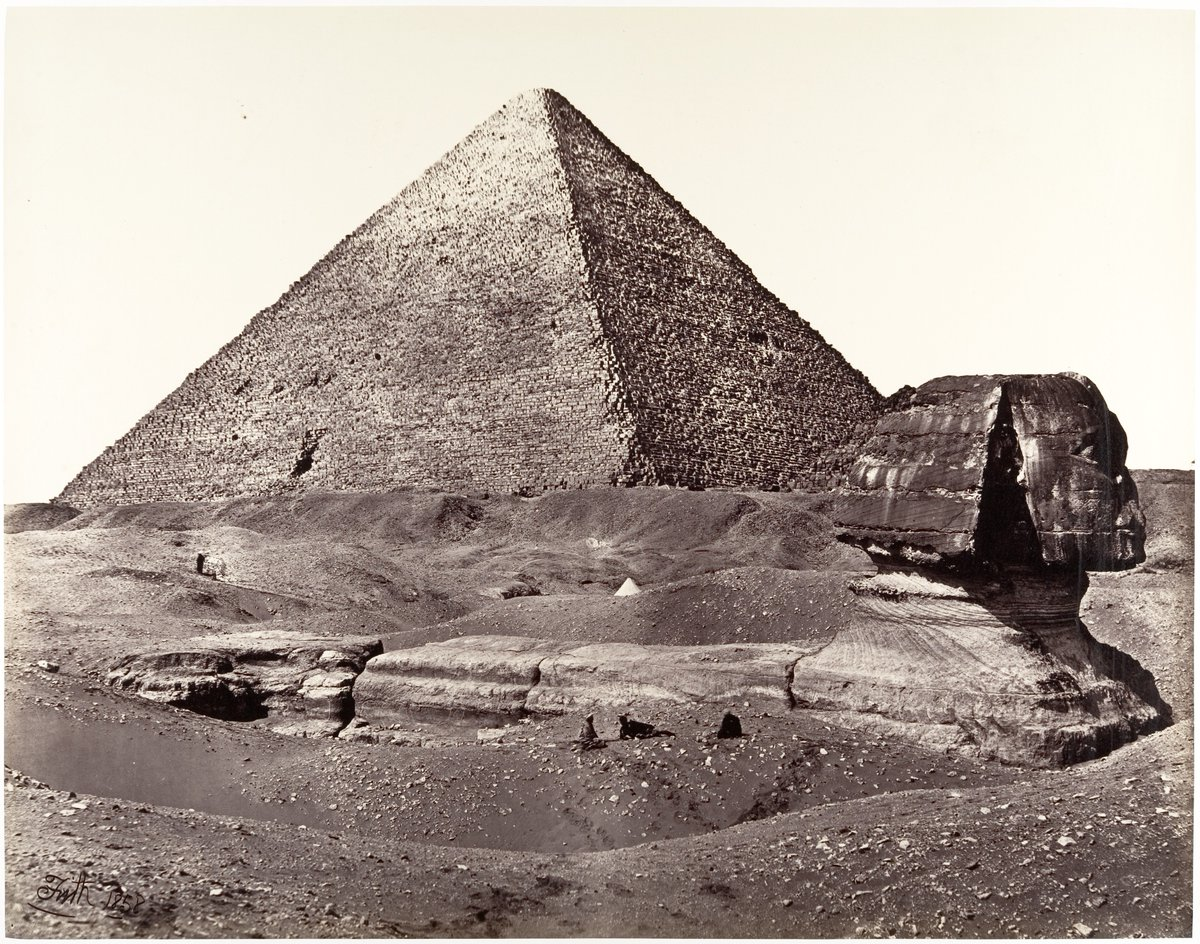
In there I explained why Atum, the Creator God of Egyptian world, created himself as a lion (Leo, Jul/Aug), after emerging from the primordial (read annual) flood (starts in Leo, Jul/Aug), the flood which makes land fertile without which there would be no Egypt...

I then talked about the Egyptian holy lioness, the precursor of the Sphinx, which again fits into the whole "lion(ness) good in Egypt"...

But for some reason, while writing these articles, I completely forgot about the murderous, destructive, Sekhmet...

"Cow good - Lioness bad" makes a lot of sense in Mesopotamia. 

"Cow good - Lioness great" would make a lot of sense in Egypt.

But...

What do you think?

To read more about ancient animal and plant calendar markers, start here…Then check my twitter threads I still didn't convert to blog post...I am way way behind...

Friday, 26 June 2020

Bastet

Bastet was the ancient Egyptian goddess of cats, home, family, sexuality, fertility and pregnancy...She is associated with Mafdet, the first feline deity in Egyptian history which was believed to protect against bites of snakes and scorpions. And with Mau, the divine cat, whom Ra sent her to fight and kill his archenemy Apep, the serpent of chaos...🙂

Most commonly Apep is shown being killed by a cat


Sometimes Apep is shown being killed by a lion headed goddess


I talked about this "mythical struggle" and it's actual meaning derived from the Egyptian climate in my post "Apep"...In short: Snake represents the sun's heat and it's effect on earth (drought). It is in Leo that the sun's heat, reaches it's maximum, and the cooling of the earth begins...It is also in Leo that the Nile river reaches its highest level and the flooding reaches its maximum extent...This is all symbolically represented as slaughtering of the great snake which choked the "river on which Ra's barge sailed"...

Originally Bastet was seen as (another) ferocious lioness goddess, (another) protector of the Pharaoh and (another) goddess associated with the "Eye of Ra"...


I talked about these lioness goddesses and their actual meaning derived from the Egyptian climate in my post "Holy Cow"... 

One of the most popular & elaborate festivals in ancient Egypt, was dedicated to Bastet. 

Herodotus says that "...of the many solemn festivals held in Egypt, the most important and most popular one was that celebrated in Bubastis in honor of this goddess [Bastet]. Each year on the day of her festival, the town was said to have attracted some 700,000 visitors, both men and women (but not children), who arrived in numerous crowded ships. The women engaged in music, song, and dance on their way to the place. Great sacrifices were made and prodigious amounts of wine were drunk—more than was the case throughout the year..."

This accords well with Egyptian sources that prescribe that lioness goddesses are to be appeased with the "feasts of drunkenness".

Why? So that lioness (wild nature) turns into a cat (tamed nature)...I talked about this in my post "Holy Cow"... 

This festival, held in Bubastis, the main cult centre of the goddess, were celebrated in April and May. Why then? Let me see If we can dig something out...

Harvest time in the Nile River Valley occurred between April and June, depending on the weather...So the festival coincided with harvest...The time of lots of grain and lots of mice...

What is the best way to protect the harvested grain from mice? Well get some cats around...Domesticated cats descended from African wild cat which is also found in Egypt...


Well, knowing cats, they were probably never "domesticated"...They probably just turned up one day, chasing mice which were after grain...And decided to stay... 

To Egyptians whose life depended on grain, these cats must have looked like God Sent...Hence being deified and worshipped...And mummified after death...


Thousands of mummified cats were fund in Bastet's temples...

In ancient Egypt, the flail, an agricultural tool used for threshing, the process of separating grains from their husks, with the shepherd crook, was a symbol associated with the pharaoh. 


It is hypothesised that these two symbols represent pharaoh's ability to provide food for his people...So a mice infestation would destroy not just grain but also the authority of the Pharaoh based on his ability to provide grain for his people...Hence cat killing mice, protects not just grain, but also the Pharoh...

But why "Goddess of sexuality, fertility and pregnancy"? 

Sexuality? Have you ever seen (and heard) cats at it? 

Fertility? Pergnancy? 

In the northern Sahara (Egypt) African wild cat breeding season runs from January to March. Gestation lasts for 56-68 days, meaning that kittens are usually born between March and May...Right on time for the grain harvest and the invasion of mice...Which is why Bastet was often depicted as cat with kittens...


And right on time for the festival of the cat goddess...

Oh and by the way, they kill and eat snakes too...Hence cat (lion) killing snake...


Sunday, 31 March 2019

Umm ali

How easy or difficult is it for a single person to change people's culture? 


Umm Ali

Umm Ali is a famous Egyptian dessert. When well prepared, is one of the best - and more calorific - desserts you will ever feast on. Puff pastry, pistachios, almonds, pine nuts, condensed milk (or just full fat milk with cream) all cooked to a golden crisp in the oven. When the golden crisp is broken, it reveals lots of other melt-in-your-mouth yummy stuff added inside that forms a sweet bread-pudding-like milky mush. 

The name "Umm Ali" means "Mother of Ali" in Arabic. The true origin of the Umm Ali dessert is unknown. In Cairo, you may hear it is from Upper Egypt, while in Upper Egypt you may here that it is from Cairo. 

But believe it or not, the origin of this dessert could actually be Ireland. 

One of the legends relating the origin of this dessert says that the name Umm Ali comes from O'Malley. Mss O'Malley was an Irish nurse. She was in Egypt and caught the eye of the ruler, Khedive Ismail (Isma'il Pasha), who was the ruller of Egypt in the 19th century. 

Ismail was in love with all things European. So he fell in love with Mss O'Malley too. She became his mistress and made a bread and butter pudding for him, which he loved so much, that it became his favourite dessert. He asked his cooks to learn how to make it and told them that the name was O'Malley dessert. The dessert was served at the court, and from there spread through Egyptian upper classes who as it is always the case tried to imitate the court. The poor people then tried to imitate the rich people and soon everyone in Egypt was eating O'Malley dessert. 

The Egyptian people quickly transliterated the name into the closest Arabic thing that made sense to them, which was Umm Ali - the mother of Ali. They also then invented stories which served the purpose of explaining the strange name of the dessert. 

The first sory tells us that the first Mameluke (mercenary) to be made a Sultan of Egypt was al-Muizz Izz-ad-Din Aybak. Mamelukes were slaves bought as children and trained to be loyal soldiers. It was a practice started by the Abassid Caliphate (the third caliphate in the Islamic empire following the death of the Prophet Mohammad). He was married to an unnamed woman with whom he had a son called Ali, hence her name: Mother of Ali. He also had another wife and son. Women at the time were not allowed to rule the country, but in the absence of a Sultan, a mother could be the guardian to her son until he came of age to take over the Sultan title. In this case, Aybak died leaving the two women to fight out whose son would rule. Umm Ali hatched a plan with the handmaid of the second wife, and had her killed. To celebrate her victory, she made this sweet dessert (akin to sweet revenge) to share with everyone.

The second legend is a bit more believable. A Sultan was down in the Nile Valley hunting with some people when he suddenly became very hungry. He stopped into a small village asking for food. The villagers asked Umm Ali to prepare something for him, as she was known to be the best cook in the village. She whipped up this dessert and the Sultan loved it so much, he came back for seconds.

This is a great example how cultures and languages can be greatly affected by a small number of well-placed people. It also shows that historical linguistics has to be a multidisciplinary study if it wants to be successful in discovering root meanings of words. It also gives a great example of linguistic absorption by closest transliteration. This is a process in which foreign names, particularly toponimes, hidronimes, get transliterated to the closest thing that makes sense in the language of the population living in the area. What happened in Ireland with Gaelic toponyms and hydronyms after the arrival of the English is a great example of this process. The same goes for Serbian toponyms and hydronyms in Kosovo and Albania after Albanians took over old Serbian territories.  

Anyway, enough science, back to sweets. 

The popularity of the O'Malley dish in Egypt is partially due to its fanciness, partially due to its deliciousness, and partially due to the fact that the recipe is extremely simple and that making of this dessert is very cheap. The main ingredients for this dessert with bread or filo pastry, milk, dates or other dried fruit and nuts, which are all staple Egyptian that can be afforded to anyone. 

Here is one way to make O'Malley (Umm Ali) bread and butter pudding:

* 6 sheets of filo (or puff pastry, pancakes, or bread)

* 6-8 tablespoons of butter, melted

* 2/3 cup black or golden raisins

* 1 cup mixed whole or slivered blanched almonds, chopped hazelnuts and chopped pistachios

* 5 cups whole milk

* 1 cups heavy cream

* - 2/3 cup sugar

* 1-2 teaspoons cinnamon (optional)

Keep the sheets of filo in a pile, covered with a damp towel to keep them from drying out. Brush each one with melted butter and place them on top of each other on a buttered baking sheet.

But the buttered filo sheets in a preheated 3500F oven for about 10 minutes, until they are crisp and the top ones are slightly colored.

When cool enough to handle, crush the pastry with your hands into pieces into a baking dish, sprinkling the nuts and raisins between the layers.

Bring the milk and cream to a boil in a pan with the sugar and pour over the pastry. Sprinkle, if you like, with the cinnamon and return to the oven. Raise the heat to 4250F and bake for about 20-30 minutes, until slightly golden.

Serve hot. Serves 8.

Enjoy your Umm Ali, or to be more precise O’Malley :)