Woman of the Apocalypse, Albrecht Dürer, 1511.
The Woman of the Apocalypse, described in Chapter 12 of the Book of Revelation, is a figure "often considered by Catholics to be Virgin Mary".
If so, who was Virgin Mary then really? Check this out:
So here is the gist (from bible.com). I will then go and try to explain what all this means:
1. Now a great sign appeared in heaven: a woman clothed with the sun, with the moon under her feet, and on her head a garland of twelve stars...
So who is this woman?
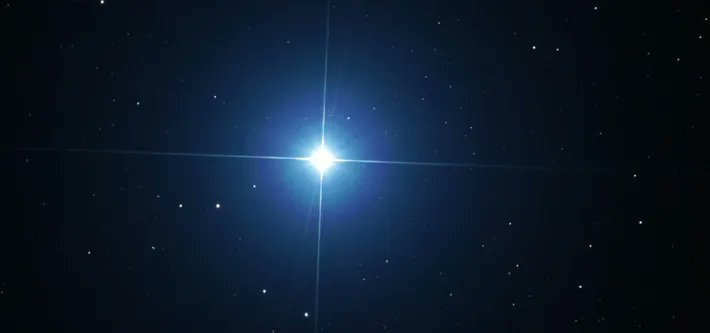
It's Inanna/Ishtar in her dual role as Sirius, The Queen of Heaven and Fertile Earth, The Virgin Mother...
But, but, the star of Inanna/Ishtar is Venus, the morning star!!! I can hear you shout...Sirius is also a morning star. In Jul/Aug, Leo...
For those who will say "Ishtar was the morning star", yes she was, in Leo (Jul/Aug), when Sirius rose in the morning before the sun...Which is why Ishtar stands on a lion (with sun above the lion) and is known as "The Lioness of heaven"...
This is the first time Sirius becomes visible again after it disappears from the night sky in Apr/May, Taurus...Between Taurus and Leo, Sirius is (was during Sumerian time at least) in the sky with the sun, "clothed in sun", and therefore invisible to human eye...
You can read about this in my article "Inana and Šukaletuda" about the true identity of the star of Ishtar/Inanna, in which I countered the arguments identifying this star as Venus.
Anyway, what about "with the moon under her feet, and on her head a garland of twelve stars"?
Well, remember my article "Moon god Nana/Sin" about the winter (wet) moon?
Which explains that the moon pointing upwards is the moon which is only visible in the night sky of Mesopotamia during the wet half of the year Oct/Nov-Apr/May....
The fact that the woman from the Apocalypse is standing on this moon, means that this is Inanna as winter Sirius, which is the most brilliant star in the winter night sky, until it disappears in Apr/May...
I talked about this in my article "The brightest star".What about the garland of 12 stars? Is it just a symbol for "We are talking about a heavenly body visible at night"?...But I also have a feeling that John change the number of stars in the garland, and that originally there were 7 stars. I'll explain what I mean further down...
And so:
2. She was pregnant and cried out in pain as she was about to give birth...
Now this doesn't make much sense if we we only see Inanna as Sirius, The Lady of Heaven. But it makes a lot of sense if we view Inanna as Earth, The Mother Earth...The Fertile Mother Earth...
During the time when "Sirius stands on the upward pointing crescent moon", Oct/Nov - Apr/May, Inanna, Fertile Mother Earth, is indeed pregnant. Inanna was associated with grain, so much so that we could say she she was seen as "Mother of grain"...
This is Inanna/Ishtar speaking:
"Before my lord, Dumuzi,
I poured out plants from my womb.
I placed plants before him,
I poured out plants before him.
I placed grain before him,
I poured out grain before him,
I poured out grain before my womb..."
Mother of grain...Grain seed and vulva symbolism...Link between female fertility and earth/grain field fertility...
I talked about this in my article "Mother of grain"...
Grain fields are indeed "pregnant" (full of grain) and about to "give birth" (be harvested) right at the time when "the lady standing on the upward pointing crescent moon" is about to be "clothed in light" (disappear in the sun), in Apr/May...
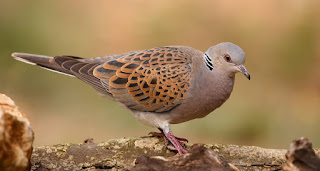
Which is why Inanna, just like Demeter, Greek goddess of grain harvest, is associated with doves...
Articles, "Inanna and dove", "Demeter with dove" about why dove was the holy bird of Inanna and Demeter, goddesses of grain (harvest). Spoiler: Harvest starts when doves start nesting...Terracotta statuette of Demeter enthroned with a turtle-dove. Sicily, 5th c. BC.
And which is why, in Mesopotamia, every year during the harvest, a man and a woman performed ritual sexual act on a threshing floor, imitating Inanna (earth, womb) and Enki (sweet water, seed) consummating their holy marriage. I talked about this in my article "Sacred marriage on the threshing floor"...
Inanna is also "associated with cattle and particularly calves"...Here is a depiction of the gigūnu (Inanna's nuptial hut) as a calving hut, on a carved stone vase (Sanctuary of Small Temple in O 43, Khafajah)
One of Inanna's appellations was "wild cow", and wild cows start calving right at the time when "the lady standing on the upward pointing crescent moon" is about to be "clothed in light" (disappear in the sun), in Apr/May...
Inanna was also associated with steppe animals, wild goats and wild sheep. Both of whom give birth right at the time when "the lady standing on the upward pointing crescent moon" is about to be "clothed in light" (disappear in the sun), in Apr/May...
Sooo...Inanna is pregnant...What happens next? Well, enter the dragon:
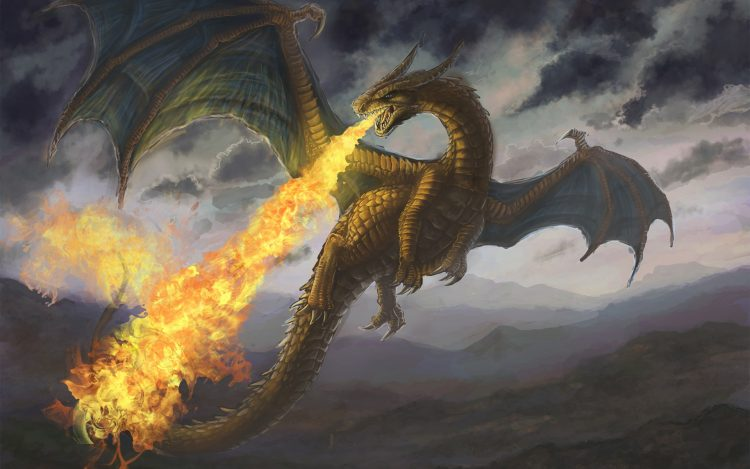
3. And another sign appeared in heaven: behold, a great, fiery red dragon having seven heads and...seven diadems on his heads...
Eeee. WTH is 7 headed dragon? To figure this out we have to go all the way back to the 3rd millenium BC Mesopotamia. Few people know that Mesopotamians had 7 headed dragons in their mythology. Or what it represented..."Cause we don't have any written explanation blah blah blah"🙂
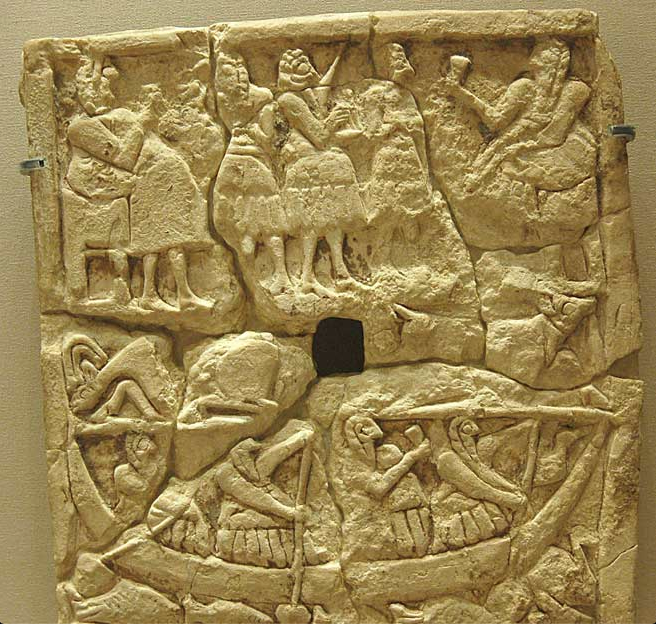
Here is one depicted on a shell plate, dating to 2500-2400 BC, Proto-Dynastic III period. And before I saw it, no one had any idea why this beast had lion's body and 7 snake heads...Or what it represented...
When I first saw this image I already knew that snake was the symbol of sun's heat.
Snake is a pure solar animal. It is in our world when sun is here (day, hot half of the year) and it is in the underworld when sun is there (night, cold half of the year)...
I talked about it in my articles "The chthonic animal", "Enemy of the sun"...
Which is confirmed on this is 3rd millennium BC, Bactrian seal depicting the sun god (see heat rays emanating from his shoulders, the same heat waves emanating from dragon's back) holding snakes, symbols of sun's heat...I talked about this in my article "Nude hero dominating snakes"...
I also knew that Leo, Jul/Aug, is the hottest part of the year in the northern hemisphere. This is depicted on this Bactrian seal with lion radiating sun/heat rays, the same rays radiated by sun god Shamash. I talked about it in: "Lion radiating heat"...
BTW, Leo calendar marker for Jul/Aug, originally had nothing to do with stars.Asiatic lions mating season started in Jul/Aug and spanned the whole of Autumn (Aug/Sep/Oct)...Which is why autumn starts in Leo (Jul/Aug). And why lion is the symbol of autumn...
So, when I saw 7 snake heads, I suspected that 7 heads represent the duration of the Mesopotamian hot dry season, the season of the snake and dragon. But I wasn't sure...And then I stumbled across "The debate between Winter and Summer" or Myth of Emesh and Enten, a Sumerian creation myth, written on clay tablets in the mid to late 3rd millennium BC...
And in it, after winter accuses summer of taking all the credit for winter's hard work, summer says: "In my working term of duty, which is seven months of the year"...Ha!
I wrote about this in my article "Seven headed dragon"...
So the 7 headed dragon represents the destructive sun of the Mesopotamian summer...Which is most destructive in Jul/Aug, Leo...
Which is why the deified destructive sun, Nergal, was depicted as a lion man...I talked about this in my article "Winged superhuman hero"...
BTW, the old Sumerian summer, the 7 headed dragon, can be depicted using animal calendar markers like this too: starts in Apr/May, Bull head, Taurus, peaks in Jul/Aug, Lion body, Leo and ends in Oct/Nov, Scorpion tail/Eagle wings and talons, Scorpio/Eagle. This beast is Angra Mainyu...I talked about this in my article "Angra Mainyu"...
Why were Persian kings so obsessed with killing lions? Well they were't really killing lions. They were symbolically killing dry season...Which starts in Apr/May, Bull, peaks in Jul/Aug, Leo and ends in Oct/Nov, Scorpio/Eagle...I talked about this in my article "King killing Angra Mainyu".
So...Destructive sun of the middle of the old Sumerian summer, Nergal, Angra Mainyu...or as the chapter 12 of the Apocalypse call him: "...the great dragon...that old serpent called the Devil..." This "dragon = old serpent" sounds familiar...
According to Slavic folklore, Dragon (the symbol of the destructive summer sun's heat which burns everything and brings drought) is just "an old snake" (symbol of sun's heat)...Also Slavic "zmaj" (dragon) is masculine form of "zmija" (snake). I talked about this in my article "Letnitsa treasure"...
BTW, see how Shamash has (mostly) 3 heat waves coming from each shoulder? Togehter whith his head, that is 7...7 months of the Sumerian summer...With the head in Jul/Aug, the hottest part of the year. The seat of the 7 headed dragon...
Oh, and central menorah candle is called....drum rolls...Shamash...
I talked about it in my articles "The tree of life/light", "Menorah from Nipur", "Lachish animal calendar"
But which Shamash? Shamash in Jul/Aug, Shamash in Leo, Shamash as Nergal of course...
So now that we know that the 7 headed dragon is the old Summerian summer, Apr/May - Oct/Nov, then the next verse can also be (I think easily and elegantly) explained:
4. Its tail swept a third of the stars out of the sky and flung them to the earth...
Orionid meteorite shower, Sep/Oct/Nov. Stars swept by the dragon's tail?
I talked about Orionids in my article "Heavenly archer"...If arrows are shooting down from the night sky, there must be an [invisible] archer shooting them from up there...
So, onwards we go to the next verse:
5. The dragon stood in front of the woman who was about to give birth, so that it might devour her child the moment he was born...Hmmm...
The main thing that Inanna gives birth to is grain...The bread of life? I already talked about the bread of life in my article "7 seals", and 7 seals grain storage jars used to store grain between sowing and harvesting.
Now let's get back to the shell plate depicting the 7 headed dragon, where each head represents one of 7 months of the Sumerian summer (Apr/May-Oct/Nov)...Hero (God) had just cut the first of the 7 dragon heads with a sickle. That's Apr/May, the month when grain harvest starts...
And so...
6. She gave birth to a son, who will rule all the nations with an iron scepter. And her child was snatched up to God and to his throne...The bread of life was born and so on so Christian...Or not...
7. The woman fled into the wilderness to a place prepared for her by God...What does this mean? What is this wilderness? Well, two things happen after Inanna gives birth to all (important) things:
Inanna as Sirius disappears into the sun, and is invisible in the burning daylight summer sky.
Inanna as Fertile Earth gets turned into desert by the summer sun.
In both cases she is gone...
I talked about this my article "Inana and Šukaletuda"...
And then the real action starts:
8. Then war broke out in heaven. Michael and his angels fought against the dragon...
What does this mean? It's basically a description of this scene from a cylinder seal found in Tell Asmar, early 3rd millennium BC...
Hero (God) killing the 4th of the 7 dragon heads with a spear. Behind him is a woman with a star above her head.
Dragon has 7 heads, one for each month of the Sumerian summer (Apr/May-Oct/Nov).
When this seal was made, Sirius, Star of Ishtar, rose with the sun in Jul/Aug.
So we are in Jul/Aug, because it is the 4th snake head (month of the Summerian summer) that is being killed (ends). Behind the dragon killer is The Lady of heaven, Inanna/Ishtar, standing under her star, Sirius, now visible again in the night sky, just before the dawn...
I wonder if John was either looking at something like this seal, or reading some, now lost text that describes this scene, when he was writing his Apocalypse...Did he know what he was describing? I would love to know...Cause if he did 🙂
Now remember when I said that I suspected that originally the diadem that the Lady of Heaven wore had 7 stars. Let me explain what I meant. I'll start with this:
Head dress with 8 petaled flower of Sumer, belonging to one of the Queen Puabi's maidens who were buried together with her. Were these flowers at all? Or were they actually the stars of Inanna/Ishtar.
Do you know any 8 petaled flowers from Mesopotamia? What is very interesting is that Queen Puabi's handmaidens had diadems with 3 stars each, while Queen Puabi's diadem had 7 stars...
Why 7 stars?
7 stars for seven months of Sumerian summer? 7 stars in the diadem of Ishtar, the destructive (warrior) goddess standing on a lion (in Leo, middle of the Sumerian summer, the time of 7 headed dragons)?
Or, 7 stars of Pleiades, which rise with the sun in Apr/May, at the same time when Inanna/Sirius gets clothed in light...
Not sure, but I think it's later...
Also, if Innana is Sirius, are these three stars the three stars from Orion's belt?
What I am sure is that the golden leaves used in making the headdresses belong to Euphrates poplar, which is linked to Inanna/Ishtar. I talked about it in my Article "Euphrates poplar" where I also asked a question: was Queen Puabi the high priestess of the Goddess Inanna/Ishtar?
Sooo...What happens next?
9. When the dragon saw that he had been hurled to the earth, he pursued the woman...The woman was given...wings of a great eagle, so that she might fly...Then from his mouth the serpent spewed water like a river, to...sweep her away with the torrent...
This is very interesting...You know how fire breathing dragons "steal and guard water"? This is what blazing summer sun does. It evaporates water and causes drought.
The main worry of the Bulgarian farmers at the beginning of the summer (Apr/May) is drought.
Traditionally people thought that drought was caused by a winged dragon (zmey), who "stole and locked up" the waters...
I talked about this in my article "Scaring off the dragon"...
As I said already, in Eastern Mediterranean, Levant and Mesopotamia, the hot, dry, dragon season lasts from Apr/May to Oct/Nov...And as the first rains arrive in Oct/Nov, Griffin vultures start their areal mating dances...
Eagle dance...
Syria, 1800BC, Eagle mating dance
Montenegro 1963AD, Eagle wedding dance
Eagle (vulture) couples dance above the mountains at the beginning of their mating season, which coincides with the beginning of the rain season in Fertile Crescent...I talked about this in my article "Eagle dance"...
So as the woman escapes into the (night) sky on eagle wings dragon spews water it has stolen (rain) like a river (rivers are being refilled with rain water)...The dragon is truly defeated...Until it reappears again, in Apr/May...
That's that I think...Hope you enjoyed it as much as I did...
I will end this with a question: Why is Mary called Queen of Heaven and Earth? 🙂
PS: Correction...I have written so much stuff, that sometimes I am forgetting what I have written until someone, reminds me.
The 7 stars of the Queen Puabi's diadem are of course Pleiades...They are linked to both grain and cattle. Just like Inanna...
Their heliacal rising in Apr/May, marked the beginning of the grain harvest season. And their heliacal setting, in Oct/Nov, marked the beginning of the plowing and grain sowing season. I talked about it in my article "Hesiod on grain"...
Pleiades are also linked to doves, Sacred to Inanna...For the same reason...Doves nest during grain harvest season...
In Greek mythology, the Pleiades are the seven daughters of Atlas, whom Zeus transformed first into doves, and then into stars...Why first into doves and then into stars? Well, he is Zeus, he doesn't have to explain himself...(Hint: animal calendar markers)...I talked about this in my article "Pleiades"...
And...Ever heard of "heavenly herd"? In the ancient Egypt seven goddesses, represented by seven cows, composed the celestial herd that provides the nourishment to her worshippers...Was Inanna, The Wild Cow, linked to the heavenly herd?
Guess what else happens during this period, more precisely Apr/May? The calving season of the Wild Eurasian cattle. Which is why cow and calf is an ancient animal calendar marker for Apr/May. Today this period is marked by Taurus. I talked about this in my article "Cow and calf ivory"...
And in Mesopotamia, cattle and grain were always linked together, and no one knows why 🙂 Akkadian seal depicting a bull carrying a granary...And taking it towards seated goddess...Inanna? I talked about this in my article "Bull carrying granary"...