Pan is a great example of what happens when mythology based on a local climate gets exported to the place where climate is different...
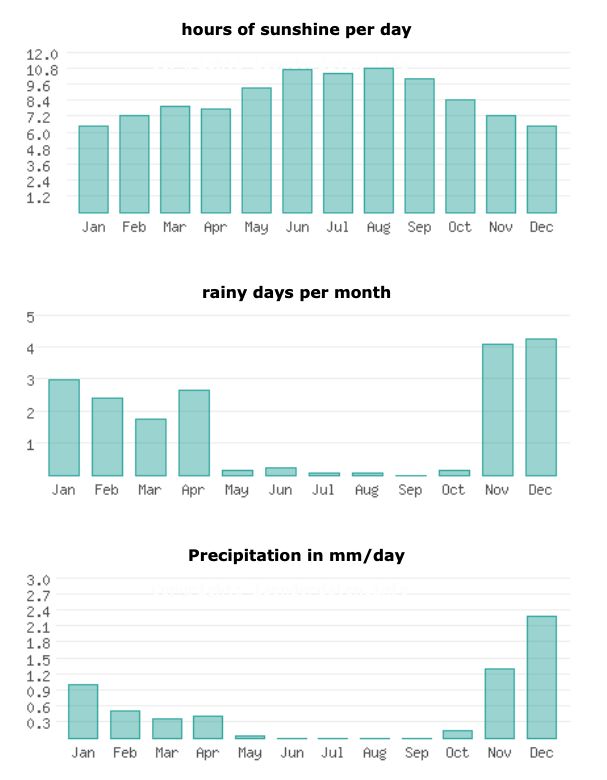
The story of Pan starts on the Island of Crete, where the local climate is characterised by hot, dry summers and mild, rainy winters. The rainy season starts in October and lasts till March or even April.
The beginning of the Cretan rain season coincides with the beginning of the mating season of the Cretan Ibex.
Which is why in Minoan Crete Ibex was venerated as the goat which brought rain...And life... Which is why Ibexes are depicted on this Minoan fresco from Knossos flanking "the tree of life"...
By the way, the "tree of life" is olive. And olives are harvested from late October, early November, at the beginning of the rain season...
The flowers depicted all around are crocuses, which also bloom from Late October, early November, at the beginning of the rain season...
So this fresco depicts the beginning of the rain season, when ibexes fight and mate, crocuses bloom and olives are ripe...
We know that the Ibex cult existed in Mycenae, to where it was most likely brought from Minoan Crete. We can see this from seals found in Mycenaean sites.
This is a Lentoid Gem depicting Sacred Tree and Ibex Goats from Mycenae.
This is next artefact, a Gold Signet Ring from Mycenae, is even more interesting.


In "Mycenaean Tree and Pillar Cult and Its Mediterranean Relations, Journal of Hellenic Studies 21, 1901" Arthur Evans says this about this artefact:
"In the gold ring from the Lower Town of Mycenae, a man in the usual Mycenaean garb, who perhaps answers to the male attendant of the Goddess in other religious scenes, is seen reaching out his hand towards the topmost bough of what is perhaps also intended for a fruit tree. Behind him with the branches of another tree visible above the back, stands a large agrimi or Cretan wild goat - an animal seen elsewhere in connexion with female votaries. This goat may represent the sacred animal of either the male or female member of the divine pair referred to in the preceding- sections....the votive remains of the Diktaean Cave as well as the traditions of Amaltheia tend to show that this animal was sacred to the indigenous 'Zeus' at an earlier period than the bull. The ox indeed in any form seems to be absent in the more primitive archaeological strata of the island"
This is very very interesting on so many levels...
Cretan wild goat - an animal seen elsewhere in connexion with female votaries (Symbol of the Goddess, Yin, part of the year), was once the symbol of Zeus, who was later associated with the bull, but Evans didn't know why...
Now the climate in Mycenae, on Peloponnesus, is similar the climate in Crete, consisting of hot dry summers and mild wet winters. But year is not clearly divided into dry and wet period, as can be seen from the precipitation table.

The main reason why Mycenaeans associated the Thunder God with bull and why Minoans associated the Thunder God with goat is because of this: the distribution of thunderstorms across the year....
If we look at the Balkans, the thunderstorm season starts in May...When Aurochs start calving...At the end of the wet part of the year...During the period, which by the time of Mycenaeans, has already been marked by a Bull all over Eastern Mediterranean, Central Asia, Middle East for thousands of years...
If we look at Crete, the thunderstorm season starts in October...When Ibex goats start their mating season...At the beginning of the rain season...During the period, which by the time of Minoans, has already been marked by a goat all over Eastern Mediterranean, Central Asia, Middle East for thousands of years...
So Mycenaeans didn't have a direct obvious reason to associate Ibex with Zeus, Rains storm...Whereas Minoans did...
Yet on mainland Greece, Ibex was still seen as "the bringer of life"...Except after a while everyone forgot why...Which is why eventually this life bringing goat, whose mad mating causes nature to flourish, flowers to flower, trees to bud, rivers to flow....became Πάν (Pan)...
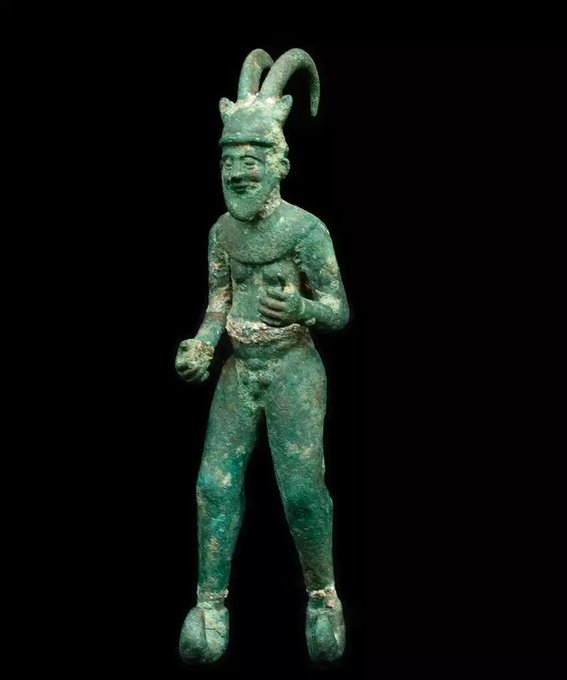
Pan, who has the hindquarters, legs, and horns of a goat, in the same manner as a faun or satyr. Whose skin is Pan carrying? Is this "Αιγις" (Aegis), the goat skin which Zeus carried from Crete? It just occurred to me. What do you get if you clothe Holy Zeus, the bringer of rain, in goat skin? Holy Ibex Goat, the bringer of rain, of course...

Pan, the god of the wild, nature of mountain wilds, natural vegetative cycle caused by gods rather than men.
Pan, the lover and companion of the Nymphs (nature sprits) and particularly the darling of Naiades (nymphs presiding over fountains, wells, springs, streams, brooks and other bodies of fresh water)...No wonder considering that it is the Holy Goat who used to bring rain and fresh water to Minoan Crete...
Pan, the symbol of sex and lust and therefore symbol of fertility. Who because of different climate on Greek mainland, became associated with the season of spring and Aphrodite, goddess of love and spring. No wonder, that on mainland Greece Spring, and not Winter, was the time when life returned to the nature...
Pan, who in his earliest appearance in literature, Pindar's Pythian Ode iii. 78, was associated with a mother goddess. Perhaps Rhea??? The Goddess which is always playing with goats on Minoan artefacts??? And who gave Zeus to a goat to mind him?
Pan, whose worship began in Arcadia which was always the principal seat of his worship. Arcadia was a district of mountain people, culturally separated from other Greeks. Remember, Greeks considered Arcadians the oldest inhabitants of Greece, Pelasgians. They were so ancient and so traditional and archaic that they still ate acorns...I talked about this in my posts "Acorns in ancient texts" and "Pelasgos". And they still remembered at leas part of the "Old faith", before Olympians arrived...Ahh. Arcadia is sooo close to Mycenae...Where Minoan Holy Ibex landed on the Greek mainland...
Pan, who as a "rustic god" (read here "old god"), was not worshipped in temples or other built edifices, but in natural settings, usually caves or grottoes such as the one on the north slope of the Acropolis of Athens. These are often referred to as the Cave of Pan...Hmmm...Cave...Just like the holy cave in holy Goat Mountain here the Holy Goat nursed the Holy Infant Zeus...
Pan, who was a hunter, and to whom hunters owed their success or failure and whose statue Arcadian hunters used to scourge if they had been disappointed during hunt. Hmmmm....Holy hunt again???
And here is the best bit...
Pan's parentage is unclear. In most accounts though, he is the son of Zeus...Hmmm...Considering that it is the Holy Goat which brings forth the Holy God...
Hyginus says that Aega (whose name means probably She Goat) who was a daughter of Melisseus, king of Crete, was chosen to suckle the infant Zeus. But as she had no milk, it was goat Amalthea who suckled infant Zeus. Hyginus also says that while married to Pan, Aega had a son by Zeus whom she called Aegipan (Goat Pan), and who was also suckled by Amalthea...Hmmm...So both Zeus and Pan were suckled by the same She Goat...Zeus actually tells Athena that "...goatfoot Pan...once was mountain-ranging shepherd of the goat Amaltheia my nurse, who gave me milk"...Meaning that Pan, Holy Goat, was there before the arrival of Zeus, Holy God...
And finally, the BESTEST :) bit:
Pan aided his foster-brother Zeus in the battle with the Typhon...

TYPHOEUS (Typhon) was a monstrous "storm-giant" who laid siege to heaven but was defeated by Zeus. He was the source of devastating storms which issued forth from that dark nether-realm.
I don't think Typhon was a storm giant or a source of devastating storms...He was The Dragon, the symbol of destructive blazing heat of the late summer...
Typhoeus was a winged giant, said to be so huge that his head brushed the stars. He was a sky being not being of the nether realm...
Hesiod in his Theogony dated to 8th or 7th century BC describes him like this:
"Typhoeus; the hands and arms of him are mighty, and have work in them, and the feet of the powerful god were tireless, and up from his shoulders there grew a hundred snake heads, those of a dreaded drakon (dragon-serpent), and the heads licked with dark tongues, and from the eyes on the inhuman heads fire glittered from under the eyelids: from all his heads fire flared from his eyes' glancing; and inside each one of these horrible heads there were voices that threw out every sort of horrible sound, for sometimes it was speech such as the gods could understand, but at other times, the sound of a bellowing bull, proud-eyed and furious beyond holding, or again like a lion shameless in cruelty, or again it was like the barking of dogs, a wonder to listen to..."
Snakes are symbol of sun's heat.Dragons breathing fire or glaring fire are symbols of the destructive sun's heat at the end of the summer which brings draught.
Bellowing bull is the symbol of summer, because summer starts in Taurus.
Lion is the symbol of the end of summer, the hottest part of the year, which falls in the middle of Leo.
Dogs are symbol of "Dogs days", the hottest 7 days of the year. Middle of Leo falls in the middle of Dog Days...
Typhoeus was also described as a giant which was "breathing fire" and whose eyes were "flashing fire"...
Hardly a description of a Storm Giant...
But then, I love that Typhoeus also had "a filthy, matted beard and pointed ears"...Just like Pan who looks suspiciously like an Ibex goat. The Holy Goat which brought rain to Minoan Crete every October-November and ended the drought...The Goat who killed Typhoeus...Or as Zeus bragged "who helped him kill Typhoeus"...
Oh, by the way, did you know that we also have Panes, "rustic spirits" of the mountains and highland pastures who protected the goat herds and sheep flocks which grazed these lands. Panes were depicted as goat-footed men with the horns, tail, beard, snub nose and ears of a goat. They sometimes had actual goat-heads instead of just a few goatish features. As lascivious fertility spirits they were often depicted with erect members...
Jumping, noise making, horny Ibex Goats during their mating season, which announce the arrival of life bringing rain to Minoan Crete, springs to mind immediately...No wonder Panes were "the attendants upon the sacred rites of Rhea and Dionysos"...Life bringing sacred rites of Mother Goddess and...That is another story for another time...
Soooooo....
The bottom bit of my article, which few people probably ever get to 🙂 about "why Slavic, Baltic and Norse Thunder gods ride on chariots pulled by goats". This article "Goat riding thunder gods" looks for the root of this myth in Minoan goat mythology...You can read more about Minoan goat mythology in my posts "Sanctuary rhyton" and "Saffron"...