Sunday, 7 July 2024

Lapis lazuli water seal

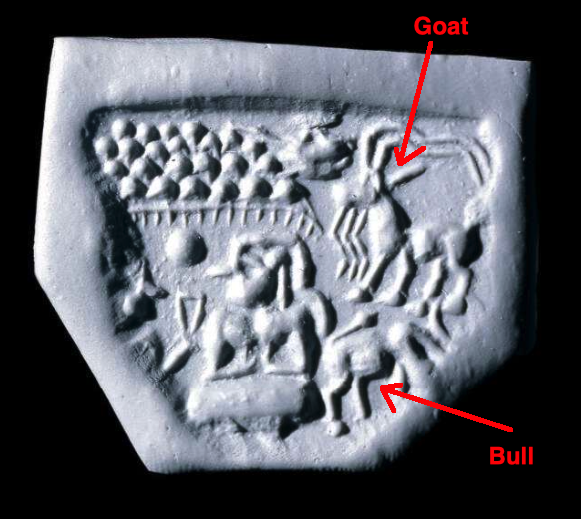
I would like to analyse the scene depicted on this Lapis lazuli seal, made between 2400BC and 2000BC in Eastern Iran. Currently in the British Museum. 

It is actually quite amazing...

So what is depicted on this seal? Well, I think that this is a calendar, which depicts the wet season in Eastern Iran, using animal calendar markers: Goat, animal calendar marker for Oct/Nov and Bull, animal calendar marker for Apr/May...Let me show you why...
This is the map of Iran. On it I circled Eastern Iran and I underlined the 4 main cities in the region: Mashhad, Birjand, Kerman and Zahedan...

These are precipitation charts for these 4 main cities in Eastern Iran...


You can see that the wet season in Eastern Iran starts in Oct/Nov and ends in Apr/May...

Mating season of Ibex Goats starts in Oct/Nov...Which is why Ibex became animal calendar marker for Oct/Nov. And cause this is when the rains arrive to Western Asia and Eastern Mediterranean, Ibex there became The Goat of Rain...

I talked about symbolism of ibex goats in many of my posts, like 

Europe:

"Pitys", "Goat in European culture", "Patera of Rennes"... 

Levant:

"The tree of life/light", "Lachish animal calendar"...

Mesopotamia:

"Feast plaque from Louvre", "Green pastures", "Problems with Abzu", "Relief from Dur Sharrukin", "Goatfish"...

Iran: 

"Flamingos from Susa", "Goat carrier", "Iranian goat of rain", "Strider", "A vessel from Tepe Hissar"...

In Iran in particular, Ibex Goat was the most depicted animal during Neolithic and Bronze Age...I talked about this in my post "Goat petroglyphs from Iran"...

So that's the Goat sorted...

What about the Bull? Normally, as the animal calendar marker for Apr/May, the end of the wet season in Western Asian and Eastern Mediterranean, we find an Auroch bull or a calf.

You know, Taurus...Taurus here is "the old Taurus", an animal calendar marker, which only later became mapped to whatever constellation was rising with the sun during Apr/May, when constellations were first defined...
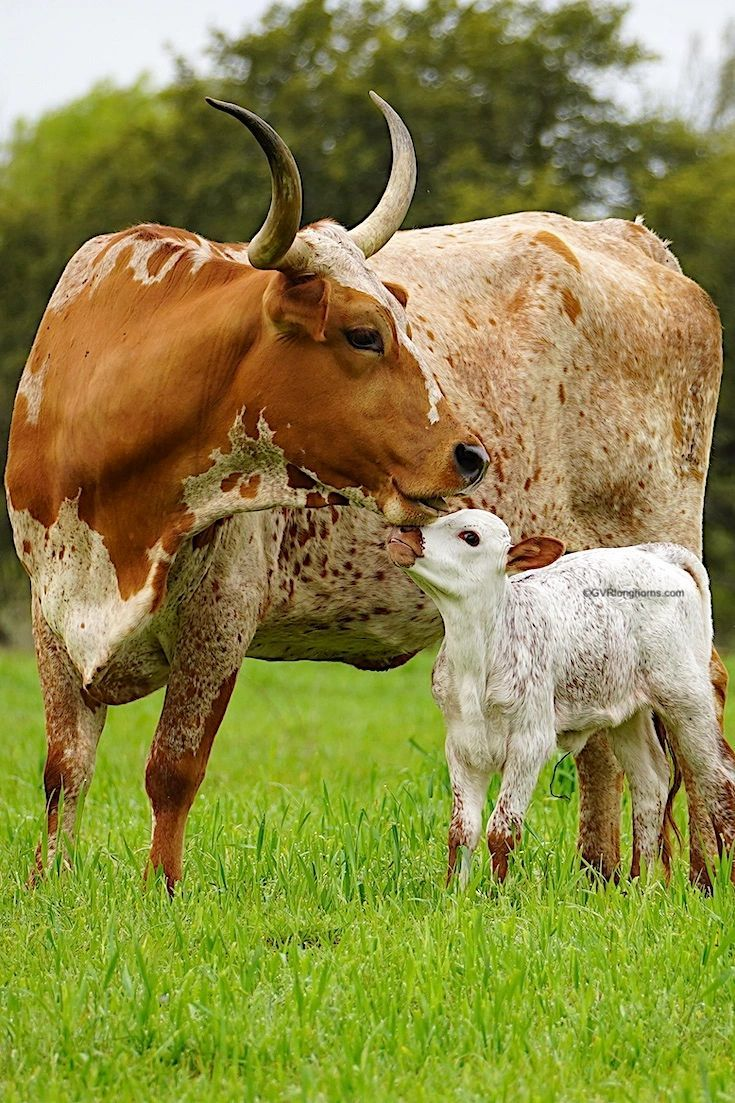
Taurus originally had nothing to do with stars. Taurus marked Apr/May, the beginning of the calving of Eurasian wild cattle. I talked about that in my posts "Ram and bull", "Cow and calf ivory", "Lotus and papyrus", "Bull carrying grannary", "Foundation peg of the goddess nanshe", "Cypriot stamp seals with cow and calf"...and many others...

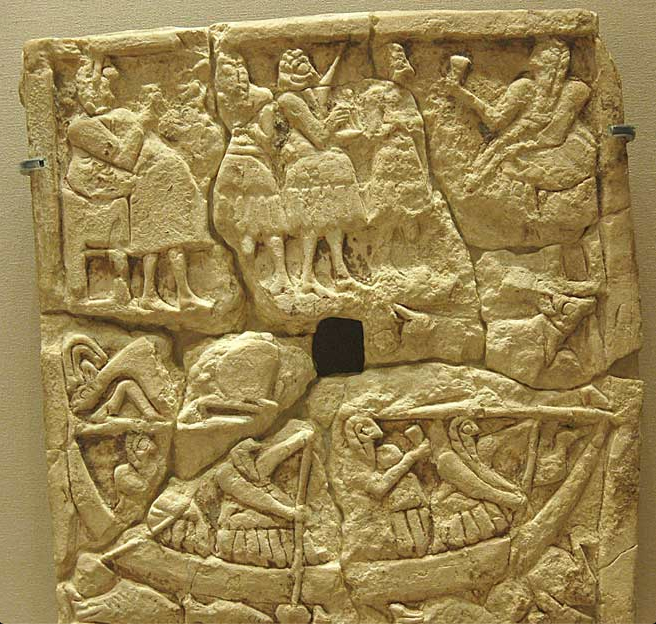
I talked about this in my post "Feast plaque from Louvre" about this amazing object I discovered during the 5 hour long stroll I took with my son through the Mesopotamian section of the Louvre museum few years ago. 

Perforated votive limestone plaque, Mesopotamia (where?), ca. 2700-2650BC...


Now interestingly, the bull depicted on our Lapis seal is not Auroch...It's a Zebu...That's interesting. Zebu originates in India...From where it spread westward...I talked about this in this post "Zebu migrations"...

Because of its mating habits (it mates during the wet season in India), in the Indus Valley civilisation the zebu cattle was used as an animal calendar marker for the Kharif (wet season) Apr/May - Oct/Nov. I talked about this in my post "Kharif and Rabi seasons" about this amazing vessel from the Indus Valley civilisation...


So it seems that on our Lapis seal, it was the beginning of the mating season of Zebu cattle and not the beginning of the calving season of Auroch cattle, that was used as an animal calendar marker for the end of the rain season (Apr/May)...


Now let's see how my interpretation fits with the official description of the seal: 

Two figures faced each other, one holding a cup...The pattern above the figures "may represent rain clouds and rain"...Ibex goat and Zebu bull depicted to the side...

See...

Rain is on ancient artefacts often depicted using dots. I talked about this already in my post "Goat of rain from Andros" about the Neolithic relief depicting the goat of rain surrounded by dots (rain drops) from the Cycladic island of Andros in Greece

Knowing what we know about the symbolism of the goat and the bull, I am 110% convinced that the pattern above the figures represent rain clouds and rain. 

The makers of this seal even positioned one of the dots (rain drops) above the cup, to make it clear what the dots mean...

What about the "drinking from a cup" scene...Have a look at this: Seated female figure (goddess? ) drinking out of a very similar cup (goblet) sitting next to a tulip, bronze seal, late 3rd - early 2nd millennium BC, (BMAC), Afghanistan...
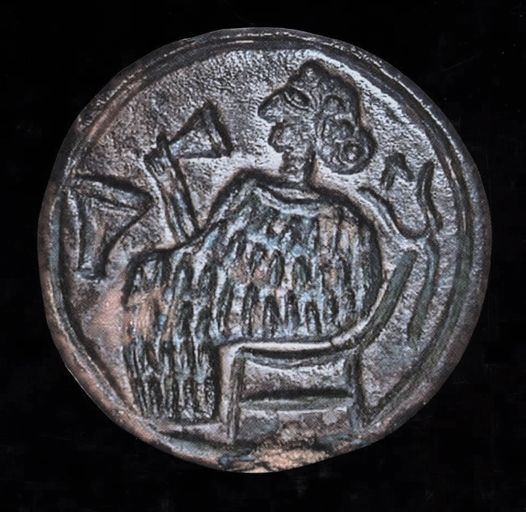
Now check the map of Iran. Our Iranian lapis seal was found in Eastern Iran...Next door to BMAC land...

In my post "Tulip goddess" about the BMAC Goddess with tulips seal, I explained that the goddess is the young spring earth, who just had her first period (snowmelt) and is drinking water (runoff)...

...while around here wild tulips flower everywhere...

The two main rivers from Eastern Iran, Atrak and Helmand, are both fed by the rain and snowmelt. Their water discharge starts suddenly rising in Oct/Nov, it peaks in Apr/May, and it suddenly drops to nothing in Jun/Jul...


Also, the fact that our seal from Eastern Iran was made from Lapis Lazuli, The Water Stone, also points to the intended meaning of the seal scene: rain, filling our cups with fresh water between the mating of Ibex goats and mating of Zebu Cattle...


I talked about this lapis as the water stone in my post "Solar bull"....


That's it. To read more about ancient animal and plant calendar markers, start here…then check the rest of the blog posts related to animal calendar markers I still didn't add to this page, and finally check my twitter threads I still didn't convert to blog post...I am 9 months behind now...

Goat of rain from Andros

This is a very interesting thread about the Late Neolithic settlement (4500-3300 BC) on the Greek island of Andros in the Cyclades...

The thread is full of great info and pics of the site and of the artefacts found on the site. 

One artefact being particularly cool...This one: it is an engraved stone, which if I am not mistaken, depicts an Ibex goat, surrounded by dots...


On ancient artefacts from Eastern Mediterranean, dots were used to depict rain, rain drops...And Ibex goat was used to depict the rain season...Cause the start of the mating season of Ibex goats (Oct/Nov) coincides with the start of the rain season the area...

Andros climate chart...

This makes this artefacts very very interesting indeed...

I talked about symbolism of ibex goats in many of my posts, like 

Europe:

"Pitys", "Goat in European culture", "Patera of Rennes"... 

Levant:

"The tree of life/light", "Lachish animal calendar"...

Mesopotamia:

"Feast plaque from Louvre", "Green pastures", "Problems with Abzu", "Relief from Dur Sharrukin", "Goatfish"...

Iran: 

"Flamingos from Susa", "Goat carrier", "Iranian goat of rain", "Strider", "A vessel from Tepe Hissar"...

That's it. To read more about ancient animal and plant calendar markers, start here…then check the rest of the blog posts related to animal calendar markers I still didn't add to this page, and finally check my twitter threads I still didn't convert to blog post...I am 9 months behind now...

Siberian smith god

Two of many similar figures made by the people of the Kulai culture, which thrived along the Ob River and its tributaries in western Siberia between the 5th century BC and the 5th century CE. From "Frozen magic, the ancient art of Siberia"...

According to the authors of the "Frozen magic, the ancient art of Siberia": The most distinctive feature of these figures is the disproportionate human form. It is unlikely that this effect was unintentional and was probably done to emphasise that we are dealing with a deity... 

The figure have a limping stance, a consistent trait among all known figures in this style. Ancient artisans intentionally crafted one leg shorter than the other, creating a deliberate asymmetry that contrasts with the figure’s symmetrical facial features... 

The authors of the "Frozen magic, the ancient art of Siberia" then propose that these figures might depict a limping blacksmith deity, that fits the common archetype found in other mythologies...  

Mythological figures such as the Greek Hephaestus, Scandinavian Völund, Scythian Targitaus, and the celestial blacksmith Kurdalagon of the Ossetian-Nart people all share a limp. BTW, if you want to know why they are all limping, check my post "Vučedol dove" out...

The gist is that the first, most primitive form of bronze made was arsenic bronse. Arsenic is extremely poisonous, and it gets released into the air from the molten metal in a form of toxic fumes... 

The first sigh of arsenic poisoning is the loss of the sensation in the legs, which then expands throughout the body and finally leads to death...Therefore forging this metal was a dangerous job... 

But if you got out of your workshop on time, then the danger passed, although limping due to loss of sensation in the legs remained for some time...Sounds familiar so far? A lame, limping smith...

Anyway, the authors of the "Frozen magic, the ancient art of Siberia" then go to say that this deity is obviously connected to the underworld...Because both fish and lizard are chthonic animals...

Eeeee what? 

I would first like to agree that this figure is most likely a blacksmith deity. I would then like to propose that this is also a solar deity. Why? Cause of Svarog (Сваро́гъ) is a Slavic god of celestial fire and the father of Dažbog, Slavic sun god... 

Svarog was in the 15th c. Hypatian Codex, a Slavic translation of the Chronicle of John Malalas, equated with Hephaestus, which means that he was not only the god of sun's fire but also of the smith (crucibel) fire...His name comes from the root "svar" which means fire...

Interestingly, Dažbog, who is among Serbs known as Dabog, was imagined as a lame, limping god...He was also the god of the underworld...Strange for a sun god to be the god of the underworld, I hear you say...

No, not really...Where does the sun spend every night? Where is the sun's palace, whose gate the morning star opens up every morning so the sun can drive his chariots into our world? It's in the underworld, the land of the dead, of course... 

So I also agree that the strange objects made by the people of the Kulai culture depict a deity which is connected to the underworld. But not because "fish and lizard are chthonic animals"...They are not. They are animal calendar markers for the hot half of the year...

Lizards are obvious animal calendar markers for summer. They are cold blooded creatures, which are only outside when the outside temperature gets high enough to warm their blood. Siberian lizards emerge from hibernation in Apr and mate in May/Jun... 

I talked about lizard as an animal calendar marker for summer in my post "Bes" about Onega Lage petroglyphs...


This is also a great example of lizard being used as an animal calendar marker for the hot half of the year. 

A (strange) griffin killing a lizard. 6th century mosaic, Great Palace Museum, Istanbul. Another complex animal calendar marker, this one depicting cold half of the year killing (ending) hot half of the year. Full analysis of the symbolism in my post "Griffin killing lizard"...


So that's lizard. What about fish? 

The people of the Kulai culture who made these strange figurines lived along the Kazym river, the right tributary of Ob river. The Kazym river is fed mainly by snow. It freezes in early November and begins to thaw in late May.

Which is when Taimen, the biggest salmonoid in the world, starts its upstream spawning migration towards the upper reaches of the small tributaries where they spawn in the shallows in May/Jun. 


I talked about migratory fish used as animal calendar marker in my post "Pisces". 

25000 years ago a Palaeolithic man carved salmon into the ceiling of a cave near the Vézère River in France. Why? Because in the past, salmon fishing season, which starts in Pisces (fish) 🙂 was one of the main food gathering seasons in Continental Europe


I also talked about migratory fish used as animal calendar marker in my post "The dragon gate" about jumping carp from China. Porcelain Dish c.1700, depicting the Chinese legend about The Dragon Gate. If a carp manages to swim up Yellow River and climb up the waterfall to the gate and jump through it, it will turn into a thunder and lightning dragon.

And in my post "Apkallu" about the giant Mesopotamian carps which migrate upstream for spawing every year during the annual flood season . 

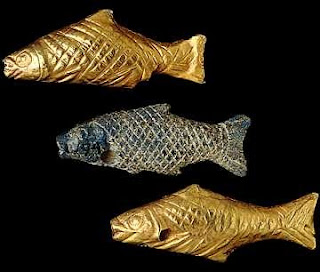
Gold and lapis lazuli carps found in the grave of the Sumerian Queen Puabi who was buried in Ur around 2500BC...Gold for sun and blue for water...About Mesopotamian carp, carp flood, Enki and his Apkallu...

So both of the animals depicted on the strange oval heads of the Kulai culture figures are animal calendar markers for the beginning of summer in Siberia. So I would suggest that the reason why these figures have such huge heads is because they are supposed to symbolise summer sun...

Ok...But what does any of this have to do with metallurgy and smith gods? Well, as it turns out, in the past, in areas with continental climate with a lot of snow, metallurgy was a seasonal activity performed during the summer. I talked about it in my post "Mishipeshu" about the Ancient Native Americans coppersmiths from the great lakes. 

It's kind of obvious, when you think about it. In the past ore was mostly extracted either from shallow shafts, or from river sediments. Both of which are during the winter covered with pile of snow and ice and inacessible. Also it is impossible to work outside on -50 C...

Hence Siberian lame sun smith god figurines decorated with fish and lizard, the two animal calendar markers for the beginning of the metallurgical season in Siberia...What do you think? Makes sense?

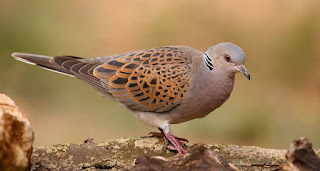
BTW, it just occurred to me why Bronze Age Vučedol culture smith could have had this partridge/dove figurine in his forge: both birds are symbol of spring, animal calendar markers for the beginning of the metallurgical season in the Balkans...

The reason we don't know exactly what bird it is:

Native Balkan dove

Native Balkan partridge

See what I mean?

But what we know is that Partridge is in Greek myths directly linked to lame smiths, like Hephaestus...Dove is linked to Aphrodite...

Hmmmm...

That's it. To read more about ancient animal and plant calendar markers, start here…then check the rest of the blog posts related to animal calendar markers I still didn't add to this page, and finally check my twitter threads I still didn't convert to blog post...I am 9 months behind now...

Saturday, 29 June 2024

A person in a little boat

Proto-Elamite tablet, Iran 3400-3100 BCE...Interestingly, the other side depicts "A person in a little boat" with a giant fish swimming underneath...Pic by Osama Shukir Muhammed Amin.

Soooo what is depicted on this tablet?

Well, this must have been something important, cause there is another tablet with the same scene imprinted on it...Pic by Jacob L. Dahl

First a thought that the "person" is Enki (or his local equivalent), the god of fresh water, and annual flood, in his little boat, the symbol of the annual flood of the rivers in Mesopotamia and Iran. I talked about it in my post "Feast plaque from Louvre"...


This would tie with the giant fish, which would then be a giant Mesopotamian carp, which swims upstream during the annual flood to its spawning grounds in the upper reaches of Tigris and Euphrates and their tributaries...


I talked about this in my post "Apkallu"...

But something was funny about the "person" in the boat. The position of the arms is commonly seen on mother goddesses squeezing their breasts. Like this Elamite one from the 2nd millennium BC from Met Museum...

Also, is this a "pregnant" belly? So could this "person" in the boat be a female? And what is that sticking out of the person's butt (sorry back 🙂)? Is this symbol for grain? This thing

So how does this "grain goddess" fit into the "boat floating on the carp flood"? Well this is the water level chart in Tigris and Euphrates system...The water level peaks in Apr/May...

And this is Mesopotamian grain harvest calendar...


This is Inanna/Ishtar speaking: 


"...Before my lord, Dumuzi,

I poured out plants from my womb.

I placed plants before him,

I poured out plants before him.

I placed grain before him,

I poured out grain before him,

I poured out grain before my womb..."


I talked about this in my article "Mother of grain"...

BTW, every year during the harvest, a man and a woman performed ritual sexual act on a threshing floor, imitating Inanna (earth, womb) and Enki (sweet water, seed) consummating their holy marriage. I talked about this in my article "Sacred marriage on the threshing floor"...

Soooo...Is this Inanna (or some local equivalent) arriving in Enki's little boat floating on the waters of the "carp flood"? I would love to know what is written on this tablet...Do we know how to read Proto-Elamite script?

That's it. To read more about ancient animal and plant calendar markers, start here…then check the rest of the blog posts related to animal calendar markers I still didn't add to this page, and finally check my twitter threads I still didn't convert to blog post...I am 9 months behind now...