Tuesday, 5 January 2021

Little Christmas

I posted this today, and it went completely unnoticed. Which is very interesting, considering how much people banged about Krampus only few days ago. Here is the real thing. St. Nicholas Day, aka "Little Christmas" In Austria, 1934: 


St Nick comes out of the church accompanied by two women dressed in white...Brides???...He is awaited by "the devils" or "the demons"...Or, considering that most have sculls instead of faces, they could also be "the ancestors", "the dead"...


They form a procession which follows St Nick from the church and through the village...

All along they shout, bang their bells and shake their chains...One of them is carrying a "wooden grape picking basket" on his back...


The procession stops in front of every house. 


St Nick knocks on the door, while the "devils, demons, dead" stay behind him...


The mother opens the door and takes the children out in front of the house...


Then St Nick tells them that they should be good Christians (while wagging his finger at them)...The thing is, all the kids hear is: "blah blah blah" as they are too busy being terrified by the (devils, demons, dead)....


This is what the kids are looking at...

St Nick then tells all the children to cross themselves, which they attempt to do as best as they can, while still staring at the grinning (devils, demons, dead) standing behind St Nick...


Once they cross themselves, the children are proclaimed to be "good children" and are given presents: apples, nuts, holy pictures...

But one child, instead of crossing himself, makes long nose at the procession (basically telling St Nick to stuff it). 


He is then proclaimed to be a bad boy and is grabbed by one of the (devils, demons, dead), while everyone laughs...


The "bad child" is then stuffed into the grape picking basket, bucket and taken away by the (devils, demons, dead)...

Hmm...Grape picking basket? Wasn't there a god once, who loved grapes and wine, and who, every December, threw mad parties, during which he led processions consisting of his female followers, half men half beasts creatures, and the dead?

And wasn't his favorite punishment for women who didn't want to follow him to make them mad and make them kill their own children? And didn't Dionysus, allegedly, delight, as a child, in tearing kids into pieces and bringing them back to life again...

I don't know...

Sunday, 3 January 2021

Maenads with hare

Detail from Athenian black-figure clay vase about 575-525 BC, made by Amasis Painter. It depicts Dionysos with a pair of attendant maenads...

There are few details on this image which deserve to be analysed, I think...The animals...Of course 🙂

One of the Maenads holds a hare by its ears and is presenting it to Dionysus...The other Maenad wears a leopard skin (dead leopard) around her waist. And is holding a stag by its front legs...

Is the choice of animals and their position in the scene random? The archaeologists who wrote the above depiction of the vase obviously thought so, as they didn't even mention the animals...

I think that these animals are all calendar markers, marking the beginning of spring...

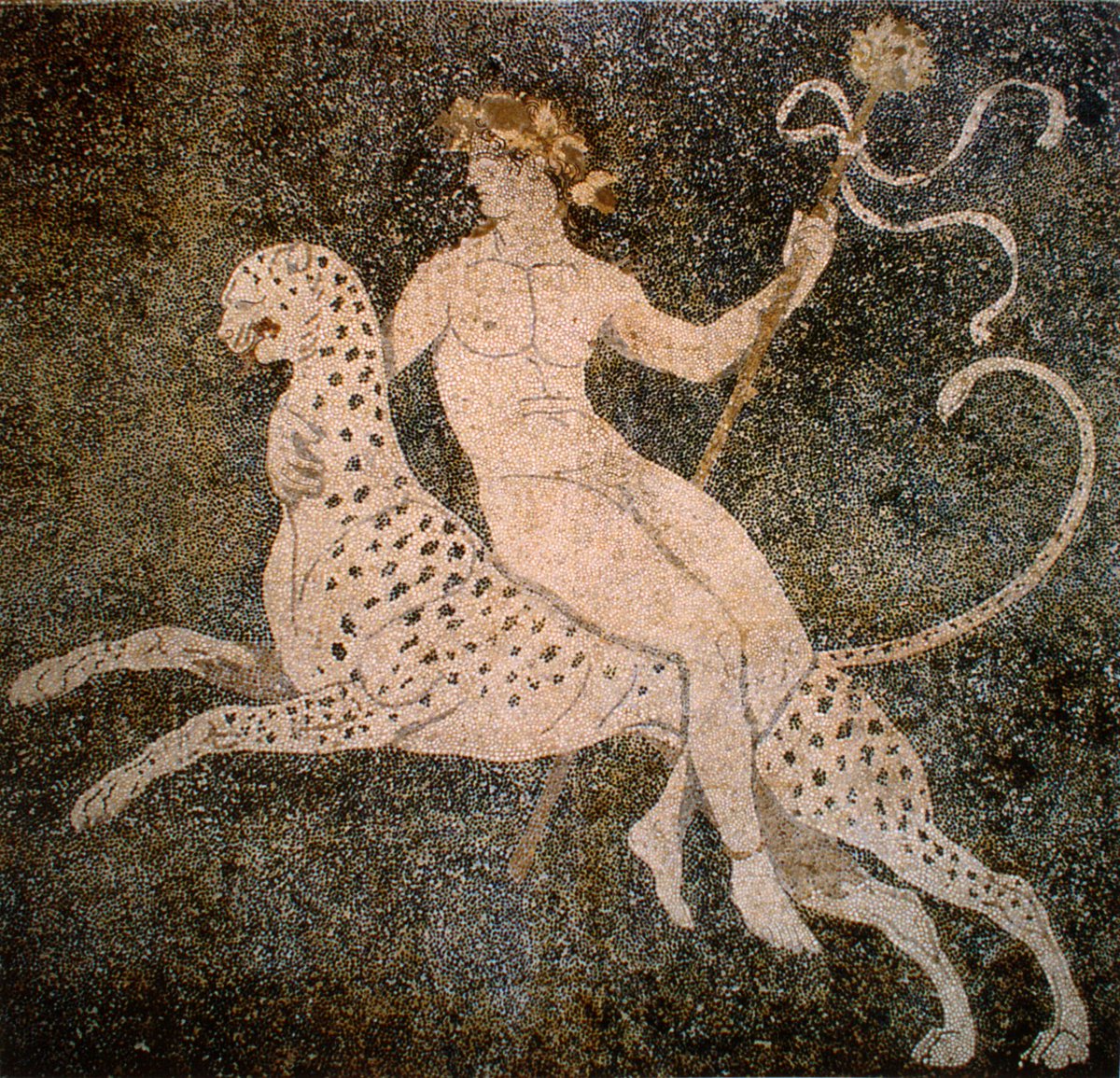
I already talked about the link between Dionysus and leopards in two of my posts: "Leopard and tiger" and "Thyrsus" In the earliest depictions, Dionysus "rides on a leopard"...

Leopard marks the end of winter (Jan-Feb). Because its mating season starts in Jan-Feb...

Just like ibex goat marks the beginning of winter (Oct-Nov). Because its mating season starts in Oct-Nov...

This symbolic linking between ibex and leopard and winter originated in Central Asia and Mesopotamia, where winter is the rain season and the season of the resurrection, rebirth of nature after long dry summer and autumn... 

I talked about this in my post 

"A vessel from Tepe Hissar"

and

"Leopard and goat seal"

Now when a god "rides" on an animal, that means that whatever that god represents happens during that the time when that animal either mates or gives birth...

Originally Zeus rode on a goat...On Crete, where Zeus was also suckled by a goat, the rains arrive during wild goat mating season...Perun, Perkunas and Thor still do ride on goats...I talked about this in my post "Goat riding thunder god"...

In India Indra rides on an elephant...In India monsoon overlaps with elephant mating season...I talked about this in my post "Musth"...

Hittite storm god rides on a bull...In Central Turkey, the main rain and thunderstorm season overlaps with the calving of Aurochs...I talked about this in my post "Ulucinar stelae"... 

Slavic Sun god Svetovid rode on a white horse, which was sacred to him and was kept in his temples...Summer solstice is the peak of the wild horses mating season which is linked to the amount of daylight...I talked about this in my post "Svetovid"...

Ishtar (The Lady of heaven, Sirius) and all her later incarnations, ride on a lion...Because Sirius rises with the sun during Leo, the time when Eurasian lions main mating season starts...I talked about this in my post "Assumption of Mary"

It goes on and on...

The fact that Dionysus rides on a leopard is befitting to the god of death and resurrection of nature...In Europe...The nature dies at the beginning of winter, and gets resurrected at the end of winter...In the middle of the mating season of leopards, beginning of Feb...

Now I talked about Maenades and their link with the end of winter (death of leopard) in my post "Furious Maenad"

I proposed that their "fury" is a symbol for the sun's fire...The sun's fire and the reproductive fire...Which creates new life in spring...After the end of winter (death of leopard)...

Now back to the original image. Dionysus is not riding on a leopard...He has already arrived...The leopard is dead and its skin is pointing down, representing the end of winter, the end of leopard mating season (Jan-Feb)...

I think that's enough about leopards 🙂 

The hare is alive and is touching the hand of Dionysus with his front paw...Now hare is one of the main symbols of fertility...And Spring...Its mating season peaks in March (March hare), after the end of the leopard mating season (Jan-Feb)...I talked about hare reproductive cycle and its symbolism in my post "The winter spirit"...

So far so simple. Here is the really cool bit...

The deer, based on the spots, is the fallow deer...

This deer species which naturally originates in the area of the Fertile Crescent, was brought to Greece in antiquity, possibly by Persians, or even earlier by settlers from Anatolia...You can read more about it in this article...


Now here is something that I didn't know until I read this paper today: "Investigation of fallow deer (Cervus dama L.) population densities by camera trap method in Antalya Düzlerçamı EÅŸenadası Breeding Station". In it we can read that: 

"All wild fallow deer do have spots"


"Except for the winter months when they develop thick spotless coat"


The spots reappear in Spring...With new antlers...

Very interesting...

The Maenad is wearing dead leopard (winter has ended) is giving Dionysus a hare (spring has begun) while holding a spotted Fallow deer with antlers (summer, autumn)...


Mad...

I find this image infinitely more interesting now...What about you?


To read more about ancient animal and plant calendar markers, start here…then check the rest of the blog posts related to animal calendar markers I still didn't add to this page, and finally check my twitter threads I still didn't convert to blog post...I am 9 months behind now...

Saturday, 2 January 2021

Furious Maenad

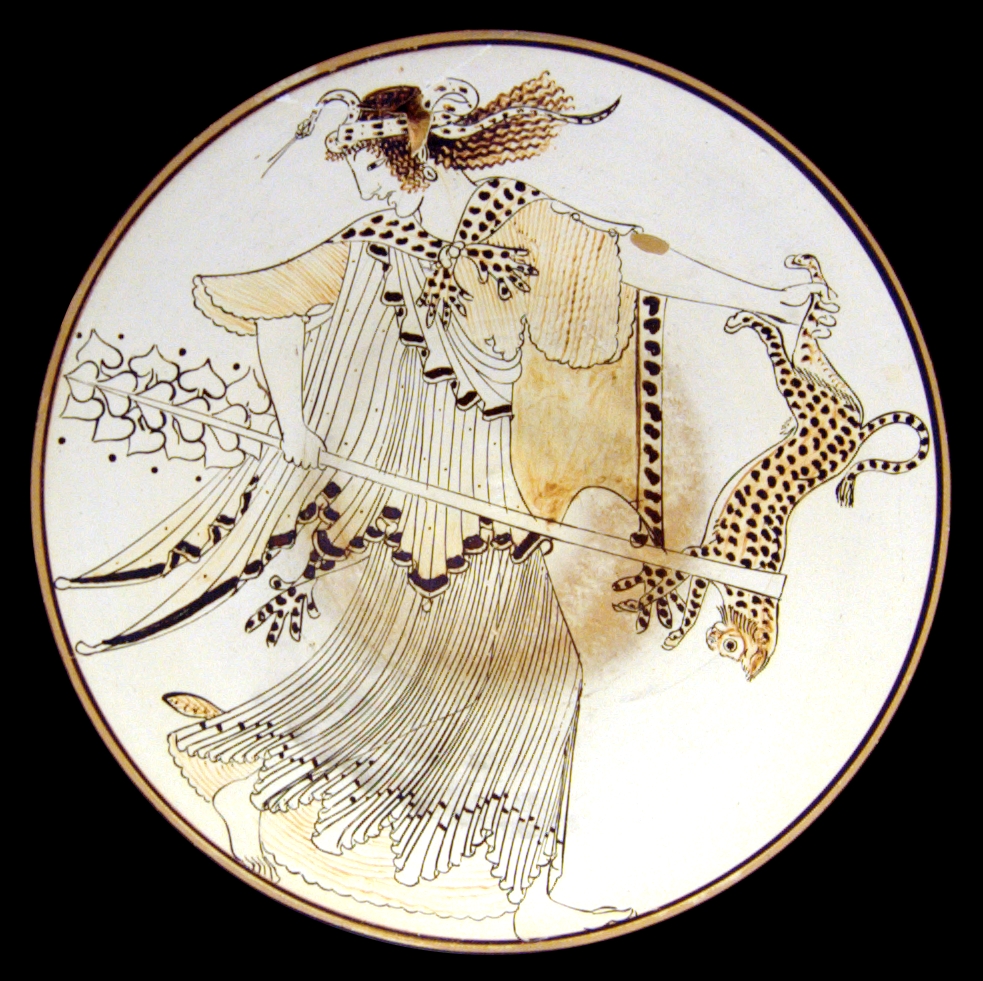
Furious Maenad holding a thyrsus in her right hand and a leopard in her left hand. She wears a leopard skin as a cloak and a snake around her head like a diadem. Tondo of an Attic white-ground kylix, 490–480 BC. From Vulci, Italy...

Very beautiful and very interesting...

Maenads were the female followers of Dionysus and the most significant members of the god's retinue. Their name literally translates as "raving ones"...

The oldest festival dedicated to Dionysus, was Rural Donysia, which took place around Winter Solstice. The main part of the festival was the procession. The god’s entourage during the procession consisted of the male satyrs and the female maenads...

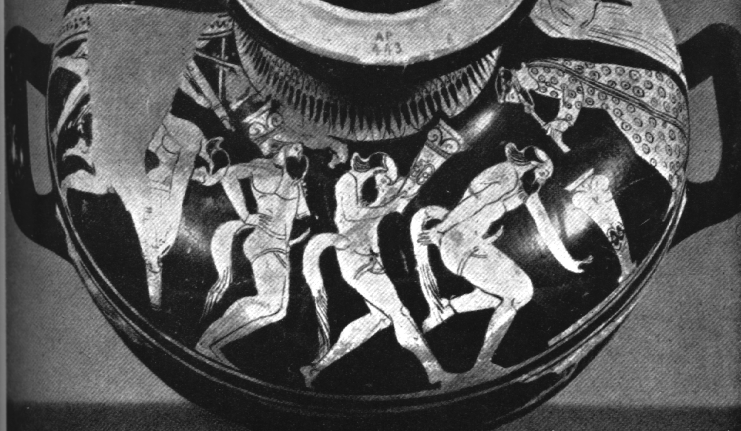
I love this depiction of reveling dancers (satyrs???) lead by the piper dressed in leopard skin (Dionysus???)...Why leopard? Well, I talked about this in my post "Leopards and tigers"

Asian leopards are very secretive creatures. Very little is known about their lives. The general belief of the local population in the areas where Leopards are still found today, is that Leopards mate during "midwinter", right at the time of Rural Dionysia...

Is this why Dionysos was associated with leopards? 

Recent studies have however shown that the actual mating starts in January, soon after the Rural Dionysia, and peaks at the beginning of February...At the the end of winter beginning of spring...

It is interesting that in Anatolia, Central Asia, Mesopotamia, leopard was, with ibex goat, associated with rain season. Rain season which covers winter (starts with ibex mating season) and spring (starts with leopard mating season)...

Leopard hunts (follows) ibex...Spring, which starts with leopard mating season, follows winter which starts with ibex mating season...And this "hunt" revives nature and brings fertility to the land...I talked about this in my post "Goat and leopard"...

Rain, which is brought by mating ibexes and leopards, brings fertility...Ibex and leopard semen turns to rain which turns to flowing water...I talked about this in my post "A vessel from Tepe Hissar"...

Wasn't Dionysus associated with goats? Wasn't goat sacrificed to him? Wasn't tragedy, which translates in Greek as "goat-song", originally an improvised hymn sung and danced in praise of Dionysus? Was't Dionysus turned into a baby goat by god of rain, Zeus, his father? Who was in turn suckled by a goat??? I talked about the link between Zeus and a goat in my post "Goat riding thunder god"...

Now I am beginning to believe that Dionysus, the god of resurrection of nature, is associated with leopards because the end of leopard mating season is when "the resurrection of nature" actually happens: the end of winter and beginning of spring...Well in Greece anyway...

I think that this is why Dionysus, the god who dies and gets resurrected, rides on a leopard (arrives during leopard mating season), wears leopard skin (is identified with the end of the leopard mating season)...

And I also believe that this is why this Maenad not only holds a leopard by his hind leg (the end of leopard mating season) but also wears a leopard skin (dead leopard, again the end of leopard mating season)

So kind of cool...

It's actually even cooler...

Maenad's snake diadem. Snake is the animal which symbolises sun's heat, fire. Snakes are in our world when sun is in our world, spring, summer, autumn...And in underworld when sun is there, in winter. I talked about this in my posts "Enemy of the sun", "The chthonic animal",  "Bactrian snakes and dragons" and many others...

Maenad's thyrsus. The stick used by Prometheus to steal fire from the gods and smuggle it into human hearths. Probably also symbolic torch as well as penis...I talked about this in my post "Thyrsus"...

Finally Maenad's fury = internal fire, heat

The three main attributes of the Maenad represent fire, heat...And she is out dancing, for Dionysus, "the polar opposite of Apollo" in the middle of cold, dark, winter...Maenad kills leopard, winter ends, spring begins. Resurrection...

Finally finally, here is a Maenad carrying a thyrsus and a flaming torch...

To read more about ancient animal and plant calendar markers, start here…then check the rest of the blog posts related to animal calendar markers I still didn't add to this page, and finally check my twitter threads I still didn't convert to blog post...I am 9 months behind now...

Walking sheafs of wheat

In the past, in Shetlands, "skeklers", children dressed in straw suits, would go round the houses at Halloween (Gaelic new year), New Year, asking for food, apparently "to bring the sun back from the grip of winter and ensure good crops"...


Apparently, these "straw men" would also turn up at weddings...
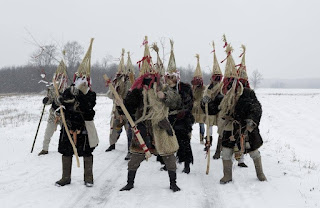
Interestingly, exactly the same type of grain straw men exist in Ireland...There they parade on St. Stephen's day when they are called wren boys...I talked about them in my post "Wran or wren"...
But they also turn up at weddings...You can read more about the Irish wedding traditions on this great page about Irish weddings from askaboutireland.ie...

The whole thing is related to fertility. Just like in Slavic culture, here too female and earth fertility is directly linked, through the fact that the "grain sheafs appear at weddings and dance with a bride"...

I talked about this link in Slavic culture in many posts, here are just two: "Wheat wreath" and "Partridge"...

This is my favorite example of that link: In the past in Russia, after the last sheaf of grain was cut, women harvesters would lie down on the ground and roll around the field "to return the strength to the earth". Russian harvest custom which directly links female and earth fertility...

So, where else do "sheafs of wheat" or "straw men" walk among the people during the winter? 

I'll start:

Walking sheafs of wheat are part of the Ķekatas masked men who wander the night on Ziemassvētki and Meteņi, "to seal away evil and bring good fortune and blessings"...


Walking wheat sheaf from Kuva region in Finland. The last day of Christmas...

Bears of wheat and peastraw, Empfingen, Baden-Württemberg. These are the so called "Straw bears", but really walking sheafs of wheat...


Straw bears also walk in Whittlesea, England...Again, walking sheafs of wheat...

Schabmänner (brooms) or Rauhen from Styria (Štajerska), Austria, but really walking sheafs of wheat...

Buttmandl (bundled men) in the area around the Bavarian town of Berchtesgaden. Walking sheafs of wheat...With St Nicholas...Remember this, this is important...

Your turn....