Irish: leamh - soft, weak, impotent, soft-witted, insane, silly
Serbian (South Serbian dialect): lijav - week, bad, stupid, soft-witted, insane, silly
Serbian: rupa - a hole. This word basically equates a woman with a hole, pussy...
Irish: rúplach - a strong fellow, anything strong; rúpálaí - a strong unmethodical worker.
Serbian: rmpalija - a stong man. The "rmp" block is difficult to pronounce and when pronounced fast transforms into "rup" so "rmpalija" becomes "rupalija"
Irish: gabhar - goat. From old Irish gabor. Cognate with Old Norse hafr, Old English hæfr, Welsh gafr, Latin caper, all meaning goat. Also cognate with Ancient Greek κάπρος (kápros, “wild boar”).
Serbian: gabor - someone with an ugly face, particularly a woman with an ugly face like a goat

Irish: magairle - testicle, magarlach - worthless, silly, testicular, having large scrotum
Serbian: magare, magarac - donkey, has large penis and scrotum. Also used as a word meaning worthless, annoying, silly, usually applied to boys or young men, who are stubborn, have big balls and small brains...Magarac is a word is also found in Romanian as măgar and in Albanian as magar with the same meaning of donkey. It is of uncertain origin.
Serbian: baglja - crutch, forked branch, stick; bagljav - has problem with legs, walking; bagariti - limp, be lame, have problem walking.
Irish: cas - twisted, winding, curly, complicated, intricate, twisty. devious; caise - twistiness, curliness, warp; cásaigh - lament, deplore, sympathise, condole, express concern for; enquire for.
Serbian (South Serbian dialect): zakasa - get stuck in something winding, complicated, difficult...and complain about it...

Irish: boil, boile - madness, Irish buile, Early Irish baile
Serbian: baljesgati - talk like a madman, make no sense
Irish: blabaran - stammerer, Irish blabarán, from the English blabber, speak inarticulately
Serbian: blebetati - speak inarticulately
Irish: baisceall - a wild person; Middle Irish basgell
Serbian: bes - fury; besan - furious; besnica - promiscuous woman; besnik, besovik - wild person. English beast is probably related to Serbian bes or maybe even derived from it: Beast - From Middle English beeste, beste, from Old French beste (French bête), from Latin bēstia (“animal, beast”); many cognates – see bēstia. But the root of Latin bēstia is unknown :)
Irish: abair - say
Serbian: aber - word; abronosha - gossiper. The word aber also exists in Turkish. Celts lived both in the Balkans and in Asia minor?
Irish: drip - hurry, confusion, bustle, snare
Serbian: dripac - someone who is capable of causing havoc
Irish: dreòlan - a silly person
Serbian: drlepan - a silly person
Irish: draos - trash, filth
Serbian: droca - whore
Possibly cognate with English dross - waste or impure matter
Irish: saobhán - mental, silly
Serbian: šaban - glup, primitive
Irish: saonta - Naive, gullible
Serbian:šuntav - inept, clumsy, silly, stupid
Irish: balbhan - dumb person
Serbian: balvan - a tree log, something blunt, inert. Expression: "glup ko balvan" stupid like a log
Irish: Dudach - mopish shy foolish
Serbian: Duduk - ignorant, foolish
Irish:Gadai - thief, rogue; gadaidheach- robbing, thieving; gadaidheacht - robbery, plunder.
Serbian:gad - a nasty person, gadan - ugly
Irish: Strabhas - grimace, ugly expression
Serbian: Strava - horror (and accompanying ugly expression)

Irish: graganach - shaggy person
Serbian: garagan - shaggy person usually kids

Irish: graosta - lewd, obscene, filthy
Serbian: greota - lewd, obscene, filthy
Irish: tút - dirt, filth, stench; tútach - uncouth, petulant, stinking, filthy, ungainly, Senseless, stupid, mean, churlish, rude...Basically everything bad you can think of something...
Serbian: "tuta" or "tuta - muta" - stupid person; tuta also means bedpan....
Irish: muta - worthless, lout
Serbian: mutav - worthless, stupid but also dumb (both meaning stupid and unable to speak which was equated with stupid)
Irish: ba - stupid, also onomatopoeic sound for sheep
Serbian - "glup ko ovca" stupid like a sheep
Irish: clip - tease, torment, prick
Serbian: klipan - someone who teases, torments, pricks, rude and ill-mannered person (especially younger), clumsy person, lubber
Irish: gairbhe - roughness
Serbian: grub - rough, coarse, rude, grubost - roughness. German grob - coarse, rough, uncouth, rude, crude, from Old High German grob. Cognate to Low German groff, Dutch grof.
Irish: gairbheisach - rough person
Serbian: grubian - rough person. English, German grobian - a coarse, uncouth, uncivilized fellow, perhaps violent, from German, from grob - rough
Serbian: drtina - old useless person or animal or bad soil
Irish: cac - excrement
Serbian: kaka - euphemism used for excrement, kakano - dirty. From a Proto-Indo-European root *kakka-. Compare Old Irish cacc, Ancient Greek κακκάω (kakkáō), Middle Armenian քաք (kʿakʿ), Russian ка́кать (kákatʹ). Onomatopoeic.
Irish: cacaim - to void excrement, to defecate
Serbian: kakim - I am defecating.

Irish: bochd - poor, so Irish, Old Irish bocht;
Serbian: ubog - ubog meaning in poverty poor. The Engllish word beggar probably comes from Slavic ubogar meaning poor person, beggar. In Serbian we also have nebogar with the same meaning: poor. All this points to the original meaning of the word bog, which today means god, as being luck, happiness, wealth, money...

Irish: Scots gaelic och an interjection, alas! Irish och, uch, Old Irish uch, vae, ochfad, sighing: *uk; Gothic aúhjôn, make a noise, Norse ugla, English owl; Leton. auka, stormwind,
Serbian: oh uh - alas, uka - a cry.
Irish: naoidhean - an infant, so Irish naíonán, Old Irish nóidiu, gen. nóiden
Serbian: ne ide - not walk - infant

Irish: cail - an old mare, usually applied to an old ass
Serbian: kilav - old, unable, feeble, someone who has hernia and can't lift or carry wight. Found also in Greek as κήλη (kele). So it seems it is a word of Balkan origin.

Irish: raspa, a bony old cow, etc.; a thin, wasted person
Serbian: raspada se - falls apart, used for machines which are losing parts, or animals and people who are wrecked, destroyed by work, old age or sickness. Raspad - breakdown...
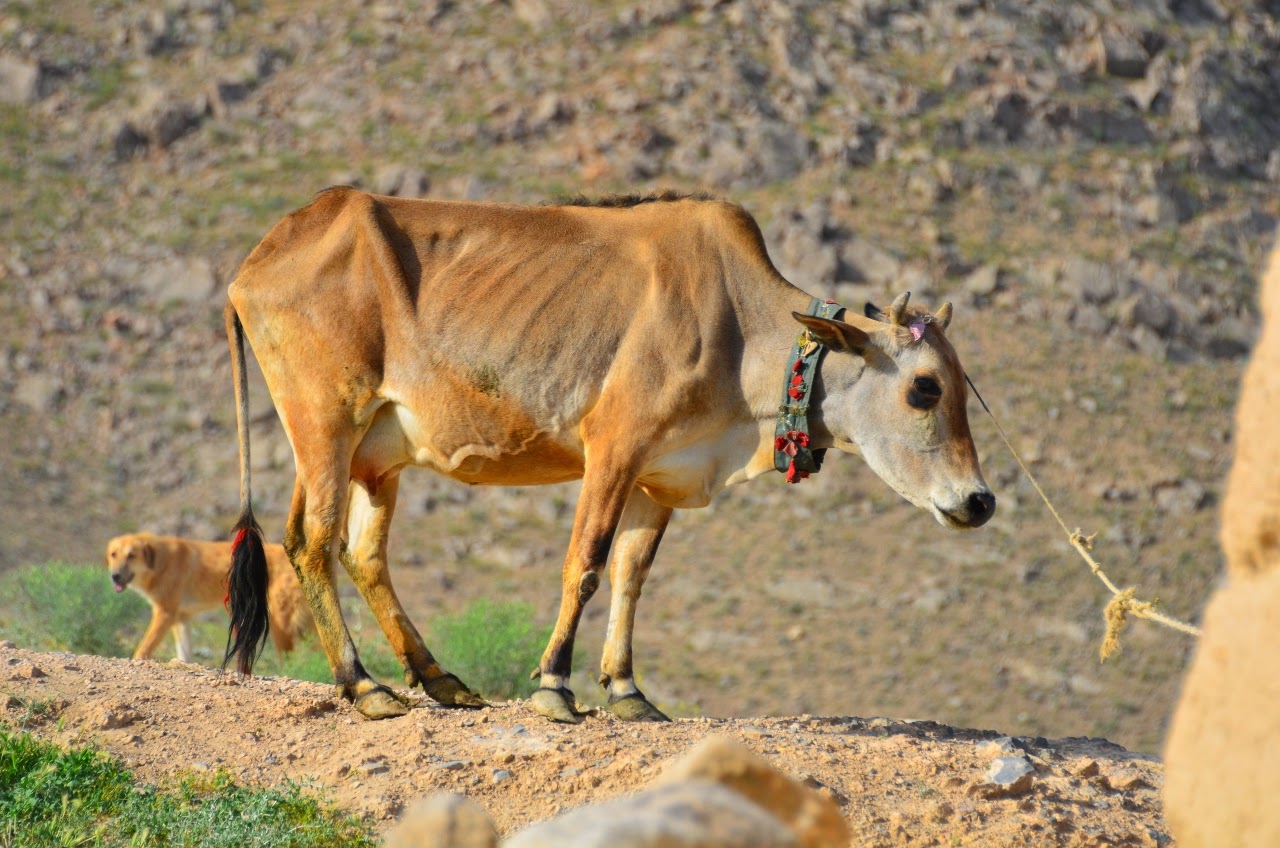
Irish: raga - worthless person or thing
Serbian: raga worthless person or thing usually horse. Something better dead...

Irish: raispín - a miser, a mean person
Serbian: rospija - evil woman, woman who is always miserable and who makes others miserable, a witch

Irish: guta - puddle, mire, mud, filth, dirt.
Serbian: guda - pig, animal which wallows in mud
Irish: praiseach, práisc - 1. Mess. 2. (a) Botch, messer. (b) Slovenly person.
Serbian: prasac - 1. pig, piglet, 2. Messy person

Irish: láib, lábán (pronounced lob, lobon) - mud, mire; lábach - muddy, miry
Serbian (South Serbian dialect): ljopa - mud; mire, ljopa se - is getting muddy; ljopav - muddy, miry
Irish: lag - week person, creature, lacking in qualities; lagaigh - weaken; laghad - smallness
Serbian:
Lak, Lagan - light in weight, easy, lacking weight and therefore importance. Cognate of light (not heavey)
ljaga - slander, disgrace, shame, stain, stigma, blemish, taint, discredit, smirch; ljaganje - defamation, embarrassing, disgracing, diminishing....
Irish: Scot old name for an Irishman. Old Irish were predominantly cattle herders and the whole society was organized around cattle and sheep. Cattle was the main property of any person and determined how wealthy someone was.
Serbian: skot - cattle but also litter (animal young); skotan (pregnant animal with litter). Veles, Volos was known as "Skotiji bog" meaning the cattle god. Proto Germanic "*skattaz" meaning cattle, kine and by extension owndom, wealth, goods, hoard, treasure, money, comes from Slavic skot meaning cattle as cattle was the original wealth. Skot also means "evil and merciless" person...
Was "Scoti" the old name given to the Irish given to them by their neighbors with the meaning Scoti = "cattle herders" who were also cattle raiders hence not very nice "evil and merciless" people? Or maybe the name did come from the Princess Scota...

Irish: mál - Prince, chief, noble
Serbian: mal - cattle, wealth. The word mal with the meaning of wealth is also found in Turkic languages and in Arabic. I presume that the original meaning was cattle, and considering that the Arabic doesn't contain the meaning cattle I wonder where and how far back in the past does the origin of this word lies...
What do you think about this? Long period of mutual insulting between the Serbians (Slavs) and the Irish, or just Proto Indo European common words which somehow were forgotten by all the other Indoeuropeans? I did try to find these words in other Indoeuropean languages apart from Slavic and Celtic, and I specified other cognates where I could find them. I would appreciate any information about the cognates that I have missed, so that I can update my post. Because the number of these non Celtic and non Slavic cognates is so small, I would say that the first thing is much more likely. Celts and Slavs spent a lot of time insulting each other... :)
Particularly interesting are the words from the Irish language which are built using root blocks from Slavic languages. How did they end up in the Irish language?
You can find all the Irish words in these dictionaries:
Foclóir Gaeilge-Béarla (Ó Dónaill, 1977)
Foclóir gaedhilge agus béarla (David Nutt 1904)
MacBain's Dictionary - Gaelic Languages (1896)
Serbian words you will unfortunately have to look for in printed dictionaries as they are not available online:
Vuk Karadzic Srbski Rjecnik 1852
Variouse dialectic dictionaries printed by the Serbian academy of art and science
Dictionary of Niksic area language by Ljubomir Djokovic
Various other local dialect dictionaries, like Gora region dictionary, Dalmatian dictionary, Shokacki dialect dictionary, Bunjevac dialect dictionary....
