Showing posts with label Thunder god mythology. Show all posts

Sunday, 22 February 2026

Cock fight mosaic

A while back, @chapps posted this on X: This cockfight mosaic may have a religious meaning, as two of Mercury’s symbols - the caduceus and a bag of money (purse) - are on the mensa agonistica (winnings table), along with a palm of victory. Cockerels are associated with Mercury...


The mosaic, part of the Santangelo Collection, is currently kept in the Naples National Archaeological Museum...

In Greek and Roman mythology, the cockerel (rooster) is a sacred animal directly associated with Hermes (or his Roman equivalent, Mercury). Why? No one really knows...

The first reason is this:

Cockerel standing on top of the sun gate, on the border between the darkness and light, between the land of the dead (where sun spends night, winter) and the land of the living (where sun spends day, summer). Medieval (?) standing stone Bosnia...

This links cockerel with both day (the living) and night (the dead)...I talked about this link in Irish and Serbian folklore in my post "Bleeding for Martin"...


In this post I talk about ritual killing of cockerels at the beginning of the dark half of the year, and the ritual blooding of the doorstep and four house corners, both believed to be the hanging places of the souls of the dead ancestors...

And it is the dead ancestors that were the source of all good and bad things that happened to their living descendants...Which is the root of the ancestor worship all around the world...

In particular, people believed that there was a link between the dead and water (rain) and consequently agriculture, and that the thirsty dead would drink the water from the clouds causing drought and hunger...

I talk about this in many of my posts...

Drought and hunger that destroyed the Hittite empire for instance...

"...humiliation of the Hittite kingdom is the result of the fact that the Hittites have forgotten to respect the sacred bond with their dead..." - Last Hittite king Suppiluliuma II. 

I talked about this in my post "Care of the dead"...

Interestingly, it seems that cockerel was among the Slavs considered a symbolic replacement of a human and sacrificing cockerel was a symbolic sacrifice of a human...to the dead...

Examples:

Serbs had an interesting ritual from the cult of the dead which involved cockerels. When two members of the family die close together, Serbs then bury "a live cockerel" with the dead "to fool Death" or more precisely "as a replacement for the third death"...I talked about this in my post "Third death"...

In the past in Serbia it was believed that someone from the family will soon die after they move into the new house, because every house wants to have its protective spirit, which is the spirit of the first person to die in the house...To prevent this from happening, people made sure that a cockerel was the first to cross the doorstep of the new house. The cockerel was then caught and killed on the doorstep, (the seat of the dead) by the man of the house...


I talked about this in my post "New house"...

Finally, a direct link between sacrificing of a cockerel, human sacrifice and grain can be seen from this harvest custom: Dožinjalica is a cock which is slaughtered (roasted and eaten) at the end of the harvest...

 
Among the Serbs from Croatia it was believed that "grain will yield plentifully next year only where dožinjalica is eaten". On Tobolić, at the end of the harvest, the harvesters would tie the housewife with ropes. They would then light up a fire in the field where the last sheaf of grain was cut, and would "pretend to burn her in the fire"... The would let her go only after "she promised them a dožinjalica". Similar customs were also recorded among Serbs from from Northern Dalmatia. There the harvesters would "grab the housewife, cary her to a fire burning in the field, where they would pretend to roast her over the fire..." or they would "put the sickle under her throat..." so she would "promise them better dinner". In some parts "housewife was tied to the stožer, the central column of the threshing floor..." until she promised them "a good end of harvest dinner"...It is interesting that in some other places, Serbs actually sacrificed a cock to the central threshing floor column at the end of the harvest...

I talked about this in my post "Cock bashing"...

You can read more about threshing floor sacrifices in my post "Bogovo gumno, God's threshing floor". For instance: In the Balkans on the first day of threshing, the first sheaf of grain was stuck on top of the stožer, the central pole of the threshing floor, as an offering. Pic: Poreč, Makedonija, early 20th century....


This link between the dead, grain and cockerel once obviously existed in Greek religion, considering that Hades was also linked to cockerels...Hades sitting on his throne with Persephone. Hades is holding Asphodelus flowers, which were in Greek Mythology, associated with the dead and the Underworld.  Persephone is holding grain (obvious)...and a cockerel (why?)...I talked about this in my post "Asphodelus"... 


Hades, god of the dead, who was also known as Pluto, god of (agricultural) wealth...I mean his wife was Persephone, the deified grain...I talked about Persephone and grain in many of my posts...

But also:

The story how Plutus was conceived from the affair between Demeter and Iason is very interesting. "Demeter, bright goddess, was joined in sweet love with the hero Iasion in a thrice-ploughed (triple-furrowed) field in the rich land of Krete (Crete)"...


This "thrice-ploughed" (triple-furrowed) thingy is very interesting. Apparently, "the cutting of three furrows was part of fertility rites performed to inaugurate the new agricultural year"...Anyone knows where I can find reference to this in Greek texts???

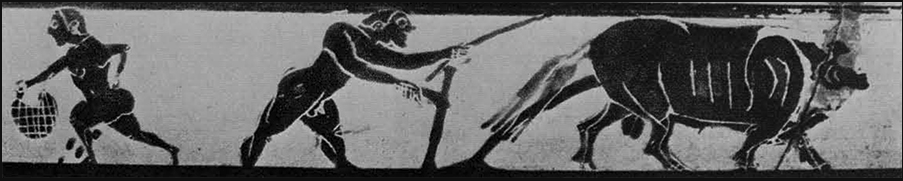
Interestingly, in "Bulletin of the ethnographic museum of Serbia, Volume 10" from 1935 we can read that in some parts of Serbia, cutting of three furrows in the field was also a ritual marking the beginning of the agricultural year...


Once the three furrows were cut, an egg was buried in and then the ploughing of the field continued...At the end of harvest, people slaughtered a cockerel in the field. Ploughing-sowing-harvesting...Egg-Cockerel...

I talked about this in my post "Pluto"...

Also, considering that Hermes, the psychopomp, the guide of the dead that guides them into the underworld, was directly linked to cockerels...Here is a depiction of Hermes/Mercury holding a cockerel from the Greek city Locri Epizefiri located in today Calabria...


I would even suggest that the wings adoring his hat are cockerel wings...


Here comes the interesting bit 🙂:

Both cockerel and Hermes (the original Mercury) were linked with thunder gods...

Hermes was the herald of the thunder god, the voice of the thunder god...The thunder...

I talked about this in my post "Iris". Goddess Iris, who was later replaced by Hermes, was originally "the one who speaks for Zeus"...Considering that thunder is the voice of the thunder god, who (or what) was she? This article asks this question and few more...

Did you know that "fiery cockerel" is the sacred bird of the Slavic Thuder/Rain god Perun?

19th c. embroidery from Russia depicting cockerels standing between two lions. 

The 2nd of August, the end of summer and beginning of autumn, the day of Perun (Slavic thunder god) falls in the middle of Leo. Perun's sacred bird is cockerel...I talked about this first in my post "Cockerel and lion"...

Cockerel, the sacred bird of Perun, Slavic thunder god, was used in magic rituals for protection agains lightning, like the ritual of "throwing cockerel over the roof of the house", symbolically placing cockerel between the thunder (god) and the house... 

Like cockerel weathervane?

Great pic by @another_barbara of the old St. George's chapel, topped with a cockerel weather-vane. Holy mountains, Slovenia. 


Why this connection between cockerels and thunder (gods)? Maybe cause chicken main mating season is during the period of 14+ daylight hours...


Mating season marked by vicious cock fights...

The main chicken mating season overlaps with the main thunderstorm season in Europe...

I talked about this in my post "Pero"...

Cockerel was the thunder bird not just in Europe, but in India and China too...

China: A man was preparing a chicken as a meal for his mother. Suddenly he was slain by a thunder strike, whereupon he transformed into a divine cock, that was no one else than the Master (Lord) of Thunder, Lei Kung...

Lei Kung was "sometimes depicted with a cock’s head, wings and claws"...

Why? Because the start of the wild chicken mating season marks the start of the rain and thunderstorm season in China...

I wrote about this in my posts "The son of thunder" and "Lei kung"...

India:

In India, peacocks are heralds of the summer monsoon rain season which is the source of (eternal) life...

This is climate chart from India. You can see that the rains season starts in Jun and ends in Sep...


Interestingly, this is also the peak mating season of the peafowls. During this time peacocks engage in mad displays and fights and their mating call even sounds like Hindu for "Come rain!!!"...

Not something local people would easily miss...

Male peafowls defend their territory from rival males during the mating season. 

Peafowl mating season peaks between Jun and Aug, the monsoon season. Hence peacock as an animal calendar marker for the monsoon season...


I talked about this in my posts "Peacock and cobra", "Come rain", "Rainbows and peacocks"...

Also, because this overlap between peafowl mating season and the monsoons season, Makara, the mount of the old monsoon god Varuna, but really a complex animal calendar marker for the monsoon season, sometimes has peacock tail...Talked about it my post "Makara"...

Peacocks are directly linked with Indra, the thunder and rain god. And Indra's main general, Kartikeya, rides on a peacock...


And Skanda, the Kartikeya's alter ego, who also rides on a peacock (the rain bird that mates in during monsoon season) holds a cockerel (another rain bird that mates in during monsoon season)?


Oh and Indra also used cockerel as his herald...

So here we have both Hermes and cockerel associated with the dead which can influence rain and therefore grain and with rain gods...

I think this is very interesting. This is even more interesting:

Cockerel behaviour often changes significantly before a thunderstorm or severe weather. Due to their extreme sensitivity to drops in atmospheric pressure, shifts in humidity, and low-frequency vibrations, cockerels can sense an approaching storm hours in advance... 

Feeling the atmospheric pressure drop, cockerels may become restless and break their usual schedule to crow, crowing instead even in the middle of the night or in the middle of the day....

Hence sayings like:

"If a rooster crows on going to bed, you may rise with a watery head (rain)"...

"If a rooster crows at night, there will be rain by morning"... 

So cockerels are real heralds of thunder gods, which I think makes me even more sure that Hermes wore hat with cockerel wings...

In the immediate moments before a severe storm (like a cyclone or heavy thunderstorm), the entire flock may go completely silent and freeze, stopping all foraging, clucking, or scratching...

Before the weather turns bad, chickens often engage in a feeding frenzy, eating as much as possible to fuel up to survive the duration of the storm. After that they will often rush to their coop or huddle together under shelter well before the first raindrops fall...

Some observers note that chickens might lower their tails as a sign of stress or anticipation of the approaching low-pressure system... 

How cool is this?

Is this why Hermes/Mercury was depicted traveling in chariots being pulled by cockerels? Mercury with his caduceus, in his chariot, drawn by cockerels. Engraving by C. Lasinio after Raphael, 1516...

If we look at cockerel as an animal calendar marker, we can see that because its natural mating season starts in Apr/May, it is an animal calendar marker for Apr/May...Now look at this: All the animals linked to Hermes are animal and plant calendar markers for Apr/May...

Happy birthday Hermes! According to the "Homeric hymn to Hermes", Hermes was born "on the fourth day of the month" but the name of the month was never mentioned...So a mystery...But we are actually told that it is a month when grapes flower...

Solved using animal and plant calendar markers: it's 4th of May...

I talked about this in my post "When grapes flower"...

What did Hermes do first after he was born? He stole Apollo's cows. 

Why? Cause Apr/May is marked by Taurus, ancient animal calendar marker for the beginning of the calving season of wild Eurasian cattle...


I talked about this in many of my posts...

He then invented fire drill, made fire, and sacrificed one of the cows to the gods...


A very strange thing to be attributed to a messenger of Zeus...

Or is it? 

Remember the article about this excerpt from the Homeric Hymn To Hestia: "Hestia, you who tend the holy house of the lord Apollo...come now into this house...having one mind with Zeus the all-wise..."?

In it I talked about how strange it was that Classical cultures still talked about the invention of fire making as if it was a really really big deal?

And I also talked about the fact that before people learned to make fire themselves, Fire (Hestia) descended to earth from the Sun (Apollo, Helios) through Thunder/Lightning (Zeus)... 
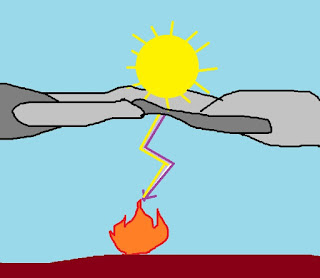
So if fire (Hestia) was made (Fathered) by the thunder/lightning (Zeus) then Hermes, "the messenger of Zeus", is the perfect inventor of the fire stick and fire making...

I talked about this in my post "12 Olympians" about (apparently inexplicable 🙂) link between Hermes and Hestia (fire)... 

What did Hermes do after that? He invented a lyre which he gifted to Apollo...

I talked about why this lyre (tortoise body, bull horns, sheep intestines) is actually a complex animal calendar marker for Apr/May in my post "Lyre of Apollo"...


The most ancient depiction of Archaic Greek Hermes is this bronze from the 6th century BC. Hermes Kriophoros is wearing a tunic with belt and zig-zag pattern, has wings on his legs, and is bearing a ram...Why would god born in Apr/May cary a ram?


Cause Apr/May is when Lambing season finishes and milking season starts...I talked about this in my post "April"...

In exchange, Apollo gave him Caduceus topped with two snakes...

Snake is an animal calendar marker for Apr/May, beginning of summer, domain of the sun. Cause the most common Eurasian snakes mating season starts in Apr/May...

I also talked about this in my post "Lyre of Apollo"...

Add to this cockerel as another animal calendar marker for Apr/May and...

Oh! Almost forgot. What about the money and trade? Why was Hermes god of trade? The trading was at the time of Hermes mostly done by boat. And the sailing season in Eastern Mediterranean starts in...Apr/May...

The sailing season starts in Apr/May, because this is when the "good sailing winds", Etesian  winds, start blowing from the north...


Talked about this in many of my posts...

And so Hermes, basically deified Apr/May, announces the beginning of the sailing (trading) season and becomes the patron of trade...

I think this is all very very cool...What do you think?

To read more about ancient animal and plant calendar markers, which are at the root of all our mythologies, start here…Then check my twitter threads I still didn't convert to blog post...I am way way behind...


Saturday, 6 September 2025

Malatya relief

A while back @PIELexicon posted this image:


With this description: A Luwian Storm-God conquers a sea-dragon, called Illuyanka in Hittite in this Malatya relief. The Luwian designation, unless the same, remains unknown. If the name was included in the relief, it was contained in the section broken off, now unfortunately permanently gone and lost...

He then said that the first deity spearing the dragon is Hitt.-Luw. Tarhunza = Hurr. Teshub and the second one is Sarma = Sarruma, the mountain God...

At which point someone joined the conversation and said that Illuyanka is not a dragon but a snake. He argued that Illuianga has the determinative MUSH "snake", which is why Friedrich call it "ungeheure Schlange" (monstrous Snake). 

Snake is a solar animal, pretty much a universal symbol of the sun's heat. Snakes follow sun everywhere. They are in our world when sun is in our world (day, summer) and in the underworld when the sun is in the underworld (night, winter)...I talked about this in many of my posts. 

Which is why the terms "snake" and "dragon" are fluid in the vocabularies and mythologies. For instance, according to Slavic folklore, (Fire Breathing) Dragon (the symbol of the destructive summer sun's heat which burns everything and brings drought) is just "an old snake" (symbol of sun's heat)...

I talked about the link between snake and sun in many of my posts...

Also Slavic "zmaj" (dragon) is masculine form of "zmija" (snake). 


I talked about this in my post "Letnitsa treasure", about the 4th c. BC Thracian treasure found in Bulgaria, which among other artefacts contained this metal plaque which depicts a common theme from Balkan fairytales: a princess being kidnapped by a dragon...And she seems to like it...Please note that the dragon was depicted with a snake body...

@PIELexicon replied that drawing distinction between "snake, snake-demon, and dragon" is "splitting hairs": Tischler gives all alternatives as the translation of Hitt. illuyanka- (c.) "Schlange, Schlangenungeheuer, Drache" (Snake, Snake demon, Dragon), (HHand2: 67), as people interpret a snake-demon as a dragon.

@PIELexicon also pointed at the article "The Serpent-Fighting Imagery of Anatolia in the 2nd Millennium BC and Malatya Serpentine Monster in the Light of Newly Published Old Assyrian Seal Impression from Kültepe" which actually states that the current understanding is that the closer examination of the Malatya "monster" shows that it has paws and multiple heads...

And that the existence of paws and multiple heads is confirmed by the recently seal impression from the Pushkin State Museum of Fine Arts...


And that "Paws are also mentioned in other Hittite texts for creatures designated by the Sumerogram MUŠ ‘snake’, for example, MUŠ[-aš] GÌR.MEŠ ‘snake paws’ in the Pittei ritual, because this Sumerogram could cover the entire range of reptiles"...

And "The Serpent-Fighting Imagery..." article also states that some of the Hittite legends about Illuyanka mention the monster being tied with a rope before being killed, tying which is usually done to tie paws, legs...

Mesopotamians depicted dragon with lion body and snake heads...Cause dragon is a snake is a dragon...

The oldest depiction of a Hero (actually two Heroes) killing a Dragon...Mesopotamia, 2200BC...Seven headed dragon to be more precise...With seven snake heads...One for each hot month of Mesopotamian summer...Analysis of the meaning of this image can be found in my post "Seven headed dragon"...

Bactrians depicted dragons as winged snakes. No legs...Cause dragon is a snake is a dragon...I talk about this in my post "Bactrian snakes and dragons"...

So it is definitely a dragon, not a snake...

But what kind of dragon? 

I asked @PIELexicon what he thought the dots above the dragon represent. 

@PIELexicon then said that he thought that what was depicted above the dragon were thunderclouds, rain and raindrops. He then again pointed to the article "The Serpent-Fighting Imagery..." which contains the analysis of this relief in which rain/hail was mentioned as one interpretation. 

The article he also stated that "It can be that lines and circles shown above the serpent’s figure represent rain and hail caused by the Storm-God and directed by his assistants from heaven just onto the monster as an additional weapon against it".

The dots are definitely rain drops. I have found this interpretation in many places. For instance, in my post "Lapis lazuli water seal" I analyse the scene depicted on this amazing Lapis lazuli seal from the point of view of the local climate and animal calendar markers. The seal was made between 2400BC and 2000BC in Eastern Iran. British Museum.

But I don't think that the rain is "a weapon used against the monster". As I already said, (Fire Breathing) Dragon (the symbol of the destructive summer sun's heat which burns everything and brings drought) is just "an old snake" (symbol of sun's heat)...So Dragon "steals the rain" and the Thunder God kills the dragon and "releases the stolen rain" with the help of his assistants. 

I talked about this in my post "Scaring off the dragon" in which I analyse this interesting Bulgarian ritual: 

In Bulgaria, at the start of summer, all the strong and healthy village men would gather at midnight, strip naked and walk the village land in ritual silence brandishing axes or cudgels, weapons of thunder gods "to scare the dragon who steals the waters"... 

The reenactment of Teshub killing Illuyanka, or another version of this pretty universal Eurasian (And not only IndoEuropean) myth?

To read more about ancient animal and plant calendar markers, start here…Then check my twitter threads I still didn't convert to blog post...I am way way behind...

Tuesday, 29 July 2025

Mamaragan

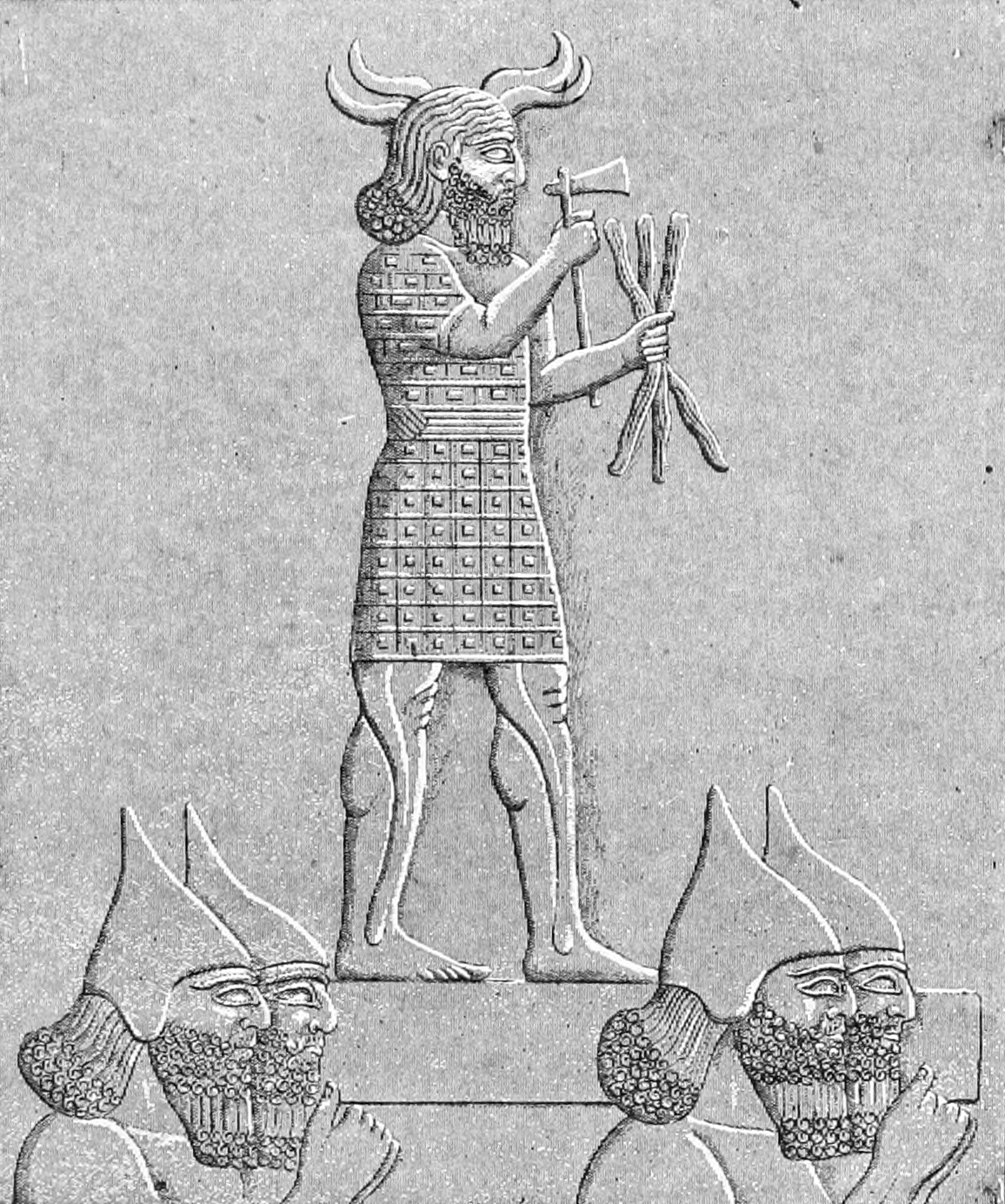
Adad, Mesopotamian storm god, holding an axe and lightning bolt...How old is this association between storm (thunder) gods an (stone) axes? How about at least 40,000 years?

I tried to explain the association between thunder gods and (stone) axes in my post "Jack and the magic beans"..

In which I proposed that some of our myths about sky gods are in fact very very old scientific theories which tried to explain the available observed phenomena in the best possible way with the knowledge of the universe people possessed at that time...Like if giant stones are falling from the sky, there must be a giant (sky god) throwing them from up there on our heads...

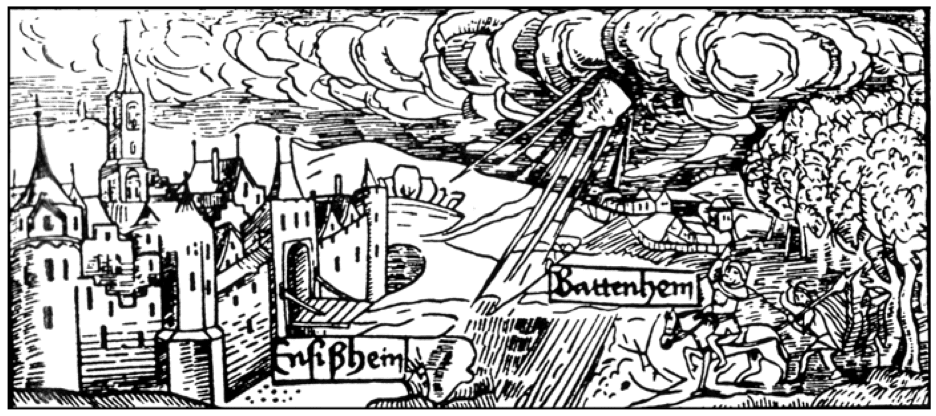
These stones that fall from the sky then became "thunder bolts" and "thunder stones" and "petrified lightnings". 

At the end of my post "Kataibates", about stone thunder axes from European folklore tradition, I asked how old this tradition could be...

I suggested that this link between a stone, more specifically flint axes, and thunder gods, already existed in the 4th millennium BC Europe...I explained why I thought so in my post "Sun stones" in which I talked about exploding flint axes...

But then I saw this picture of Namarrkon/Mamaragan, the storm "god" from Aboriginal mythology from Western Arnhem Land in northern territories. He lives high in the sky, rides storm clouds and makes thunders by striking the clouds with stone axes fixed to his head, elbows, and knees...

He also "soaks up the sun's rays and turns them into lightning"...In monsoon regions of the world, the end of the dry season is marked by spectacular electric storms which announce the arrival of the rains...

Also in Northern Australia, the hottest time of the year is also the rainiest time of the year...

So sun's heat is obviously and literally turned into lightning...

BTW, remember this?

"Because it is a great secret how come Svarog (hevenly and earthly fire) is at the same time Perun (thunder and lightning) and Svetovid (Sun)." Modern science explains the link between solar energy, lightning and fire...I talked about this in my post "Sun thunder fire"...

Now, Aboriginals arrived to Australia about 40,000 years ago...Which could mean that the link between thunder gods and stone axes, is more than 40,000 years old??? If we assume common root of the myth...

I already wrote about the age of (some) Aboriginal myths in my post "Dream time" and "Yeti revisited". Some Australian Aboriginal "dreamtime" stories, passed orally from generation to generation, could, according to latest scientific data, actually be over 40,000 years old...

Or, maybe, again, everyone ended up with the same explanation for the same observed phenomena...