Showing posts with label Peepal symbolisms. Show all posts

Tuesday, 7 December 2021

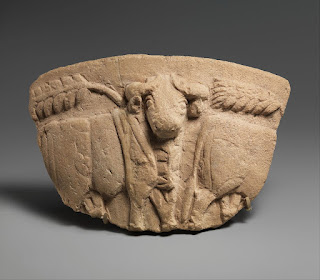
Mehrgarh Crane bowl

A Terracotta Bowl, Mehrgarh, Balochistan, Indus Valley, 3500–3000 BC...
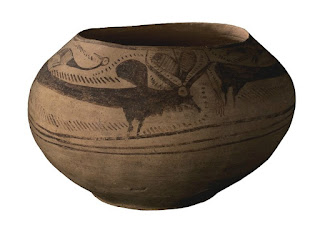
Decorated with three elongated zebu bulls, each with a water bird perched on its back and a leaf motif between the horns... 

Just a decoration? Don't think so...

These birds are Siberian cranes, native to Russian Arctic...Every Sep-Oct, they fly over 4,000 miles southward, to spend winters in India. When winter is over, the cranes fly back to native northern habitats and nesting grounds by the end of April...
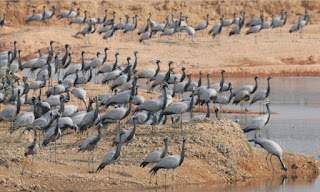


But not for much longer...Every year thousands of these beautiful birds are captured and killed by the locals in Pakistan Pouting face...You can read more about it in this post entitled "Balochistan's Siberian secret"...
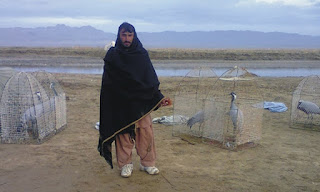
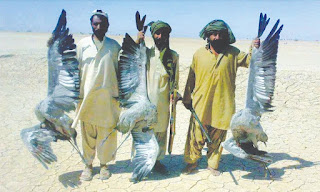

That bird depicted on the pot looks very much like a crane...But why would it stand on a bull's back? Well cause Taurus, the ancient animal calendar marker for Apr/May, calving season of Eurasian wild cattle, is also when cranes land in Balochistan on their way back to Siberia...

I talked about "the old Taurus" in many of my posts. This is a good example "Bulls and grain bowls"...
I couldn't find any data about the natural mating or calving season of the wild ancestors of zebu cattle. But considering that they belonged to the same auroch species, they probably had the same or similar reproductive cycle as the rest of the aurochs of Eurasia...

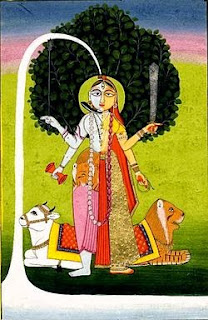
And certainly, bull was used as a symbol for the beginning of summer and for summer itself in India...I talked about this in many of my posts and threads...For instance "Ardhanarishvara"... 
But how can we be sure that this is really a depiction of "Cranes in Taurus"? Because of the leaf depicted between bull's horns. The lief belongs to Ficus religiosa or sacred fig (also known as bodhi tree, peepal tree...)


This tree is Drought deciduous plant. It sheds its leaves during the peak of the dry season, between February and April. And new leaves start growing in end of April beginning of May, during Taurus...Beginning of summer, season marked by Bull...I talked about this in my posts "Harapan wheel seal", "Fig with bulls"...
Right at the time when cranes fly over Indus Valley on their way to Siberia...Or used to...

Wednesday, 13 January 2021

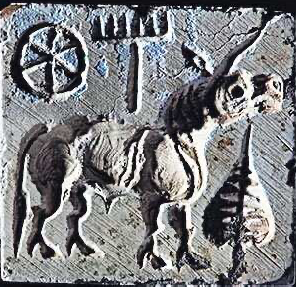
Harappan wheel seal

A seal from the mature Harappan period, the time when the civilisation was at its peak (2600 BC to 1900 BC), which was discovered in Rajasthan few years ago...It depicts a bull, sacred fig leaf, a wheel and another symbol which looks like a rake...

The climatic year in Rajasthan consists of dry period (Nov-Apr) and wet, monsoon period (May-Oct)...

Just before the beginning of the wet season is the hottest part of the year in Rajasthan. This is when the sacred fig sheds its leaves only to regrow them again just when the first rains start...


The bull on the seal is Auroch, Eurasian wild cattle. The beginning of the wet season (end of April, start of May), falls in Taurus (Bull). I talked about this in my post "Ram and Bull". And the rain season basically covers the whole summer, which is symbolised by a bull. I talked about this in my post "Symbols of the seasons"

The wheel is very very interesting. Here it is on another cylindrical Indus Valley tablet. I talked about this artefact in my post "Musth"...


It symbolises sun and rain. It is the symbol of the sun god and the rain god. Of the sky god...Well it is in Slavic mythology where it is the symbol of Svetovid (sun god) and Perun (rain god). The rain season arrives in Rajasthan at the hottest part of the year...Interesting...

I have no idea what the rake means...Just before the rains start, in the middle of Taurus, is the driest part of the year. And the time when grain is harvested in Rajasthan...Does this rake has anything to do with harvest? No idea...

But Taurus was bloody important time of the year for Harappans...

Someone asked me "why refer to symbolism in Slavic mythology to explain all this?"

Because without Slavic mythology and folklore we wouldn't have been able to decipher any of it. The original keys were found in there...Why and how? Slavs seem to have preserved a lot of old stuff which they inherited from their many ancestors (look at their genes)...

Indian tradition has no explanation for any of this...

Saturday, 5 September 2020

Fig with bulls

Indus Valley civilisation seal depicting a tree flanked by two bulls. 

From "Intercultural Relations between Iran, the Murghabo-Bactrian Archaeological Complex (BMAC), Northwest India and Failaka in the Field of Seals" by Sylvia Winckelmann

This is one of many so called "narrative seals". The problem is no one has a clue what the narrative is. So let's try to figure it out...

The broad lief tree is Ficus religiosa or sacred fig, a drought deciduous plant. 

It sheds its leaves during the peak of the dry season, February to April. And new leaves start growing at the end of April beginning of May, in Taurus. Taurus which marks the beginning of summer, season marked by a Bull. You can read more about why the beginning of summer is marked by a bull in my post "Ram and bull". And you can read more about the animal symbols of the seasons in my post "Symbols of the seasons"...

Here is the sacred fig again, this time literally "linked" to the bull. 

 From an Indus Valley Civilisation pot depicting two growing seasons in Indus Valley. More in my post "Kharif and rabi season"... 

Oh and what about the fish from the original seal? Well this is most likely "palla" fish, a migratory fish which swims up the river to mate between May and August (summer symbolised by a bull), which is the main fishing season on the Indus river...

Here is again most likely "palla" fish again symbolically linked to the bull of summer. And the sun 🙂 From another Indus Valley Civilisation vessel. More about it in my post "Palla"...

Oh, and here it is again on these two Indus Valley Civilisation seals, swimming up the river (please note the arrow pointing up, just in case you might get confused 🙂 ) During the bull season, summer...


Now finally what about the wheel depicted on the original seal? Well that is the symbol of the sun and thunder god. Well at least it is in Slavic mythology (folklore).

Ok that's a bit much, I can hear you say...That makes no sense...

Well...

The little circles on the trunk of the fig tree are fig fruits. 


They ripen at the end of Taurus. The end of Taurus (End of May) is the beginning of the rain, monsoon season in Indus Valley.
 

The rain season spans summer, the season marked by a bull. That is the hottest (Sun god) and wettest (Rain god) part of the year...

Does it make sense now? 

Here is the same symbol on another Indus Valley Civilisation tablet, above the scene which marks the peak of the monsoon season (end of July beginning of August)


You can read more about this object and the meaning of the symbols depicted on it in my post "Musth"...

So do we understand the narrative a bit better now?

PS: It is amazing how blind I can be sometimes. Luckily my friend Tobi Wd was't blind. Here is the conversation I had with him about this seal moments ago:

Tobi Wd: Predecessor of the trident 🔱

Me: No, it's a tree. A sacred fig. It appears on many seals in different shapes.

Tobi Wd: With the curved bull horns as well? I hypothesize that the shivaistic trident could be a stylisation of this tree in combination with the bull horns.

Me: Ahhh, I see it now. BLIND!!!! You are right. And the trident is of course an early symbol of the thunder (rain) gods...If you read the article linked from the post, it actually says that the meaning of the seal is "beginning of monsoon"...And trident was the weapon of Shiva, whose Vimana (animal avatar) was bull...


Amazing actually...