Showing posts with label Lion hunt symbolism. Show all posts

Friday, 15 July 2022

Kubaba with grain and poppies

Very interesting: A drawing of a relief from the great staircase from the Luwian city of Carchemish. It depicts the storm god Tarhunt, holding an axe and vajra (lightning trident), leading the earth goddess Kubaba, holding grain and poppies...🙂 Sounds familiar?

The drawing is from this great article: "Building Inscriptions of Carchemish: The Long Wall of Sculpture and Great Staircase" by J. D. Hawkins

So why is this drawing interesting?

Here's Demeter holding grain and poppies

The reason why Kubaba and Demeter hold grain and poppies is that in Europe and Middle East, opium poppies harvest coincides with the beginning of the grain harvest...I talked about poppies harvest and poppies as a plant calendar marker in my article "Poppies"... 

Now check these articles about Demeter and Middle Eastern grain goddesses: "Demeter riding a panther", "Fertility goddess with poppies", "Sacred marriage on a threshing floor", "Jerusalem of gold"...Then have a look at this: 

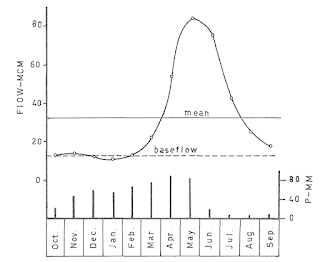
The grain goddess follows the storm god...Why? Because in the area where Carchemish is located, without rain, the land ends up looking like this...No grains (or poppies)...


This is the climatic year in the area of Carchemish. You can see that the year is clearly divided into hot/dry half and and cool/wet half...


The hottest and driest part of the year is the end of Jul beginning of Aug. Leo...The time of death...Ruled by the god of death...Mot...Nergal...Another name for the destructive burning sun...I talked about this in my post "The oldest Arabic poem"...

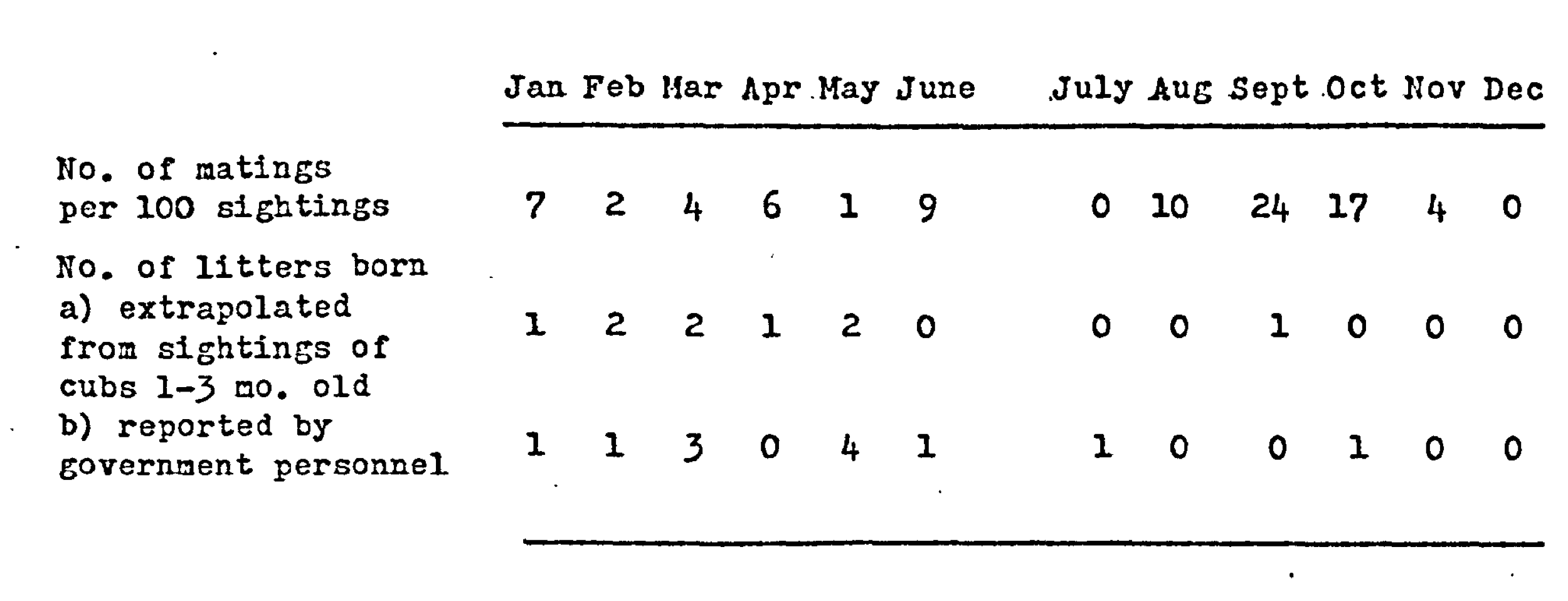
The hottest, driest part of the year is marked by the lion animal calendar marker...Leo...The reason for this is that this is when the Eurasian lions main mating season starts...


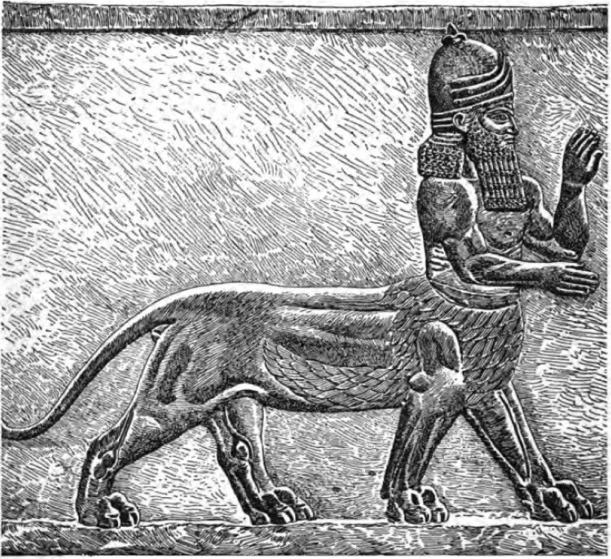
Which is why Nergal, the deified destructive burning sun, was depicted as a lion (man)...I talked about this in my post "Winged superhuman hero"...

This is the reason why in Carchemish we also find this relief depicting the above mentioned storm god killing a lion. The image is from this great article "Carchemish Å¡a kiÅ¡ad puratti" by Irene J. Winter 

The other guy helping the storm god is probably the local king, not another god...The role which later became the main role of local kings, who were "(storm) god's incarnation on earth"...I talked about this in my post "The king killing Angra Mainyu"...


Hope you enjoyed this...

To read more about ancient animal and plant calendar markers, start here…then check the rest of the blog posts related to animal calendar markers I still didn't add to this page, and finally check my twitter threads I still didn't convert to blog post...I am 9 months behind now...

Sunday, 20 February 2022

The King killing Angra Mainyu

This is a drawing of a relief from Persepolis, depicting "The King killing Angra Mainyu", the main adversary of Ahura Mazda, the highest deity of Zoroastrianism...

In the earliest texts, Angra ("destructive", "chaotic", "disorderly", "inhibitive", "malign") Mainyu ("Energy", "Force", "Sprit", "Mind") was the antithesis of Spenta ("Holy", "Creative", "Bounteous") Mainyu ("Energy", "Force", "Sprit", "Mind")...

Eventually Angra (Destructive) Mainyu became Aka (Evil) Mainyu...Because of course everything destructive caused disorder and disorder is evil...And so Zoroastrian devil, Ahriman, was born...

However originally Angra Mainyu and Spenta Mainyu were, I believe, and will explain here why I believe so, just two opposing natural forces, at work in Persia: sun and rain...


This is the climatic year in the area of the ancient Persopolis

You can see that the climatic year is divided into 2 halves: Cool, Wet half (Nov-Apr),  the time of life, Spenta Mainyu and Hot, Dry half (May-Oct), the time of death, Angra Mainyu...

Eeee what? Why?

Look again at the "monster" the king is slaying. It has lion's body, eagle's talons and wings, and bull horns...

Apr/May, Taurus, Beginning of the calving season of the Eurasian wild cattle. 

Jul/Aug, Leo, Beginning of the main mating season of Eurasian lions.

Oct/Nov, Eagle, Beginning of the main mating season of Eurasian Vultures.

Beginning, middle, end of the hot, dry season...

The half of the year dominated by the beast...The dragon...The symbol of the sun's destructive heat... 

I talked about it in my post "Seven headed dragon"...

These are all well known animal calendar markers found all over Eurasia and North Africa since Neolithic. Check this page with links to animal calendar markers related articles then the rest of the blog (I still didn't add all posts here), and then my twitter account threads (I still didn't convert all to blog posts)...

Sun's heat is the strongest and the most destructive, deadly, at the end of summer, start of autumn. This moment is "marked" by all those "lion killing bull" images from Persepolis...Lion (autumn) killing (ending) Bull (summer)...Like this one from Persepolis...

And the hottest and driest part of the dry  at the moment when bull meets lion. At the end of summer, beginning of autumn. This moment is "marked" by all those "lion killing bull" images, like this one from Persepolis...Lion (autumn) killing (ending) Bull (summer)...

So the Persian king is slaying the monster, which is a composite animal calendar marker for the hot, dry half of the year, the half of the year ruled by the sun. Destructive, deadly sun. This "destructive, deadly" sun in Leo had a name in ancient Mesopotamia: Nergal...

I talked about him in my post "Winged superhuman hero"...

In Levant, this destructive, deadly sun of the late summer, early autumn was the God of Death, Mot...I talked about him in my posts "Oldest Arabic poem" and "Anat"...Same climate, same mythology...Different names..."We are all individuals" 🙂 after all...

Anyway, it is funny that only 2 days, in my post "Sacred hunt" ago I asked "Why were Assyrian kings so obsessed with killing lions"...

And I proposed that it was a symbolic killing of the hot dry half of the year...And today, this... 

Achaemenids have actually spelled it out for us, so we don't have to wonder any more...The king is killing the hot dry half of the year...Well he is not really killing the sun's heat. He is pretending to be Ninurta, the Old Storm god, killing the sun's heat...

Ninurta, who was, in the earliest times, imagined as an "enormous black bird with outstretched wings".

Basically a vulture performing mating areal dance, which coincides with the end of the hot, dry half and beginning of the cool, wet half of the year...

I talked about him in many posts, like "Abu", "The judgement of the birdman", "Mysterious creature", "Eagle dance" "Pero"...

Also Ninurta, the hunter, the guy with the bow and arrow...Killing The Blazing Sun (Nergal)...Sagittarius...Which marks the same moment in the solar year...The end of the half of the year dominated by the sun...The Irish will love this. Remember the legends about Balor with the scorching eye being killed by Lugh? 

By the way, the tree animals marking the beginning, middle and end of "the beast" are 3 out of 4 "living creatures" which Ezekiel saw in his vision, around the same time when Persepolis was made...

I talked about them in my post "Four living creatures"...

What we have is Taurus (Apr/May), Leo (Jul/Aug), Eagle/Scorpio (Oct/Nov)...What's missing is the man, Aquarius (Jan/Feb)...

The four symbols which mark the beginning of Spring (Man), Summer (Bull), Autumn (Lion) and Winter (Eagle/Scorpion)...

Now in the area of the Persian empire, Aquarius marks the exact period of the solar year when the snowmelt started in Zagros mountains, including the area around Persepolis. The period when the water level in the rivers that made the Persian fields fertile began to rise...

Just to see how persistent these symbols are, here they are surrounding the Christ, as "Evangelists"

Christs with "the symbols of 4 evangelists". Original and fixed version with the correct sequence of "evangelists"...


It seems that "mad prophetic visions of Ezekiel and John, could be hidden remnants of old knowledge"...

So more of the same...Ninurta,  Ahura Mazda...God, as they say, has thousand names...And so does the devil...

I want to thank great Italian archaeologist, Gabriella Brusa-Zappellini, for drawing my attention to this image...

Oh, BTW, guess who was worshipped in Iran, including parts which later became Achaemenid Persia, since Neolithic? Ibex Goat...


Why? Because the Ibex goats in Iran mate at the beginning of the cool wet part of the year, and baby goats are born at the the end of the cool wet part of the year...

Hence, "Goat of rain"...You can read more about on my blog. Start here in my post about "Goat carrier"...

So if Angra Mainyu, bull-lion-eagle, is the hot dry part of the year, is the devil, then his antithesis, goat is god? It's complicated...

Thursday, 9 December 2021

Patera of Rennes

The Patera of Rennes. A beautiful Roman gold bowl dated to c. 210 AD. found in France and currently kept in the Bibliothèque nationale de France...

Along the rim, the bowl has inset gold coins, which make the dating of the bowl possible. The latest issued coin imbedded into the bowl is the one with the representation of the Emperor Geta who ruled with his father Septimius Severus and older brother Caracalla...


This coin would not have been reissued after his assassination and subsequent "damnatio memoriae". So this provides the earliest possible date when the bowl could have been made...

The bowl could have actually been somehow connected to the Severus family. The central decoration shows Bacchus and Hercules. The were tutelary deities of Leptis Magna, the birthplace of Septimius Severus, and both featured on his coins...

However this "history stuff" is not "the interesting bit"...The interesting bit is the stunning central scene depicting Dionysus getting Heracles drunk. And the circular depiction of the Rural (Winter) Dionysia procession which surrounds it...End their meaning...


The story goes that Heracles challenged Dionysus to a drinking contest and lost, resulting in his joining the Dionysus's retinue for a period...

I don't know about the drinking contest...The only person  drinking here is Hercules...The two are seated at the table, surrounded by the satyrs who are providing musical entertainment...

In front of them is a leopard...

Leopard is animal calendar marker and the symbol of winter...The end of winter (Jan-Feb) to be more precise, and the beginning of spring and spring itself...Because this ie when Asian and Arabian leopards begin to mate...

This link between leopards and winter was in Europe preserved in Dionysus cult, which is a winter cult...

Leopard is the mount of Dionysus...

Is carried by Maenads, female followers of Dionysus...

And his skin is worn by the leader of Rural Dionysia...

I talked about the link between Dionysus and leopard in my posts "Leopard and tiger", "Furious Maenad", "Maenads with hare"...

Hercules is sitting on lion's skin which he always carries around...

Interestingly, lion is the symbol of summer. The end of summer (Jul/Aug) to be more precise and the beginning of autumn and autumn itself...Because this ie when Eurasian lions begin to mate...


This is why Leo is where it is on the zodiac circle...And has always been there, since at least Neolithic...It has nothing to do with stars and is not affected by precession...

Leopard and lion are two opposite animal calendar markers...Leopard marks the coldest part of the year while lion marks the hottest part of the year...

And at the Dionysus's party, one is alive (leopard) and the other dead (lion)...Basically symbolically depicting victory of winter over summer...

The celebration of the victory of winter over summer??? But why would anyone celebrate winter? It's cold and damp and dead time of the year...At least in Rennes, France...

Because Dionysus cult didn't originate in Europe...It originated in Eastern Mediterranean or Western Asia (Levant, Mesopotamia, Eastern Anatolia...), in one of the areas where the climatic year is divided into 2 halves: Hot, Dry Summer (May-Oct) and Cool, Wet Winter (Nov-Apr)...

There, the part of the year symbolised by a lion is the time of death. The hottest, driest part of the year...And the part of the year symbolised by a leopard is the time of life. The coolest, wettest part of the year...The time of rebirth of nature...

Which is what Old Rural Winter Dionysia, which is depicted along the bowl's rim is all about: celebration of the return of the rain season... 

Which turns land of death (beginning of autumn)


To land of life (beginning of spring)...

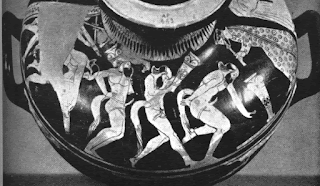
In the procession we see Dionysus arriving on a cart pulled by two leopards, his favorite mounts...The cart is lead by a satyr, half man half goat...

In the areas where Dionysus cult makes sense, like in Levant, rains return when Ibex goats start their mating season, at the beginning of winter (Oct-Nov)...

Which is why goats (and half man half goat Satyrs) feature so prominently in Dionysus cult...

And which is why Dionysus's leopard pulled cart (chariot) is lead by a half man half goat Satyr...

An Ibex goat (mating season Oct/Nov, beginning of winter) leads (is followed, is chased, is attacked) by a Leopard (mating season Jan/Feb, end of winter) since Neolithic...Here they are on a vessel from Mesopotamian Tepe Hissar

Both animals are thus linked to rain and fertility...Their mating, semen, brings rain, heavenly semen, which fertilises the land...

In fact in Eastern Mediterranean, Western Asia, Central Asia, Mesopotamia, the Ibex goat became The Goat of Rain...The most depicted animal found on ancient artefacts.

I talked about this in my many of my posts...Like "Goat petroglyphs from Iran", "Goat in a tree", "Volga mirror", "Green pastures", "Strider", "Jumping goat", "Goats and partridges", "Sanctuary rhyton", "Griffin killing lizard"...

The mating season of Ibex goats begins with wild buck fights...

In the depiction of the Dionysia on the Rennes bowl, we see an Ibex goat about to head butt a half man half goat Satyr...

The goat mating season starts right after the end of the grape harvest, which in Eastern Mediterranean starts in August and ends in October...

Hence goats pulling cart full of grapes...

Because the end of grape harvest and the beginning of the rain season overlapped, Dionysus became eventually The God of Wine...When actually he is The God of Winter...The life giving winter (Nov-Apr)...

Apollo (right) and Dionysus (left) shaking hands at Delphi. From an Attic vase, fourth century BC. Light, hot, dry part of the year and dark, cold, wet part of the year...Summer and winter...In there balance and accord the tree (of life) will grow... 

I have to say I love the fact that right before the Satyr who leads Dionysus's leopard pulled chariot, walks (well drunkenly stumbles) Heracles 🙂 "the Lion killer"...

Hot dry part of the year (symbolised by a lion) has to end so that cool, wet part of the year (symbolised by a leopard and ushered by a goat) can begin...More about lion as the symbol of the hot dry part of the year can be found in this article about "Chariots of Admetus"...

So far so good and pretty obvious... 🙂...But here is where we come to the mystery animal...

What animal is this, reined and pulled by one of the revelers while an old Satyr rides on its back?

There is a broken goat horn depicted on the ground under it...Cornucopia? You know goat horn symbol of plenty...Plenty provided by the Goat of rain... 🙂I talked about this in my post "Cornucopia"... I don't think this is here for no reason...

Oh look. Dionysus and Pluto (God of wealth) with cornucopia...

But what animal is this? I don't think somehow that this is a goat...I think that this could be a deer, Persian Fallow deer to be more precise, if these are spots on its body...The tail is also a giveaway as Fallow deer have exactly that kind of tail...

But if this is a deer, where are its horns? Well is this a hole on the side of the animal's head? 

Are they the holes that can be seen on deer head after their antlers fall off in the spring?

If so, then this is a symbol for the end of the winter half of the year, the half ruled by Dionysus...Because Fallow deer lose their antlers right at the end of winter, Apr-May...

So if I am right about this mystery animal being an antlerless Fallow deer buck, then this Dionysian procession actually depicts the "Old winter, dark, cool, wet half of the year" (Oct/Nov-Apr/May)...

Ibex goat, symbolysing the beginning of the old winter (Oct/Nov)

Leopard, symbolising the middle of the old winter (Jan/Feb)

Fallow deer with no antlers, symbolising the end of the old winter (Apr/May)

This is kind of cool, right? But I wonder how much of all this was known to the makers of this artifact? Did they just blindly copy old symbols without knowing their meaning? Or did they indeed know precisely what they were doing, but the rest of the plebs didn't...

Hmmm. Quite possibly...Because Dionysus cult was kind of a secret society, whose members didn't really go around explaining what all this stuff was about to the uninitiated...

But I wonder if even the initiates in the Dionysian mysteries knew that at the bottom of their religion was death and resurrection of nature?

To read more about ancient animal and plant calendar markers, start here…then check the rest of the blog posts related to animal calendar markers I still didn't add to this page, and finally check my twitter threads I still didn't convert to blog post...I am 9 months behind now...