Showing posts with label Iranian folklore. Show all posts

Tuesday, 21 July 2026

Kuseh Gardani

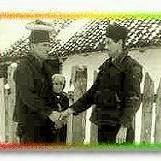
Oh this is amazing. This image depicts a traditional Iranian "Kuseh Gardani" ritual, which is performed by men in times of drought or low rainfall...This image is from this site...

One man, chosen as the "Kuseh" (devil of drought), has his face blackened, wears horns (positioned in such a way to resemble ibex goat horns) and bells, and leads a procession through the village...

He stops at every house and collects some flour. After visiting all the houses, a large bread is baked from the collected flour and is shared between the villagers...

The ceremony is a symbolic performance of overcoming drought and seeking rain...

Unreal...Here is why:

Climate in Iran is divided (roughly) into hot, dry half (Apr/May - Oct/Nov) and cool, wet part (Oct/Nov - Apr/May)...


And the start of the wet season coincides with the start of the mating season of the ibex goats, mating season characterised by wild male goat fights for females...

Which is why ibex goat became associated with rain, and became "goat of rain", an animal calendar marker for the start of the rain season: When ibex goats start fighting the rain will start falling...

And which why ibex goat became the most depicted animal in Iran since Early Neolithic...

I talked about this in my post "Goat petroglyphs from Iran"...

Eventually, with the start of grain agriculture, when having rain at exact time at exact quantity became super important, people turned "goat of rain" into "god of rain with goat horns". It's easier to pray to gods than goats...

And so, local priests started wearing goat horns and playing the role of the goat rain god...

It is most likely that it was in Iran in the 9th mill BC when the goat of rain got anthropomorphised and turned into the god of rain with goat horns...

I talked about this in my post "Zavi Chemi Shanidar"...

"Kuseh Gardani" is a very very very very....distant echo of this...

And this:

Stamp seals, Tepe Giyan, Iran, 5000-4000 BC...Anthropomorphised rain goat (god) dominating sun snake (dragon)...


I talked about this in my post "Master of the animals from Tepe Giyan"...

And this:

Elamite figurine from around 3000BC, depicting a man with goat horns (or a goat horns helmet, cap) and a goaty 🙂 How goat of rain became god of rain...


I talked about this in my post "Strider"

And this:

Article about this Bronze top for a standard. ca. 8th–7th century BC. Luristan, Iran...Two human figures with male Ibex goat ears and horns holding hands...Why? Same thing I guess...

I talked about this in my post "Dancing goat men from Luristan"... 

The rain brought by the goat of rain is what supports (the tree of) life in Iran. Which is why we see prancing ibex goats flanking the tree of life...

I talk about this in my post "Sassanian goats with the tree of life" where I analyse these two Sassanian wall relief slabs dated to the 5th-6th c. AD, depicting rampant ibex goats flanking "the tree of life"...

This again is an ancient symbol found in all the areas where ibex mating season overlaps with rain season...

As we can see, Iranian people still kind of remember that "ibex is linked to rain". But with the arrival of Islam, the (goat) "god of rain", became "devil of drought"...The one who (still) brings rain (and bread) if he is asked politely...

How cool is this? 

If you are interested in reading more about ancient animal and plant calendar markers, which are at the root of all our mythologies, start here…Then check my twitter threads I still didn't convert to blog post...I am way way behind...

Saturday, 11 March 2023

Koloocheh

These are Koloocheh (Persian کلوچه) or Koleecheh (Persian کلیچه ) - golden round cookies decorated with spirals and made for Perisan new year. 

The name of these cookies comes from Middle Persian "kulachag" (round bun). Further etymology is unknown... 

Hmmm...Maybe...

In Slavic languages any round (originally ceremonial) bread or cake was called "kolač" (pronounced kolach).

Serbian Christmas and Slava "kolač" examples...

The word "kolač" comes "kolo" (wheel, spinning circle). Hence "kolo" also being the name for the Slavic ceremonial circular dance...I talked about this in my post "Oro" and "Shield of Achiles"...

Fresco from the 14th century Serbian Lesnovo monastery, today located in Macedonia.


So the word "kolač" does mean "round, circular" bread, cake...But the name has additional meaning of "spinning, turning, rotating"...

Ceremonial cakes are rotated 3 times "s leva na desno" (from left to right), by the family members, before they are broken and eaten...

Turning "from left to right" is also known as "sunwise" and was apparently a big thing in the past...Cause that's the way sun moves across the sky...I talked about this in my post "Sunwise"...

Now it is interesting that the Iranian Koloocheh/Koleecheh cookies are made with spirals...Which are a symbol of rotation...

They are also made as ritual cookies for New Year...The day when the old solar year ends and new solar year begins...Now Slavs imagined solar year as an ever spinning solar wheel (kolo)...

The Slavic name of the old "New Year" celebration, Winter Solstice celebration, was Koljada, Koleda, Kolenda...It marked the end of one and the beginning of another spin of the solar wheel...Kalendar...🙂

Remember this post, "Janus", about Janus and Juno and wheels within wheels? 


Or this post, "Young god", about the Serbian folk song celebrating the birth of the New Sun (God) or New Solar Year: "Pass me cold water, o Koledo, to bath the young god, Božića Svarožić...His horse is the bright sun, a flaming war steed"...


Or this post, "The end of time", about the Koledari, traditional Slavic carol singers who went from house to house during Koleda (Originally Winter Solstice, but now Christmas) singing ritual songs celebrating the immanent brith of the new god (once new Sun God, now Son of God)...

But look a this...This is one of the traditional Koleda (Christmas, Winter Solstice, New Solar Year) ritual breads from Bulgaria...Looks familiar? 

Also some Serbian votive breads were actually made in a shape of "kolo" (wheel). Serbian Votive bread (kovrtanj, kolač, kravaj).  

The word "kovrtanj" most likely comes from "kolo" (wheel) + "vrt" (spin)...We find the same word in Russian kovriga (коврига) meaning "round bread", which was mentioned in the Primary Chronicle under year 1074. Funnily enough, according to the linguists, "its ultimate etymological origin is uncertain"...How about Ko(lo)+vr(t)+ga = wheel+spin+it???

On Xmas morning the bread was brought to the threshing floor, pulled on the central stake, and then the father and the children would walk on hay, around the stake, holding onto the bread... 

You know, threshing floors, circular platforms with the central pole...


Where grain was threshed by waling around the and around the central pole

I talked about this in my post "God's threshing floor"...

Threshing floor which was in the past used as a solar observatory, with the central pole serving as a "gnomon"...


Threshing floor on top of which, for some weird reason, the First Temple was built. The First Temple, which according to the Josiah, Jews worshiped the Sun God...I talked about this in my posts "Boaz and Jachin", "The sun god from the First Temple" and "The tree of light (life)"...

But I am digressing...

These Serbian "wheel breads" (kolač, kovrtanj, vrtanek) were also used as part of the first footer (Christmas, New Year) rituals in Serbia and Bulgaria...

If the first footer was a man, kovrtanj was placed on man's head. 


I used AI to enhance this image

If the first footer was a bull, kovrtanj was placed on bull's horns...If anyone knows of a picture of a bull with kovrtanj on his horn, please post the link in the comments, so I can add it to the article. 

I used AI go generate this image


I talked about this in my post "First-footer"...

And in Bulgaria, In return for good wishes, the Koledari Carol Singer, receive gifts of food and ritual ring-shaped breads, "Коледно колаче" (Koledno kolache) meaning little Christmas circular bread or "кравай". 

Which they string on the wooden sticks they carry with them...

Pic from "Българска Етнография" by Николай Колев

These breads were often made by the young women in the family...Some kind of symbolism here, wheel breads and sticks...

So we have all these Slavic words with the root "kolo" (wheel) used for ritual circular breads, ritual circular dances, new year rituals...

And yet...

According to linguists: 

The similarity of Slavic "kolač" to Middle Persian "kulachag" (small, round bun) and Ancient Greek "κολλύρα" (koloura) (loaf of bread) may be coincidental as it is difficult to explain through usual models of inheritance and borrowing...

BTW, the Ancient Greek "κολλύρα", from which modern Greek "κουλούρι" (kuluri) is believed to be "of Pre Greek origin"...

I know, difficult, difficult...Not difficult to explain...Difficult to accept...That all these ancient Non Slavic words for round breads have the root in Slavic "kolo" (circle, wheel)...

BTW, in Turkey, this type of wheel bread is called simit. 

The word simit comes from Arabic samīd (سميد) "white bread" or "fine flour". Ceremonial breads were in the past the only breads made from white flour...

Another name for these breads in Turkish is gevrek meaning "crisp", and this word in a form of "djevrek" is now used for these wheel breads in all the Slavic Balkan lands, thanks to multi century Ottoman Turkish cultural influence...

What is very interesting is that simit/gevrek only became a thing in Ottoman Empire since the 16h century...It was most likely a Slavic cultural import... 

I forgot the most important bit. The recipes 🙂

Recipe for Koloocheh, Recipe for Koledno kolache, Recipe for Kovrtanj