Showing posts with label Hades. Show all posts

Tuesday, 27 December 2022

Asphodelus

In Greek Mythology the Asphodelus  is the most famous plant associated with the dead of the Underworld. It was planted on graves. Persephone was said to have worn a crown of Asphodelus flowers. Its association with death may be due to its greyish leaves. 

Homer's "ASPHODEL MEADOW" (ἀσφοδελὸν λειμῶνα), "where the spirits of the dead dwell" (Od. 24.14), could be a result of an ancient confusion between ἀσφόδελος (the plant name) and σφοδελός, or rather σποδελός, meaning "ashen"... 

The Ancient Greek word "σποδός" is regularly used in Greek poetry for the ashes of the dead, and for the ashes used in the act of mourning for the dead. It is also commonly used in funerary epigrams for the ashes of the dead contained in a vessel, in the earth...

The Hades (as in land of the dead) was always portrayed as a dark, gloomy, and mirthless place. So the translation of the "dead wondering through asphodel meadows" as "dead wondering through ash-filled meadows" fits the context well...

You can find the full discussion in "Homer’s Asphodel Meadow" by Steve Reece. 

Steve Reece does say that this could actually be a kind of play on words, considering that there was a definite association between white asphodel flower and the dead...

For instance Eustathius says that "the asphodel is suitable for the dead because it was to be found growing on tombs"...

This epigram, traditionally attributed to Aristotle, was apparently often found inscribed on Ancient Greek tombs: "On my back I hold many-rooted asphodel..."

According to the ancient historians, asphodel was also associated with Persephone (Kore): "Rhodians garland with asphodel Kore"...

Considering that Persephone (Kore) was the queen of the dead and the wife of Hades, the god of the dead, this association is understandable...

But, Persephone (Kore) is associated with many different plants, and the story about her abduction by Hades is full of plant and animal references. I discuss them in the article "Abduction of Persephone" which tries to determine when did the abduction take place? 

Yes we are back to animal and plant calendar markers. It is interesting that when abducted, Persephone was picking flowers...roses, crocus, violets, iris, hyacinth, narcissus. But asphodel was not one of them...You can find exactly which flowers Kore was picking in the "Homeric hymn to Demeter"...

Based on all the animals and plans mentioned in the description of the abduction scene, as well as other botanical references linked to Persephone, I proposed that the abduction took place in the autumn...Oct/Nov...And that it happened on Crete. Most likely Minoan Crete...

Which would explain why asphodel is not among the flowers blooming in the meadow where Persephone was abducted. The White Asphodel is found all over Crete in large populations from sea level to around 1300m. Flowering time is from early March to June depending on altitude...

And here we come to (to me at least) very interesting Greco-Roman bas relief, depicting Persephone and Hades on a throne of the underworld...Currently in the National Museum of Magna Graecia, Reggio Calabria...

I talked about this in my post "Pluto"...

Now what is very interesting about this relief, and which only became apparent to me now, is that the three things held by Persephone and Hades are all animal and plant calendar markers, all pointing to the same time of the year, Apr/May, beginning of summer...

Persephone in one hand holds ripe grain, ready for harvest. The grain harvest in Ancient Greece, as Hesiod tells us, began in Taurus, (Apr/May), at the beginning of summer. I talked about it in my post "Hesiod on grain"...

In the other hand Persephone holds a cockerel...Why? I talked about the link between the grain, the dead and the chicken which, which once obviously existed in Ancient Greek mythology, and which was preserved until today in Slavic folklore, in these articles: "Pluto", "Diduch", "Cock bashing", "The third death"...

But there is another thing that I didn't get before. The original, wild fowl from which all our chicken descend, used to have a single mating season starting in Apr/May, during the grain harvest in Greece. I talked about it in my posts "Kharif and Rabi season", "The city of cockerels", "Lei Kung", "Son of thunder", "Pero"...
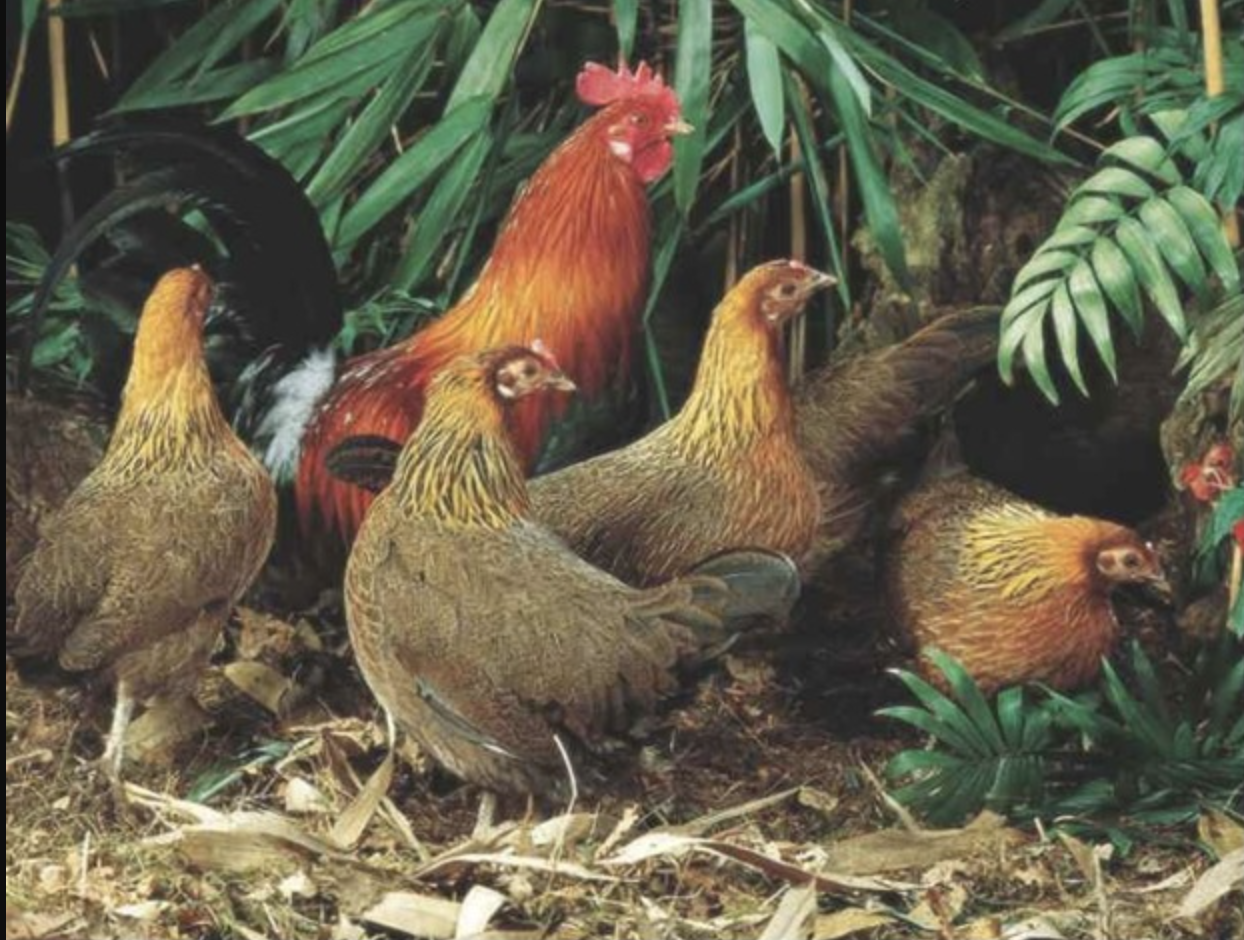
I wonder did the original early chickens, that were brought into Europe in the early 1st millennium BC still have a single mating season? Which overlapped with the grain harvest season? Is this why Persephone holds both ripe grain and a cockerel?

But we are here supposed to be talking about Asphodel flowers. And apparently, on the Hades and Persephone throne relief, Hades holds blooming Asphodel plant...Which also flowers during the grain harvest season...

Very interesting. Considering that on Crete, Cyprus, Levant, Middle East, Central Asia, Iran...the climatic year is divided into two halves, the hot and dry half (Apr/May - Oct/Nov) and cool and wet half (Oct/Nov - Apr/May)...


And the hot dry half, which begins with the grain harvest, chicken mating season and the blooming of Asphodel, is the time of death...The time of droughts caused by the burning summer sun...When sun ascends to its throne...

The sun which was in Mesopotamia personified by the god of death Nergal. I talked about this in my post "Winged super human hero", "Angra Mainyu"...

The sun which was in Levant personified by the god of death Mot. I talked about this in my posts "Oldest Arabic poem", "Anat"...

And in Minoan Greece by what name?

Remember this article: "Trojan horse"? In it I talked about the fact that both Phoenicians and Greeks had the same triad of gods...And that where we find Mot in Levant we find Hades in Greece...

The hot dry half of the year is also the time of snakes and fire breathing dragons, both symbols of sun's heat. Both for some "weird" reason linked to Persephone/Demeter. Well, not really weird. Snake is the main symbol of sun, sun's heat...And an animal calendar marker for Apr/May, because this is when the main snake mating season begins in Europe...I talked about this in my post "Who are Persephone's parents"...


Very interesting...Finally, do you remember the belief in "thirsty dead"? Why are the dead always thirsty? Cause the land of the dead is a hot, dry, dusty desert ruled by the blazing summer sun???

To read more about ancient animal and plant calendar markers, start here…then check the rest of the blog posts related to animal calendar markers I still didn't add to this page, and finally check my twitter threads I still didn't convert to blog post...I am 9 months behind now...

Saturday, 19 November 2022

Descending to Hades

One of my favourite frescoes: Christ's descent into Hades, fresco from the 12th c. Church of St. George, Kurbinovo, Macedonia... 


Stunningly beautiful, it is also super unusual and interesting. Here is why:
Christ is depicted in a globe of light, pulling Adam by his wrist out of Hades...Literally...As Hades is depicted as a mountain with human face...


Here is a Hades's head detail enlarged. Hades is depicted as an old man with a long beard with his mouth opened and an expression of pure terror. He is facing away from Christ, but he seems to be trying to get a glimpse of what's happening behind his back...


You can read analysis of this fresco in the paper by Dejan Gorgievski entitled "The mysterious mountain of Kurbinovo"...

Very good analysis. But there are few bits that he missed...

This depiction of Hades as an anthropomorphised mountain is very strange...Because Hebrew Sheol, Greek Hades and Christian Hell were all believed to be located "under the surface of the earth, below"...

Yet the dead were depicted on this fresco to be "inside of a mountain"...I know, I know...We could say that this is technically "under the surface of the earth, below", but...

Have you ever heard of Ekur? Ekur, "the mountain house of the dead" from Sumerian mythology?

Ekur is one of the names for the earth, but is applied more particularly to "that part of the mountain"...where the gods were born...And from where they came to Sumer...

These mountains are actual, real mountains, north east of Sumer, where the first civilisations arose, where grain agriculture was invented. I talked about this in my post about "How grain came to Sumer"... 


And in the earliest Sumerian mythology, it was on this mountain that the gods were supposed to dwell. 

Hence Ekur became also one of the names for "temple", as the seat of a god, temple which was shaped to look like a mountain...


And it is inside this holy mountain that we find the land of the dead...And guess who is the God of the Dead in the Sumerian mythology? The Sun...

The Sumerian poem "Enki and the World Order" exclaims: Young Utu (the sun), father of the Great City (the realm of the dead, underworld)...I talked about it in my post "Soul bird"...


And until today it never occurred to me why it was "Young Utu/Shamash" who was the "God of Ekur"...

The Holy Mountain, Ekur, The mountain of gods and mountain of the dead, is also the source of Tigris and Euphrates...


It is the snowmelt runoff from these mountains that is the main source of the Holy Rivers...


Snowmelt which is the result of the spring sun getting higher and higher in the sky, and heating higher and higher ranges of the mountains, melting more and more snow...Which creates bigger and bigger snowmelt runoff...Which causes water level in Tigris and Euphrates to rise...


And so, symbolically 🙂, it is Young Utu/Shamash, Spring Sun, who every  spring climbs up the Holy Mountain to release Enki/Ea, (god of) fresh water, from (his) it's icy prison...


I talked about this in my post "Shamash young and old":

And poetically 🙂, in "Enki and Ninhursanga" we read that "When Utu [the sun god] steps up into Heaven (Holy mountain), fresh waters shall run out of the ground for you"...


I talked about this in my post "When Utu steps up to heaven"...

Sun, brings water which in Sumer literally resurrects life...At the moment when sun (solar year) is about to enter "the land of the dead", hot dry season...


The domain of the Old Utu/Shamash...Old Sun, Sun at the end of Summer, Sun in Leo...Nergal, God of Death...Who was because of that depicted as a lion-man...I talked about this in my posts "Winged superhuman hero", "Angra Mainyu", "The king killing Angra Mainyu", "Achaemenid lion boar seal"...


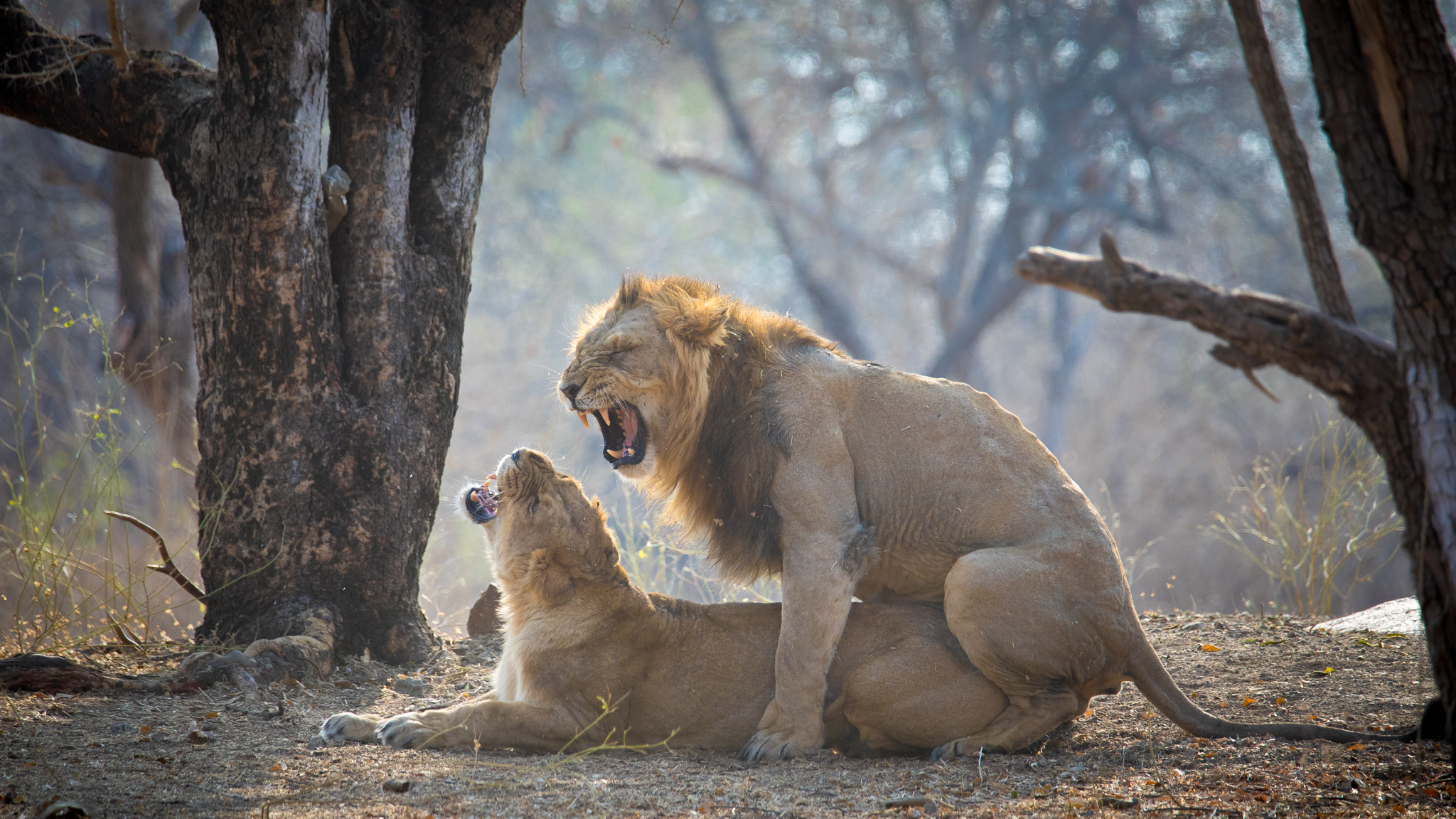
Oh, BTW, Leo (Jul/Aug) marks the beginning of the main mating season of Eurasian lions...Hence Leo...


Anyway, this is why it is "Young Utu", Spring Sun, who is the god of "the mountain house" of the dead...

Compare that to Christ, Son of God, going into the mountain of the dead as an orb of light, in Spring...

Interesting...

BTW, Slavs believed this: "...the souls of our ancestors shine every morning from Iriy (Slavic Paradise)..."

There are two worlds, the world of the living and the world of the dead. The sun spends the day in the world of the living and the night in the world of the dead...

And there are two gates that stand on the border between these two worlds: the eastern gate and the western gate...

Every morning the eastern gate is opened by Danica, the day star, which is in the morning called Zornjača, the morning star, and the sun comes from the world of the dead into the world of the living...

And every evening the sun goes from the world of the living into the world of the dead through the western gate, which is then closed behind him by Danica, the day star, which is in the evening called Večernjača, the evening star...

The souls of the dead follow sun to the western gate, which is where the entrance into the land of the dead is...

And there they enter Iriy, the ever green land of eternal spring, full of cattle...Raj..Paradise. And every morning, when the eastern gate of the world of the dead is opened, they smile on us...

Also: In Ireland there was a belief that the souls of the dead departed westwards over the sea with the setting sun...

And Serbs believed that their Supreme god Dabog, Giving God, was both Sun God, Rain (water) God and God of the Dead...

Where does the sun come from in the morning and where does it go back in the evening?
The same observation resulted in Dabog, Serbian Sun god, Serbian ancestral deity, having all the characteristics of the god of the dead, and having the cult which is in its essence a cult of the dead...According to Serbian ethnographers...

People are logical...

This is also the reason why the dead play such a huge role in Slavic agricultural cult...Not only that the life literally grows out of the dead...But Dabog, The Sun, the father of the living, and the dead, resides among the dead...

And if the dead are not happy with the living, and if they complain to "Their Father", Dabog, about the living...Then the living are basically fucked...I talked about this in my posts "Diduch", "Julenek", "White feast"

Hittites forgot about their dead, and look what happened to them: 

"...humiliation of the Hittite kingdom is the result of the fact that the living Hittite kings and their subjects have forgotten to respect the sacred bond with their dead..." - From the letter of the last Hittite king, Suppiluliuma II...

I talked about this in my post "House of bones"...

So, Dejan Gorgievski thought this was a very interesting fresco...I think it's even more interesting than he was aware of...

PS: Kurbinovo monastery is located on the southwest slopes of Baba Mountain...This is the highest peak on the Baba mountain, Pelister...


Now the word Baba means Mother, Grandmother, Midwife...Birth Giver...Among South Slavs, Baba was also the name used for Mother Earth...There are many mountains, peaks, crags, bedrock outcrops all over Balkans with the names whose root is Baba. And there is a whole belief system linked to Baba/Mother Earth, preserved in the local folklore...I talked about this in my post "Living stone"...

So I don't think it was a coincidence that we find the fresco depicting living mountains, in the church located on the Baba mountain...

There is another interesting monastery in Macedonia, built on the summit of Babuna (Evil old woman) mountain...I talked about it in my post "Treskavec"...

Hope you enjoyed this...

Wednesday, 26 February 2020

Pluto

Pluto, Roman god of the underworld, from Latin Pluto, Pluton, from Greek Plouton "god of wealth," from ploutos "wealth, riches". This was also alternative Greek name of Hades in his function as the god of wealth (precious metals and gems, coming from beneath the earth)...


But there was another Plutus, also god of wealth. He was either the son of Demeter and Iasion, or the child of Pluto and Persephone. In the theology of the Eleusian Mysteries he is regarded as the "Divine Child" portrayed carrying the horn of plenty...

Considering that Demeter and Persephone are one and the same goddess, Mother Earth, in two of her yearly phases, does that mean that Iason and Pluto (Hades) are one and the same god in two of their yearly phases? Just an open question here. I will come back to this later...

The story how Plutus was conceived from the affair between Demeter and Iason is very interesting. "Demeter, bright goddess, was joined in sweet love with the hero Iasion in a thrice-ploughed (triple-furrowed) field in the rich land of Krete (Crete)"...


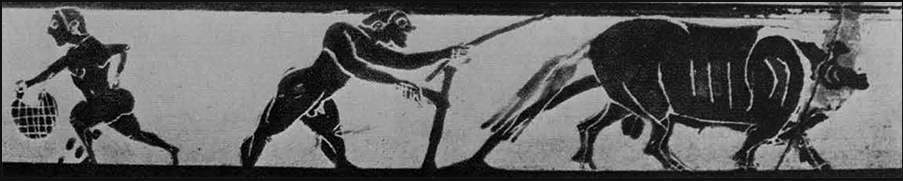
This "thrice-ploughed" (triple-furrowed) thingy is very interesting. Apparently, "the cutting of three furrows was part of fertility rites performed to inaugurate the new agricultural year"...Anyone knows where I can find reference to this in Greek texts???

Interestingly, in "Bulletin of the ethnographic museum of Serbia, Volume 10" from 1935 we can read that in some parts of Serbia, cutting of three furrows in the field was also a ritual marking the beginning of the agricultural year...


Once the three furrows were cut, an egg was buried in and then the ploughing of the field continued...At the end of harvest, people slaughtered a cockerel in the field. Ploughing-sowing-harvesting...Egg-Cockerel...

Interestingly, Persephone, the winter Demeter, holds chicken and grain in her hands while sitting on the throne in the "underworld" next to Pluton god of wealth...Her return from the "underworld" announces the return of Spring which is celebrated with painted eggs...

But there is a much deeper link between grain, chickens and the dead, preserved in Slavic folklore. I talked about it in my posts "Diduch", "Cock bashing" and "Third death"

Now rolling around the triple ploughed field didn't produce just Ploutos, the god of wealth. It also produced Philomelus, God of Husbandry, Tillage/Ploughing and Agriculture... Agriculture=Wealth...

Also rolling around triple furrowed field with Demeter = Death. Jealous Zeus, who was by the way Iason's father, killed Iason with a thunderbolt...

Hmmm...In Slavic mythology, Jarilo, young sun, the youngest son of the Thunder god Perun, seduces Vesna, young earth. They "roll around fields in spring". Their affair produces all the "wealth" of the summer...

But after spring comes summer. Jarilo has become Veles, the Dragon, Vesna has become Mokosh (wife of Perun). Ups 🙂.  And so, at the end of summer, jealous Perun kills Veles, (old Jarilo) with his thunderbolt. But Mokosh is already "pregnant" with all the wealth of autumn...

In Slavic languages, Jarilo, spring consort of Mother Earth, comes from the root "jar" which means: green, young, bright, hot, raging...Also in Slavic languages the word "jasan" means: clear, brigh, shiny...IASION was an agricultural hero and the springtime consort of Demeter...

Very interesting, right?

Well, Iasion's name has no meaning in Ancient Greek. The best etymology is: "...name may refer to bindweed, a small white flower that frequently grows in wheat fields..." Compare that with Jasan (Clear, Bright, Shining)...And you know how old gods get demoted by new gods...Also have a look at this:

"Demeter, bright goddess, was joined in sweet love with the hero Iasion (Bright one) in a thrice-ploughed (triple-furrowed) field in the rich land of Krete (Crete)"...

And considering that Iasion is one of the people credited with the introduction of the Demeter (Da Mater, Giving Mother) worship in Greece, the Samothracian Mysteries...I wonder...

O! by the way, in Slavic languages, sija means "shines" and sije means "sows seeds"...

One last thing for this article. You know how in some sources Gemini twins are said to be Triptolemus, the hero whom Demeter sent to teach the world how to grow grains, and Iasion, Demeter's lover with whom she "gave birth to wealth and agriculture"???

PS: is that Thyrsus, symbol of Dionysus stuck into the ground in front of the throne...The symbol of fertility...I talked about Thyrsus in this post...