Showing posts with label Bactrian camel mythology. Show all posts

Saturday, 19 September 2026

Winged camel

I want to thank Gabriella Brusa-Zappellini for alerting me to this amazing book, "National museum of Afghanistan: illustrated guide" by Dupree, Nancy Hatch. In it, on page 37 is this Bactrian bone seal dated to the 2nd millennium BC. WOW!!!

The official description says that the seal depicts a winged camel on the front and a bird on the back...Gabriella Brusa-Zappellini thinks the bird is an eagle and the camel's wings are also eagle wings...I would say the bird is a vulture...

Hmmmm...Winged camel...If it was just a winged camel, I would say "Eh, Afghanistan is a weird place, maybe camels there really have wings" and would move on, just like the authors of this book...

But the "winged camel" also has a very, very long stripy tail, like a tiger tail...Or are my eyes deceiving me???

And when I see something like this, I put my super suit, assume a super pose and shout out my super slogan: "Animal calendar markers!!!" 🙂

All of these animals (Bactrian camel, eagle/vulture, Caspian tiger) mate during winter, starting in Oct/Nov...This is a complex animal calendar marker for winter...

I actually wrote about all of these animals separately as animal calendar markers for winter.

I wrote about Bactrian camel as animal calendar marker for winter in my posts "Bactrian camel", "Volga mirror", "Camel and buffalo"...The reason why they are an animal calendar marker for winter is because they start breeding in (Oct/Nov), the beginning of winter...


I wrote about Griffon Vultures as animal calendar marker for winter in my posts "Double headed eagle", "Summer and winter BMAC seals" and many others...The reason why they are an animal calendar marker for winter is because they start breeding in (Oct/Nov), the beginning of winter...


I wrote about Tingers as animal calendar marker for winter in my posts "Spots and stripes", "Tigers tigers everywhere", "Tiger and dragon" and many others...The reason why they are an animal calendar marker for winter is because they start breeding in (Oct/Nov), the beginning of winter...

So:

Bactrian camel - mating season winter

Caspian tiger -  mating season winter

Old world vultures - mating season winter

You put them all together and you get complex animal calendar marker for the beginning of the rain and snow season in Afghanistan.

And it is this rain and especially snow, that feeds all the local rivers and supports life in the land of flying camels with vulture wings...Source of water in local rivers. I talked about this in my posts "Tulip goddess"...


That's it. To read more about ancient animal and plant calendar markers, start here…Then check my twitter threads I still didn't convert to blog post...I am way way behind...

Monday, 3 February 2025

Camel and buffalo

Plaque with Bactrian Camel, North China, 2nd–1st century B.C., North China, Gilt bronze...

E what about the buffalo head? Anyone? Let's try animal calendar markers...

Both wild bactrian camel and wild buffalo are animal calendar markers pointing to the same time of the year, Oct/Nov, because both species start mating in Oct/Nov...


This is an article about Bactrian camel, and how it became a calendar marker for Oct/Nov and winter in general in Bactria... 

This is an article about animal calendar markers (including Bactrian camel) depicted on this Bronze mirror found in the Volga River region, Russia, and dated to the 8th-7th century BC...

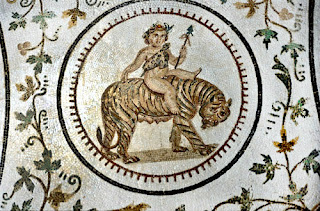
In this article I explain (using animal calendar markers) why on this Roman mosaic from Tunisia, dated to 2nd century AD we see Dionysus riding a lion, followed by Silenus riding a camel, followed by a leopard on a leash...

I first talked about buffalo as an animal calendar marker for Oct/Nov, in this article about Asura (demon) Mahisha whose name means buffalo. Oct/Nov marks the start of the dry season. He is killed by Durga, riding on a lion (Leo, Jul/Aug, peak monsoon season)...

This animal calendar could have already been mythologised in Indus Valley civilisation...I talked about this in this article about this 3rd mill BC Harappan tablet...  

I then talked about buffalo as an animal calendar marker for Oct/Nov with positive connotation (Mesopotamia has the opposite climate to India, so Oct/Nov marks start of wet season) in this article about this cool Akkadian seal...

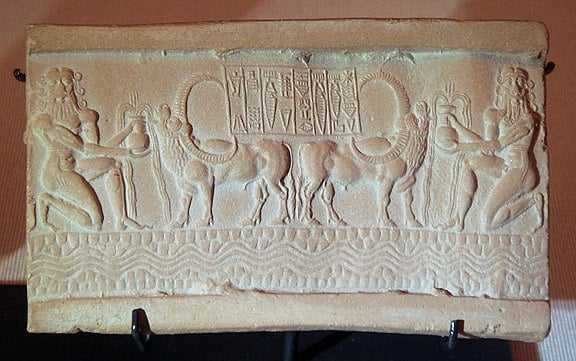
And in this article about this Akkadian cylinder seal from the 3rd millennium BC, where buffalos are depicted drinking from a jar overflowing with water... 

I also talked about buffalo as an animal calendar marker containing both Mesopotamian and Indian meanings associated with buffalo in this article about this 5th c. BC Achaemenid cylinder seal...

And in this article about this 3rd millennium BC seal from Hurian city of Urkesh, Syria with two opposite calendar markers, equid and buffalo...

Finally I talked about buffalo and tiger animal calendar markers in this article about this 13-11 c. BC bronze figurine of wild water buffalo with a tiger on its back from Hunan...

As I said, "All our mythologies are the result of the fact that people are very good at noticing patterns in nature while simultaneously being very bad at distinguishing between correlation and causation 🙂"

To read more about ancient animal and plant calendar markers, start here…Then check my twitter threads I still didn't convert to blog post...I am way way behind...
Tuesday, 7 December 2021

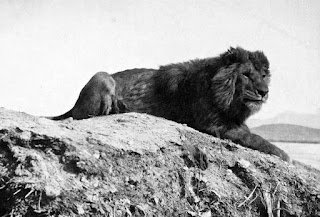
Barbery lion

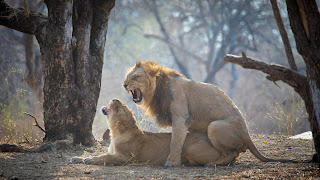
Now here is something very interesting I just found out today...The Lion calendar marker for end of Jul beginning of Aug, hottest part of the year, Leo, was derived probably in Mesopotamia, from the beginning of the mating season of Eurasian lions...


African lions are different...Their mating season peaks in winter, starting in November in the Southern Africa and in January in the Northern Africa...Now extinct Barbery lion, which once lived in Tunisia, mated in January...

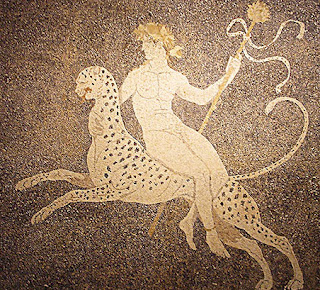
The mating behavior of Barbary lions would explain something that I couldn't explain until today. Things like this: Roman mosaic, 2nd century AD, Tunisia. Dionysus riding a lion, followed by Silenus riding a camel, followed by a leopard on a leash...


We all know that Dionysus was linked with winter, the period after the grape harvest...His main celebration was Winter Dionysia, which is what is depicted on the above mosaic...

Now let's have a look at the animals depicted on the above image as animal calendar markers: 

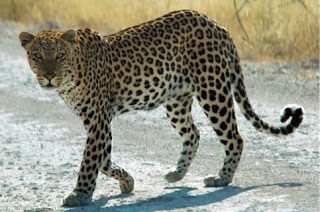
I talked about leopard symbolism and its link to winter, the rain season in both Middle East, Central Asia, Levant and North Africa in my posts "A vessel from Tepe Hissar", "Ibex and leopard", and its link to Dionysus, the god of rebirth (of nature), and Rural (winter) Dionysia in my posts "Maenads with hare", "Furious Maenad", "Leopard and tiger"...Basically, leopards mate in Jan/Feb, at the end of winter beginning of spring...

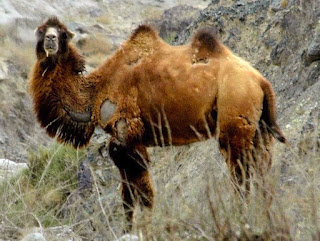
In this article I talked about Bactrian camel, and how it became a calendar marker for winter in Bactria. Basically, wild Bactrian camels mating season overlaps with the rain season in Central Asia... 

But the camel ridden by Silenus is Arabian camel, Dromedary...What about its mating season? Well, Dromedary mating "peaks in the rainy season". Winter... So camel is then exactly what you would see in the winter procession of Dionysus next to leopard...


But you wouldn't expect to see Dionysus riding on a lion. Dionysus is normally depicted riding either on a leopard or tiger. Both animals mate in winter, both are used as animal calendar markers for winter... 


I thought that this was because the mosaic artist didn't know "that Dionysus, winter god, should only ride on winter mating wild cats"...

Weeeell...I was wrong...The lion on which Dionysus rides on mosaics from North Africa is Barbary lion...Another winter mating cat, worthy of bringing god of winter, rain and life giving winter...God of rebirth (of nature) indeed...

You can see how the same animal, lion (two subspecies), with two opposite mating habits in two different parts of the world, can become a calendar marker for two different things, and cause complete confusion when it comes to interpreting its meaning on ancient artefacts...

But it wouldn't be fun if everything was obvious...Right? 

To read more about ancient animal and plant calendar markers, start here…then check the rest of the blog posts related to animal calendar markers I still didn't add to this page, and finally check my twitter threads I still didn't convert to blog post...I am 9 months behind now...

Friday, 5 November 2021

Volga Mirror

In this article I would like to talk about animal calendar markers depicted on this Bronze mirror found in the Volga River region, Russia, and dated to the 8th-7th century BC. Published: Sotheby's, New York, sale cat. December 8, 2ooo. 


The mirror is decorated in relief with: 

(wild) ibex goat

(wild) horse

(wild) bovine

(wild) Bactrian camel

The fact that wild Bactrian camel is depicted on the mirror, tells us that this object was made somewhere in Central Asia, where we used to find wild Bactrian camels.

Now look at the arrangement of the animals around the rim:

We have 

horse paired (depicted across from) bull 

ibex goat paired (depicted across from) Bactrian camel 

I don't think this pairing is a coincidence. It indicates that these animals are used as animal calendar markers... 

In Bactria, the climatic year is divided into hot/dry half (Apr/May - Oct/Nov) and cool/wet half (Oct/Nov - Apr/May)


An animal calendar marker marks the mating or birthing season of the depicted animal. Now have a look at the mating and birthing seasons of the depicted animals  

The mating season of Ibex goats begins in Oct/Nov, which is why ibex goat were used as animal calendar markers for the beginning of cool/wet half of the year (Nov-Apr)...I talked about this in my post "Goat carrier" about this Elamite figurine...


The mating season of Bactrian camel begins in Oct/Nov, which is why Bactrian camels were used as animal calendar markers for the beginning of cool/wet half of the year (Nov-Apr)...I talked about this in my post "Bactrian camel" about this "Scythian"??? badge...


There are even Bactrian seals where we see Bactrian camel depicted with Ibex horns...Just so we know they are used as animal calendar markers...


The mating of wild horses begins in Apr/May...Which is why horse was used as animal calendar marker for the beginning of hot/dry half of the year (May-Oct). I talked about this in my post about "Unicorn"... 


The calving season of wild cattle begins in Apr/May...Which is why cattle were used as animal calendar markers for the beginning of hot/dry half of the year (May-Oct). I talked about this in my post "How grain came to Sumer" about this Sumerian seal...


So I don't think that the arrangement of the animals on the Volga mirror is a coincidence...It is possible, but unlikely...

This beautiful object can be found under the number 167 in this amazing book entitled "Nomadic Art of the Eastern Eurasian Steppes The Eugene V. Thaw and Other New York Collections"

Saturday, 9 January 2021

Bactrian camel

Among many weird and wonderful ancient Bactrian seals impressions dated to the 3rd mill BC, found in this great article: "Myths of ancient Bactria" by Sarianidi Victor, are these two seals with a man leading a Bactrian camel.

All the other Bactrian seals with animals turned out to be complex animal calendar markers based on reproductive cycles of depicted animals...

I talked about some of them in these articles: "Bactrian snakes and dragons", "Fluffy", "Eagle calendar marker"...

So I suspected that somehow these Bactrian camel seals were also "religious" (read calendar marker) images, somehow linked with the reproductive cycle of Bactrian camels...

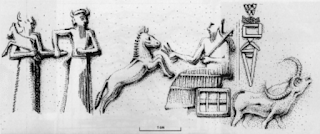
The reason why I suspected this was because of this seal depicting, just like the other two seals, a man leading a Bactrian camel...Except this camel had Ibex (Bezoar) goat horns...

Now, as we all know 🙂, that Ibex (Bezoar) goat is The Goat of Rain and The Goat of Winter of Eurasia...You can find examples of the use of Ibex goats as symbols for winter from around Eurasia on this page which lists some of the examples of animal calendar markers...

Ibex (Bezoar) goat mating season starts at the end of Oct beginning of Nov, with Ibex males, which are normally solitary, gather to fight for females...And so the Ibex became the "Goat of rain", the calendar marker that marks the beginning of the wet season. Which is also the beginning of the rain season in Bactria

Which is why Bezoar (Ibex) became the calendar marker for Oct/Nov, the beginning of the winter and the rain season in Bactria...I talked about this in my post "Fluffy"

So, I suspected that this camel goat was a composite animal calendar marker too...

And I also suspected that it was also in some way linked to winter and the rain season...

But when I looked at Bactrian camels I was disappointed. "The Bactrian camel's breeding season takes place in March and April"...Middle of Spring...Meaningless from the point of view of "religious" calendar markers...

So I filed these into "I don't understand the meaning of these yet" box...Then recently I came across a mad article about wild bactrian camels living in a nuclear testing site in China...


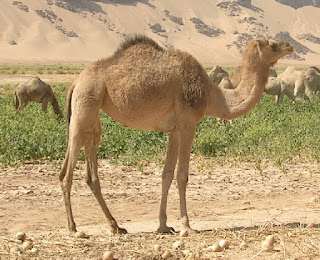
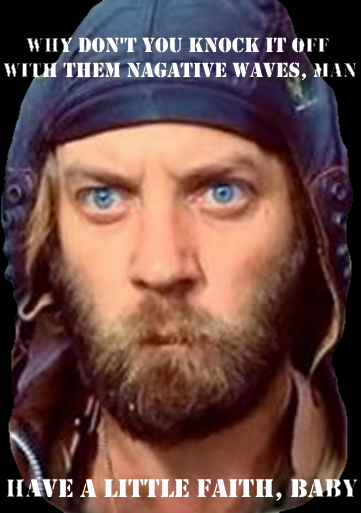
BTW, doesn't this one look like Donald Sutherland from Kelly's Heroes?


Anyway, here is one of the funniest (I have a weird sense of humor) things I read in a looong time....

In 1964, China began testing nuclear weapons at Lop Nur, home to many of the wild Bactrian camels...

Because of this, their habitat became a restricted military zone where human activity was kept to a minimum. The camels experienced no apparent ill effects from the radiation and continued to breed naturally...They actually thrived...

After China signed the Comprehensive Test Ban Treaty in 1996, human incursions into the area have caused a sharp drop in the camel population...Now, the camels are reclassified as an endangered species on the IUCN Red List...

See...FUNNY...

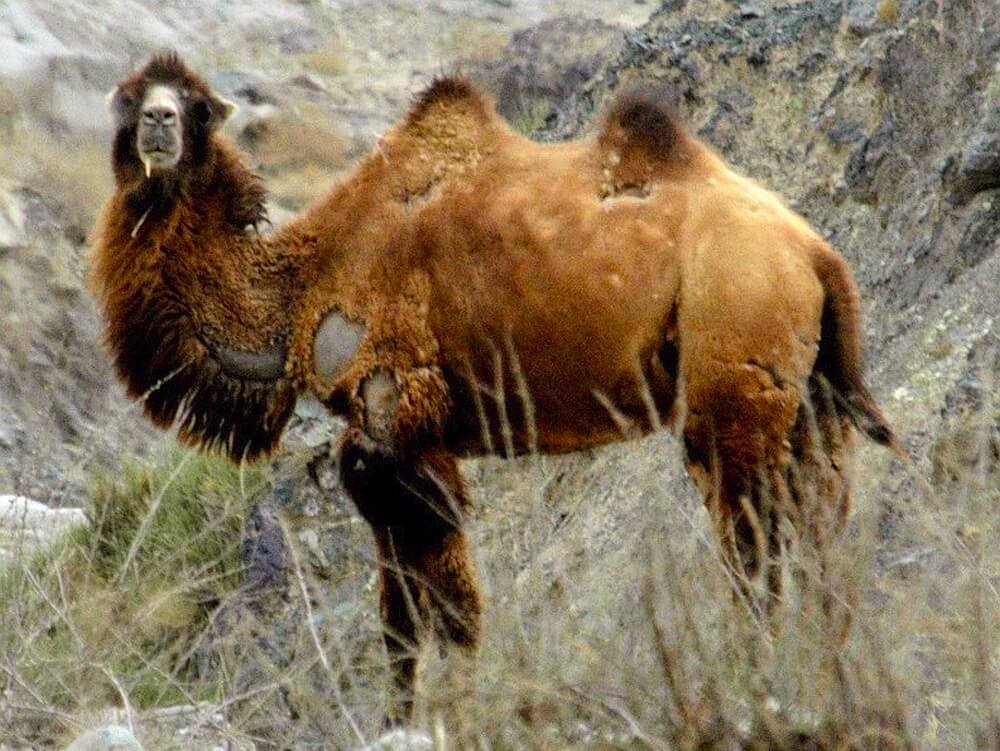
While I was reading this it suddenly dawned on me: wild Bactrian camels! Of course. I was looking at the domesticated camels, whose behavior was changed by humans...So I went and checked the wild Bactrian camel lifecycle. And sure enough: "they breed during winter with an overlap into the rainy season...

It turns out even "Aristotle reported that breeding time of camels is in November and December"...

And the contemporary data from Central Asia confirms that  "The dead-of-winter months, roughly from November to February, are when the male camels start their seasonal three-month-long rut"...

So...I was right...Bactrian camel on Bactrian seals from the 3rd millennium BC is a calendar marker for winter and the rain season. Interchangeable with Ibex (Bezoar goat). Hence camel with ibex horns...


PS: Check this beautiful object out 


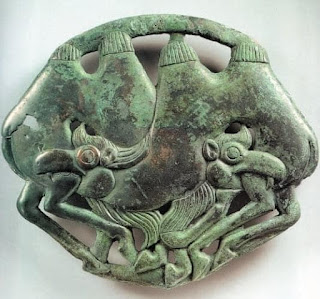
Bronze badge depicting two fighting Bactrian camels. From Filippovka mound, Southern Ural region, dated to V -IV century BC. Currently in the Museum of Archaeology and Ethnography of the Institute of Ethnological Research named after R.G. Kuzeev, Ufa...

The mating of the wild Bactrian camels (Oct-Nov), which is characterised by vicious fights between males involving biting (!), coincides with the beginning of the rain season in the Bactrian camel range. A big deal in these semi desert lands... 

To read more about ancient animal and plant calendar markers, start here…then check the rest of the blog posts related to animal calendar markers I still didn't add to this page, and finally check my twitter threads I still didn't convert to blog post...I am 9 months behind now...