Saturday, 15 May 2021

Golden boy

Inlaid ivory panel depicting "lioness devouring a boy"... From the palace of Ashurnasirpal II, part of an almost identical pair, originally part of a piece of furniture, perhaps a throne. ca 899-700 BC...


There is something very strange about this object. It doesn't look very Mesopotamian...

This "boy" being devoured by the lioness...His gold tunic and particularly his gold curly hair, indicate that this is not an ordinary boy...And the lioness devouring him. The jewel on her forehead indicates that we are not talking about an ordinary lioness either...

I would suggest that this young boy (we know it's a boy because he is wearing short skirt of youth and not the long skirt of adulthood) is the symbolic depiction of the young sun of spring and summer...

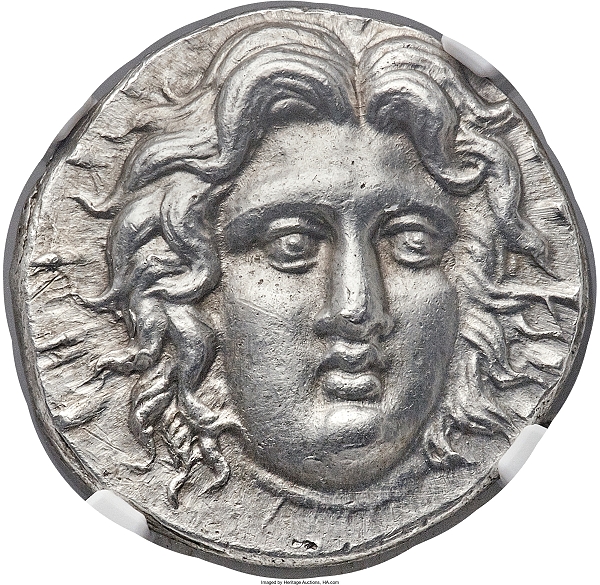
A very strange depiction of the sun to be found in Mesopotamia...But not further west...Here are three ways the sun god Helios is depicted on Greek coins: Big rays, Small rays, No rays, but dashing locks of (presumably golden) hair... 


From my post about "Lion killing Snake" symbolism...

Was this golden hair boy an early depiction of such sun god? The piece looks like an import. From where? Do we find anything similar anywhere else at that time in the Eastern Mediterranean? 


The killing of the young boy by a lioness takes place among blue water lilies, wrongly called Blue Lotus, even though they don't belong to the lotus family... 


These beautiful blue flowers are native to both Nile marshlands as well as Mesopotamian marshlands although it is possible that they were transplanted from Egypt to Mesopotamia during Bronze Age or even Earlier...were believed to be "magic flowers", and were worshiped by both Egyptians and Mesopotamians...You can read more about this in "Influences of Egyptian Lotus Symbolism and Ritualistic Practices on Sacral Tree Worship in the Fertile Crescent from 1500 BCE to 200 CE"

And blue water lilies flowering season is from July until September. Peaking in Leo...Leo which marks the end of summer...

Hence the lioness killing the gold haired boy (sun) among the lilies...So I think that whoever made this ivory plate deliberately placed the murder scene among the flowering blue lilies. 

By the way, why is July-August the part of the year marked by Leo? Well Eurasian Lions are seasonal breeders. And their mating season peaks from August and October. 


Covering the whole of autumn, part of the year symbolised by lion...

I talked about this in my post "Symbols of the seasons"...

And it is autumn that kills summer...

Interestingly, Nebuchadnezzar II dedicated the bright blue gate he built in Babylon to the Babylonian "Mistress of Heaven", Ishtar, and covered its façade with Nilotic blue lotus (Blue water lily)...


Ishtar (the warrior goddess) who likes posing standing on a lion...


The "mysterious" morning star...Guess who rises with the sun, pretending to be "The morning star" in Leo? Sirius...A very special star indeed...

Is she the lioness in the original scene? The jewel on the lionesses forehead sure looks like a star...

PS: Just learned about Nefertem, the Egyptian Beautiful Boy, originally a lotus flower at the creation of the world, who had arisen from the primal waters. Some of the titles of Nefertem were "He Who is Beautiful" and "Water-Lily of the Sun"... 

Nefertem emerging from the lotus blossom. Found at the entrance to the tomb of King Tutankhamun, in the Valley of the Kings, 18th Dynasty, New Kingdom.

Pic: Margarete Büsing

BTW, blue water lily flowering season, July until September is the same season when the Nile water level reaches its peak. During the annual Nile flood...

So I wonder if "lotus flower at the creation of the world, who had arisen from the primal waters" just means: "lotus flower who arrises from the waters of the Annual Nile Flood"

The Annual Nile flood is after all what originally created Egypt...Without the annual Nile flood there would be no Egypt... 

I talked about this in my posts "The flower of life" and "Lotus and papyrus"...

This is the time when Hathor, who was also Mehet-Weret (The great flood) finally arrives...As a lioness, Sekhmet...I talked about this in my post "Holy Cow" and "Cow and calf ivory"...

PPS: Just learned that the jewel in the lioness's forehead is lapis lazuli, the "water stone"...This would also point at the lioness, flood link...I talked about this link between lapis and water in my post "Lapis lazuli water seal", "Lyres of Ur"...

To read more about ancient animal and plant calendar markers, start here…Then check my twitter threads I still didn't convert to blog post...I am way way behind...

Friday, 7 May 2021

Butt chewing

"Triumphant bull with flowing beard climbing the mountain"? It's from the time of the First Dynasty of Ur...No one knows what it means because: "we have no written documents explaining it"...At least this is what we can read in "A Problem of Early Sumerian Art"

Let's see if we can come out with some sensible explanation for this scene...

"Enki placed in charge of the whole of heaven and earth the hero, the youth Utu (Shamash), the bull standing triumphantly, audaciously, majestically...the great herald in the east of holy An...with a lapis-lazuli beard, rising from the horizon..." from "Enki and the world order"...

Here's the majestic Shamash, depicted as a golden bull with long flowing "lapis lazuli" beard...

Why? To understand this we need to know something about the source of water in Tigris and Euphrates...Well according to the Sumerian legends, the source of these two rivers is Enki.

In "Enki and the world order" we read: "...Father Enki...he stood up full of lust like a rampant bull, lifted his penis, ejaculated and filled the Tigris with flowing water [after filling Euphrates]. He was like a wild cow mooing for its young in the wild grass..."

But the actual source of water in the two sacred rivers was to a smaller extent rain which fell during the wet half of the year (Oct/Nov-Apr/May), but majority of water in Tigris and Euphrates came from the snow melt in Anatolian highlands and Iranian Zagros mountains...

This snowmelt is caused by Young (spring) sun, Young Shamash...Here he is depicted on this seal in a short tunic climbing the sacred mountain towards Imprisoned Enki...To free him...


This climbing of the mountain by the sun god represents the heating up of the higher and higher regions of the holy mountains in the spring. The heating up which results in the snowmelt, which is the main source of the water in the Tigris and Euphrates rivers...This is the "freeing of Enki" and it happens during the spring. You can see how the water levels in Tigris and Euphrates river system are suddenly sharply rising starting from Feb...Water level charts for

Tigris


Euphrates


Enki is finally free (the water levels peak) in Apr/May, at the beginning of summer.  In Taurus...

So Enki, the god of fresh water, gets freed by Shamash, "the triumphant bull with lapis lazuli beard". And the first thing he does, he starts wanking 🙂 And the moment of his ejaculation, the moment of his climax, the moment of the peak water levels in the rivers he fills with his heavenly semen, is also the moment when "wild cows moo for their young in the wild grass"...In Taurus...Taurus, which marks the beginning of the calving season of the Eurasian wild cattle...

Taurus also marks the beginning of summer. The season dominated by the sun...Hence Golden Bull, symbol of summer, symbol of the sun, with lapis lazuli beard, symbol of flowing water...The water bull...

That's the triumphant bearded bull depicted on the original relief...Standing triumphantly...Having his butt chewed by a winged lion...

Why?

Summer ends at the beginning of August, in the middle of Leo. By the way, why is July-August the part of the year marked by Leo? Well Eurasian Lions are seasonal breeders. And their mating season peaks from August and October. 


During autumn, part of the year symbolised by lion...As you can see the symbol of summer is bull...

I talked about this in my post "Symbols of the seasons"...

So if you wanted to symbolically depict the end of summer (symbolised by bull) and beginning of autumn (symbolised by lion), you could do it like this: Lion killing Bull (actually chewing bull's butt)

Or like a winged lion (actually creature with lion's head and eagle tail) chewing on the butt of a bull...

So what's with lion eagle "monster"? It's a composite calendar marker. It represents autumn, which starts "when lions mate" (Leo) and ends "when vultures mate" (Eagle/Scorpio)...I talked about the vulture as the symbol of the end of autumn beginning of winter in my post "Double headed eagle"...

So I think we can understand early Sumerian art even without written explanation from the creators of the said art...

Amazing how all these things fit into each other like pieces of a jigsaw...What is emerging looks like a "lost first draft" of our religions and mythologies, and what has come to us in writing seems to be a reworked version done by the editors (priests) to make it sell better...

Monday, 3 May 2021

Killing of the bull of heaven

Assyrian cylinder impression, MS 1989, Schøyen Collection, Norway, depicting Enkidu and Gilgamesh killing the Heavenly Bull...


The interesting bit is here: Epic of Gilgamesh, Table VI, 140-149.

Enkidu stalked and hunted down the Bull of Heaven.
He grasped it by the thick of its tail
and held onto it with both his hands,
while Gilgamesh, like an expert butcher,
boldly and surely approached the Bull of Heaven.
Between the nape, the horns, and... he thrust his sword.
After they had killed the Bull of Heaven,
they ripped out its heart and presented it to Shamash.
They withdrew bowing down humbly to Shamash.
 
This is actually very interesting. 

Bull is the ancient symbol of summer (May, Jun, Jul), the period which starts in Taurus...


I talked about this in my post "Symbols of the seasons"...

By the way, summer is symbolised by a bull, because both calving (begins in Apr/May) and mating (begins in Jul/Aug) of Wild Eurasian cattle takes place during the summer, May to August...I talked about this in my post "Ram and bull"...

Taurus (Apr/May), the period when wild Eurasian cattle start their calving season, was extremely important time of the year for the people of Ancient Mesopotamia. This is when the water levels of Tigris and Euphrates peaked...

Tigris


Euphrates

So to the people of the Ancient Mesopotamia, it sure looked like it was the sun, Shamash, who released Enki, the sweet water, at the beginning of summer, in Taurus...

I talked about this in my post "Shamash young and old"...

Which is why Shamash is depicted as a golden bull with long flowing "lapis lazuli" (water) beard...

And why, in "Enki and the world order" we read: "...Father Enki...he stood up full of lust like a rampant bull, lifted his penis, ejaculated and filled the Tigris with flowing water. He was like a wild cow mooing for its young in the wild grass..."

The moment of Enki's ejaculation, the moment of his climax, the moment of the peak water levels in the rivers he fills with his heavenly semen, is also the moment when "wild cows moo for their young in the wild grass"...In Taurus...

Taurus was also the beginning of the grain harvest in Mesopotamia...

Which is why Shamash/Utu is also depicted as a bull with a tail made of wheat...


Both the flood and the grain harvest end with the summer, in Jul/Aug. So killing of the bull symbolically represent end of summer symbolised by a bull...As well as the end of the harvest and the end of the period of water abundance. And the beginning of drought...

This killing of the bull is usually done by a lion...


This is a symbolic depiction of the end of summer, which begins in Taurus (Apr/May) and ends in Leo (Jul/Aug)

And, Leo is a solar year calendar marker which marks the beginning of the main mating season of the Eurasian lions. 

Leo is the hottest and driest part of the year in Mesopotamia. The time of maximum heat, maximum drought. 


The throne of Shamash, the sun god. When he is the most powerful...Here is Shamash standing "between the lions" (in Leo), in an empty irrigation canal, at the moment of maximum heat and drought, when he is most powerful...


But here the killing is done by Gilgamesh and Enkidu. On behalf of the Shamash in Leo...

So our two "heroes" kill the bull of heaven (season), rip its heart (water, grain???) and present it to Shamash...Summer, the season of the bull ends. Autumn, the season of the lion begins...

Oh and guess who is there too, "standing on a lion" (in Leo): Ishtar, who started the whole thing


Sirius starts rising with the sun (is a "morning star") in Leo...

Saturday, 1 May 2021

Shamash young and old

"When Utu/Shamash steps up into heaven, fresh waters shall run out of the ground for you..." from "Enki and Ninhursanga"


Cylinder seal discovered at Ur and dated to the time of Sargon (2340-2160 BC) or to the time of Shar-kali-sharri (2224-2199 BC). De Clercq collection...

The description found in the Notes on the Sargonid Cylinder Seal, Ur 364 by Edith Porada: 

The seal depicts three gods:

First god in a "shrine" surrounded by streams of flowing water

Second god with rays issuing from one shoulder, wearing a flounced kilt, holding a mace and ascending a stepped mountain topped by a gate or a temple

Third god with rays issuing from both shoulders, wearing a long pleated skirt, holding a curved notched weapon or a saw dagger, standing with one foot on a back of a lion with upcurving wings, the other foot on a small god who kneels with one foot on the ground...

Very interesting indeed...But I would disagree with some of the stuff said above. 

These are not three gods. These are two gods, one of them depicted in two "stages" a young and old.

First god is Enki, the Sumerian god of sweet water. He is depicted sitting imprisoned inside abzu, the source of the two great rivers...


That source is the snow that falls on the "holy mountains" located North East of Mesopotamia during the winter...Anatolian highlands and Zagros Mountains...


I can hear pretty much every Sumerologist screaming at this point: Abzu means "the underground waters of the Aquifer"!!! This commonly accepted meaning of the term Abzu is actually a result of a mistranslation...We have Sumerian ab=water and zu=knowledge, deep, far...Abzu can then mean both deep water and far away water...Considering that the source of Tigris and Euphrates is far away from Mesopotamia, in the Anatolian highlands and Zagros Mountains, the proper translation of the term Abzu is far away water...

I mean this is actually spelled for us in the Early Dynastic Za-me hymns where we read:

"Abzu ki kur-gal men-nun-an-ki den-nu-de4-mud zà-me": Abzu, place that is a big mountain, princely crown of the heaven and earth. To the lord Nudimmud (Enki), (give) praise! 


Anyway I am going to write another post specifically about Enki and Abzu, so watch this space...

So the first god is Enki/Ea.

The second god is young Utu/Shamash, the young sun. See how he has sun heat rays emanating only from one of his shoulders??? He is depicted on this seal in a short tunic climbing the sacred mountain towards imprisoned Enki...To free him...


This climbing of the mountain by the sun god represents the heating up of the higher and higher regions of the holy mountains in the spring. The heating up which results in the snowmelt, which is the main source of the water in the Tigris and Euphrates rivers...This is the "freeing of Enki" and it happens during the spring. You can see how the water levels in Tigris and Euphrates river system are suddenly sharply rising starting from Feb...Water level charts for

Tigris


Euphrates


Enki is finally free (the water levels peak) in Apr/May, at the beginning of summer.  In Taurus...Which is why Shamash is depicted as a golden bull with long flowing "lapis lazuli" (water stone) beard...

"Enki placed in charge of the whole of heaven and earth the hero, the youth Utu (Shamash), the bull standing triumphantly, audaciously, majestically...the great herald in the east of holy An...with a lapis-lazuli beard, rising from the horizon..." from "Enki and the world order"

Shamash/Utu is also depicted as a bull with a tail made of wheat...

Because it is in Taurus, the water bull, that the grain harvest begins in Mesopotamia...

Summer, which starts in Taurus, is symbolised by a bull, because both calving (begins in Apr/May) and mating (begins in Jul/Aug) of Wild Eurasian cattle takes place during the summer, May to August...I talked about this in my post "Ram and bull"...

Which is why, in "Enki and the world order" we read: "...Father Enki...he stood up full of lust like a rampant bull, lifted his penis, ejaculated and filled the Tigris with flowing water. He was like a wild cow mooing for its young in the wild grass..."

So Enki, the god of fresh water, gets freed by Shamash, "the triumphant bull with lapis lazuli beard". And the first thing he does, he starts wanking 🙂 And the moment of his ejaculation, the moment of his climax, the moment of the peak water levels in the rivers he fills with his heavenly semen, is also the moment when "wild cows moo for their young in the wild grass"...In Taurus...

It is interesting that the Young Utu/Shamash carries a scepter...Why is this interesting? Have a look at this:

Modern impression from a greenstone cylinder seal from Sippar, c. 2300 BC...Currently in The British Museum... 

Here is Shamash (the sun god), in full power (represented by sun heat rays emanating from both shoulders), standing "between two columns with a lioness and a lion". 

The same scepter carried by the Young Utu/Shamash can be seen abandoned to the left of the left column with the lion...Instead of the scepter, Old Utu/Shamash is holding a serrated knife...A reed cutting knife...That is very important...And I explain why in this post about Mesopotamian irrigation "Canals"...

Here is the same dude, Old Utu/Shamash on our original seal, "standing with one foot on a back of a lion with upcurving wings..."


If someone is standing "between the lions" or "on a lion", that just means that he is standing in Leo, end of July, beginning of August...

And, Leo is a solar year calendar marker which marks the beginning of the main mating season of the Eurasian lions. 

Leo is the hottest and driest part of the year in Mesopotamia. The time of maximum heat, maximum drought. Which is why the Old Utu/Shamash has sun heat rays emanating from both of his shoulders.


This is also the time of the lowest water levels in Tigris and Euphrates river system...Water level charts for

Tigris


Euphrates

Which is why the Old Utu/Shamash is standing in an empty river (canal) bed...Perfect time to cut reeds and repair irrigation canals...Hence serrated reed cutting knife...For full discussion check my post about Mesopotamian irrigation "Canals"...

So this is what I think is depicted on our Ur seal...What do you think?