Showing posts sorted by date for query eagle thunder. Sort by relevance Show all posts

Sunday, 26 July 2026

Jupiter Zeus Dolichenus

Stone relief dated ca 50-150 AD from Croy Hill, Scotland. It depicts Jupiter Dolichenus (standing on a bull) and his wife and consort Juno Dolichena (standing on a cow). National Museum of Scotland, Edinburgh, UK...

Juno Regina is the Queen of the Gods and Queen of Heaven and the patron goddess of Rome... 

Jupiter Dolichenus is a mixture between Roman Jupiter and a Anatolian sky god. Carrying a thunderbolt (Jupiter) and a double-headed axe (Teshub)...

Jupiter Dolichenus stands on a bull because the Anatolian thunder god stood on a bull...

Pics of the two stele from Tell Ahmar are from this paper... 

And he stood on a bull because...Officially we don't know, but actually we do know. He stood on a bull because:

This Hittite symbol means storm god. Bottom part (Bull head) means storm, the above part means god...

The thunderstorm season in Anatolia starts in Apr/May, Taurus...Which is why Hittite Thunder God stands on a bull...I talked about this in my post "Bull god from Arslantepe"


Roman Juno was associated with cows and calves...And so was her Greek predecessor Hera.

Which is interesting considering that Apr/May, the start of the thunderstorm season in Anatolia and Southern Europe, is also the start of the calving season of the wild Eurasian cattle...

This is what Taurus, Bull (it really should be Calf), marks. It originally had nothing to do with stars. It was a marker for Apr/May, the beginning of the calving season of the wild Eurasian cattle. Talked about it in many of my posts...

BTW, Jupiter (Zeus) Dolichenus was also known as Jupiter (Zeus) Heliopolitanus. This is because the cult originated from the area between the cities of Doliche and Heliopolis, which both housed important temples of the god...

Between the two cities lies the mount Caisus, the sacred home of Ba‘al Hadad, who was the Ugaritic version of the Hurian storm god Teshub...

It is in this area that we see the local storm god, wearing local clothes...

Become Romanised/Hellenised, and starts wearing Roman military attire, and gets his lightning trident replaced with lightning bolt...


Pics again from this paper...

Here is another relief, this one from Rome, 3rd c. AD, depicting Jupiter Dolichenus and Juno Dolichena. See the eagle killing snake in the top left corner, the symbol of Zeus/Jupiter?

I love this one a lot. A sculpture of an eagle devouring a serpent from Roman London. 

It depicts a snake eagle killing a snake...

Why is this a symbol of Zeus/Jupiter? Because:

Eagle-Snake struggle is a complex animal calendar marker for the thunderstorm season in Europe Apr/May -  Sep/Oct, when migratory snake eagles can be seen in Europe...I talked about this in my post "Eagle snake struggle"... 

Interestingly, main snake mating season, when snakes coil like this, also starts in Apr/May...


And so:

Why is Hermes, the herald of Zeus, carrying a staff with two coiling snakes, given to him as a present by Apollo, the sun god?

Cause snakes (solar animals) mate (coil) in Apr/May, (heralding) the beginning of the thunderstorm season. I talked about this in my post "Lyre of Apollo"...

So...The visual depictions of Jupiter Dolichenus and Juno Dolichena are full of animal calendar markers for Apr/May...

The time of the year when snakes start mating, snake eagles arrive back from Africa to Anatolia/Southern Europe, wild cows start calving, and when the thunderstorms (ThunderGod) arrives riding on a bull...In Taurus...

BTW, If you want to see how Teshub the thunder god is actually symbolically equated with the snake eagle check my post "Teshub killing snake" out. It gives symbolic analysis of this Neo-Hittite basalt stele from the 9th-8th c. BC and explains why is Teshub standing on a bull and why is he holding a snake in his left hand...

To read more about ancient animal and plant calendar markers, which are at the root of all our mythologies, start here…Then check my twitter threads I still didn't convert to blog post...I am way way behind...

Tuesday, 3 February 2026

An angel

@another_barbara alerted me to this cave painting from the La Pileta Cave, Province of Malaga, Andalusia, Spain, dated to c. 20,000BC...

She said: "...There is a mention of an early idea of an angel, but I bet @serbiaireland knows better 😇"

I didn't at first, but now:

After quick googling this is what I found out:

This is where Malaga is on the map. It lies at the bottom tip of the Iberian peninsula...

It also lies on the main bird migration route between Europe and Africa. Every autumn, between Jul/Aug and Oct/Nov, millions of birds fill the skies over Malaga heading south...And they did too at the time when the people painted the bird man on the walls of the La Pileta Cave.

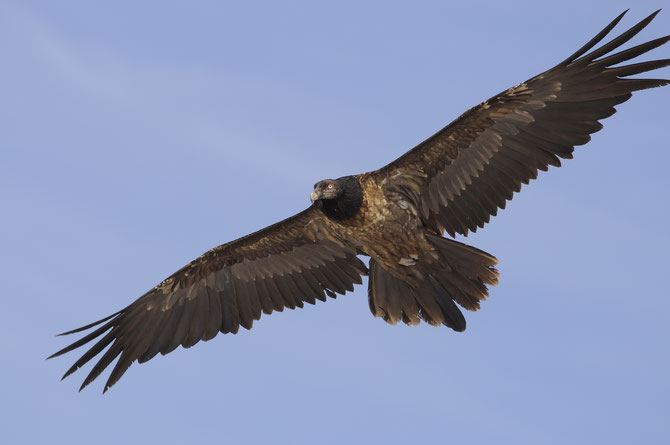
The last birds to migrate are the most spectacular: Vultures. Today, they gather in the skies of Andalusia in their thousands and are a spectacle not to be missed. At least according to this page...

During Palaeolithic there were probably hundreds of thousands, or more vultures circling over the heads of the Malaga cave painters, right at the time when the first rains arrived to the region. Well if the climate was in anyways similar to the today climate.

I talked about migratory birds as animal calendar markers in many of my posts...

Interestingly in Mesopotamia vultures are linked with storm, rain gods...I talked about this in my post "Eagle dance"...

Eagle dance...

Montenegro 1963AD

Syria, 1800BC

Eagle (vulture) couples dance above the mountains at the beginning of their mating season, which coincides with the beginning of the rain season in Fertile Crescent...

I also talked about this in my post "Kassite seal with Apkallu", about this Kassite seal (18th-12th centuries BC) from Syria. National Museum of Damascus...

And in my article "Judgement of the birdman"...

So I wonder...

You also might find this interesting...Article "Pero" (feather), in which I proposed that the root of the name of the Slavic thunder god Perun is "pero" = feather, which would make Perun = Feathered one, and not from PIE perkwus, meaning "oak" or "mountain". Zeus, Jupiter, Perun were all linked to eagles. Why?

And I want to thank @another_barbara for alerting me to this amazing rock painting of a (maybe the earliest) "bird man", "eagle man"...vulture turned storm/rain god???

To read more about ancient animal and plant calendar markers, start here…Then check my twitter threads I still didn't convert to blog post...I am way way behind...

Saturday, 19 April 2025

The sacred tree and a bee

The sacred tree motif...may be associated with a bee in a Hittite text: "An eagle is perched on the branches of the tree above, wrapped around the roots of the tree is a snake below, a bee hangs at the middle of the tree"...

From "Apiculture in Hittite cuneiform texts". Here is my symbolic depiction of the above passage. Cool, right?


This tree is usually interpreted as "the world tree", "a colossal tree, located at the centre of the world, which supports the heavens, thereby connecting the heavens, the terrestrial world, and, through its roots, the underworld"...

The World Tree, often has an eagle in its crown and serpent /dragon in its roots. As in Hittite mythology. And Germanic mythology where we find Yggdrasil. 1897 depiction by Ernst Hermann Walther

Here are examples of the depiction of "the world tree" from Serbian epic poetry.

Excerpt from a Serbian folk poem which talks about the tree of life with Falcon (Perun) sitting on its top and Serpent/Dragon (Veles) coiling around its roots:

Here is another variant of the same poem about the Tree of Life with Eagle (Perun) sitting on its top and Dragon (Veles) coiling around its roots. This one narrated by the tree of life itself:


It is commonly believed that the eagle symbolises the heaven and the serpent symbolises the underworld...But the world tree can also be interpreted as "the tree of life". Basically "everything between the earth and the sky"...

In which case the eagle symbolises rain (god) and serpent symbolises sun (god)...I talked about this symbolism of eagle and serpent in my post "Eagle snake struggle" in which I analysed the symbolic meaning of the Eagle-Snake struggle mosaic from the palace of the Emperor Justinian I  (527-565), Istambul.


Basically this is a complex animal calendar marker for the thunderstorm season in Europe Apr/May -  Sep/Oct, which is also when migratory snake eagles and snakes can be seen in South Eastern Europe... 

BTW if you look at the above thunderstorm chart, and if you look at the Hittite part of Anatolia, you will see that Apr/May is also the start of the main thunderstorm season there too...

Eagle (Rain) and Snake (Sun)...Whose balance is needed if we want (the tree of) life to flourish. And between them, bees...Without whom...

In Polesye, area along Belarus and Ukraine border, there is a belief that God created bees "to live til the end of the world" and that "when all bees die, the world will end"... More Slavic bee folklore can be found in my post "Bee"... 

You can find lots and lots of posts about eagles and their link to thunder/rain and about snakes and their link to sun on my blog

BTW, I talked about bee as an animal calendar marker in Asia Minor, in my post "Deer and bee", about this Silver tetradrachm from Ephesus minted c. 390–380 BC.


All this helps us understand the Hittite myth about the disappearance of Telipinu, the god of agriculture. His disappearance caused all fertility to fail, both plant and animal. Everyone is looking for him, but finally it is the bee who finds the god after everyone else gave up search. And by finding the missing Telipinu, it is the bee that brings the fertility back to the world...

It is interesting that bees reappear in the spring, when the winter is finally over, and are one of the main signs that the winter (infertile time of the year) has ended and summer (fertile time of the year) had began...

One more thing about Hittites and bees:

Amulet of a bee goddess, 700 - 600 BC. Found in excavations of Kamiros, Rhodes, Greece. One of the nicknames of Persephone, The Queen of the Underworld, was Melitodes ("sweet as honey"), and the priestesses of Demeter and Persephone, were known as Melissae ("bees")...


You can read more about this in "The Eleusinian Mysteries and the Bee"...

Interestingly, Hittites believed that bees were "the gift of The Sun Goddess of the Earth", Hittite equivalent of Persephone, The Queen of the Underworld...

You can read more about this in "Apiculture in Hittite cuneiform texts"...

Both of these Queens of the Underworld were also linked to land fertility...

That's it. To read more about ancient animal and plant calendar markers, start here…Then check my twitter threads I still didn't convert to blog post...I am way way behind...

Sunday, 2 February 2025

Zawi Chemi Shanidar

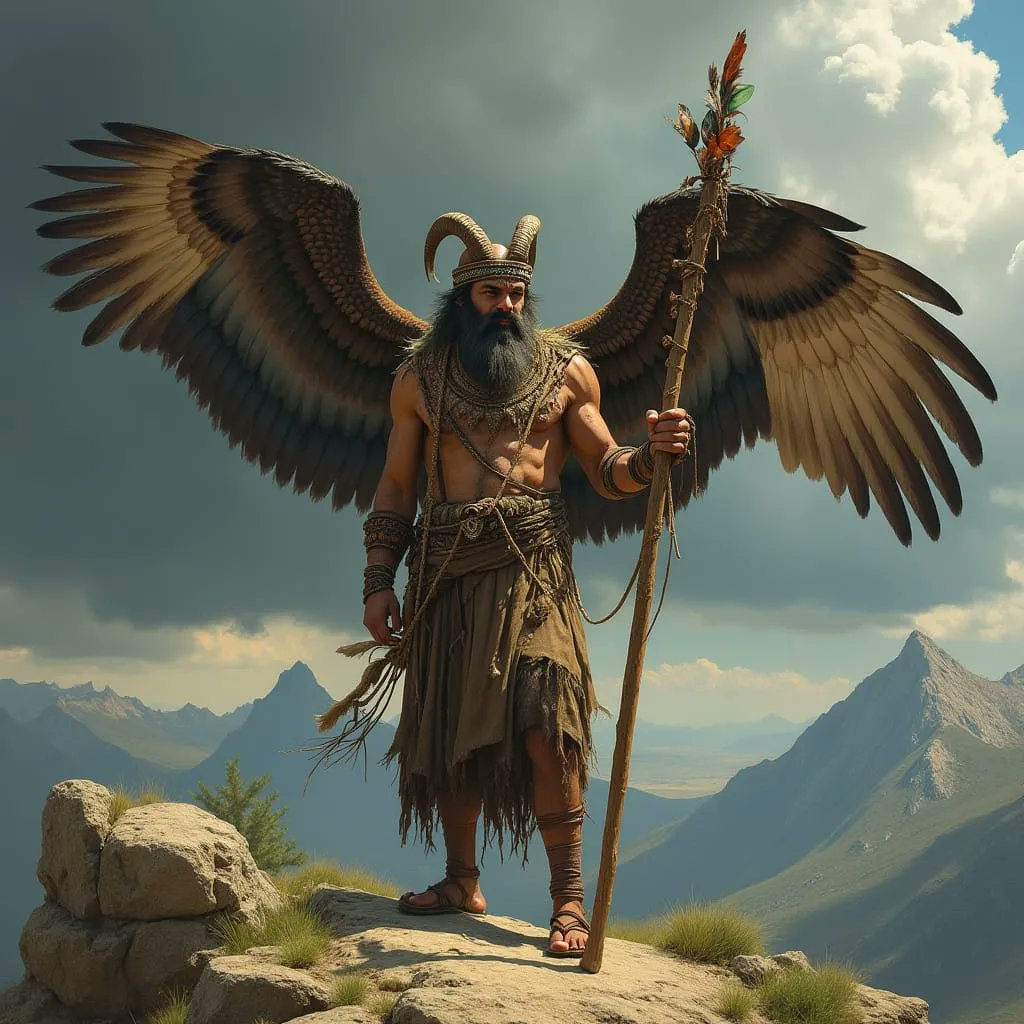
AI prompt: A prehistoric Iranian man, wearing griffin vulture wings on his back and a headdress with ibex horns, standing in a mountain landscape, under dark clouds, holding a long wooden staff.

You are probably all going WTF? 

Ever heard of Zawi Chemi Shanidar?

Zawi Chemi Shanidar was a small settlement located in the Northern Mesopotamia, dating to the late 10th or early 9th mill BC...

It was built and used by the people of the so called Karim Shahir Culture, named after the Karim Shahir archaeological site...

The people of this culture shared many cultural traits with the people of the Natufian culture...

The excavations of the site took place in the late 1950s and early 1960s. Sickles, grinding stones, and querns were found during the excavation testify to the wide use of wild cereals and possible early cereal domestication, basically agriculture...

There is also evidence that by the end of the Zawi Chemi Shanidar's occupation, the residents had domesticated sheep...Basically we are talking about the evidence of Hunter Gatherers evolving into Farmers...You can read more about Zawi Chemi Shanidar in "The Proto-Neolithic People of Zawi Chemi Village and Shanidar Cave in the Western Zagros Highlands"...

This is the area from where "Gods brought grain to Sumer". I talked about this in my post about the Sumerian legend "How grain came to Sumer", which turns out to describe exactly how grain came to Sumer from the north, and which have been over 6000 years old when it was first written down...

Anyway, this is not the most interesting thing about Zawi Chemi Shanidar. There is one discovery that makes this site stand out among other Fertile Crescent sites. During the excavations, a structure was found that appears to have been for religious purposes...

And we believe that this is indeed some kind of a temple, because next to it, archaeologists found a ritual deposit composed of at least 15 skulls of goats and the articulated wing bones of at least 17 huge predator birds, vultures, eagles and a bustard. You can read more about it in "Birds of prey in prehistory and early history"...

Knife marks on the bird bones indicate that they had been carefully cut from the birds. The archaeologists interpreted these wings as part of ritual costumes. The goat skulls were thought to be part of the paraphernalia of the ritual...

But what kind of ritual, no one knows...And so "A prehistoric Iranian man..." This is not just me dreaming up shit. 6000 years later, in the same part of the world, we find this: Proto-Elamite dude with Ibex goat horns cap, Vulture wings cape, and very schmancy shoes...

As I said in my article "Strider", to understand the real meaning of this Proto Elamite figurine, we need to look at the climate in Iran, and at the lifecycles of Ibex goats and Vultures...

The same thing will help us understand the strange find from Zawi Chemi Shanidar. So let's start with climate, which is pretty much the same in Iraq and Iran.


We can see that the climatic year is divided into two halves:

Hot, dry half, Apr/May - Oct/Nov

Cold, wet half, Oct/Nov - Apr/May

Now if you are a farmer in the part of Iraq and Iran which don't lie in the flood plains, then you are totally dependant on rain to water your fields, and the arrival of the rain in Oct/Nov is probably the most important event in your agricultural year.

This is because it is after the first rains that you can start sowing your grain...

And right at that time, in Oct/Nov, Ibex goats start mating...The mating is marked by vicious male goat fights for females...

Coincidence that a good hunter gatherer could't miss...

And as I said before: Mythology is a result of people being very good at noticing patterns in nature and very bad at distinguishing between correlation and causation.

How long do you think it took the first farmers to start believing that it was mating ibex that brought rain?

I first talked about this in my post "A vessel from Tepe Hissar", about this amazing Neolithic vessel from Tepe Hisar. Great example of related animal calendar markers used together. Mating Ibex (start of winter) followed by Mating Leopard (start of spring). Both winter and spring are rainy seasons...Semen turns to flowing water...

The rain (brought by the goat of rain) is what supports (the tree of) life in Iran, Iraq, Levant, Eastern Mediterranean, Central Asia...All the areas with the same climate...And the same ibex goat behaviour...

Which is why in all these places we find ibexes flanking the tree of life. I talked about this in my post "Bactrian Bronze Age menorah"...

Hence, I believe, all the goat heads found next to the Zawi Chemi Shanidar temple. And the goat horns headdress I proposed...

BTW the goat dude seems to have been a thing in the border area between Iraq and Iran for thousands of years.

2000 years before the Proto Elamite goat dude

"Master of Animals" stamp seals, Tepe Giyan, Iran, 5000-4000 BC...From my post "Master of Animals from Tepe Giyan"

Which depicts the eternal struggle between the rain goat (mating of goats marks the beginning of the rain season) and the sun serpent/dragon (mating of snakes marks the beginning of the drought season)...


2000 years after the Proto Elamite goat dude

Dancing goat men, 8th–7th century BC. Luristan, Iran...From my post "Dancing goat men from Luristan"...

Just for completeness, the Zawi Chemi Shanidar goat dudes could have held the goat head mounted on a staff, instead of wearing ibex horns on their headdress...

Or they could have both worn the ibex horns headdress and held ibex goat head mounted on a staff...

If you are interested, you can find pile of articles about ibex, the goat of rain, goat of winter, animal calendar marker for Oct/Nov-Jan/Feb in these articles from my blog...

Now what about the raptors?

All the raptors whose wings were found next to the Zawi Chemi Shanidar temple, are either resident species which mate during the winter/spring rain season or are migratory species which spend winter/spring rain season in the Zawi Chemi Shanidar area...

Bearded vulture, resident, mating during the winter

Griffon vulture, resident, mating during the winter

White tailed sea eagle, winter visitor

Great bustard, winter visitor

Unidentified small eagles??? Could be winter visitors as well...Like steppe eagle

How long do you think it took people from this part of the world to arrive to this: Sumerian god Ningirsu, the oldest thunder god we know by name (?), was in the earliest times imagined as a huge black bird, with outstretched wings...

I talked about this in my post "Eagle dance"...

Eagle dance:

Montenegro 1963AD

Syria, 1800BC

Eagle (vulture) couples dance above the mountains at the beginning of their mating season, which coincides with the beginning of the rain season in Fertile Crescent...

Did they already have this religious idea formed at the time when all those raptor wings were deposited with the goat heads next to the Zawi Chemi Shanidar temple?

I believe so...

BTW, just so we know that the eagle dude and the goat dude are one and the same dude...Thunder, Rain God...The Feathered one...The Winged one...The rain cloud...Bactrians actually spelled it for us in the 3rd millennium bc. Clouds...In a shape of a two headed eagle dude and his goat...

I talked about this in my post "Fluffy"...

Again, for completeness, maybe the the Zawi Chemi Shanidar goat dudes weren't actually goat dudes. Maybe they were eagle dudes, who held the ibex goats (heads or maybe whole goats) in their hands?

Like depicted on this end of 3rd beginning of 2nd millennium BC Bactrian seal showing an eagle dude holding "winged" ibex goats...

Or on this Kassite period (1595-1155 BC) seal depicting a "bird-demon" 🙂, holding two ibexes, by their hind legs. 

Found in Iraq, UChicago, A29439. The description reads: "Marduk, great lord, on the servant who reverences you show mercy."

What is really depicted here?

I talked about this seal in my post "Kassite bird demon"...

You can read more about vultures and eagles as animal calendar markers linked to rain and thunder in these posts from my blog...

Sooo....What do you think?

To read more about ancient animal and plant calendar markers, start here…Then check my twitter threads I still didn't convert to blog post...I am way way behind...