Showing posts with label Peacock mythology. Show all posts

Sunday, 21 September 2025

Peacock and cobra

Chaturbhuj Nala's rock art in Bhanpura, Madhya Pradesh. 

What we see is two peacocks attacking a snake. Peacocks are known to hunt and eat snakes and were kept in palaces for exactly that reason...I think that the dots depicted next to the snake are drops of snake's blood. But does this image have another, non obvious meaning. I think so. And I think that animal calendar markers can help us understand it...

Animal calendar markers are made by people who observed that certain annual animal behaviour, like mating, birthing, migrating, coincides with some climatic event like summer monsoon season...

In India, climatic year is divided into two halves, the wet half of the year, summer monsoon (Apr - Sep) and dry half of the year, winter monsoon (Oct - Mar)...

I talked about deification of the monsoon winds in India in my post "Surya's wives" in which I explained what this commonly depicted scene means. 

This very happy looking dude, with two gorgeous babes sitting on his laps, is no other than the Vedic Sun God Surya. He is positively "beaming" with pride...And I guess pretty glad to have few extra hands...But what is really the narrative here? Well sun and monsoon, dry and wet, of course...

And in my post "Vayu", about the "God of wind" whose name literally means air/wind. But not just any wind. Summer monsoon wind...

The peak monsoon rain season in India is Jun-Sep...

Interestingly, this is also the peak mating season of the peafowls. During this time peacocks engage in mad displays and fights and their mating call even sounds like Hindu for "Come rain!!!"...

Not something local people would easily miss...

Which is why peacock became deified animal calendar marker for summer monsoon rain season. I talked about this in my post "Come rain"...

Inevitable deification of peacock animal calendar marker, process we see everywhere with all animal calendar markers, produced in India these kind of legends: Peacocks originally had dull tail feathers...

But once Indra, the god of monsoon rain, battled the demon Ravana. Indra was losing the fight, and was running away from Ravana when he came across a peacock who spread its tail and hid Indra behind it...

In return from being saved by the peacock, Indra gave a boon to the peacock saying that just as he, Lord Indra is  Sahasraksha, or thousand-eyed, the peacock too shall get a plumage of a thousand iridescent eyes...

Oh, and since then Indra loves peacock so much, that it is believed that when Indra transforms himself into an animal, he becomes a peacock...

Indra is usually depicted riding on a cloud elephant (another deified animal calendar marker)...


Why? Indian elephants mate during Indian monsoon season...

This is another proof that Rig Vedas had to have been written in India proper, cause this link between rain gods and elephants makes no sense anywhere else...

I talk about elephant calendar marker in India in my posts "Musth", "Samantabhadra", "Modesty", "Ganesha"...

But Indra's main general, Kartikeya, rides on a peacock...I will talk about Kartikeya in a separate post soon...

Also, because this overlap between peafowl mating season and the monsoons season, Makara, the mount of the old monsoon god Varuna, but really a complex animal calendar marker for the monsoon season, sometimes has peacock tail...Talked about it in my posts "Makara", "Yakshi", "Maruts"...

But what about the snake?

Snake is a pure solar animal. It is in our world when sun is here (day, hot half of the year) and it is in the underworld when sun is there (night, cold half of the year)...


I talked about this in many of my posts listed here

I so far didn't write about snake animal calendar marker in Indian mythology, something which is way overdue. Will try to do this soo...I promise...

But what snake is depicted between the two peacocks on the Chaturghuj Nala's rocks? If I was a betting man, I would bet it is the Indian Cobra (Naja naja). 

Why? Because it has a mating season in India between April and July...During rain monsoon...

During this period, the female Indian Cobra lays eggs in holes in the ground and then guards them. The incubation period lasts for approximately 48 to 69 days, after which eggs hatch into young snakes that are independent from birth and capable of hunting and delivering venom...

Again, all the things not easily missed by the local population...

So, during the monsoon season, both peacock and cobra have their mating seasons and are because of that both animal calendar markers for the monsoon season...

In the Arthashastra, an Ancient Indian Sanskrit treatise on statecraft, politics, economic policy and military strategy, when the author wants to talk about two natural enemies forgetting their ancient hostility in the face of a common calamity, he says:

The peacock and the cobra are natural enemies. But during the heat of the summer, the cobra lives in the shade of the peacock’s wing...

I believe that this is both political and calendaric allegory...

And so back to the original depictions of peacocks attacking a cobra from the Chaturghuj Nala's rock art. What I think is depicted here is triumph of summer monsoon (peacock) over sun (snake), where the drops of snake's blood represent rain...


That's it. To read more about ancient animal and plant calendar markers, start here…Then check my twitter threads I still didn't convert to blog post...I am way way behind...

Come rain

Male peafowls defend their territory from rival males during the mating season. 

Peafowl mating season peaks between Jun and Aug, the monsoon season. Hence peacock as an animal calendar marker for the monsoon season...

It is during the mating season that peacocks (male peafowl) dance (parade around with their tails spread) showing off in front of the females...

Peacock pics are from the article "All About The Indian Peafowl".

Which is why in Ritusamhara we read that:

"For this bird, the rainy season serves as a period of jubilant activity, when it extends its tail (feathers) and indulges in the dance. The rains serve as an inducement to this bird for indulging in its exalted dance..."

"The beauty of mountains streaked everywhere with waterfalls, while their high rocks were kissed by the stooping clouds, and their sides presented a gorgeous chaos of peacocks."

oldeuropeanculture

The author of the Mayoora Doota exclaims:

"When the showers rain, you dance with delight. Even the gods take pleasure in observing your dance without twinkling their eyelids..."

Even the peacock mating call sounds like Hindu for "Come rain!!!"...

Because this overlap between peafowl mating season and the monsoons season, Makara, the mount of the old monsoon god Varuna, but really a complex animal calendar marker for the monsoon season, sometimes has peacock tail...Talked about it in my post "Makara"...

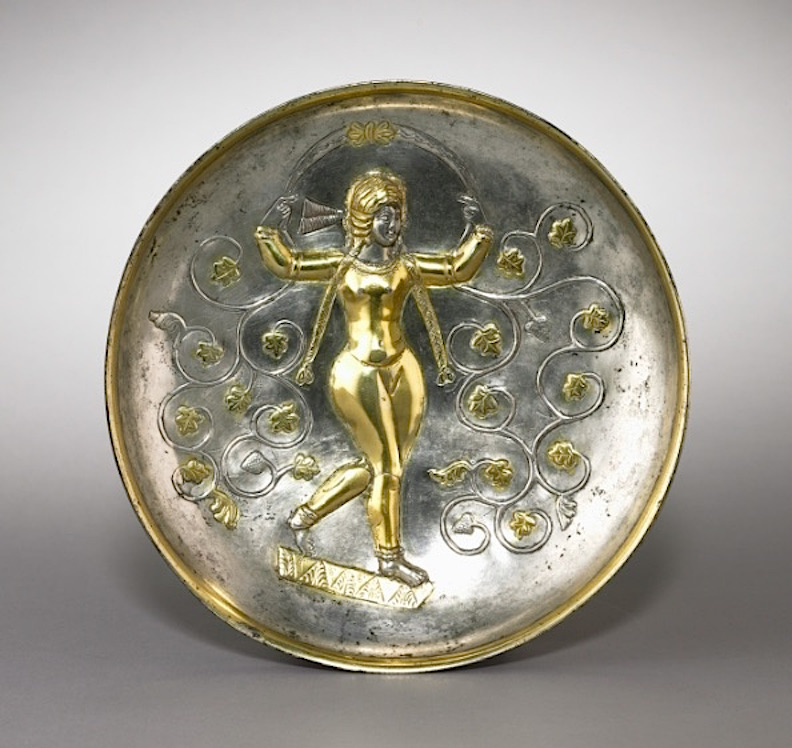
Peacocks as animal calendar marker are also present in Iran. A Sassanian dish, 400-600AD, Iran, Currently in Al Thani collection...I talk about it in my post "Rainbows and peacocks" about rain, rainbows and peacocks and the goddess Anahita, Zoroastrian goddess of water and fertility...

Peafowl mating season is Mar-Sep with peak Jun-Aug...Look at the snowmelt diagram for Iranian rivers...Hence the link between Anahita and peacocks...

Just like in India the monsoon rain and floods bring rebirth of nature, in Iran spring rain and floods bring rebirth of nature.

Both are linked to mating (dancing and fighting) peacocks...

Ever wondered why two peacocks drinking water surrounded with greenery are Christian symbol of resurrection, rebirth? 🙂


PS: Peacock, symbol of the resurrection of Christ makes a lot more sense if...

If Christ is life, living nature, then his immaculate conception and virgin birth become easy to understand...From my post "Living nature" about the nature of Christ...

That's it. To read more about ancient animal and plant calendar markers, start here…Then check my twitter threads I still didn't convert to blog post...I am way way behind...

Sunday, 8 December 2024

Rainbows and peacocks

A Sassanian dish, 400-600AD, Iran, Currently in Al Thani collection...

What is exactly depicted here? Some would say just an exotic dancer. I think that this is a depiction of the goddess Anahita, Zoroastrian goddess of water and fertility...

I already talked about Anahita in my post "Anahita" about this Sassanian dish, which again depicts her "holding a scarf above her head"...

In that article, I proposed that the scarf is symbolic depiction of a rainbow. 

Rainbow which is in Iran only seen during the rain season, which in most of Iran is Oct/Nov - Apr/May...


I also proposed that this is the tree of life that is depicted growing out of her scarf (rainbow) because it is the rainbow creating rain that is the source of life in Iran...

I then backed my claim by this other Sassanian dish which depicts the same tree of life, this time without Anahita as it's source, but instead flanked by two ibex goats, the goats of rain...

Ibex goats are animal calendar marker for the Oct/Nov, the beginning of the rain season in Iran, because Oct/Nov is when ibex goats start mating in Iran, mating which is characterised by vicious male goat fights...

I talked about symbolism of ibex goats in many of my posts, like 

Europe:

"Pitys", "Goat in European culture", "Patera of Rennes"... 

Levant:

"The tree of life/light", "Lachish animal calendar"...

Mesopotamia:

"Feast plaque from Louvre", "Green pastures", "Problems with Abzu", "Relief from Dur Sharrukin", "Goatfish"...

Iran: 

"Flamingos from Susa", "Goat carrier", "Iranian goat of rain", "Strider", "A vessel from Tepe Hissar"...

Above the goats, we can see some birds: 

Male and female peafowl

Male and female pheasants 

Why?

Well because both of these bird species start their mating season in Mar/Apr...

And this is important why?

Well, because all that rain (and snow) that falls during the cool wet season cause the water flow of the rivers in Iran to suddenly start increasing in Mar/Apr which leads to the floods in Apr/May/Jun...

Flow chart for the Zayandehrud River that flows through Isfahan. It suddenly increases in Mar/Apr. 

And here is Aries Ram, with blue (water) horns, lying in water...Describing exactly what is happening in Mar/Apr...In Aries...

Talked about it in my post "Sagittarius from Isfahan", about an amazing 14th c. Isfahan zodiac... 

Floods that Anahita as the goddess of water was also linked to...

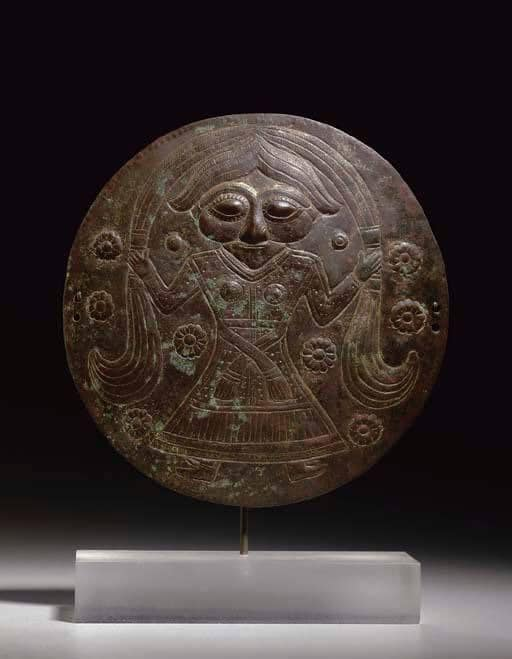
We find Anahita with rainbow in Iron Age Iran...Bronze disc from Luristan, Western Iran. 8th century BC depicting a goddess holding a scarf (rainbow) above here head...

And in Bronze Age Iran...Chlorite carved flask, Jiroft culture, Western Iran, 3rd millennium BC depicting a goddess holding a rainbow above here head...

I talked about this in my post "Jiroft flood vase"...

Here is the whole flood vase design:

Bronze Age Anahita? Goddess of water? Standing on bulls...

In Taurus? Apr/May? The time of the annual flood? It seems like this is what is depicted here, considering that the goddess is holding a water scarf (rainbow) and the same water is depicted flowing out of bulls heads...

I talked about the link between bulls and annual flood in Iranian art in my post "Dedicated to Inshushinak", about this 3200 years old Elamite ceremonial silver pouring vessel with handle and double spout in the form of two bulls...

So peacocks and pheasants start mating right at the time when the water levels in Iranian rivers start to rise...

This is why, on our original Al Thani dish, Anahita is holding a scarf with the peacock feathers "eyes" designs above her head, and is flanked by two peacocks...

BTW, in India, where peacocks come from, they breed during the monsoon season, and are believed to "call the rain to come"...

I talked about this in my post "Makara", about the mount of the old monsoon god Varuna, who was mainly just imagined as a crocodile, but was sometimes imagined as a complex "creature" (animal calendar marker), with a peacock tail...

BTW, do you see the star and the moon next to the Bronze Age Anahita? 

That's symbol of Sirius..The original star of Inanna/Ishtar, before Venus took over...

I talked about this takeover in my post "Sirius the mother of Venus"... 

I explained why, based on Sumerian Inanna mythology, only Sirius could have been the original star of Inanna/Ishtar in my posts: "Inanna and Sukaletuda", "The brightest star"...

The brightest star which is visible in winter sky over Iran together with the winter moon...

I talked about the winter wet moon in my post "Moon god Nana/Sin"...

Sirius disappears from the night sky in Apr/May...The time of the fertility bringing annual flood...The emptying of the winter moon...Which is why we find this symbol right next to Bronze Age Anahita holding a rainbow...And which is why in the Sumerian epic "Inana and Å ukaletuda" we read that Inana "stretched herself like a rainbow across the sky, and reached thereby as far as the earth"...

Cause Bronze Age Anahita was the same goddess as Bronze age Inanna/Ishtar...

It seems that I am not the only one linking Inanna/Ishtar with Anahita. I recently came across this article which actually explores the possibility that Anahita could actually be Inanna/Ishtar in disguise...

To read more about ancient animal and plant calendar markers, start here…Then check my twitter threads I still didn't convert to blog post...I am way way behind...