Showing posts with label Native American mythology. Show all posts

Tuesday, 21 April 2026

Bison man

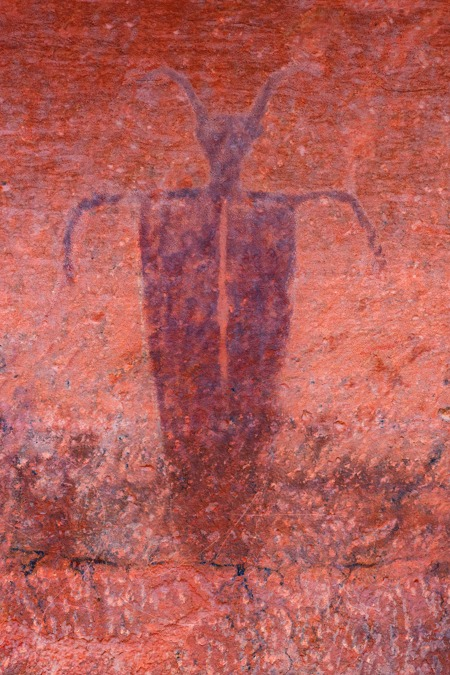
An amazing pic by Mike Wilson of an amazing petroglyph from Utah, SW USA, depicting what???

Well, I think these are SW Monsoon "rain bombs"...

Which are symbolically depicted like this: A "mysterious" creature depicted on the rocks of North Eastern Arizona. Holbrook area. Pic by Mike Davenport...You can read more about this in my post "Rain cloud", in which I talk about rain bombs...And how (why) they look like corn knobs... 

The rain bomb dude is accompanied by a big horn sheep...Why? Well cause the rain bombs fall from the sky during the SW monsoon season, which overlaps with the big horn sheep mating season...I talked about this in my post "Alosaka", where I also talk about Alósaka/Muyingwa, two aspects of The Corn God of the Hopi pantheon: The God of Germination and The God of Growth (of corn). And why he has big horn sheep horns...

Here is another great pic, this time by Randy Langstraat, of another one of the rain bomb dudes and his pet horned snake with hands, spewing water...Why horned snake spewing water?


Well the horns are the horns of the big horn sheep, which is an animal calendar marker of the SW monsoon season...But why snake? Cause the SW monsoon season is also the time when snakes are most active...I talk about this in my post "Horned serpent"...

The SW monsoon season is also the time when rattle snakes dance...

Which is what snake dancers imitate...


In order to bring rain...

I talked about this in my post "Snake dance"...

Ok so we can explain everyone on the original pic, except this dude? Who is this dude? Who (what) does he represent?

His horns don't look like big horned sheep horns


or pronghorn antelope horns (equivalent animal calendar marker). 

Both are found in SW Indian rain related mythology and petroglyphs cause they mate during the SW monsoon season, Jul-Sep...

There is another animal, which originally lived from Canada to Mexico...American bison

Check the horns and tail. And guess what: Male and female herds usually do not mingle until the breeding season, which can occur from July through September...

Which is when the snake dance and the rain bombs freak the shit out of the local SW USA Indian corn farmers...Enough for them to deify them...

So I think we have just, by chance, discovered another animal calendar marker...

That's it. To read more about ancient animal and plant calendar markers, start here…Then check my twitter threads I still didn't convert to blog post...I am way way behind...

Saturday, 11 March 2023

Rain cloud

A "mysterious" creature depicted on the rocks of North Eastern Arizona.  Holbrook area. Pic by Mike Davenport...

Mysterious...Not really...It's our old friend, the Big Horned God of Rain and Grain, with his holy animal, the Big Horn Sheep...

I wrote about this god in my post "Alosaka"...

He is basically a deified Desert Big Horn sheep, an animal calendar marker, marking the mating season of these wild sheep (Jul-Oct), which coincides with the Southwestern Monsoon season...


This is climate chart for Arizona...That spike you see in Jul/Aug/Sep is the monsoon...Only the most important annual event, the one that makes grain (maize) agriculture (and life) possible in Arizona...

So that explains the god's horns and the sheep. But what about the polkadots "dress" the god I wearing? Is this just fashion statement, or is this a symbol as well?

Now this dude is the god of grain, maize to be more precise. If you wanted to symbolically depict that, you could depict the god's body as a maize ear... Polkadots being maize seeds...


This dude is also s god of rain...And a common way of depicting rain is a rain drops, coming out of a rain cloud... Polkadots being raindrops...

The monsoon in Arizona is characterized by localised heavy downpours, called "micro bursts" or "rain bombs", and which have exactly the shape of the "polkadots dress"...

Which is why rocks in the South West of the USA are covered with mysterious legless creatures, which are linked with Big Horned sheep, or Horned snakes...

I talked about these dudes in my post "Horned serpent"...

So if you wanted to depict a "rain and grain" god, a "polkadots", maize ear/rain downpour shaped "dress" is a perfect symbolic choice. I think...

Here is another deified rain bomb cloud with bighorn sheep hornsAn amazing petroglyph from Utah, USA. Pic by Wayne David. 


To read more about ancient animal and plant calendar markers, start here…then check the rest of the blog posts related to animal calendar markers I still didn't add to this page, and finally check my twitter threads I still didn't convert to blog post...I am 9 months behind now...

Tuesday, 7 March 2023

Horned serpent

Horned Serpent petroglyph, Barrier Canyon, Utah, USA...Pic by Brian C. Lee.

When I first saw this image, I thought that this could be a depiction of an actual horned snake. The only horned snake that lives in Southwestern USA is American horned rattlesnake (Crotalus cerastes).

But it is images like this, of a horned humanoid figure standing over a snake with no horns that made me believe that the horned serpent depicted on the ancient American petroglyphs is not a depictions of a horned rattlesnake, but something else entirely. Pic by "Nine Mile the Third".

In this article I will explain why "mythological" horned serpents of the Indian tribes of the South West of the USA isn't mythological at all. It is actually real...complex animal calendar marker. 

The horned serpent is an animal hybrid

with a body of a rattle snake

and horns of the desert big horn sheep

So what's it all about? Well let's first have a look at the mythology of the horned serpent.

The horned serpent is believed to be the guardian of water and is associated with rain, thunder and lightning. Its wavy curves symbolise flowing water...and its depictions are most often found on river canyon walls...Pic by "Nine Mile the Third"

Sooo...Rattle snake-Big Horn sheep hybrid guarding water...Why? What does it mean? Well to understand this, we need to have a look at the climate in the Southwest of the USA and the annual lifecycle of Rattlesnakes and Big Horn sheep...

This is climate chart for Arizona...

That spike you see in Jul/Aug/Sep is the monsoon...Only the most important annual event, the one that makes corn agriculture (and life) possible in Arizona...And the rest of the Southwest...

In my post "Alosaka" about the Hopi Indian "god of agriculture and rain", I explained that he had Big Horn Sheep horns because the mating season of these wild sheep, characterised by violent ram fights, coincides with the Southwestern Monsoon season...

And so the Big Horn sheep became animal calendar marker for the Southwestern Monsoon season: 

When are the rains going to arrive father?

When Big Horn sheep start banging their heads my son...Now shut up and go to sleep...🙂

Eventually this animal calendar marker became deified...And we ended up with the Rain god with Big Horn sheep horns...To whom people could pray for rain...It's kind of hard to pray to a sheep...

So this solves the horn part of the horned snake, mythological being associated with rain, thunder and lightning, the protecter of flowing water...BTW, a lot of the canyons where horned snake petroglyphs were found are dry, except during monsoon season...So let's have a look at the reproduction lifecycle of Rattlesnakes...Cause animal calendar markers most often mark mating and birthing period of the depicted animal...

In the Southwest of the USA, Rattlesnakes are active between Mar/Apr and Oct/Nov.

But they are most active during the monsoon season (Jul/Aug/Sep). In just a few short months, they need to shed their skin (at least once), give birth, find mates, mate...

Which makes Jul/Aug/Sep the most likely time to be bitten by a rattlesnake...

I don't think that this would have gone unnoticed by the local hunters/gatherers/corn farmers...

Soooo...The monsoon thunderstorms arrive when Big Horn sheep and Rattlesnakes start mating/giving birth. What do you think? Is this why in Southwestern USA we find "horned serpent" as the guardian of water associated with rain, thunder and lightning? 

I think so...

BTW, the horned snake from the original tweet is just a part of a larger petroglyph panel, depicting a the "spirit" (???) with horned snake (guardian, bringer of water) on one side and the sun on the other. As opposing forces??? Or just to emphasise that the wettest part of the year in in Southwestern USA is also the hottest time of the year??? Pic by Randy Langstraat.

This petroglyph is one of many made during the archaic period (6000 BC - 100 BC)...Here is another one from that period. I love the horned snake with hands spewing water (rain)...Oh, and there is another "spirit" (???) there too...Pic by Randy Langstraat.

Apparently no one knows what these "ghost" like creatures with "tails" could be...Well, the monsoon rain storms, which arrive with the "horned snake", look like this...Hmmm..."ghost" like creatures with "tails"???

Maybe this petroglyph panel, also from the archaic period (from Thompson, Utah) depicts just such rainstorm? Compare this image to the above pic of monsoon clouds spewing water onto the dry ground...Pic by Calvin J. Hamilton.

In the middle of this panel is this horned dude, with what look like Big Horn sheep horns. Just like our Hopi friend Alósaka, the Big Horn sheep god of grain and rain, whom I mentioned earlier...

The Utah horned dude also has no legs, and looks like one of those monsoon downpours...Which apparently have a name: microbursts...or...rain bombs...Like this spectacular one...

Downpours which create flush floods and fill the rivers with water...Like this flush flood in White Canyon, Utah. And he has what looks like flowing water pouring out of his shoulders...Hmmm...

And next to the horned rain cloud dude is a horned snake...The guardian (bringer) of rain...Which arrives in Jul/Aug...In the 7th moon after winter solstice...Keep this in mind...Now look at this petroglyph...A horned snake with 6 horns and a rattle...Pic by Michael Fuller.

Apparently, no one knows what this means...Maybe each horned snake represents on moon and the rattle means thunder...And this all together means "the horned snake brings rains after 6 moons counting from the winter solstice"??? What do you think? Makes sense?

Monsoon rains which are brought by the horned snake in Jul/Aug, end the drought, caused by the summer sun in May/Jun. Look at this: petroglyph at Los Lunas site, depicting shielded warrior (with sun shield) engaged in combat with horned serpent...Pic by W. C. "Bill" Porter.

Oh BTW, in case you wander if this horned snake has Big Horn sheep horns, it does. Just reversed for some reason. This article shows all different ways Big Horn sheep were depicted, on Southwestern petroglyphs. 

Normal horns example

Reversed horns example 

Pic by Maarten van Hoek.

I could go on and on, but I think this is enough for everyone to get the point...What we are looking at are complex animal calendar markers for Monsoon season in the Southwest...

Animal calendar markers which were developed by the "archaic people", nomads, who lived from hunting large and small game animals, and collecting and processing wild plants...

They occupied the Southwest of the USA from approximately 8,000 years ago until the introduction of corn agriculture about 2,000 years ago...The earliest examples of their art appear in Utah, in and around the Canyonlands National Park...

BTW this is climate graph from the area of Utah where these cloud dudes with horned snakes first appeared. The precipitation peak starts Jun/Jul, peaks in Aug, and ends in Sep/Oct...From "Climate of the Central Colorado Plateau, Utah and Arizona: Characterization and Recent Trends"

Interestingly, the corn farmers continued using the same animal calendar markers...What does this tell us about cultural continuity in the area? I think a lot...

These animal calendar markers were developed locally, in the area, and were used by local people, hunter/gatherers who later became farmers. They were not imported from any other part of the world where we find animal calendar markers. And I found them everywhere I looked so far. 

Like everywhere else, these animal calendar markers are an inevitable product of the process in which hunter gatherers turn into farmers...

Hunter gatherers knew everything about plants and animals...And if those animals do the same thing every year, at the same time, then you can use them as calendar markers...

As agriculture become more and more important, and people start depending on it more and more, the animals related to the most important annual agricultural events (like monsoon rains) become more and more important. To the point where they become deified...

And turned into gods...As I said, you kind of look stupid praying to a Big Horn sheep for rain...So you pray to a God of rain with Big Horn sheep horns...Makes much more sense...

And this seems to have happened everywhere...And I believe totally independently...It's just the way we are...

Anyway, I hope you enjoyed reading this article. I did certainly enjoyed researching it and writing it...

To read more about ancient animal and plant calendar markers, start here…then check the rest of the blog posts related to animal calendar markers I still didn't add to this page, and finally check my twitter threads I still didn't convert to blog post...I am 9 months behind now...

Friday, 14 October 2022

Mishipeshu

Ojibwe pictograph of a "Mishipeshu" (mishibizhiw) as well as two giant serpents and a canoe, Lake Superior, Ontario, Canada. Pic by D. Gordon E. Robertson.
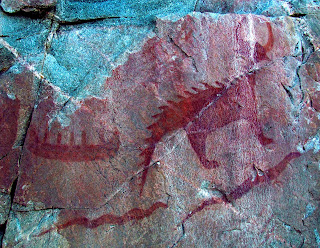
I just discovered this mythical creature. I can bet it is a complex animal calendar marker. Let's check (realtime research log🙂)

Mishibizhiw (Mishipeshu) translates into "the Great Lynx". It has the head and paws of a giant cat, bison horns and snake tail and is covered in scales and has dagger-like spikes running along its back and tail...

Great Lakes tribes believed that this creature lived in the deepest parts of lakes and rivers. It had power to create storms. It often needed to be placated for safe passage across a lake...

Mishipeshu guarded the vast amounts of copper in Lake Superior and the Great Lakes Region...Copper was kept in medicine bags because it was believed to be "hair from the mishibizhiw"...

Sooooo.....What do you think? Complex animal calendar marker?

Definitely. Check this out:

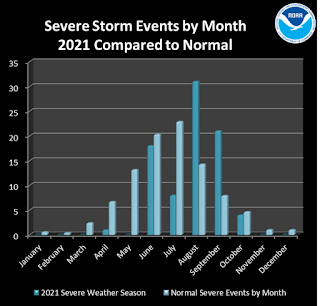
Typically, storms season starts in late Mar/Apr, peaks in July/Aug, and runs through early Sep/Oct due to warmer weather increasing moisture and humidity in the air. That can mean severe thunderstorms and strong winds...Storm chart for Michigan...
This was also the season when local Indian population came to the lakes to mine copper...Typical copper ingot from the area...
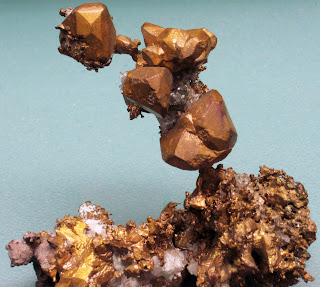
Now our "mythical beast" caused storms and guarded copper...So if this was really a complex animal calendar marker, it must be a calendar marker for the storm/copper mining season, Mar/Apr-Jul/Aug-Sep/Oct...

As we all know 🙂, animal calendar markers mark significant events from the annual reproduction cycle of the depicted animal: mating, birthing...

Our mythical beast consist of: 

Head: Lynx, Bison

Body: Lynx, Something scaly with sharp spines

Tail: Snake

So let's check them out...

In the Great Lakes area, Lynx mating occurs from Feb to May...Peaking in...Mar/Apr...

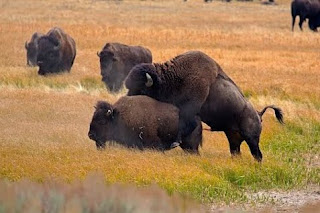
In the Great Lakes area, Bison rut starts in Jun and ends in Sep, with most of the activity occurring in...Jul/Aug...
What about "Something scaly with sharp spines"??? Considering that our "Mythical creature" lived in lakes and rivers, I would look for our scaly and spiny friend in there. This is Lake Sturgeon. It spawns on clean, gravel shoals and stream rapids in...Apr/May...

So that's head and body done...What about long snake like tail and all the snakes that usually accompany our "Mythical creature"? Well let's have a look at snakes from the Great Lakes area...Logical??? 🙂 

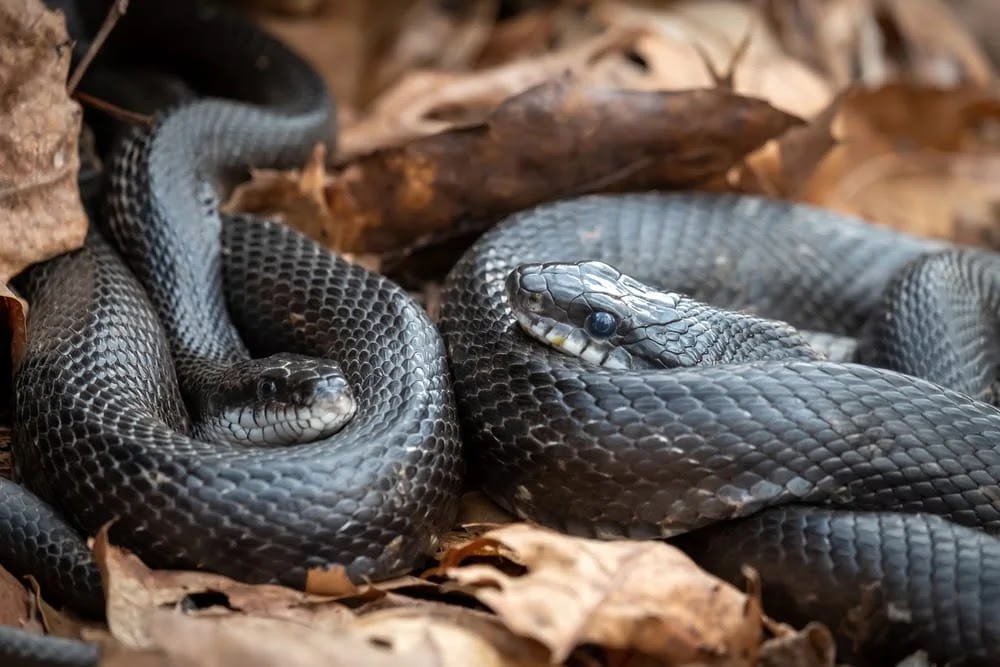
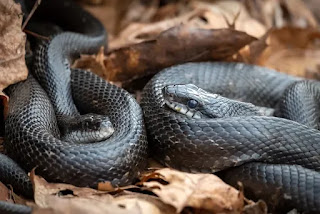
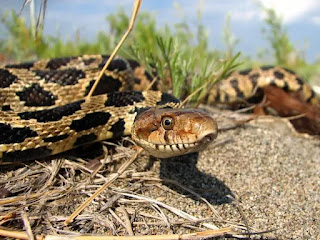
These are 4 biggest snakes from the Great Lakes area and their mating seasons:

Eastern Massasauga Rattlesnake - Jul/Aug/Sep
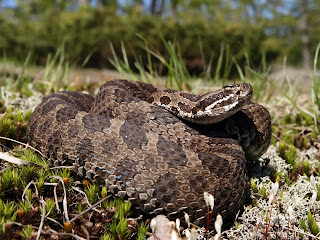
Gray Rat Snake - May/Jun
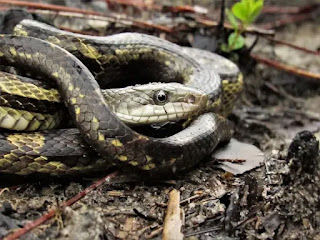
Black Rat Snake - Apr/May/Jun
Eastern Fox Snake - Jun/Jul/Aug
Sooooo....Just as I thought:

Mishibizhiw (Mishipeshu) Lynx (Mar/Apr), Sturgeon (Apr/May), Bison (Jun/Jul/Sep), Snakes (Apr/May/Jun/Jul/Aug/Sep)...

Causes storms (Apr/May/Jun/Jul/Aug/Sep)

Protects copper (Apr/May/Jun/Jul/Aug/Sep)

I won the bet 🙂 Not that I ever doubted I would

So what do you think? It took, what, an hour? And no one before me thought to do this?

PS: Last night I sent an email with the link to this article to an Archaeology and Anthropology Professor who worked extensively in the Great Lakes area (will not name him until I get his permission to do so) asking him for an opinion. This is our little conversation from this morning:

His email:

HI @serbiaireland,

These kinds of speculations are always interesting.  So let me offer a couple of counter points.

Storms on the lakes:  I am not sure what your NOAA chart is monitoring but having spent many years working on and under the Great Lakes, as a fisherman, vessel captain, and diver, the chart is almost the opposite of my experience.  May (April if there is an early thaw) June and into July are the calmest and least unpredictable months on the Lakes, as you move into August, September and October, the weather gets progressively more severe and less predictable, then you arrive at the fames 'Gales of November' which is the month responsible for the majority of historic (and modern) Great Lakes wrecks.  In the calculation of a Native mariner, just as for sailing captains,  the later into the season the more risky the journey. Now it's true that storms can appear with great suddenness anytime of the year, but if I were linking a storm maker beneath the lakes to a time of year, it would be cold and blustery November and not sunny May.

Bison are not common in the Great Lakes region, although forest bison were known, and Great Lakes Natives actively interacted with bison hunters further west on the Plains.

Sturgeon are not typical scaly fish (maybe better to look at Northern Pike or Muskies).  Sturgeons do have these very odd scutes which are hard cartilage triangular elements that form a kind of raised spine on the back and along the sides.

Best,

...

My reply:

Hi ...

Thank you very much for your quick response. And especially for your counter points. While I was writing my article, I was puzzled by several things. 

The local tribes prayed for safe passage across the lakes to Mishipeshu. He was seen mostly as benevolent and only sometimes malevolent. And Mishipeshu was "in opposition with the thunderbird"...So I expected Mishipeshu to be the marker for the calm weather with occasional storms...

Yet the storm charts are showing the period of the year marked by Mishipeshu, which you would expect to be the only navigable time of the year on the lakes, as being the main storm season. You also have things like:

"Typically, storms season starts in late March, peaks in July, and runs through early September due to warmer weather increasing moisture and humidity in the air. That can mean severe thunderstorms, strong winds, and downed power lines that can lead to outages for Michigan homes and businesses". From this page

Could the charts from the net be showing the tornado season in Michigan and not storm season on the lakes? 

Anyway I am really glad that you can actually confirm that the period marked by Mishipeshu is actually calm without storms...So this actually fits the calendar interpretation even more...

As for the sturgeon, I think that sturgeon is definitely part of this calendar, because of the spines. As for the "scales", as you pointed yourself, I was thinking about the bone plates that this armoured fish has under its skin...

But it is entirely possible that some other fish is also part of this "mythical being"...As a fisherman with local experience, if you were a local native, what fish would you be fishing, during the Mishipeshu period? I can see that salmon runs up rivers from the lakes in Aug/Sep/Oct, at the end of this period...So we have sturgeon spawning at the beginning and salmon spawning at the end of Mishipeshu period...Maybe that is the missing scaly bit? What do you think? 

BTW, I am not just playing a guessing game. I have been testing the animal and plant calendar markers theory for 3 years now against complex (animal and plant lifecycle)-(climate)-(agriculture) mythological constructs from around the world, most of them without any explanation whatsoever, and it seems that wherever we look we find deification of the early calendars...I don't expect you to, but if you have time that you can waste, check my blog for many many more examples...If you are only interested in the Native American mythology, I wrote few articles about South Western tribes and their mythology and petroglyphs, which you might find interesting...They are all also just deified natural calendars...

I can only explain this by this creation of natural calendars being something inherent to human race...The same idea everyone had...To me this is pretty obvious idea...If you live in nature, you notice patterns, overlaps between animal, plant behaviour and climate, and you use these patterns to create calendars...That's all...

Anyway, I am so happy that you have replied to my out of nowhere email, and I want to thank you for your info. I wish you calm waters and great fishing and all the best in life... 

...

Will add here the continuation of this conversation if it happens...

It didn't happen...Of course...But this happened on twitter:

Dr Alicia Colson @colson_alicia

I'd suggest checking out: 

Twance, Melissa (2017) ““It Was Your Ancestors That Put Them There and They Put Them There for You”: Exploring Indigenous Connections to Mazinaabikiniganan as Land-Based Education. M.Ed., Lakehead University.

And two by her from 2019: 

Learning from Land & Water: Exploring Mazinaabikiniganan as Indigenous Epistemology. Environmental Education Research 25(9):1319–1333, & Pictographs & Indigenous Presence in Northwestern Ontario. Voices of Mexico: First Cultures 109: Our Voice: 19–21.

My reply after reading the papers:

Really like this. "The knowledge encoded in these petroglyphs is land base, local"...This is exactly how animal and plant calendar markers work. They describe local conditions, local climate, local terrain...The symbolic language is universal but the stories encoded are local...

And then: "Water as traditional territory. Perhaps most surprising, fishing was a strong theme that occurred in every conversation. Conversations emphasized the importance of fishing to the history and livelihood of the community..."

"...These conversations also describe the relationship the community has with Lake Superior, the amount of knowledge necessary to navigate the water and to harvest fish, and the importance of intergenerational knowledge..."

"...Taken together, these findings indicate that Batchewana First Nation’s traditional territory includes a large portion of Lake Superior wherein specific knowledge is needed to sustain their livelihood."

This exactly what I proposed is the meaning of Mishipeshu calendar marker

And then we come to the part about Mizhibizhiw and we realise that current descendants of the people who originally created this rock art "to teach their ancestors" have forgotten the original meaning of these petroglyphs...

All the local informants always added a disclaimer to the information they provided to the researcher: “This is my understanding” or “This is what I was told” or “That’s what this means to me.”

Meaning the knowledge was lost as time passed...

Which is why the author of this study, Mellisa Twance says: It is important, then, to realize that no definitive interpretation is being offered in this thesis as the ‘correct’ one...

She then says that: Rather, it is my intent to show that mazinaabikiniganan (indigenous rock art) can be interpreted in a multitude of ways and that each person creates their own meanings and understandings...

This is attitude that I find in all the papers about old artefacts, legends and rituals, which I just can't accept. And which, I think, we don't have to accept any more...Now that we can read these crazy images that no one really understands, in the same way, always...

Dr Alicia Colson @colson_alicia

Firstly, these images are not "crazy". Secondly, they were not made by people who shared your worldview which doesn't justify your statement.

My reply:

🙂 I was joking when I said crazy...They are as crazy as Chimera, or Gorgon, or Mushushu, or Hathor...Meaning they look strange to us at the moment as we have forgotten their original meanings...This has nothing to do with my worldview...

To read more about ancient animal and plant calendar markers, start here…then check the rest of the blog posts related to animal calendar markers I still didn't add to this page, and finally check my twitter threads I still didn't convert to blog post...I am 9 months behind now...