Showing posts with label Adad. Show all posts

Tuesday, 29 July 2025

Mamaragan

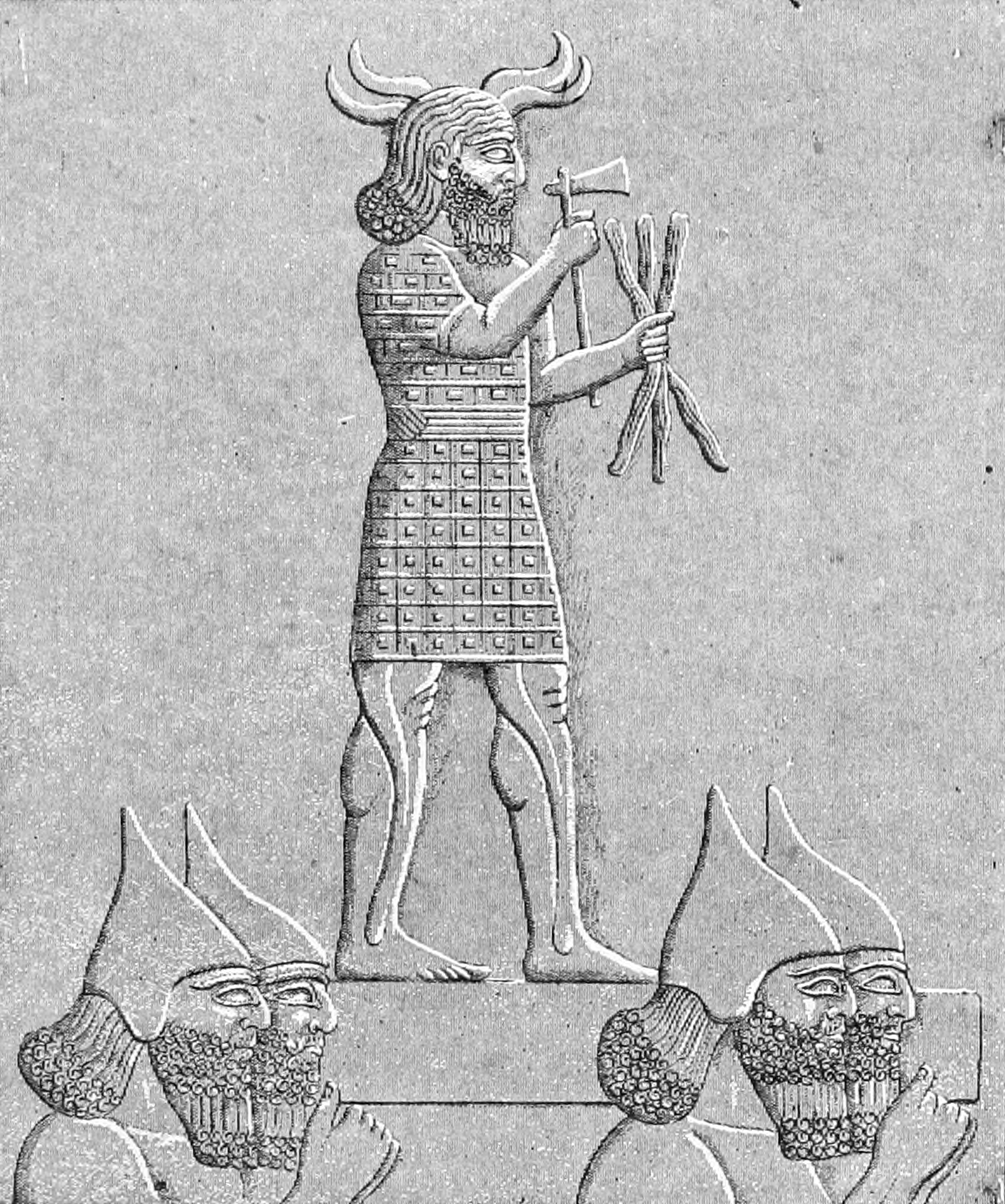
Adad, Mesopotamian storm god, holding an axe and lightning bolt...How old is this association between storm (thunder) gods an (stone) axes? How about at least 40,000 years?

I tried to explain the association between thunder gods and (stone) axes in my post "Jack and the magic beans"..

In which I proposed that some of our myths about sky gods are in fact very very old scientific theories which tried to explain the available observed phenomena in the best possible way with the knowledge of the universe people possessed at that time...Like if giant stones are falling from the sky, there must be a giant (sky god) throwing them from up there on our heads...

These stones that fall from the sky then became "thunder bolts" and "thunder stones" and "petrified lightnings". 

At the end of my post "Kataibates", about stone thunder axes from European folklore tradition, I asked how old this tradition could be...

I suggested that this link between a stone, more specifically flint axes, and thunder gods, already existed in the 4th millennium BC Europe...I explained why I thought so in my post "Sun stones" in which I talked about exploding flint axes...

But then I saw this picture of Namarrkon/Mamaragan, the storm "god" from Aboriginal mythology from Western Arnhem Land in northern territories. He lives high in the sky, rides storm clouds and makes thunders by striking the clouds with stone axes fixed to his head, elbows, and knees...

He also "soaks up the sun's rays and turns them into lightning"...In monsoon regions of the world, the end of the dry season is marked by spectacular electric storms which announce the arrival of the rains...

Also in Northern Australia, the hottest time of the year is also the rainiest time of the year...

So sun's heat is obviously and literally turned into lightning...

BTW, remember this?

"Because it is a great secret how come Svarog (hevenly and earthly fire) is at the same time Perun (thunder and lightning) and Svetovid (Sun)." Modern science explains the link between solar energy, lightning and fire...I talked about this in my post "Sun thunder fire"...

Now, Aboriginals arrived to Australia about 40,000 years ago...Which could mean that the link between thunder gods and stone axes, is more than 40,000 years old??? If we assume common root of the myth...

I already wrote about the age of (some) Aboriginal myths in my post "Dream time" and "Yeti revisited". Some Australian Aboriginal "dreamtime" stories, passed orally from generation to generation, could, according to latest scientific data, actually be over 40,000 years old...

Or, maybe, again, everyone ended up with the same explanation for the same observed phenomena...

Tuesday, 14 September 2021

Lions vs buffalos


"This cylinder seal and rolling show a pair of lions holding a bull at each end, while a hero is attacking one of the lions! A26312: limestone, Iraq, Akkadian period". From a tweet by @orientalinst (Oriental Institute of the University of Chicago)

The two kitties are identified correctly as lions. But I don't think this is an ordinary bull...This looks like a buffalo to me...Do you see the ribbed horns? And that makes all the difference...Here are some buffalos:

Now remember this post in which I talked about water buffaloes being already present in south western Iran (Jiroft) 2000 years earlier than people thought? In this article I talked about this artifact depicting buffalos, dated to the early 3rd millennium BC. 


You want proof of Indus Valley civilisation - Mesopotamia links, there you go. These buffaloes didn't wander into Iraq all the way from Indus Valley by themselves...Someone had to bring them there...Via Iran of course...

Now about the seal...It is another example of a complex animal calendar marker.

Buffalos start mating at the beginning of the the rain season...Beginning of winter...November...

While Eurasian lions main mating period starts at the beginning of the drought season...Beginning of Autumn...August...


This is why Leo is where it is on the zodiac circle. It is an ancient animal calendar marker for Jul/Aug, the beginning of the main mating season of the Eurasian lions...

Leo is the hottest and driest part of the year in Mesopotamia. The time when water levels in the two great rivers and the irrigation canals that they feed is the lowest. Leo is the time when canals were repaired...See, sun god, in an empty canal (river bed) between lions (in Leo)...


I talked about this in my post "Canals"...

This time of the year was the time of droughts and death...Which is why the god of death in Mesopotamia, Nergal, was actually a "destructive sun of the late summer"...And was depicted as a lion...


I talked about Nergal in my post "Winged superhuman hero"...

Also, because the Eurasian lion mating covers the whole of Autumn (Aug,Sep,Oct), lion was in the past a symbol for autumn

I talked about this in my post "Symbols of the seasons"...

But I wonder if Lions vs Buffalo here means dry vs wet season? Where Lion represents the whole of the hot, dry season (May-October), season of the sun, while Buffalo represents the whole of the cool, wet season (Nov-April), season of rain???

Is this why Mesopotamian dragons have lion's bodies??? I mean 7 heads here represent the 7 months of "summer" (the whole dry and hot season, not just autumn)...


I talked about this in my post "Seven headed dragon"...

How's this for a symbol of hot dry season? Cute Bactrian lion, whose head looks like a blazing sun, and whose body radiates heat, just like the body of the sun god Shamash/Utu...From the same period, 3rd millennium BC...


I talked about this in my post "Lion radiating heat"...

So if lions represent the dry, drought season, and buffalo represents the wet, rain season, then what's that over buffalo's head, two crescent moons pointing up...Why?


The same moon is placed on other Mesopotamian seals over sowing ploughs, next to scorpions, which also symbolise the start of winter and grain sowing season...Scorpions disappear when weather gets too cold...At the start of winter.


I talked about this in my posts "Seven stars of scorpio" and "Ploughing"

But what about the crescent moon pointing up? When the crescent moon points upward and looks like a dish gathering rain water...And when the buffalos start mating...And when the scorpions disappear...Then the rains will start falling...After which, it's time to sow grain...


The last thing: Who's the dude with the axe? Looks suspiciously like a storm god...Ishkur / Adad...He loved axes...


Well, all storm gods used to love axes. And especially stone axes...

I talked about this in my post "Kataibates"

So is the dude from the Akkadian seal "a hero" or a storm god ending drought and bringing rain? 

Have a look at this:


I was planning to do a lot of boring stuff, but then you posted this tweet and ruined my plan...🙂 Thank god...

To read more about ancient animal and plant calendar markers, start here…then check the rest of the blog posts related to animal calendar markers I still didn't add to this page, and finally check my twitter threads I still didn't convert to blog post...I am 9 months behind now...

Sunday, 4 July 2021

Kataibates

Zeus, the god of lightning, had a nickname "Kataibates" (he who descends). This basically equated Zeus with Thunder/Lightning...

Pic: Antikenabteilung, Staatliche Museen zu Berlin—Preussischer Kulturbesitz

Remember this article about what came first: Thunder/Lightning or Thunder God? Thunder gods of course...

The piece of ground hit by lightning cannot be walked on, is consecrated to Zeus and is marked by a monument or an altar. These altars were then used to make offerings to Zeus in exchange for protection from lightning...

Same altars dedicated to Zeus Kataibates were also built in front of houses, and there too offerings were made in order to protect the house from lightning. This custom seems to have been fairly common in Greece. 

You can read more about this in "Greek Popular Religion" by Martin P. Nilsson...

Interestingly, Zeus's thunderbolt was imagined to be a stone or a stone axe. Like this one. 


Which is interesting considering that Zeus didn't wield an axe...Well that's not exactly true. Late Roman god Jupiter Dolichenus, whose mystery cult was widespread in the Roman Empire from the early-2nd to mid-3rd centuries AD, wielded an axe. And rode on a bull... Here is an altar from Vindolanda dedicated to Jupiter Dolichenus...


It is believed that he came from the east...And in the east, in Anatolia, we find Hittite thunder god(s) wielding an axe...

Pic: www.mesopotamiangods.com

And even further east we find Adad, Mesopotamian storm god, who also loved axes...


Pic: History of Egypt, Chaldea, Syria, Babylonia and Assyria, Vol. III

How far East and how far back in time should we go?

Stone axes or adzes, originally shaped and polished in Neolithic times, sometimes turn up in later archaeological sites or graves from the Bronze Age down to the medieval period...

Because they were apparently thought to have some kind of magical power to protect buildings and people, especially from lightning and violent storms...

We know something about these beliefs thanks to a string of testimonia in technical treatises on stones, beginning with a third-century BCE Greek author named Sotacus and ending with a twelfth-century bishop of Rennes. And thanks to European folklore...

It is important to understand that there is no evidence that the Greeks or Romans realized that these axe-heads were manufactured by previous stone-age cultures. They were believed to be “natural” stones which, like amber, jet or coral, had special protective powers...

Sotacus, the Hellenistic author of a lost treatise on stones maintained (according to Pliny’s abridged account) that "cerauniae are similar to axes" except they are not axes but magic thunderstones...

Latin lapidary (natural history) attributed to Damigeron-Evax, devotes an entire chapter (12) to the "lapis ceraunius" (thunderstone), which is found in places where lightning has struck...

Timotheos of Gaza, a 5th c. CE author tells us that "you will have an amulet against a thunderblast (keraunon), if you inscribe a thunderstone (lithon keraunion) with the letters αφια αφρυξ and keep it in your house"

In his Etymologies Isidore, the early 7th c. CE bishop of Seville, also notes that "ceraunia" (thunderstones), were found in places struck by lightening and could avert lightening...

In the 12th c. AD, Marbodaeus, the bishop of Rennes, preserves a similar account in his own Liber lapidum.

And in the 11th century the Byzantine emperor sent to the Holy Roman emperor a "heaven axe" as a present...

Ethnographers and folklorists have also established the existence of similar long-standing and widespread beliefs throughout Europe.

For instance, in modern Greece, astropelékia ("lightening axes") are sought out at places where "lightning has fallen" and are kept in houses to ward off lightning and fire...

Perun, Slavic thunder god, also wielded an axe...According to Slavic folk beliefs, prehistoric stone axes found in the ground were remains of these weapons...

Thor wielded a hammer...And we know that in Scandinavia thunderstones were frequently worshiped as family totems which kept off spells and witchcraft...

Both Slavs and Scandinavians wore axe (hammer) amulets...

Thor's hammer amulet

Pic: Sveriges hednatid, samt medeltid, förra skedet, från år 1060 till år 1350

Perun's axe amulet

Pic: Древнерусские амулеты-топорики

I always thought that Thor's hammer looked like a stylized axe

That Thor's "hammer" was originally an axe, can be seen from this next artifact. A museum in Utrecht has a relic called "the hammer of St. Martin of Tours". 

Pic: Museum Catharijneconvent

The "hammer" was made in the 13th or 14th c. from a Bronze Age stone axe dated to 1,000 - 700 BC...

What does this have to do with Thunder gods? Well, St Martin is another "saint" who is nothing more than the thunder god in disguise. I talked about this in my post The "The axe of Martin"...

Another indication that Thor's hammer was originally an axe, can be seen from the etymology of the the Thor's axe name: Mjǫllnir. The etymology of the hammer's name is disputed among historical linguists.

Here are proposed etymologies. You tell me which one is most plausible:

1. Old Norse Mjǫllnir developed from Proto-Norse *melluniaR and one proposed derivation connects this form to Old Church Slavonic mlunuji and Russian molnija meaning 'lightning' (either borrowed from a Slavic source or both stemming from a common source) and subsequently yielding the meaning 'lightning-maker'. 

2. Another proposal connects Mjǫllnir to Old Norse mjǫll meaning 'new snow' and modern Icelandic mjalli meaning 'the color white', rendering Mjǫllnir as 'shining lightning weapon'. 

3. Finally, another proposal connects Old Norse Mjǫllnir to Old Norse mala meaning 'to grind' and Gothic malwjan 'to grind', yielding Mjǫllnir as meaning 'the grinder'.

Considering the amount of mixing between Slavs and Norse and mutual cultural influences...

Also, The word "mo(ld)nya" (lightning) exists in all Slavic languages. It's cognates, apart from Norse Mjǫllnir are: Latvian "milna" (hammer of the thunderer 🙂), Old Prussian "mealde" (lightning), Middle Welsh "mellt, myllt" (lightning)...So...

Archaeological evidence confirms, that this belief in the link between Thunder Gods and stone axes, and the belief in their protective power was already widespread all over early Roman Empire.

For instance, in a survey of pre-historic axe-heads found in Roman sites in Britain, of the forty known examples, twenty nine were found in or closely associated with buildings...Some in temples...

You can read more about this in "Inscribed Greek Thunderstones as House- and Body-Amulets in Roman Imperial Times". 

The generally accepted belief was that a thunderstone fallen from the sky will in future protect against thunderstorms and lightning strikes. It's power will be greatly increased if inscribed with a magic spell...Like this roman example with Greek inscription...

Pic: www.nat.museum-digital.de

Or like this Roman stone axe amulet worn as a protection against evil...Lightning too...


Pic: Inscribed Greek Thunderstones as House- and Body-Amulets in Roman Imperial Times

So...

Are European folk beliefs related to the thunderstones Roman in origin?

Are Roman beliefs related to thunderstones Greek in origin?

Are Greek beliefs related to thunderstones Hittite in origin?

Are Hittite beliefs in thunder gods armed with an axe Mesopotamian in origin?

Where and when does the link between the stone axe and thunder god originate?

I would suggest that this link between a stone, more specifically flint axe, and thunder gods, already existed in the 4th millennium BC Europe...Enter exploding flint axes dudes from Southern Baltic... 
Pic: www.naturstyrelsen.dk