Sunday, 5 May 2019

Northern Etruscans

The Pomeranian culture, was an Iron Age culture with origins in parts of the area south of the Baltic Sea, from the 7th c. to the 3rd c. BC, which eventually covered most of today's Poland


People of the Pomeranian culture made these amazing bronze collars.


These collars are commonly thought of being jewellery but it is possible that they were a type of a neck armour. These are depiction of warriors from Tiryns Peloponnese (c. 1500-1200 BC). Bronze statuettes of warrior from Sardinia Italy (c. 1900 BC). Both wearing ring neck amour.


This type of armour was found in Italy (c. 2000-1600 BC).


From Greek age of Bronze.

Pomeranian culture is also known as face urn culture. Reason for that is that they put ashes of the deceased in urns with sculpted faces, possibly resembling the faces of the deceased.


Now interestingly, at the same time, or a bit earlier (they first appear during the 8th centuries BC. ) in Italy, Etruscans also made urns with faces.


I love the more stylised design of the older versions of these Etruscan face urns, like these 4.


One of the most striking examples, to me anyway, is this one. It could have been made in 1930s...


At the same time when both people in Etruria and in South Baltic made face urns, the people in both places also made house urns.

The House Urns culture was an early Iron Age culture of the 7th century BC in central Germany, in the Region between Harz Mountains and the junction of river Saale to river Elbe. It was the western periphery of the bronze and Iron Age Lusatian culture.


At the same time (actually slightly earlier) in Italy, we find Villanova culture, (Early Etruscan culture) which also made house shaped urns


The most elaborate house urns made in Italy come from the Etruscan city of Vulci and date to the 9th century BC. They are made of bronze.


One of my favourite Etruscan house urns is this one, today kept in Vatican museum. Some people will find symbols adorning this urn interesting. I particularly like this one:


Etruscans loved amber, and amber comes from South Baltic. So the trade connection between the two places definitively existed during the time when these two urn traditions developed in both Italy and South Baltic.


Villanovans, early Etruscans, were master amber carvers


What is interesting is that both urn traditions are developed earlier and to the much higher level in Etruria. This points to the corresponding North European traditions being cultural exports from Etruria.


Cultural exports brought along the amber road? The shortest route directly connects these two cultural areas.


These cultural traits are not present along the whole length of the Amber Road. Does this indicate the presence of the Etruscan settlers in the South Baltic area? Maybe to control the amber trade?


Latest Etruscan genetic data shows that they were a very mixed population...But "...the finding of the Central European lineage G2a-L497 (7.1%) at considerable frequency would rather support a Northern European origin of Etruscans"...

Interesting...

Sunday, 28 April 2019

Khnum

The flooding of the Nile is the result of the yearly monsoon between May and August causing enormous precipitations on the Ethiopian Highlands whose summits reach heights of up to 4550 m. Most of this rainwater is taken by the Blue Nile and by the Atbarah River into the Nile, while a less important amount flows through the Sobat and the White Nile into the Nile. During this short period, those rivers contribute up to ninety percent of the water of the Nile and most of the sedimentation carried by it, but after the rainy season, dwindle to minor rivers.
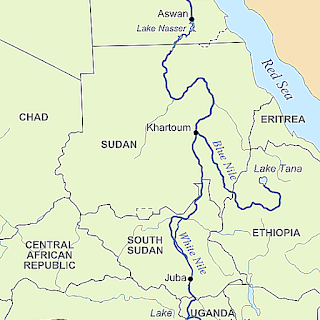

Apparently, these facts were unknown to the ancient Egyptians who could only observe the rise and fall of the Nile waters. The flooding as such was foreseeable, though its exact dates and levels could only be forecast on a short term basis by transmitting the gauge readings at Aswan to the lower parts of the kingdom where the data had to be converted to the local circumstances.

The Egyptian year was divided into the three seasons of Akhet (Inundation), Peret (Growth), and Shemu (Harvest). Akhet covered the Egyptian flood cycle. This cycle was so consistent that the Egyptians timed its onset using the heliacal rising of Sirius, the key event used to set their calendar.

The first indications of the rise of the river could be seen at the first of the cataracts of the Nile (at Aswan) as early as the beginning of June, and a steady increase went on until the middle of July, when the increase of water became very great. The Nile continued to rise until the beginning of September, when the level remained stationary for a period of about three weeks, sometimes a little less. In October it often rose again, and reached its highest level. From this period it began to subside, and usually sank steadily until the month of June when it reached its lowest level, again.

Now meet Khnum.


Khnum was one of the earliest-known Egyptian deities, originally the God of the source of the Nile. In art, Khnum was usually depicted as a ram-headed man holding a jar from which flowed a stream of water.


I particularly love this depiction of Khnum, with water pouring out of a snake mouth. As I explained in my post "Apep", snake is the symbol of the sun's heat, the symbol of the sun's fire, which swallows the water (moisture). And here the snake seems to be offered to Khnum  as a sacrifice. At the same time Khnum is holding the Was staff (the weapon that kills Apep, The Dragon, The destroyer of life) and Ankh (symbol of life).  A very very interesting relief. If anyone knows where this relief is and if you have the full image, please let me know. 


Since the annual flooding of the Nile brought with it silt and clay, and its water brought life to its surroundings, he was thought to be the creator of the bodies of human children, which he made at a potter's wheel, from clay, and placed in their mothers' uteruses. He later was described as having moulded the other deities, and he had the titles "Divine Potter" and "Lord of created things from himself". So he was also depicted working at a potter's wheel, with recently created children's bodies standing on the wheel...

The horizontally twisted horns show that we are dealing with a ram of the species "ovis longipes palaeoaegyptiacus".


This was the earliest type to be domesticated in Egypt, but became extinct sometime in the New Kingdom. Nevertheless, the shape of the horns was preserved even in later depictions of Khnum.


Now this type of sheep is a bit of a mystery. There are two thing you can find about its origin. 

One says that it came from wild Barbery Sheep, which came from Numbia. The problem with this is that Barbery Sheep is not a sheep but a goat...And it doesn't look anything like the Egyptian sheep, Khnom's sheep. Look at the horns


The other says that it came from Iranian Red Sheep, and that it came to Egypt via Sinai. This sheep is indeed a wild sheep of a Muflon family. But this sheep also doesn't look anything like the Egyptian sheep, Khnom's sheep. Look at the horns


I don't know if any genetic analysis was done on the remains of "ovis longipes palaeoaegyptiacus", or if such remains were ever found. But considering that these two animals, one goat and the other sheep, neither of which looks like the depictions of the "ovis longipes palaeoaegyptiacus" were proposed as its ancestors, I could bet that we have no clue what "ovis longipes palaeoaegyptiacus" actually was...

If we disregard the horns, what is interesting is that both of these animals mate in late autumn and give birth to their young in late spring, finishing their birthing season in April...You will see why this is important in a sec. But first, have a look at this:


This is "Balkanska koza" (Balkan goat) also known as "Hrvatska šarena koza" (Croatian colored goat), direct descendants of wild goats. And like many other old Southern European goat breeds it has horizontal horns. 

Balearic goat

Balkan black goat

Kalofer goat

Old Irish goat

What all goats have in common is that their natural mating season is in the autumn and that their kidding season is in the spring, ending in April...

Did such goat once live in Egypt too?

As I said, we don't have any data for the ancient Egyptian goats, but I would bet that their kidding season also ended in April...As is normal for most Northern Hemisphere wild goats and sheep...

And coincidentally, the monsoon that is the source of the nile flood, begins during the birthing season of the above animals (March/April). These are rain charts for two areas of the Ethiopian highlands... 


I talked about this in my post "Menat"...

It is this rain that is the source of the Nile...And interestingly, the rise of the nile water level, the beginning of the annual inundation of the Nile starts right after that, in May. 


Do you think that this is why Khnum, the God of the source of the Nile, has a head of the "ovis longipes palaeoaegyptiacus" ram (or male goat)???

Are there any other goats or sheep that look like this in Africa or Asia? This definitely needs more investigation...

Well I just found this representation of Khnum, harvesting wheat. 


Harvest time in the Nile River Valley occurred between April and June, depending on the weather. So the harvest also starts after Aries (Ram) ends. 

Interesting...


PS: 

I came across this interesting article today: "EVOSHEEP: the makeup of sheep breeds in the ancient Near East". An in it, I read this:

In northern Mesopotamia, an important increase in sheep husbandry during the fourth millennium BC (Uruk period) can be identified. Zooarchaeological studies have shown that these animals are larger than earlier sheep. Their horns form horizontal spirals, which are similar in shape to those of contemporaneous Levantine and Egyptian sheep. At the beginning of the third millennium BC (Early Bronze Age), the average sheep size was smaller, and the horns were coiled.


I went and I checked the modem sheep breeds, and I came across this one, Damara sheep, which can today be found in Central and Southern Africa, but which arrived there from Egypt. Is this Khnom's sheep?


I also found out that sheep that were a result of back breeding with wild sheep, mouflon, have horizontal spiral horns...Like this Hawaiian black sheep...


Very interesting. So Khnum could have been a deified ram after all...

The thing is, that the reason why a deified ram would be worshiped as the god of the source of Nile stil stands, as these old sheep are also seasonal breeders, which mate in autumn and lamb in spring...

PPS: Both Barbery sheep and Mouflon mate in Oct/Nov and give birth Mar/Apr...

Sunday, 21 April 2019

Apep

Today I would like to talk about snakes. And the sun. 

Apep or Apophis was the ancient Egyptian deity who embodied chaos. He was viewed as the greatest enemy of the solar deity Ra who as the bringer of light was seen as the upholder of order. This is why he was given the title Enemy of Ra.

Apep was seen as a giant snake or serpent leading to such titles as the Evil Dragon. Some elaborations said that he had a head made of flint.


The few descriptions of Apep's origin in myth usually demonstrate that it was born after Ra, usually from his umbilical cord. Combined with its absence from Egyptian creation myths, this has been interpreted as suggesting that Apep was not a primordial force in Egyptian theology, but a consequence of Ra's birth.

In his battles, Apep was thought to use a magical gaze to hypnotise Ra and his entourage, attempting to devour them whilst choking the river on which they travelled through the underworld with his coils.

But god Set, who always accompanied Ra on Atet (Solar barge) defended Ra and killed Apep with his spear.


The god Set was usually depicted as a man with a head resembling that of the sha, Set animal.

In ancient Egyptian art, the Set animal is usually depicted as a slender canid, resembling a greyhound or a jackal, usually with a long, slightly curved nose, and erect ears, squared at the tops, and a forked tail.


Set was often depicted carrying the so called "was" (Egyptian wꜣs "power, dominion") sceptre. It appears as a stylized animal head at the top of a long, straight staff with a forked end. Basically it was a stylised Set animal.


In one account, Ra himself defeats Apep in the form of a cat.


Egyptian believed that thunderstorms and earthquakes were caused by Apep managing to temporarily overwhelm Ra. They also believed that solar eclipses were caused by Apep managing to swallow Ra during the day. However Ra's defenders would quickly cut Apep's belly open and free Ra out, ending the eclipse within a few minutes.

Comparable hostile snakes as enemies of the sun god existed under other names (in the Pyramid Texts and Coffin Texts) already before the name Apep occurred. The etymology of his name ('pp) is perhaps to be sought in some west-semitic language where a word root "pp meaning 'to slither' existed. A verb root 'pp does at any rate not exist elsewhere in Ancient Egyptian.

Soooo. That's the story of Apep. How are we to understand all this?

Maybe this will help:

In Slavic languages the word for dragon "zmaj" is the masculine form of the word for snake "zmija". In Slavic mythology dragon is believed to be an "old male snake"... 

Snake is in Slavic mythology described as "the enemy"of the sun. As the protector of the sun, who saves the sun from the snake, we often find swallow. In Serbia people believe that swallow saved the sun when snake tried to swallow it. In Bosnia people believe that the swallow hid one quarter of the sun under it's wing, to protect it from the snake. In Dalmatia people believe that once there were three or four suns in the sky and that the snake ate all but one, which swallow hid under its wing. Two "blind suns" which can sometimes be seen in the sky together with our normal sun are the ones which the snake ate. The one that heats us is the one that the swallow hid under its wing. There is also a story that once there were 9 rays on the sun, but that snake ate (sucked, drank) all but one. In Montenegro people believe that a huge dragon once sucked in two out of three suns which once existed. In Bulgaria people say that once snake bit the sun in the eyes when it bent down to drink water. Another version of this story says that the sun used to have two or more eyes, but that the snake "sucked" them all out.

Bulgarians believe that the sun celebrates the killing of snakes. because the snake sucked in one of sun's eyes. In Montenegro people say that every time a snake is killed, the sun happily exclaims "A dragon was killed".

Bulgarians believe that snakes eyes have magic affect on the sun. They say that the sun can't set unless the snake looks at it. In Poland people say that the sun would stop shining if the snake looked at it. This is because the snake's eyes can suck all sun's strength out. In Bosnia people believe that snake gets more poisonous if it often looks at the sun. The most poisonous are the snakes that look at the sun for nine days. God forbade snakes to look at the sun longer than nine days a year. A lot less poisonous are the snakes which look at the sun only six days a year. And even less poisonous are the ones which only look at the sun for three days a year.

In Belarus people believe that snakes, while lying outside and sunbathing, actually sucking the sun's strength out, and that this is why the sun gets smaller and smaller as the summer progresses. The sun replenishes it's strength during the winter when snakes are under the ground. This is why one should always kill a snake, or they will multiply so much that they will completely destroy the sun. The dead snake should be buried or hid in the deep shade so that sun doesn't see it. If the snake is not buried the sun will start to shine weakly and will start hiding behind the clouds, because it can't look at it's dead earthly enemy. The sun won't shine on a man who doesn't kill a snake for three days. People in Ukraine also believe that a dead snake should be hidden in a shade or buried so that it doesn't harm the sun in some way. Polish people believe that a dead snake should always be buried so that the sun can't see it. If the sun sees a dead snake it might get extinguished. Also if the sun sees a dead snake it will get sick and turn red. The sun will get sick and start crying, because the snake is poisonous. The setting sun is red if it had seen a dead snake which wasn't buried. If a live snake comes out of its hole to sunbath, the sun will get sick and get pale. In Pomerania people believe that snakes actually don't like looking at the sun. If a snake is lying still, staring at the sun, has gone mad.

There is also a belief, which is found in all Slavic countries from Baltic to Balkans, that if you kill a snake, it will twitch and jump around, even if you chop it in bits, until the sun sets.

In Bulgaria people believe that the snake bite wound should be exposed to the sun. In Poland people believe that the person who was bitten by a snake should be outside, in the sun, or he will get sick.

People in Ukraine and Poland believe that snakes once had wings and flew in the sky. But the sun burned their wings and they fell on the ground. There is a Polish legend that says that the solar eclipse happens because a dragon covers the sun with its body. There is also a Polish fairytale which says that it is a twelve headed snake which causes solar eclipse. Ukrainians have a legend about a dragon which feeds on the sun, which is why the sun gets smaller and weaker as the year progresses. The motif of a dragon swallowing the sun can be found in all Slavic countries.

How should we understand all this? 

And why there are so many similarities between the Slavic and Egyptian stories about the sun and the snake?

The snake and the sun are intrinsically connected. 

Snakes come out of the underground when the air and soil get warm enough. They stay outside during the late spring, summer and early autumn and during that that time they are visible to people. 


This is why snake is the symbol of the sun's heat.  

In Egyptian mythology we find snakes wrapped around the sun disk on the head of the young Sun god Horus.


They are all around Amun-Ra


They have wings to symbolised their link with the supreme deity Ra 


And are called "the Uraei of goodness". You can read a lot more about the snakes in Egyptian mythology in the great book "The Serpent Myths of Ancient Egypt". 

But let me continue with the analysis of the snake-sun symbolic relationship based on Slavic mythology and see how it fits with the Egyptian one. 

The sun's heat is "young" week and beneficial at the end of spring, just before the summer starts. This is the good snake. The sun's heat is "old" strong and destructive at the end of summer, just before the autumn starts. This is the bad snake. Dragon, a heavenly being that breaths fire, the great old male snake, represents the burning heat of the Late Summer, Early Autumn, the "old sun", the sun which is threatening to turn everything into cinder. 


In Slavic Pre-Christian religion this dragon was Veles, the great horned snake, who "Stole heavenly cows from Perun". Basically he is the late summer heat which dries the land and the sky and causes draughts. You can read more about this in my post "Lion killing Snake" and my post "Two crosses".

Just enough sun is beneficial but too much sun is destructive. 
Just enough sun makes grain grow and creates order, but too much sun makes grain wither and burn and creates chaos. 

This is why Apep, the great snake, the dragon, the destructive sun, the creator of chaos is the enemy of Ra, the beneficial sun, the creator of Order. 

The great snake, the dragon, Apep, is the sun, is Ra in its destructive manifestation. This is why Apep is "a consequence of Ra".

The sun's heat increases all the way through the summer until we reach the hottest point of the summer, the 2nd of August. This point marks the end of the summer and the beginning of autumn, the end of the heating and the beginning of the cooling of the northern hemisphere. I talked about this in my post "Two crosses".


At that precise moment, The Great Snake, The Dragon, Veles (the summer heat) gets killed by Perun (autumn thunderstorms) whose weapon is lightning (spear). This day is celebrated in Serbia as Perun day. 

But the thing is, Perun and Veles are one and the same. This can be seen from the fact that on the 2nd of August (the end of summer beginning of autumn), the day when Serbs celebrate Perun's victory over Veles, Serbs celebrate the day of St Elijah the thunderer. St Elijah is the burning sun of the late summer, Helios. 

This is Helios


This is Elijah


Every year on his day he is about to burn the world to cinder. But he never does. Because  St Elijah is also the thunderer, the one who makes lightning and the one who rides on storm clouds. Which arrive right on time, to cool the earth down. You can read more about this in my post "Thundering sun god".

This what is represented by Set killing Apep. The sun Ra, its protector Set and sun's enemy Apep are one and the same...

Set scores a small victory over Apep every day when the evening kills the heat of the day. 
Set scores the big victory over Apep on the 2nd of August (the end of summer beginning of autumn) when he kills the heat of the summer and when the northern hemisphere starts cooling.

The 2nd of August,  (the end of summer beginning of autumn) falls in the middle of the zodiac sign Leo. This is why Ra kills Apep as great cat (Lion). 

This is also why we find the depiction of a lion headed deity (probably Pakhet or Pasht) killing great snake, dragon, on the above Set killing Apep scene.


Here is another depiction of Pakhet holding in one hand was staff (Set animal used to defeat Apep) and in the other hand two snakes. 


Interestingly, in Serbian mythology, St Elijah doesn't burn the world down, because every year, in the middle of Leo, during the Dog days, he gets "calmed down" by his wife "Ognjena Marija" (Fiery Mary). 


I wrote about this in my post Ognjena Marija

I talked about the symbolism of the "Lion killing snake" image in my post Lion killing snake

The 2nd of August, (the end of summer beginning of autumn), the hottest part of the year, the time when the great snake, the dragon is killed is known as Dog days. This is when Dog Star Sirius, rises before sun in the sky. Which is very interesting considering that Set, the Egyptian dragon slayer, the god of storms, is a dog faced deity...Knowing this, I wonder if the Set animal (dog really) has a forked tail because it is itself the "animal that ends the great snake, the dragon"???

Medieval standing stone from Ubusko, Hercegovina depicting dog fighting snake.


Just after the dog days and the slaughter of the great snake which choked the "river on which Ra's barge sailed", the Nile flooding reaches its highest level. This is still celebrated by Egyptians as an annual holiday for two weeks starting August 15, known as Wafaa El-Nil. 


The Nile always followed the same water rise and fall pattern. First indications of the rise of the river could be seen at the first of the cataracts of the Nile (at Aswan) as early as the beginning of June, and a steady increase went on until the middle of July, when the increase of water became very great. 

This is the beginning of Leo. 

The Nile continued to rise until the beginning of September, when the level remained stationary for a period of about three weeks, sometimes a little less. 

This is the end of Leo.

In October it often rose again, and reached its highest level. From this period it began to subside, and usually sank steadily until the month of June when it reached its lowest level, again.

Here is the The god Nilus or Hapimou encircled by the serpent...


From the dead dragon water, vegetation and life burst out...


What do you think about all this?