Showing posts with label Aztec mythology. Show all posts

Monday, 6 January 2025

Hummingbird war god

Today I would like to talk about Huitzilopochtli, the scary war god of the scary warriors of the Aztec/Mexica tribe. And an astonishing fact that he is basically a deified hummingbird...

Yup, you heard it right. The scary hummingbird war god...

Huitzilopochtli was the patron god of the Aztec/Mexica tribe and their capital city Tenochtitlan. He was also the sun god. The one that had to be constantly fed human blood and hearts (seat of fire), or he would lose his strength and the world would end. You can read more about the Aztec human sacrifices here...

He was the one because of whom Aztecs fought the eternal holy war whose only purpose was capturing sacrificial victims for Huitzilopochtli...

The scary blood thirsty hummingbird war god...

In art and iconography Huitzilopochtli is represented either as a hummingbird or as an anthropomorphic figure with blue-green hummingbird feathered helmet...

His name, Huitzilopochtli, consists of two elements, Huitzilin "hummingbird" and opochtli "left hand side", translats as "Hummingbird of the left hand side" or "Hummingbird of the south" on the basis that Aztec cosmology associated the south with the left hand side of the body...

Soooo...If you learned that the war god of the Aztec/Mexica was a deified hummingbird, wouldn't you go "WHY?!?"

I know I would. Obviously some other people also found this intriguing. And they thought about it. And...

The only proposed explanation that I could find is that "Aztecs believed the bravest warriors were reincarnated as hummingbirds. Because of this, a more appropriate translation of Huitzilopochtli would be "Reincarnated Warrior of the South"...

This, apparently, fits the Aztec belief that "Huitzilopochtli was conceived after his mother, Coatlicue, the Earth Mother goddess, a charming lady about whom I will write more soon, placed in her bosom a ball of hummingbird feathers (the soul of a warrior) that fell from the sky"...

Huitzilopochtli already had many [innumerable] older brothers [southern stars]  and an older sister [moon]. Because they were angry about the way Huitzilopochtli was conceived (?), they decided to kill both him and their mother...

But, hearing of the attack, the pregnant Coatlicue miraculously gave birth to a fully grown and armed Huitzilopochtli [sun, burning with anger and fury and armed with the fire serpent, his deadly main weapon]...

Huitzilopochtli fought ferociously, defended himself and his mother, killed dismembered and decapitated his sister and chased his brothers across the sky southwards...

According to Aztecs, this is why we get day and night because Huitzilopochtli, the sun, continues to chase his brothers, the stars, around and around the world...But there is more to this story as you will see soon. 

Soooo...Happy with this explanation? It all makes sense? This would all make a lot more sense if we knew why were "the bravest warriors reincarnated as hummingbirds" and why was Huitzilopochtli specifically the "hummingbird of the south"...

Well, let's have a look at the hummingbirds and their lifecycle to see if there is any overlap between significant annual lifecycle events of the hummingbirds and the Aztec/Mexica war season...

Cause Huitzilopochtli sure looks like deified animal calendar marker. And as you will see, he is indeed a deified animal calendar marker for the Aztec/Mexica war season...

I have already shown in this article, that all the animals and plants from the Aztec legend about the foundation of Tenochtitlan and Huitzilopochtli's role in it are indeed animal and plant calendar markers...

And I have also shown in this article, that the starfish found as offerings in the temple dedicated to the god of war, Huitzilopochtli, in the Aztec capital Tenochtitlan are also animal calendar markers...

So I can bet that hummingbird is no different.

The climatic year in Mexico is divided into dry and wet halves, and so Aztec year was divided into two "opposite" seasons: farming (wet) season, Apr/May-Oct/Nov, and war (dry) season, Oct/Nov-Apr/May...


Huitzilopochtli ruled the war (dry) season, Oct/Nov-Apr/May. I would even suggest that he was deified war season. This is why the Panquetzaliztli festival which was held every year during the Aztec month Panquetzaliztli (Nov 9 to Nov 28), celebrated the (miraculous) birth of Huitzilopochtli...

Guess what ends in Oct/Nov? Southern migration of hummingbirds, who in their millions arrive to Mexico from the north, from Canada and the USA, between Aug and Oct...

BTW, Aztecs believed that North was the location of the land of the dead. Hence the brave dead warrior souls arriving from the land of the dead (north) to the land of the living (south) in a form of a hummingbird...

The arrival of the hummingbirds (warrior souls) signals the change of season from wet season of agriculture and life, to dry season of war and death (impregnates Mother Earth with war god) which springs out of her womb fully grown and armed and ready for war every Oct/Nov...

This indicates that Huitzilopochtli, the hummingbird of the south, was the deified sunny/dry/war season, Oct/Nov-Apr/May, the time which all the hummingbirds spend down south, in the land of the living...

Which is why Aztecs celebrated Huitzilopochtli's birthday every year in Nov...

BTW, the birthday cake baked for Huitzilopochtli was a statue of the god made with sacred amaranth seeds dough

Amaranth seeds are harvested in Nov...

After a ritual battle in which warriors "captured" and dismembered the amaranth-dough figure of Huitzilopochtli, the warriors took the dough pieces home to their families to be ritually consumed.

Another, this time plant, calendar marker for the start of the war season...

One other thing. Right around amaranth harvest and the Huitzilopochtli's birthday, in Nov, the Southern Stars, including Southern Cross, become visible from the Aztec land just before dawn. As the sun rises, they move towards, and finally disappear in the southern sky...

They are then visible in the night sky until Jun, until it's time to plant amaranth. So again a calendar marker. The time during which Huitzilopochtli chases his brothers, the southern stars, is the same period ruled by (deified as) Huitzilopochtli: the sunny/dry/war season...

Anyway I will stop here. In my next post I will talk about Huitzilopochtli as the burning sun god...And why he is armed with a "fire serpent", as all burning sun gods should...

To read more about ancient animal and plant calendar markers, start here…Then check my twitter threads I still didn't convert to blog post...I am way way behind...

Sunday, 22 December 2024

Starfish for the god of war

A while back I came across this X post by @Paracelsus1092:

I don't know if anyone knows the significance of starfish to ancient Mesoamericans, but I like the idea of decorating a war god altar with them. 

He was referring to this article in Smithsonian magazine which talks the discovery of starfish in the temple dedicated to the god of war, Huitzilopochtli, in the Aztec capital Tenochtitlan... 

So I said: Let's try animal calendar markers. See what jump at us...

The year in Mesomerica consisted of just two main and opposite seasons, RAINY and DRY. In Aztec times these matched two principal and contrary activities - FARMING and WAR. You can read more about this here...

The rainy (farming) season was ruled by Tlaloc and the dry (war) season was ruled by Huitzilopochtli - depicted symbolically in the "twin towers" atop the Great Temple of Tenochtitlan...You can read more about this here...


The main agricultural crop, maize, was planted in May and was harvested in Sep...

At the peak of the hurricanes season...


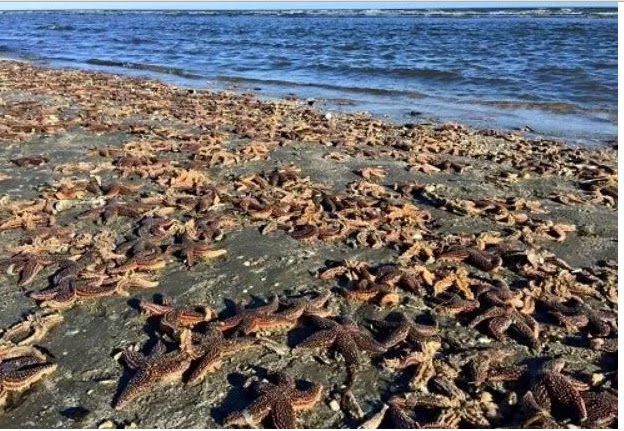
Hurricanes which (sometimes, don't know how often) lift thousands of starfish from the sea floor and throw them onto the Mexican beaches...And not just Mexican beaches...Pic from this article about starfish beaching...

And right after the end of the agriculture season, and the dead starfish season, in Oct, Pleiades appear in the night sky, heralding the beginning of the war season...

Are these the stars symbolised by starfish used to decorate the altar of the war god?

I don't know...But I know this:

The Pleiades star cluster was a significant symbol in Aztec culture and astronomy. The Aztecs based their calendar on the Pleiades. 

The Aztecs used the Pleiades to predict the seasons: 

Rain, farming season began when the Pleiades disappeared from the night sky...

Dry, war season began when the Pleiades reappeared in the night sky...

To read more about ancient animal and plant calendar markers, start here…Then check my twitter threads I still didn't convert to blog post...I am way way behind...

Saturday, 21 December 2024

How Tenochtitlan was established

In this post I will talk about the back panel of the "Temple of the Sacred War", a monolithic pre-Columbian miniature of an Aztec temple, currently in the Museo Nacional de Antropología, Mexico City...

I first discovered that this artefact existed when in 2023 I posted this post in X:

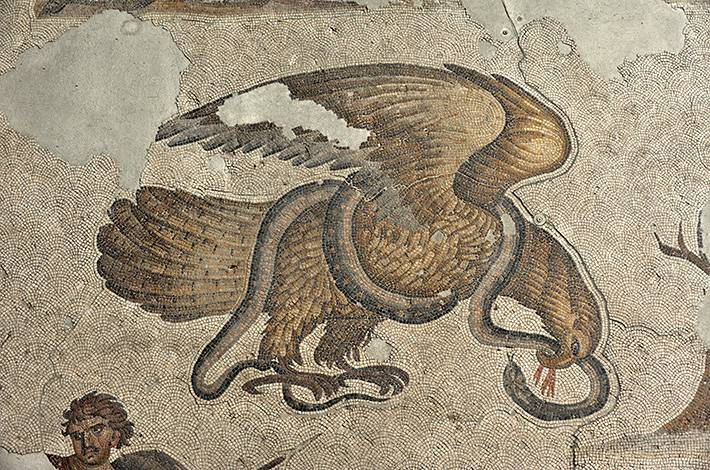
Eagle-Snake struggle mosaic from the palace of the Emperor Justinian I  (527-565), Istambul 

is a complex animal calendar marker for the thunderstorm season in Europe Apr/May -  Sep/Oct

when migratory snake eagles can be seen in Europe...

I talked about this in my post "Eagle snake struggle"...

And @JuraPijandura replied with this: Have you ever thought about the same motive in  Aztec civilization? Do they correlate?!

As it turned out, the image he posted was the photo of the back panel of the "Temple of the Sacred War"...

It depicts: "an eagle, representation of the god of war Huitzilopochtli holding in its beak the glyph for war, while standing on a prickly pear cactus which grows out of the goddess of lakes and streams, Chalchiuhtlicue".

The symbol for war consists of two opposite elements - water and fire, forming two streams (most likely one blue and one red) that when put together form the idea of "war".

Each element is a source of energy and life-force but can also be one of destruction. Ever heard of Yin (dark, cold, water, wet, downward, earth) and Yang (light, hot, fire, dry, upward, sun)? Life thrives only where there is balance between these two opposites...

Interestingly, in the language of the Aztecs/Mexica (Náhuatl), the war glyph is called "atl tlachinolli", meaning "water, burnt earth". This indicates that in the war glyph, the fire is the fire of the sun which burns earth, causes drought, and that water is rain water...


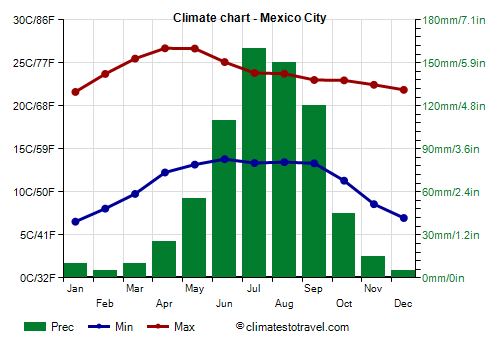
If we look at Mexico climate chart we can see that the climatic year is divided into two "opposite" seasons, wet and dry season... 

This is why Aztec year was also divided into two "opposite" seasons: farming (wet) season, Apr/May-Oct/Nov, and war (dry) season, Oct/Nov-Apr/May...

This is also why the main temple of the Aztec/Mexica was topped by paired shrines to (rain god) Tlaloc and (war, and sun, god) Huitzilopochtli...

So sun (fire) vs rain (water) = opposites = conflict = WAR (glyph)...

Sacred War?...War between the sun and rain (gods)?

Sacred War for capturing sacrificial victims that will be sacrificed to the deified "opposing" forces which decide if Aztec/Mexica will live or die???

Ok, back to the back panel of the "Temple of the Sacred War". It's time to look at the local climate and the animals (eagle) and plants (prickly pear) depicted on it, and see if they are just random animals and plants or are we looking at animal and plant calendar markers...

Aztec civilisation developed inside the Valley of Mexico, a highlands plateau in central Mexico surrounded by high mountains, full of rivers which all emptied into the central lakes...

The lakes and most rivers of the Valley of Mexico are now gone, buried under the Mexico City, but some, like Magdalena river are still above ground and their monthly flow chart, published in this article, looks like this:

During the time when Aztec mythology was developed, the wet season in the Valley of Mexico which is Apr/May-Oct/Nov, the season when rivers, and the lakes they fed were full of water, was the season ruled by Chalchiuhtlicue, goddess of lakes and streams...And floods...

Why would prickly pear be depicted growing out of the mouth of the goddess Chalchiuhtlicue?

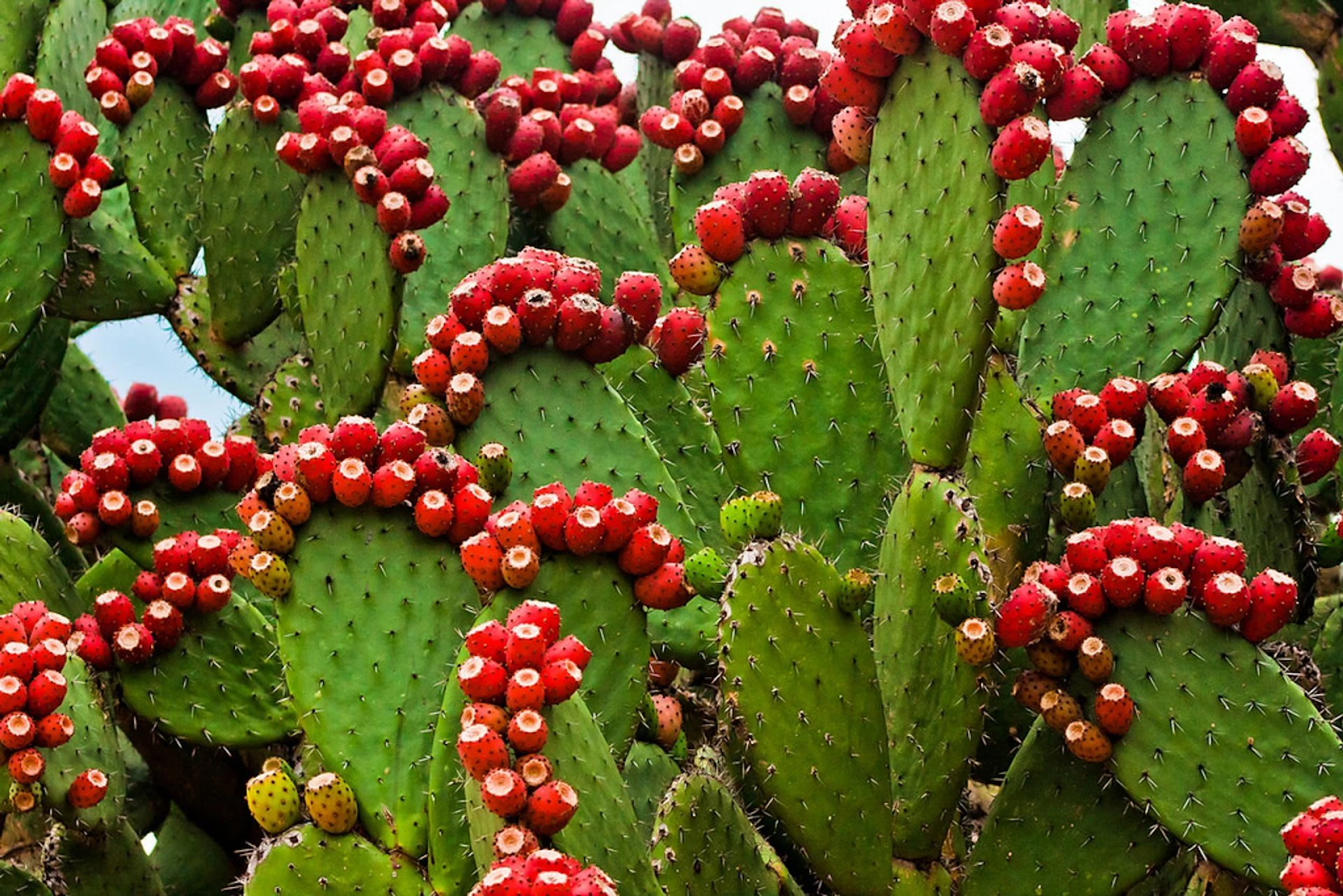
Cause in Mexico, prickly flowering starts in Apr/Jun, start of rain (flowing water) season, and fruit season starts in Jul/Aug, peak of rain (flowing water) season...


Ok, what about the eagle? The eagle is a golden eagle, which in Mexico nests in Mar/Apr/May/Jun. The eggs hatch after about 45 days, and and chicks fledge after about 75 days, in Jul/Aug, peak of the rain (flowing water) season...

So both prickly pear and golden eagle are animal calendar markers for the rain (flowing water) season...Which is also the agricultural season...The fertile season...The season of life...

This is why both golden eagle and prickly pear cactus feature in the Aztec/Mexica myth about the founding of their capital, Tenochtitlan:

Aztecs were looking for a new place to settle. Huitzilopochtli (the sun, war god) told them that they will settle in a place where they see "an eagle with a snake in its beak, standing on a cactus growing from a rock in the middle of a lake".

Finally, after 200 years of wondering through Mexican desert, a scout looking for water saw "an eagle with a snake in its beak, standing on a cactus growing from a rock in the middle of a lake". The lake was lake Texcoco in the Valley of Mexico. 

The Aztecs established their capital city on the island in about 1325AD and named it Tenochtitlan, which means "place where a prickly pear cactus grows from a stone"...

Wow, cactus, eagle...But what's with the snake? Is this another animal calendar marker?

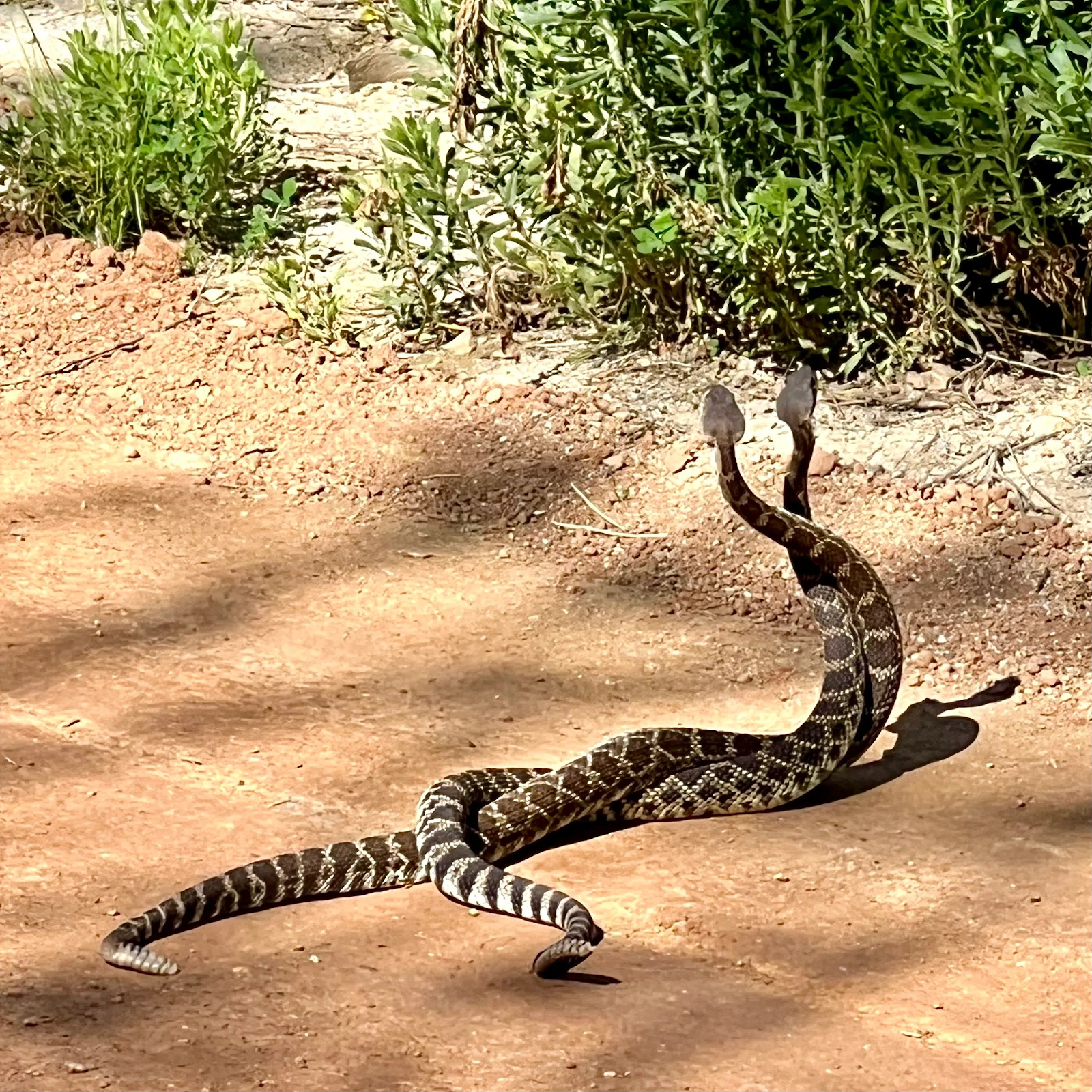
It is. Rattlesnake season in Mexico is Apr/May-Oct/Nov. This is when the rattlesnakes are most active, but also when rattlesnakes mate...And when rattlesnakes mate they dance...

So a golden eagle, devouring a snake, while standing on a prickly pear cactus...Like on this depiction of the Aztec myth from the 16th century "The History of the Indies of New Spain", sometimes referred to as the Durán Codex... 

All animal calendar markers for Apr/May - Oct/Nov, the rain, flowing water, agriculture season. The season of life, peace...As opposed to Oct/Nov - Apr/May, the sun, drought, war season. The season of death...Ruled by Huitzilopochtli...

I will continue with my analysis of the "Temple of the Sacred War" in my next post, where I will talk about Huitzilopochtli...

To read more about ancient animal and plant calendar markers, start here…Then check my twitter threads I still didn't convert to blog post...I am way way behind...